Disc Harrow vs Rotary Tiller: How To Determine Which Is Right For Your Farm
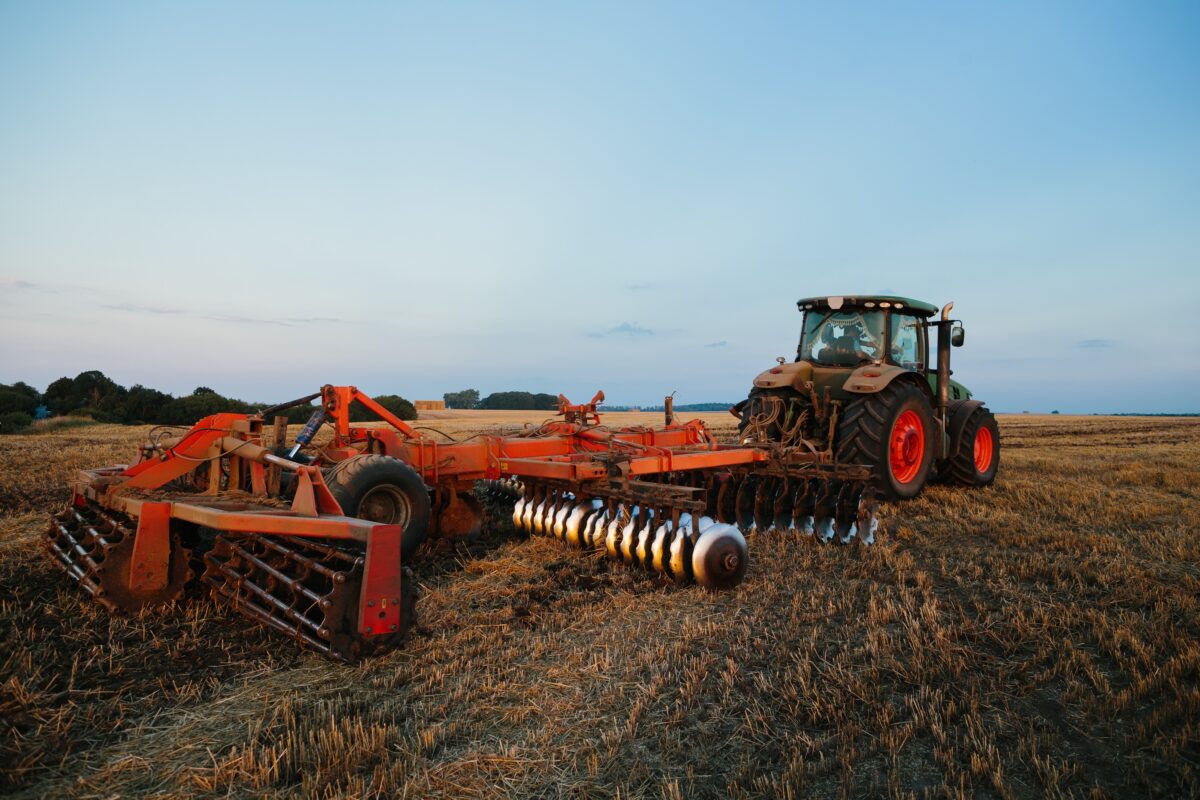
Every planting season starts with ground that needs to be ready for seed. For many farmers, ranchers, and landowners, that means hooking up either a disc harrow or a rotary tiller (also known as a rototiller). Both implements have been used on farming grounds for generations, and both can do the job well. But the decision between a disc harrow vs rotary tiller comes down to your soil, the acres you need to cover, what you plan to grow, and the tractor you already have in the shed.
In our guide, we’ll walk you through how each implement works, where each one tends to perform best, and how soil type, plot size, cost, and existing equipment can help you pick the right tiller or disc harrow for your distinct operation.
Table Of Contents
Disc Harrow vs Tiller: How Each Implement Works
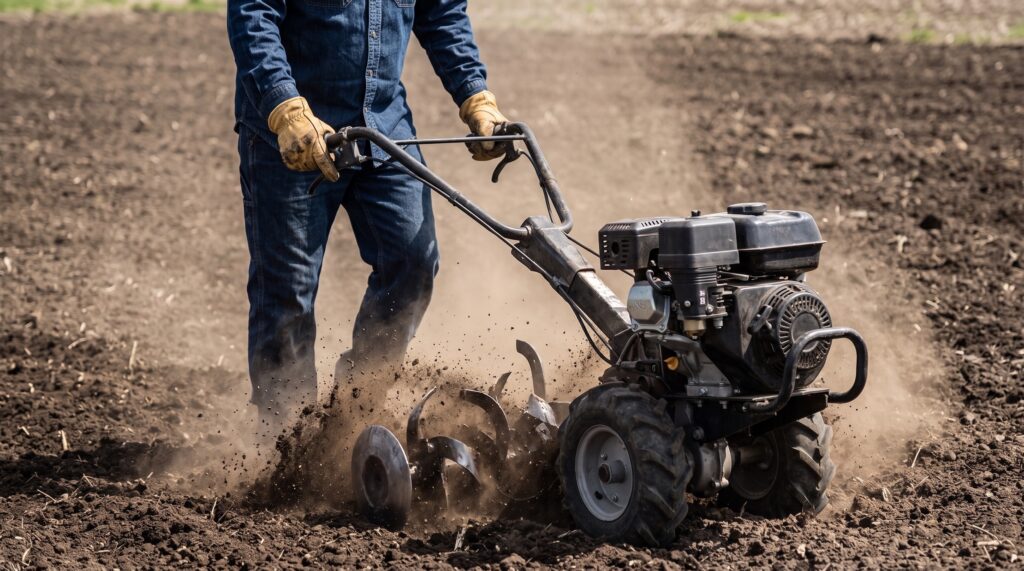
Before comparing a disc harrow and a tiller, it helps to know what each one is doing below the surface. A disc harrow and a tiller both loosen and mix soil, but they go about it in different ways.
How A Disc Harrow Works
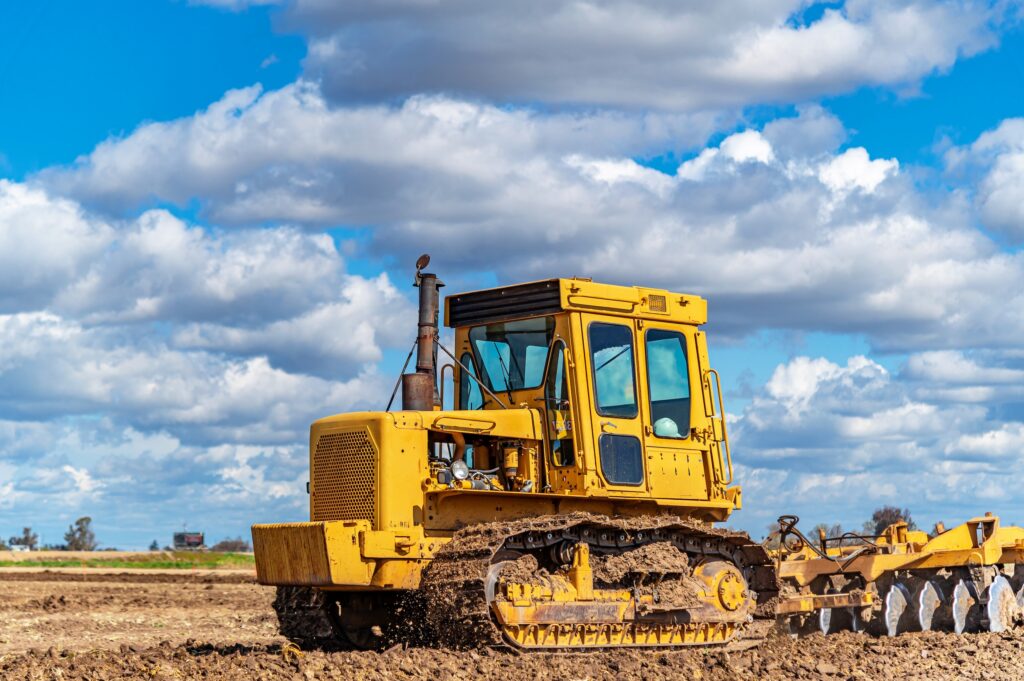
A disc harrow is a set of concave steel blades mounted on shafts called gangs. The gangs sit at an angle to your direction of travel, so as the tractor pulls the harrow forward, the blades roll, slice into the ground, and turn soil and residue to the side.
Unlike a tiller, a disc harrow needs no PTO (power take-off). The work comes from the tractor’s pulling power and the weight of the frame pressing the blades into the soil.
You’ll see a few common designs. A tandem disc has a front and rear set of gangs that throw soil in opposite directions, which helps keep the field fairly level. An offset disc uses two gangs, one behind the other and offset to the side, and is usually heavier, with larger blades built for deeper cutting. Many harrows use notched blades up front to bite into residue and firm ground, with smooth blades in the back to mix and smooth the surface.
Most people use a disc harrow for secondary tillage. That includes breaking down clods on ground that’s already been plowed or worked, mixing in crop residue, incorporating lime or fertilizer, and covering broadcast seed. Heavier offset models can handle some primary tillage as well.
A quick note on names, since this can cause some confusion. You’ll hear “disc tiller” used in a few ways. Some people use it as another name for a disc harrow. Others mean the one-way disc plow, also known as a harrow plow or wheatland plow, which is somewhere between a standard disc plow and a disc harrow and is used to cut and turn soil as a first step in working ground.
Whichever meaning a seller has in mind, a disc tiller is a disc implement, not a PTO-driven rotary tiller. A disc cultivator is lighter and mostly used to control weeds between rows. When the disc cultivator vs tiller comparison comes up, it’s usually about weed management in gardens and row crops rather than seedbed prep.
How A Rotary Tiller (Rototiller) Works
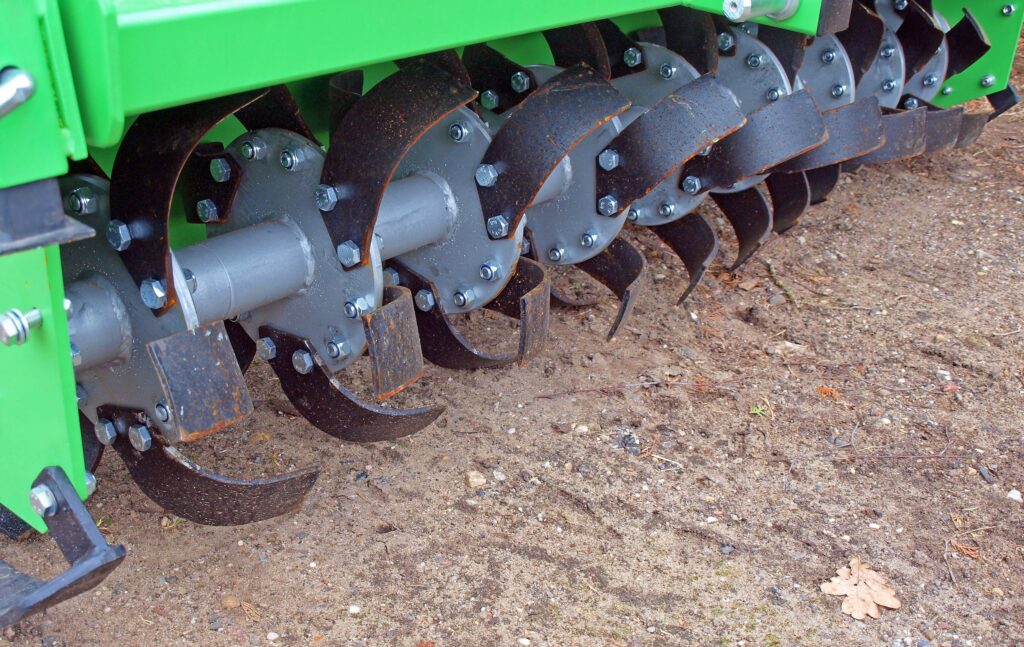
A rotary tiller, also called a rototiller, runs off your tractor’s PTO rather than relying on pulling power the way a disc harrow does. A gearbox drives a horizontal rotor lined with curved tines, and those tines chop into the soil, break it apart, and throw it back under a hood. A rear shield, sometimes called a flap or tailgate, can be raised for a rougher finish or lowered to smooth the surface behind you.
Many tractor tillers spin in the same direction as the wheels, which is called forward rotation. Reverse rotation models spin the opposite way and dig up from underneath. They’re typically built for harder ground and heavier residue, so check each model’s horsepower rating against your tractor. Depth is set with skid shoes or depth wheels on each side.
Because the tines do so much of the work, a tiller can take ground to a fine, planting-ready seedbed in fewer passes than a disc harrow or most other implements. The trade-off is ground speed, which we’ll cover in a bit.
Why The Disc Harrow vs Tiller Choice Depends On Your Ground
When it comes to the disc harrow vs rotary tiller discussion, there’s a good bit of debate amongst farmers on which is best. The reality is that both tools are good at what they do, but the better fit is really going to depend on the conditions you’re working with on your particular farm.
Common Disc Harrow vs Tiller Misconceptions
There are a few misconceptions when it comes to the disc harrow vs rotary tiller debate, so before we get into the details, let’s dispel some myths.
“A tiller always makes the better seedbed.” A tiller makes a finer, smoother seedbed than a disc harrow, and small seeds like clover, brassicas, and many vegetables do well in it. Finer isn’t automatically better, though. In some soils, especially heavier clay, a very fine surface can dry out quickly and form a crust after a hard rain. A disc harrow leaves a coarser, firmer surface that can hold moisture around the seed.
“A disc harrow is only for big farms.” Large pull-type discs get most of the attention, but smaller 3-point disc harrows are common on smaller acreages, hobby farms, and food plots. They’re a practical size for the same compact and utility tractors that often run a tiller.
“You have to choose one.” Plenty of operations own both a disc harrow and a rotary tiller and use each where it fits, sometimes in the same field on the same day.
Why The Advice On The Disc Harrow vs The Tiller So Often Differs
If you’ve read through forum threads on the disc vs tiller question, you’ve probably noticed how dead-set many of the farmers and gardeners talking are. A gardener with sandy loam and a compact hydrostatic tractor will have quite a different experience than a rancher pulling a disc harrow through rocky ground behind a larger utility tractor. Soil, acreage, climate, and equipment all need to be taken into account when comparing how a disc harrow vs a rotary tiller will meet the needs of your land.
Why Trust Our Take
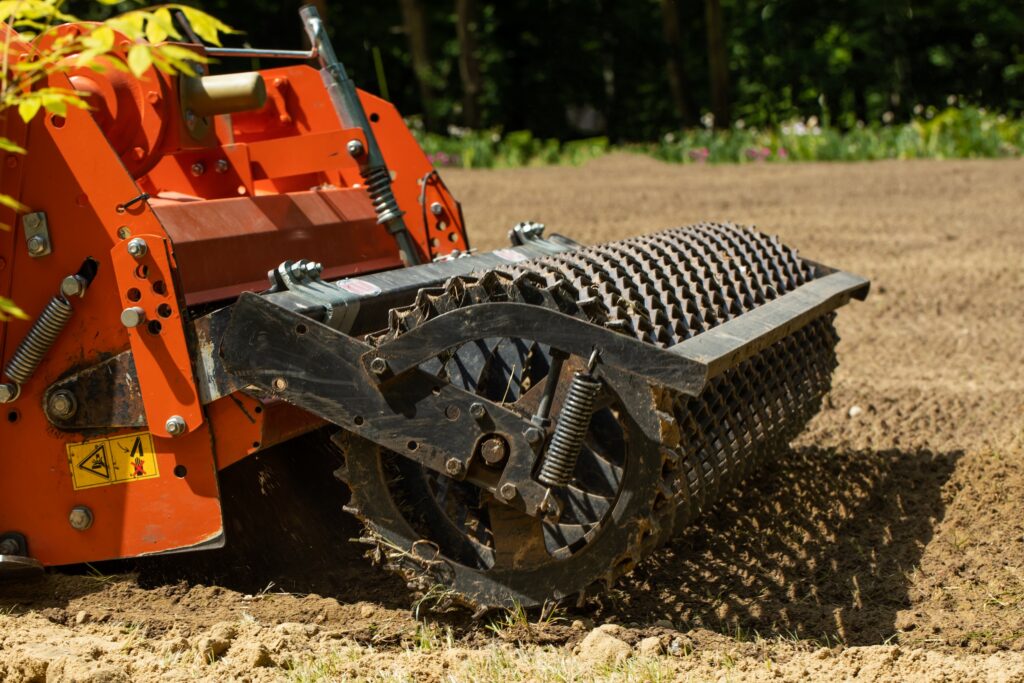
At Hayden Outdoors, we spend our days on farms, ranches, and recreational properties in a wide range of regions. We see irrigated farm ground, dryland wheat country, mountain hay meadows, and hunting properties with food plots tucked back in the timber. That variety teaches you that choosing between a disc harrow and a tiller is typically a local decision. The disc harrow that works great in one place may need a different setup on the next, and a rotary tiller that shines in one garden may be slow going on another property.
We also know that buying a tractor implement is an investment, and you want to make that decision with confidence. The sections below are meant to give you the kind of practical perspective you’d get from a neighbor who’s run both a disc harrow and a tiller and knows when each one shines.
Factors That Point To The Right Fit Between A Disc Harrow vs A Rotary Tiller
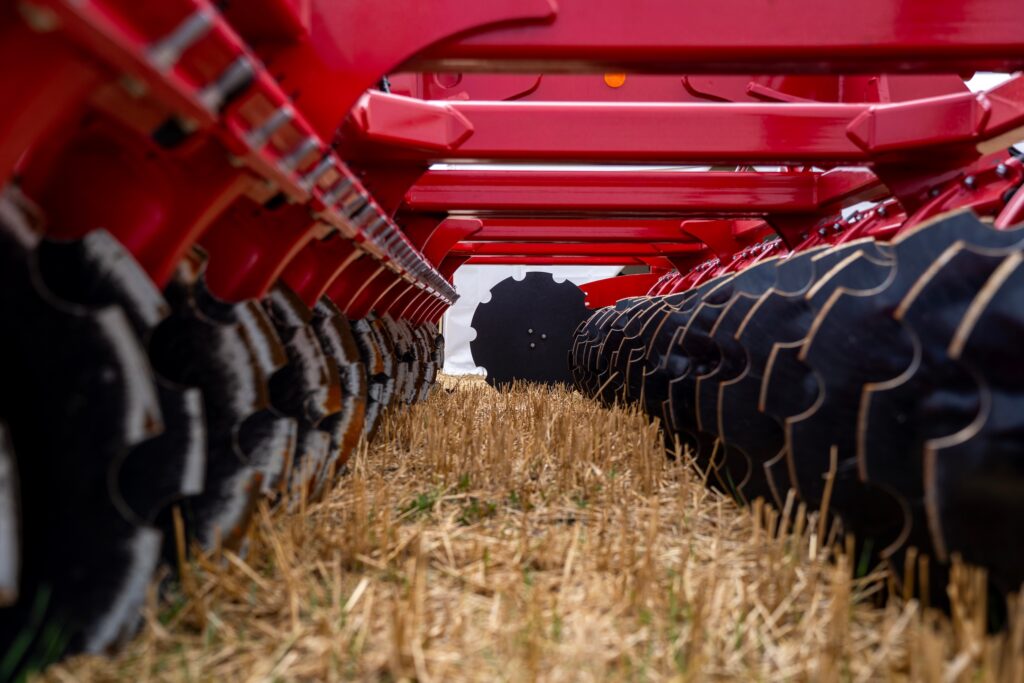
Soil type, plot size, type of operation, cost, and existing equipment can all help you decide between a disc harrow or a rotary tiller. When those factors consistently seem to point in different directions, that can be a sign that owning both (or pairing one with another implement) is worth considering.
How Soil Type Impacts The Disc Harrow vs Tiller Decision
Clay soil: Working with heavy clay often comes down to timing. When it’s too wet, working it with either a disc harrow or a tiller can smear and compact the soil, leaving hard clods once it dries. When moisture’s right, a tiller does a great job loosening compacted clay and working in organic matter. A disc harrow also handles clay well and leaves a firmer surface that tends to crust less than ground worked fine with a tiller. A simple way to check moisture is to squeeze a handful of soil from working depth. If the ball crumbles apart when you press it, you’re in good shape. If it holds together in a tight, sticky ball or smears, you may want to give it a few more days.
Sandy and loam soil: Both a tiller and a disc harrow work well for these types of soil. Loam is forgiving, and sandy soil breaks down easily. The main thing to keep in mind with sandy ground is how much you work it, since a very fine surface can blow or wash away more easily. Leaving some residue on top helps hold soil in place.
Rocky ground: This is one area where a disc harrow generally has the edge over a rototiller. Disc blades tend to roll up and over rocks, and while a large rock can still chip a blade, the harrow usually keeps moving. Tiller tines meet rocks head-on as they spin, which puts stress on the tines, rotor, and gearbox. If you plan to use a tiller in rocky ground, a slip clutch, slower travel speed, and a round of rock picking beforehand all help protect your equipment.
Sod and new ground: Breaking out pasture or grass sod takes patience with either tool. A light 3-point disc harrow may ride across established sod and need several passes spread out over a few weeks. A rototiller can chew through sod but works slowly, and a reverse rotation tiller is often the better fit for that job. On tough ground, many owners start with a plow or chisel plow, then follow with a disc harrow or tiller to finish the seedbed.
Drier Western soils: In drier climates, soil moisture is valuable. Every tillage pass exposes moist soil to sun and wind, and a finely tilled surface can lose water. Fewer passes, good timing, and some residue left on the surface help conserve what you have. That’s one reason disc harrows and reduced tillage are common in dryland country, while tillers remain a popular choice for irrigated gardens and smaller plots.
Disc Harrow vs Tiller For Small Plots And Large Acreage
The size of your particular plot of land is where the differences between a disc harrow vs rotary tiller become more noticeable. A tractor tiller works slowly (about 1 mph forward speed for rototilling). Disc harrows move a good bit faster (about 4.5 to 6 mph for field-size discs).
Iowa State University Extension’s formula for estimating coverage is width in feet multiplied by speed in miles per hour, divided by 8.25. That gives you theoretical acres per hour before accounting for turns, overlap, and stops. Here’s how that plays out for a hypothetical tiller and disc harrow using the speeds above:
The disc harrow usually needs more passes to reach a good seedbed than the rotary tiller does, but even so, the disc harrow tends to cover more ground per hour once a plot gets into the multiple-acre range.
As a general guide:
- Gardens and small plots: A tiller is a popular choice. The speed is less important on smaller plots like these, and the finish of the rototiller is excellent.
- Mid-size plots and small fields: Either a disc harrow or a tiller can work well. You’ll want to assess your particular soil, the amount of rocks, the tractor you have, and your seedbed to determine whether a disc harrow vs a rotary tiller is the right choice.
- Larger acreage: A disc harrow tends to be the more practical option for covering ground in a reasonable amount of time.
On the disc vs tiller question, plot size can serve as a starting point, rather than the sole deciding factor. There are farmers who till several acres of food plots every year and are happy with the results, and plenty of gardeners who use a small disc harrow followed by a rake.
Choosing A Disc Harrow vs A Rotary Tiller Based On Operation Type
- Market gardens and vegetable rows: A tiller is usually the go-to over a disc harrow here, since it’s hard to beat for a fine seedbed and for working compost into the soil. Some growers also use a disc cultivator between rows for weed control.
- Hay and pasture renovation: A disc harrow is often a better fit than a tiller when you’re renovating a pasture or hay field. It cuts through sod and residue and covers larger acreage efficiently. Many ranchers follow the disc harrow with a drill, or with a broadcast seeder and cultipacker, to get good seed-to-soil contact.
- Food plots and wildlife habitat: Small plots near a cabin or tucked into the timber are well suited to a tiller vs larger plots, remote plots, and rocky ground, which often favor a disc harrow. Rolling the seed in with a cultipacker after either tool can improve germination.
- Row crops and crop residue: A disc harrow is a common choice for chopping and mixing residue ahead of planting, and it covers big crop fields much faster than a tiller. Many row-crop operations have moved toward reduced tillage or no-till, so discing is used more selectively than it once was.
- Hobby farms and homesteads: Either a disc harrow or a tiller can work well, as long as it’s sized to a compact or utility tractor. Think about which jobs you’ll do most often and let that guide the choice.
Comparing Disc Harrow vs Tiller Costs Over Time
- Purchase price: A new rotary tiller generally costs more than a new disc harrow of similar width, largely because of the gearbox, driveline, and rotor. Used versions of both are typically widely available, and a well-kept disc harrow can stay in service for decades.
- Operating costs: A tiller puts a steady load on the PTO while moving slowly, while a disc harrow covers ground faster but may need more passes. Fuel, hours, and wear all vary with soil and conditions, so it’s worth tracking the numbers on your own ground to assess whether a disc harrow vs a rotary tiller is the right fit.
- Wear parts and maintenance: Tiller upkeep primarily involves the tines, gearbox oil and seals, and the slip clutch or shear bolts. Disc harrow upkeep primarily involves the blades, bearings, and scrapers. Sealed bearings cut down on greasing, while greaseable bearings can be serviced and extended, which is one of the reasons that disc harrows can outlast tillers.
- Your time: Hours in the seat have value, especially during a narrow planting window. A faster tool on large acreage, or a one-pass finish on a small plot, can be worth the extra investment. The clearest way to compare disc harrow vs tiller costs is to estimate cost per acre over the years you expect to own the implement.
Compatibility Of A Disc Harrow vs Rotary Tiller With Your Tractor
The tractor you already have on your property will likely factor into your decision between a disc harrow and a rotary tiller.
- Power source: A disc harrow relies on drawbar pull, traction, and weight. A tiller relies on PTO horsepower. A lighter tractor with solid PTO power but limited traction may pair better with a tiller, while a heavier tractor with good traction will pull a disc harrow well.
- Horsepower range: Every manufacturer publishes a recommended horsepower range for each model, and staying within it pays off. An oversized tiller can put strain on your driveline, and a disc harrow that’s too wide or heavy for your tractor won’t maintain a useful depth or speed.
- Ground speed: A tiller works best at a slow, steady pace, well below the speed you’d pull a disc harrow. Hydrostatic transmissions and creeper gears make that easy. If you have a gear-drive tractor, check what your lowest gear delivers at rated PTO rpm before buying a tiller.
- 3-point hitch: Confirm your hitch category and lift capacity. Wider tillers and heavier 3-point disc harrows need enough lift to raise them fully for turns and transport.
- Weight on the blades: A disc harrow’s cutting ability depends heavily on weight per blade, not just the number of blades. Lighter 3-point discs sometimes need added weight to work into firm ground.
A Quick Summary
| Factor |
Rotary Tiller |
Disc Harrow |
| Power source |
Tractor PTO |
Drawbar pull, traction, and weight |
| Typical ground speed |
About 1 mph |
About 4.5 to 6 mph |
| Seedbed finish |
Fine and smooth |
Coarser and firmer |
| Passes to a seedbed |
Fewer |
More |
| Rocky ground |
Best in cleaner soil |
Handles rocks more easily |
| Crop residue |
Buries and mixes thoroughly |
Chops and leaves some on the surface |
| Common acreage |
Gardens and smaller plots |
Larger plots and fields |
| Relative purchase price |
Usually higher |
Usually lower |
| Main upkeep |
Tines, gearbox, driveline |
Blades, bearings, scrapers |
Scenarios When Having Both A Disc Harrow and A Rototiller Makes Sense
The reality is that both the disc harrow and the rototiller have their own particular strengths, and on some farm operations, it actually makes sense to have both.
- You’re breaking out sod or new ground. Turning established pasture or grass into a planting area takes some muscle. A disc harrow is a practical first step for cutting through the sod and opening up the soil before a tiller gets involved. Once that material has had time to break down, a tiller can follow to work the ground into a smooth, even seedbed that’s ready for planting.
- Your property includes a garden and larger acreage. Many rural properties have a vegetable garden near the house and food plots, hay ground, or pasture farther out. A tiller is better suited to garden beds than a disc harrow, where a fine finish and thorough mixing of compost pay off. The disc harrow handles the bigger ground, where covering acres in a reasonable amount of time is more important than the smooth surface a tiller leaves.
- Your soils change from one field to the next. Rocky ground tends to be easier on a disc harrow, while cleaner soil in a garden or small plot is a good fit for a tiller. Owning both a disc harrow and a tiller lets you match the implement to the ground instead of forcing one tool to handle every condition on your land.
- You run a food plot program with plots of different sizes. Small plots tucked into the timber or close to a cabin work well with a tiller, especially for small seeds that benefit from good seed-to-soil contact. Larger or more remote plots are often faster to prepare with a disc harrow and a cultipacker. Having both a disc harrow and a tiller makes it easier to prep every plot during the same planting window.
- You’re adding amendments at different scales. Working lime or fertilizer into a field is a common job for a disc harrow, while a tiller does a thorough job of blending compost or manure into garden beds. Different jobs on the same property can each get the disc harrow or tiller that fits.
- Your plans are likely to grow. If you’re starting with a garden now but expect to add food plots or renovate a pasture down the road, buying a tiller or disc harrow first and adding the other later can spread out the investment while still giving you flexibility.
If owning both a disc harrow and a tiller isn’t in the plans right now, one tool paired with a finishing implement can go a long way. Following a disc harrow with a cultipacker or drag harrow creates a firm, smooth seedbed for many field and food plot plantings without a tiller. For fine garden beds, though, a tiller remains hard to match, so a disc harrow works best as a replacement for a tiller at field scale, rather than in the garden.
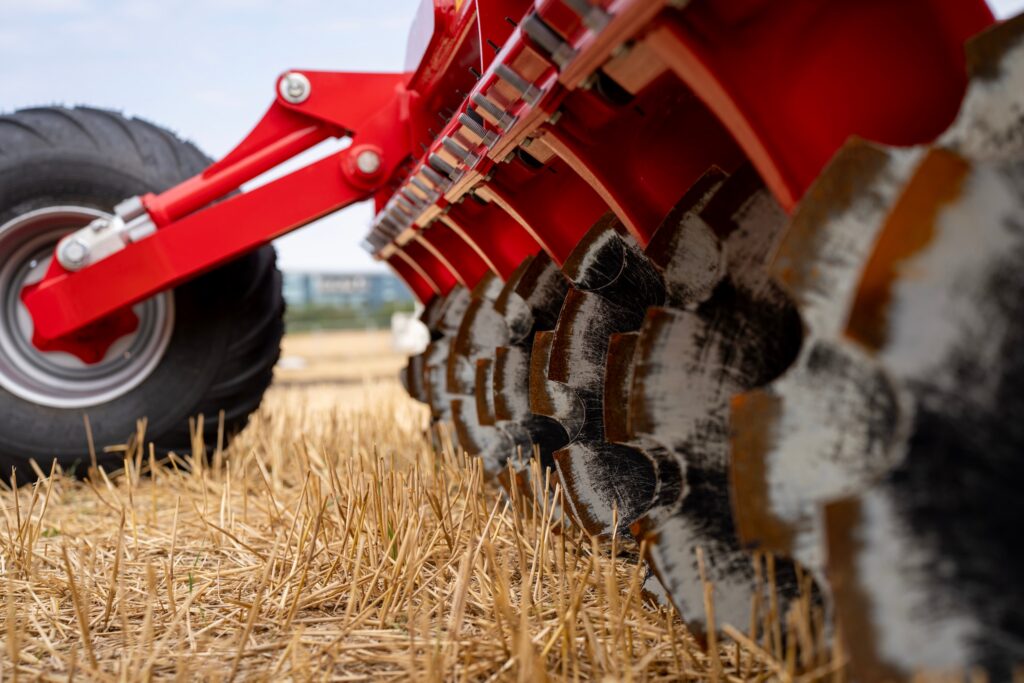
Once you know whether you’re leaning toward a disc harrow or a tiller, a few features make a substantial difference in how well a particular implement will work for your operation.
Disc Harrow Features:
- Blade diameter and spacing: Larger blades cut deeper and roll over obstacles more easily.
- Notched vs smooth blades: Notched blades cut residue and penetrate firm ground. Smooth blades mix and level.
- Gang angle adjustment: More angle means more aggressive cutting. Adjustability lets you match the harrow to the job.
- Frame weight: Heavier frames put more weight on each blade.
- Bearings: Sealed bearings need less maintenance. Greaseable bearings can be serviced over time.
Rotary Tiller Features:
- Gear drive vs chain drive: Gear drive is a popular pick for heavy use, while chain drive models are common and replacement chains are easy to find.
- Driveline protection: A slip clutch absorbs shocks and resets itself. Shear bolts are simpler and need replacing after they break.
- Forward vs reverse rotation: Forward rotation is common and efficient. Reverse rotation helps in sod and hard ground.
- Tine style and parts availability: Make sure replacement tines are easy to find.
- Offset capability: An offset tiller can shift to the side, which helps along fences and garden rows.
Whether you’re deciding between a rotary tiller vs a disc harrow, opting for used equipment can be a solid route to take. On a disc harrow, spin each blade and check for wobble in the bearings, look for blades worn well below their original diameter, and inspect the frame for cracks.
On a tiller, look for leaking gearbox seals, listen for grinding as you turn the rotor by hand, check for bent or missing tines, and look over the PTO shaft, shields, and slip clutch. Asking about maintenance history is always worthwhile, whether you’re buying a used disc harrow or a used tiller.
How Soil Health Impacts The Disc Harrow vs Tiller Decision
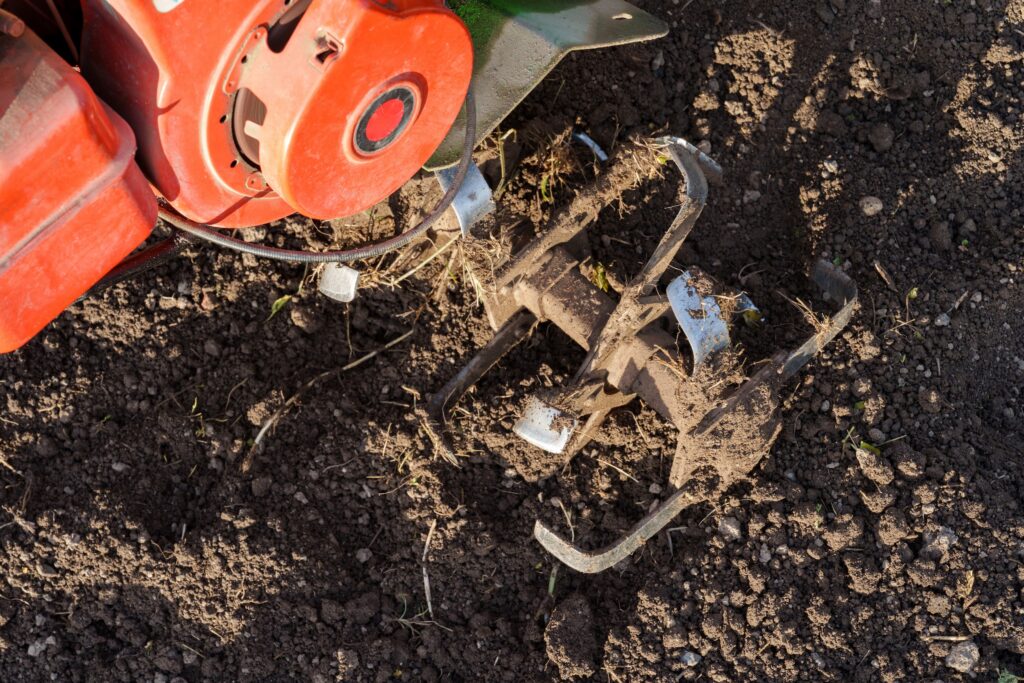
Tillage is a tool, and how you use a disc harrow or tiller matters just as much as which one you choose. Whether you use a disc harrow or a tiller, there are a few best practices that can help protect soil structure:
- Work soil at the right moisture: Waiting for soil to crumble rather than smear protects its structure and saves wear on your equipment.
- Vary your depth: Working at the same depth year after year can build a compacted layer just below it, often called a tillage pan. Changing depth, subsoiling occasionally, or planting deep-rooted cover crops can help break it up.
- Match intensity to the seed: Stop when the seedbed is good enough for what you’re planting. Many forage and food plot seeds do well in a firm, slightly coarse bed.
- Keep some residue where erosion is a concern: Slopes, sandy ground, and windy sites all benefit from surface cover.
- Firm the seedbed after tillage: A cultipacker or roller improves seed-to-soil contact after either a disc harrow or a tiller.
Each of these is an opportunity to get more from your ground over the long run, regardless of whether a disc harrow, a tiller, or both end up in your shed.
What A Good Disc Harrow vs Tiller Match Looks Like
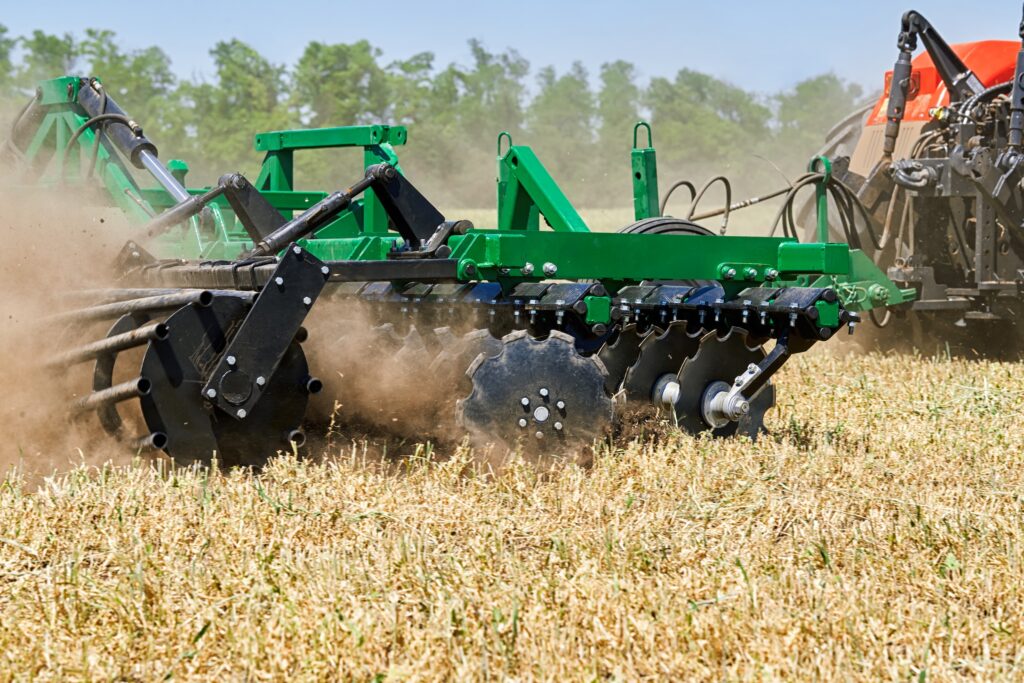
You’ll notice when the tiller or disc harrow fits your operation. The implement is sized to your tractor and runs at the right speed without strain. The seedbed suits what you’re planting, the stand comes up evenly, and you spend fewer hours getting there. Over time, the soil stays in good shape season after season. Whether that ends up being a disc harrow, a tiller, or both, the right match gives you more time for the rest of the work on your property.
Find Or Sell Farm And Ranch Equipment On Hayden Outdoors
Hayden Outdoors connects farmers and ranchers with farm and ranch equipment through its equipment listings and regular equipment auctions, without a middleman taking a cut. Listings change from one auction to the next, so browse what’s currently available and check back often for tractors, tillage tools, and other equipment.
If you’ve upgraded, changed your operation, or have an implement sitting unused, you can list it with Hayden Outdoors and put it in front of buyers who are looking for exactly that kind of equipment.
Browse Farm And Ranch Equipment
How Do Cattle Guards Work And Are These Grates Better Than A Cattle Gate?
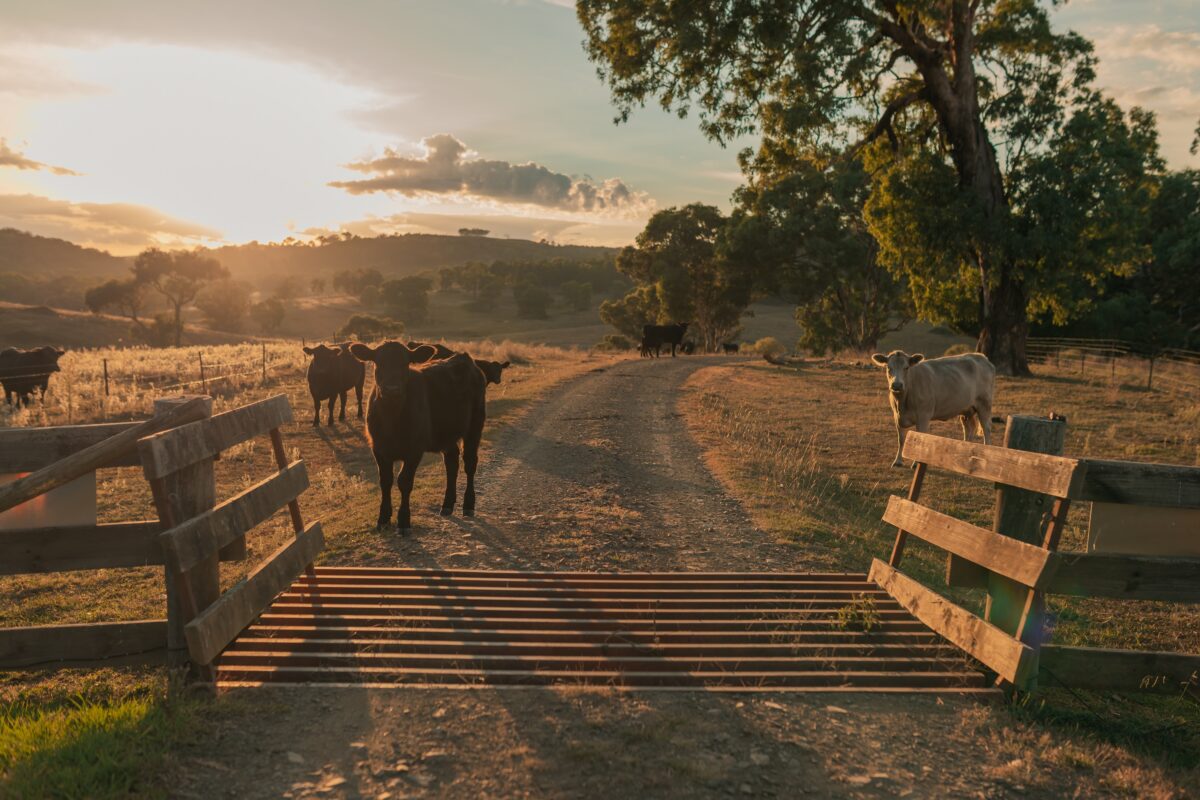
If you’ve ever stopped a loaded truck, climbed out to swing a cattle gate open, pulled through, and climbed back out to latch it behind you, you’ve probably wished for a way through that fence without leaving the cab. How do cattle guards work, and could one save you the trouble? A cattle guard, also called a cattle grate, is a set of rails laid across a shallow pit where a road meets a fence line. Most cattle won’t step onto it, while your pickup, stock trailer, and hay truck can roll right across without stopping.
At Hayden Outdoors, we spend a lot of time on working ranches and with the families who run them, and this question comes up often. So we put together a landowner’s guide that walks through how cattle guards work, what they do well (and what they don’t), why cows tend to respect these grates, and how to decide between a cattle guard and a good old-fashioned cattle gate.
Table Of Contents
How Do Cattle Guards Work?
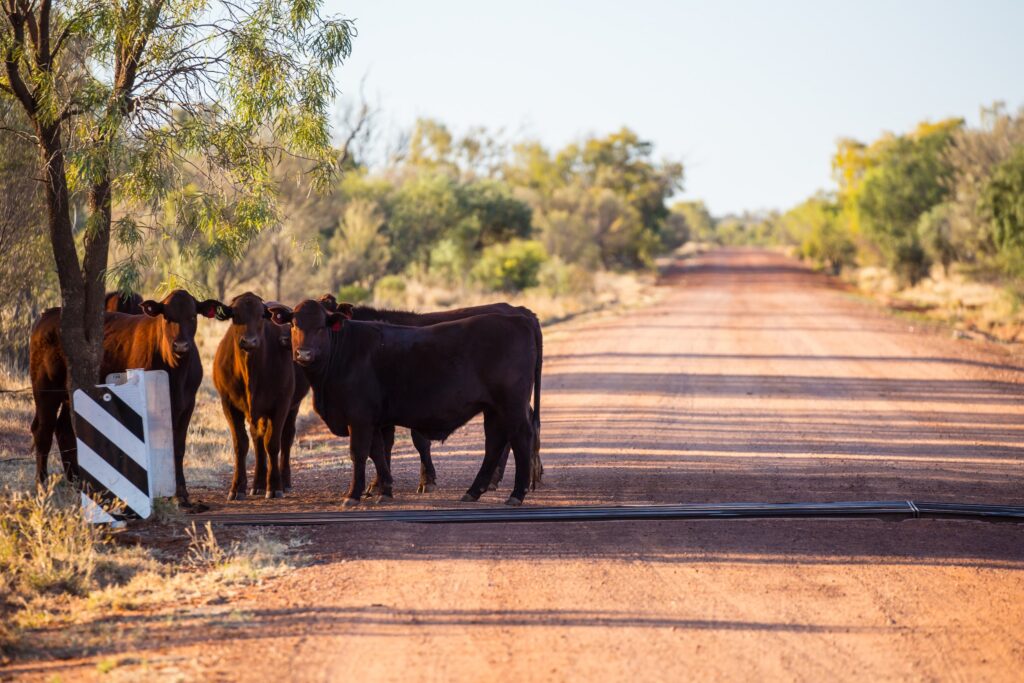
Cattle guards rely on two cow traits: limited depth perception and a flat hoof that needs solid footing. A row of rails runs across the road, perpendicular to traffic, with open gaps between them and a shallow pit underneath. To a cow standing at the edge, that pattern looks like uncertain footing over a drop, so she usually turns back and looks for grass somewhere else. To a tire, it’s just a slightly rumbly stretch of road.
The idea’s been around for a long time. Kansas author James F. Hoy wrote an entire book on the subject, and the University Press of Kansas notes that it traces the first U.S. cattle guard patent back to 1837. Early versions were simply poles or logs laid over a ditch, and they held cattle back in much the same way that modern steel guards do.
Ranchers kept refining the design, and today you’ll find everything from simple pipe grids on private lanes to heavy precast units on state highways.
What Exactly Is A Cattle Guard And How Do These Grates Work Without Moving Parts?
What is a cattle guard, in plain terms? It’s a grid of steel pipes, rails, or concrete ridges set over a shallow pit or raised frame where a road crosses a fence line. It lets vehicles pass freely while discouraging cattle from crossing. Depending on where you live, you may hear it called a cattle grate, cattle grid, stock guard, or a Texas gate.
Most modern cattle guards or grates are built from steel pipe or rail on a concrete or steel foundation, and plenty of ranchers go with precast concrete bases that drop into place without pouring on site.
Part of the appeal of the cattle grate is its simplicity. A cattle guard has no hinges, latches, chains, or springs. And it’s not like a gate that can be accidentally left open when you’re in a hurry to get off the ranch. Because there aren’t any moving parts on a cattle grate, there’s very little to wear out, which is why many ranchers call a cattle guard the lowest-maintenance “gate” on the place.
That said, there is a little upkeep involved. You’ll still want to clean out the pit now and then, touch up paint on steel rails, and keep an eye on the wings and fence ties. Compared with a swinging cattle gate that sags, drags, and eventually needs new hinges, most ranchers find the maintenance for a cattle guard to be quite light.
Why A Cattle Gate Isn’t Always The Right Choice For A Working Ranch
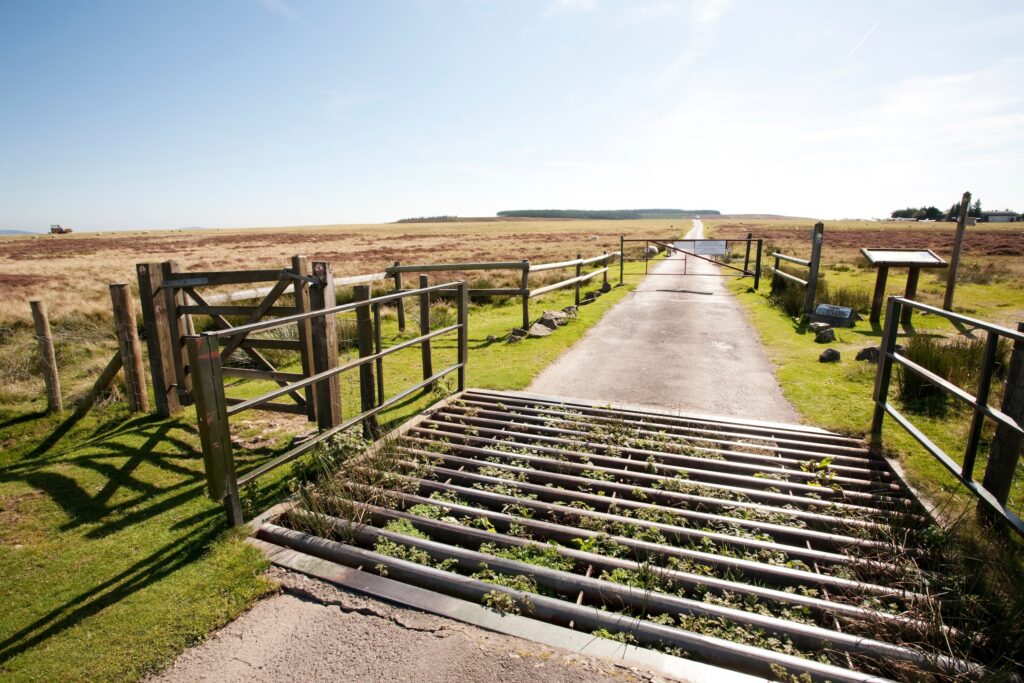
A cattle gate does its job well when everyone who uses it actually closes it. The nuisance is the time it takes (and what happens when someone forgets to close the gate after themselves).
If each gate stop takes about two minutes, and you pass through ten times a day, that’s about 120 hours a year spent opening and closing one cattle gate. Add a second gate, a hired hand, a feed truck, and a hunting lease, and those minutes add up. In winter, when you’re breaking ice and feeding in the wind, these gate stops feel even more challenging.
Then there’s the cattle gate that gets left open. Ranch visitors who don’t regularly handle livestock can easily forget, and even careful hands can slip up during a busy week on the ranch. Cattle guards work as an excellent solution for these types of situations.
The Way It Works: How Do Cows Know Not To Cross Cattle Guards?
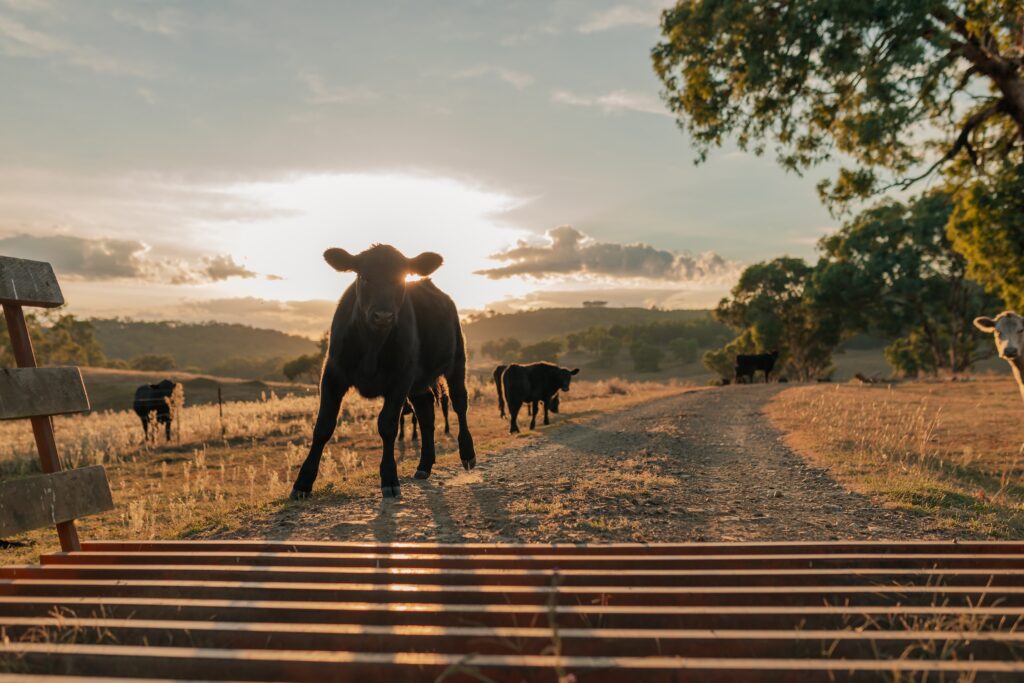
Most cattle respect a guard the first time they see one, without really needing any training. But how exactly do cattle guards work on a cow that’s never seen one? Three things are at play: the cow’s eyesight, footing, and experience.
The Role Of Cattle Eyesight In Whether The Cattle Grates Work
Cattle are prey animals, and their eyes are built to spot movement from almost any direction. According to the Penn State Extension, their wide-set eyes give them close to 300 degrees of vision, but their depth perception is poor. Cattle may treat a shallow or shaded spot as a pit they can’t cross.
The University of Wisconsin Extension explains that because cattle rely mostly on vision from one eye at a time, with only a narrow band of binocular vision straight ahead, they have a hard time judging depth and often balk at shadows. The contrast between the bright rails of a cattle grate and the dark gaps below looks like a hole with no clear bottom, and most cows would rather not find out how deep it is.
You can often see this same thing play out when a cow stops when it stumbles across a puddle or a shadow. Handling specialists design corrals with this in mind, and a cattle guard uses the same trait to hold cattle back with nothing more than steel rails and open space.
How Are Cattle Hooves Impacted?
A cow’s eyesight limitations are what cause it to hesitate when it stumbles upon a cattle guard. But the unstable footing is the added layer that further deters cattle from crossing the grate.
A cow’s hooves are fairly flat, and the round rails on a cattle grate give that hoof very little to grip. If the cow does test it, their hoof tends to rock forward or back, and it can feel right away that the footing isn’t stable. Most cattle back off after that first try, having decided that the grate is an unstable route.
But this begs the question: if a cow does decide to traverse the grate, can the cattle guard hurt the cow? A guard that is built to a good design, sized correctly, and kept clean typically doesn’t cause trouble for cattle, because most animals turn away before testing their weight on it (that said, injury can in some instances happen, but we’ll get into that later).
Problems tend to show up with guards that are too short, have worn or broken rails, or have a pit packed with dirt that lets a hoof sink partway in. That’s why a good design and regular upkeep are important parts of having a cattle guard on your property.
The Long-Term Picture: How Do Cattle Guards Work Over Time?
Do cattle guards work for a lifetime? Mostly, though, how long they last really depends on how you build and care for them. Cattle are curious and, given enough reason, persistent. And there are a few elements that can cause your cows to test the boundaries:
- Short guards invite jumping: A big, athletic bull under pressure can clear a short guard, so length in the direction of travel matters.
- Filled pits look like solid ground: When mud, gravel, or snow fills in the gaps of the grate, the visual trick fades, and the footing firms up, making crossing the cattle guard more enticing.
- Hunger and herd pressure: Cattle pushed hard from behind (or staring at green grass on the other side of a dry pasture) may take chances they’d normally skip.
- Leaders teaching followers: If one cow figures out a way across, others may follow her lead.
You may also have seen painted lines on highways that mimic cattle guards. How do cattle grates work when they’re only paint on asphalt? Many transportation departments and ranchers have tried them. And painted stripes can work for a while, especially with cattle that have already learned how real guards feel underfoot. With these types of guards, many cows do hold off at first.
Over time, though, many cattle test the stripes and discover the road is flat. The U.S. Forest Service even suggests bold painted stripes as a backup near recreation sites, noting that some horses and mules hesitate to cross them, but it treats them as a temporary deterrent rather than a replacement for a real barrier. That’s why a physical guard with a clean pit tends to be a better long-term solution.
How Do Cattle Guards Work For And Impact Horses And Wildlife?
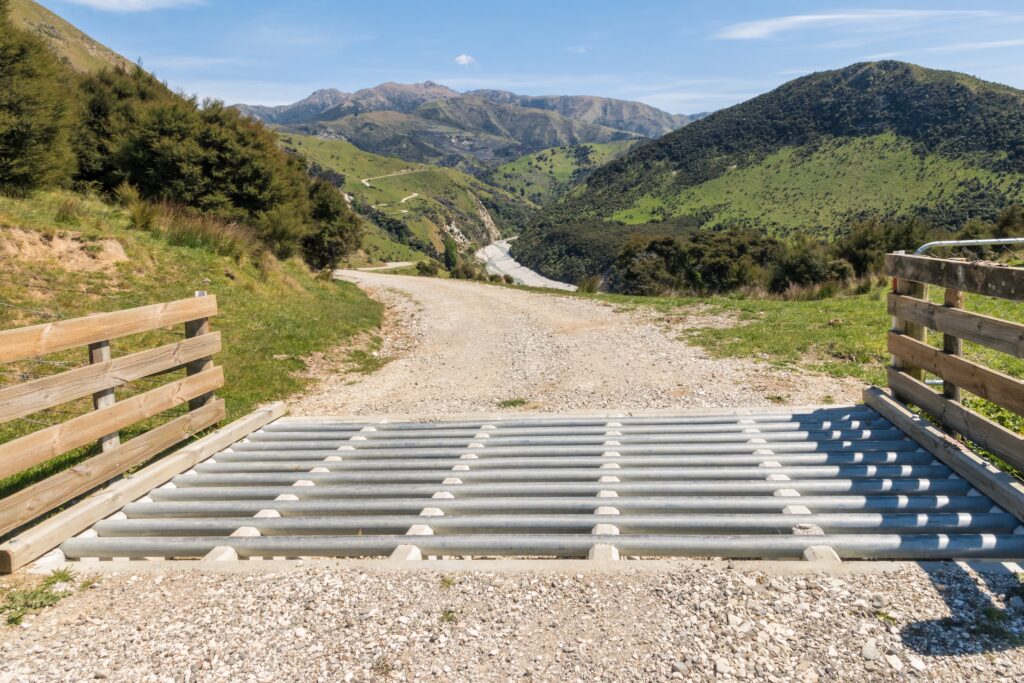
Plenty of ranches have horses, sheep, or goats alongside their herd of cattle, and many ranches share ground with wildlife. So, how well do cattle guards work on other animals? Each one responds a little differently, and a few are better served by their own crossing.
Horses and mules: The Forest Service’s Equestrian Design Guidebook says cattle guards are dangerous for horses and mules, whether they’re loose or under saddle, because a horse may try to walk or jump across and can trap a hoof or leg between the rails. Horses have smaller hooves and more slender lower legs than cattle, and a trapped horse that panics can do serious damage. If horses share a pasture served by a cattle guard, many ranchers will add a bypass gate right beside it so riders and loose horses have a safe way through.
Sheep and goats: Small, sure-footed animals may pick their way across the rails of a cattle grate, and goats in particular seem to treat the guard as a puzzle rather than a barrier. A cattle gate or tighter fencing usually does a better job for small ruminants.
Deer and elk: How well do cattle guards work on deer and elk? Not very. Both can clear most standard guards with ease. If keeping deer off a garden or out of a hay yard is the goal, you’ll likely need taller fencing along with a longer guard.
Small wildlife in the pit: A research note in California Fish and Wildlife Journal found that the pit under a cattle guard can act like a pitfall trap for rodents, amphibians, and reptiles that fall in and can’t climb out. The authors describe designs with open sides or drain pipes that let small animals walk out, and they encourage retrofitting older cattle guards where protected species live. A simple escape ramp in a corner of the pit beneath your cattle grate is an easy weekend project that helps both wildlife and the cleanliness of your guard, and it doesn’t change how cattle guards work on cows.
So how do cattle guards work in a mixed operation? Quite well, as long as you plan for the animals that shouldn’t be on them.
Cattle Guards vs Cattle Gate: What Ranchers Should Know
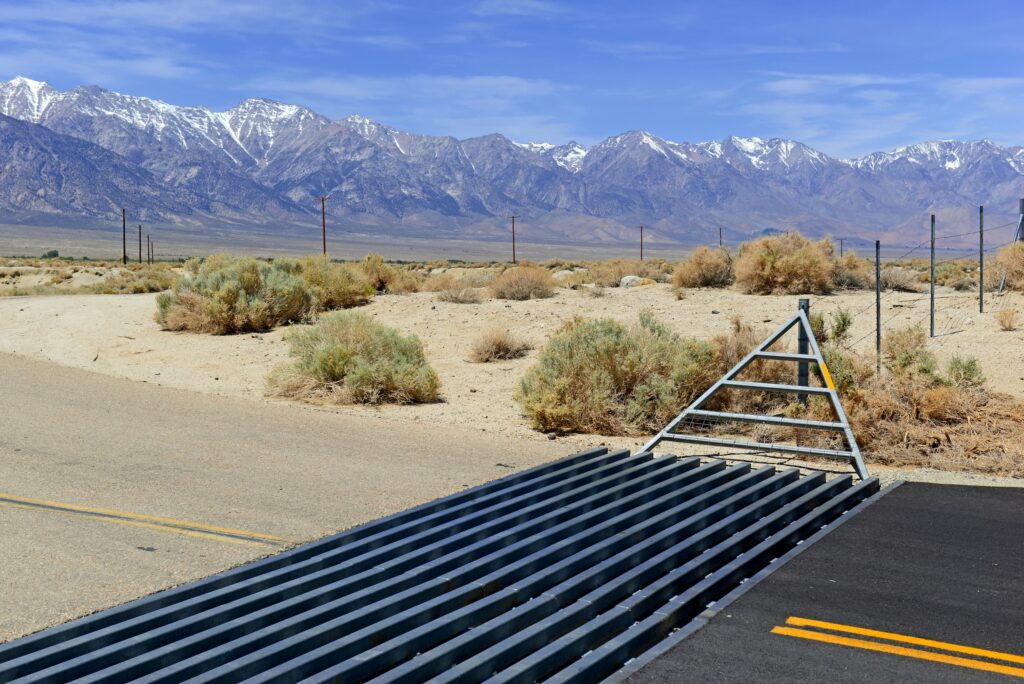
So which is the right choice, the guard or the gate? The answer really depends on your traffic, your animals, and your budget. Regardless of whether you choose a cattle guard or a cattle gate, both options have their particular strengths on a ranching operation. Let’s break it down.
| Factor |
Cattle Guard |
Cattle Gate |
| Upfront cost |
Higher, especially with a concrete foundation |
Lower for most standard gates |
| Installation |
Excavation, foundation, wings, and fence ties |
Posts, hinges, and a latch |
| Daily use |
Drive straight through |
Stop, open, pull through, close |
| Upkeep |
Pit cleanout, paint, periodic inspection |
Hinges, latches, sagging and dragging |
| Horses |
Needs a bypass gate |
Works well |
| Sheep and goats |
Often unreliable |
Works well |
| Human error |
Nothing to leave open |
Only as good as the last person through |
How Do Cattle Guards Work Better Than A Cattle Gate For Daily Traffic?
If the entrance to your ranch receives a good bit of traffic, a cattle guard tends to be a solid option. Main ranch entrances, the road to the calving barn, feedlot lanes, and any crossing used by employees, contractors, or hunters are all good candidates for a grate.
How much do cattle guards cost, and does the math work out? Prices vary a lot depending on width, load rating, material, and whether you buy new or used, so it’s smart to get quotes from a few fabricators and check the used market before you commit.
If the cattle guard is going on a county road, local fees may apply too. For example, Union County, New Mexico lists a $50 administration fee and a $300 installation fee, and the applicant supplies the guard. But even with those additional fees, when many ranchers compare those numbers to the hours they’d spend at a cattle gate opening and closing up behind them, a cattle guard at a busy entry point may be worth the investment.
With that said, there’s still a place for the traditional cattle gate. Low-traffic pasture crossings, horse operations, leased ground you may not farm next year, and spots where you need to sort or move cattle all tend to favor a cattle gate over a guard. Many ranchers use both, pairing a cattle guard with a walk-through or vehicle gate beside it, so they have options for horses, cattle drives, and oversized equipment.
How Load Capacity Factors Into What Type Of Cattle Guard You Should Install
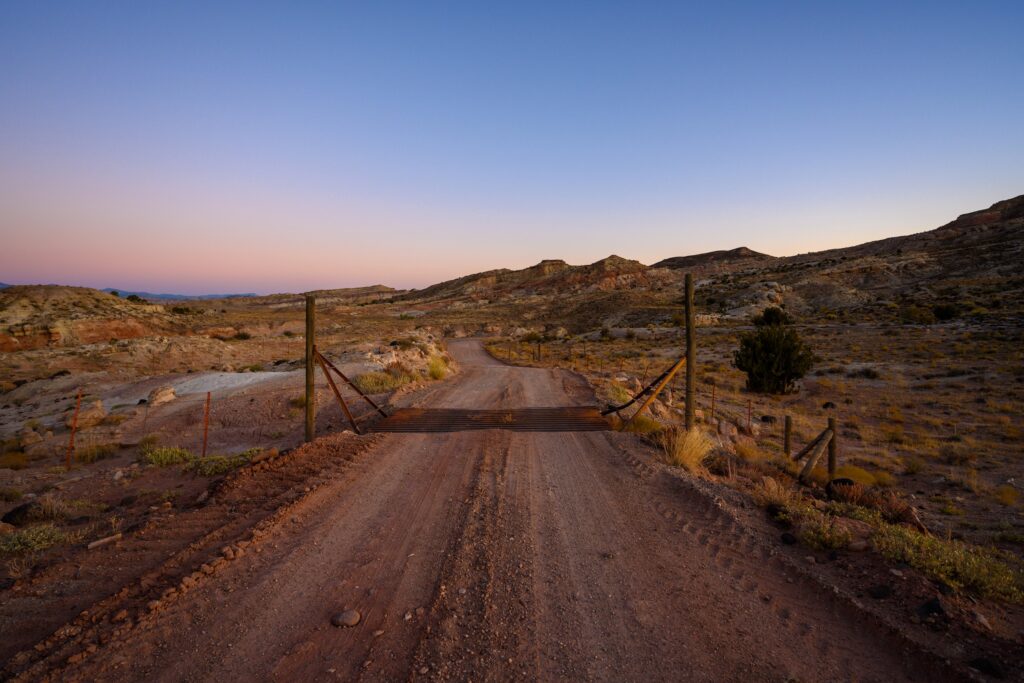
A cattle guard is part fence and part bridge, so the weight it can hold matters just as much as its ability to hold cattle back. When you size one, think about the heaviest vehicle that’ll cross it: a loaded semi hauling calves, a grain truck at harvest, a fuel truck, or a fire engine responding to a grass fire.
Many public agencies spell out load requirements. Fremont County, Colorado’s cattle guard policy requires cattle guards on county roads to meet or exceed an HS20 rating with a concrete base, and state departments of transportation, such as Montana DOT, publish standard drawings built around HS20 highway loading. On a private lane that only sees pickups and tractors, you may not need a highway-rated unit, but a manufacturer can help you match the rating to what type of weight your cattle guard needs to bear.
Material use is an important consideration as well. A steel cattle grate is strong and easy to transport and set. Concrete guards resist rust and can use deep beams that give a stuck hoof room to slide back out. Round-top rails do the most to unsettle a hoof, while flat-top rails ride more smoothly at speed. You’ll want to select the rail shape based on whether ride quality or deterrence matters more at that crossing.
Pro Tip: Make sure you always check your local requirements and choose a rating based on the heaviest expected vehicle to cross your cattle guard.
Is It Worth Considering A Cattle Grate Without A Pit?
Not every piece of land is suitable for digging, and in those cases a cattle guard without a pit is worth considering. But how do cattle grates work without a pit underneath them? A flat or box-style cattle grate sits on top of the ground on a raised frame, often with skirts around the sides to keep dirt and gravel from creeping underneath. Some are light enough to move between fence openings, which works well on rented ground or seasonal pastures.
The tradeoff here is depth. A guard over a true pit or a tall foundation gives cattle a more convincing gap to look at, and many ranchers find cattle grow more willing to test guards set close to ground level. Do flat cattle guards work as well as ones set over a pit? Usually not quite as well, though how your herd responds in the first few weeks can tell you a lot. If you go with an above-ground design, choose a generous length, keep the underside clean, and watch how your herd responds during those first few weeks.
Are There Best Practices On How Wide And Long A Cattle Guard Should Be?
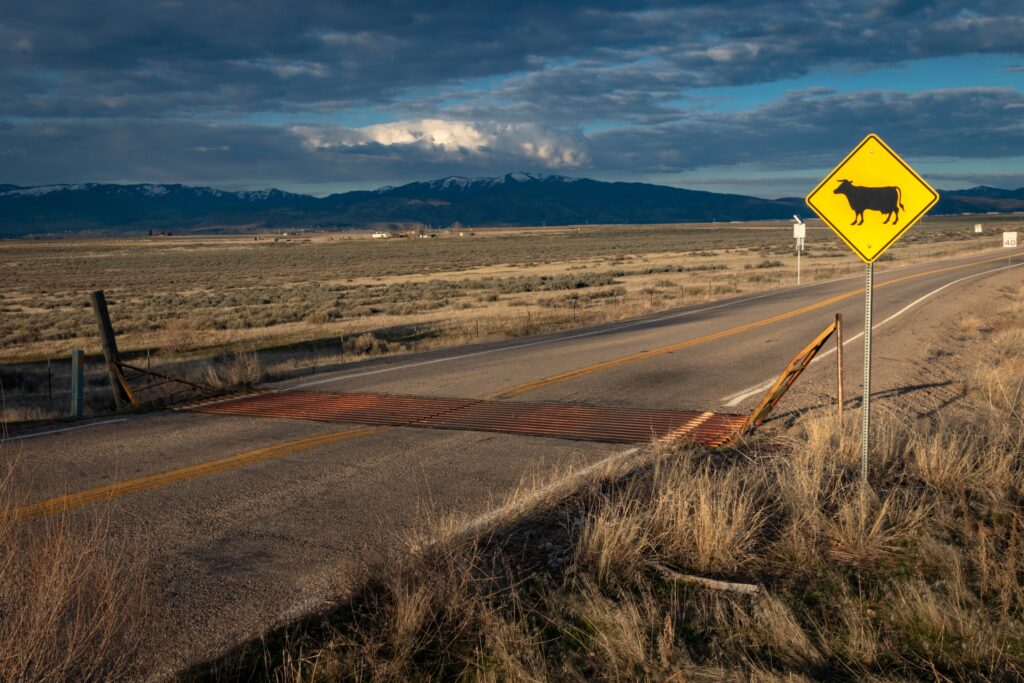
Yes, and they depend on who and what will cross the grate. There’s no single national size, but agency standards and extension guidance provide a few rules of thumb. Width decides which vehicles can cross, and length decides whether or not cattle attempt to jump or cross.
Width runs across the road, side to side. You’ll want to choose a size that accommodates your widest regular vehicle or implement, with some room to spare. Private ranch lanes often use guards in the 12 to 16 foot range, while county roads may require more. Powder River County, Montana sets a 24-foot minimum for cattle guards on its roads, for example, and asks landowners to install a bypass gate of at least 16 feet on or next to the county right-of-way. At the other end of the scale, the Forest Service’s trail cattle guard report describes guards just 4 to 5 feet wide and notes that widths of 52 to 60 inches will let most ATVs squeeze through.
Length runs in the direction of travel. This is what deters cattle from jumping. How long do cattle guards need to be to work well? Many highway standards land around 8 feet. The British Columbia Ministry of Transportation, for example, specifies a standard length of 2,500 millimeters, a little over 8 feet. The Forest Service trail guards ranged from about 5.6 to 13 feet long, and the report notes that cattle avoided them even when bunched up. If you run big, athletic bulls or cattle that get pushed hard at the crossing, leaning toward the longer end is often going to be the best move.
Rail spacing and pipe size vary by manufacturer and by the cattle you have on your ranch. On any cattle grate, the goal is gaps that look uninviting and don’t give a hoof comfortable footing, paired with rails strong enough for your loads. Ask your supplier what spacing their cattle guard design uses and what livestock it was built for.
Due Diligence Before The Installation
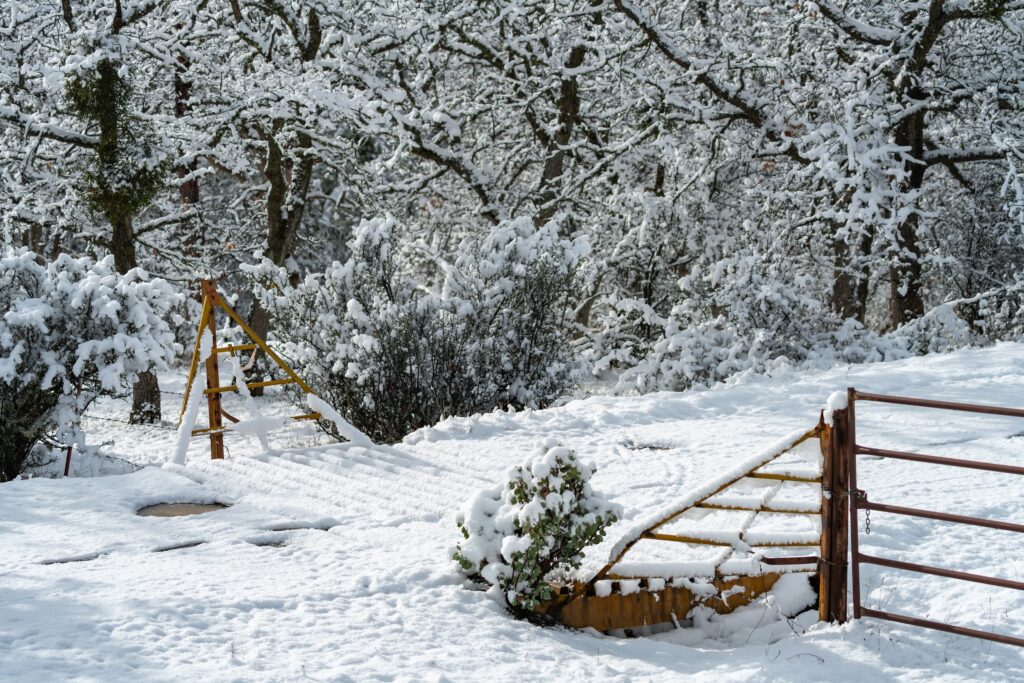
Getting the guard in the ground is only part of the job. Where you put it, how you tie it into the fence, and how you care for it all affect how well the cattle guard holds up over time.
You’ll likely need to start with paperwork if your cattle guard will touch a public road or shared access. Different counties handle this in different ways. For example, in Grand County, Colorado, a cattle guard application goes to the Board of County Commissioners for approval, and the applicant covers the cost of the guard and blocks.
On grazing allotments or roads crossing Bureau of Land Management or Forest Service ground, you’ll want to talk with the local office before you order anything for your cattle guard, since they often have their own specifications.
Working With Wing Fences
Cattle typically won’t cross a well-built guard, but they’ll walk around one if the ends are open. Wings are short panels or fence sections that angle from each end of the guard to the nearest fence posts, closing the gap. The Forest Service lists suitable wings or side barriers among the must-haves for a trail guard that works.
Keep the wings clean and simple. The Forest Service’s equestrian guide shows how clutter and barbed wire in the angled wings can create hazards for everyone, especially horses, so smooth panels or well-built fence ties are usually a better choice.
How Cattle Guards Are Impacted By The Snow And Mud
How well do cattle guards work in winter? This really depends mostly on keeping the pit clear. Mud, gravel, and blowing snow can pack the pit until it forms a bridge, and cattle notice.
A few things help:
- Choose a cattle grate with a cleanout section or easy access to the pit.
- Set the guard slightly higher than the surrounding road so water drains away.
- Check it after big storms and during spring thaw.
- Clear the grate before moving cattle nearby, especially in winter.
What Kind Of Issues Can Arise When You Have A Cattle Guard?
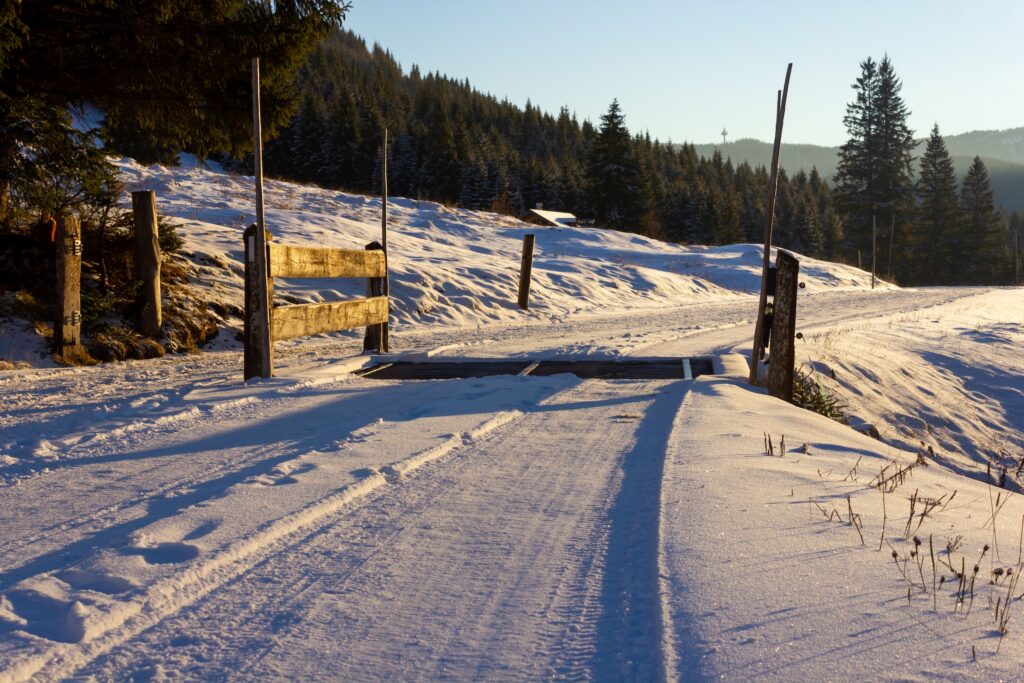
Many of the problems ranchers have with their cattle guards can be traced back to how the grate was sized and set. A cattle guard that’s too short may get jumped. One rated too light can bend under a loaded truck. Missing wings let cattle walk around the ends of the cattle guard, and a packed pit turns the whole thing into a bridge. In a horse pasture without a bypass gate, the risk of injury goes up.
This is why you’ll want to size the guard for your animals and your heaviest load, add wings and a bypass gate, and give the pit some attention a few times a year.
Cattle can get hurt on a guard too, though it happens less often with one that’s built well and properly maintained. Most injuries come when an animal tries to cross anyway, such as a spooked cow, a calf trailing close behind its mother, or cattle crowded hard from behind, and a hoof slips down between the rails.
A few simple habits lower those odds. Keep rail spacing to the manufacturer’s spec, choose a pit deep enough that a slipped hoof can pull back out, and clear the guard after storms. During a gather, move cattle through a gate instead of pushing them toward the guard, and give pairs a gate to use so calves aren’t tempted to follow their mothers across.
Find The Equipment You Need To Keep Your Ranch Running Smoothly
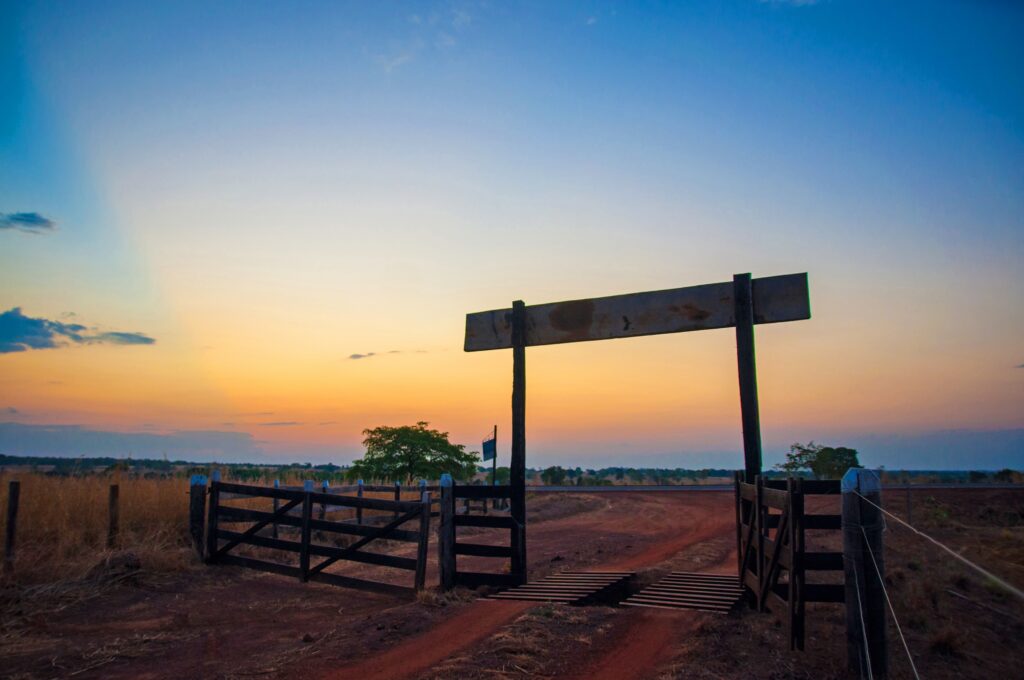
With the right cattle guard in place, you pull up to your main entrance with a load of hay, roll straight past where the cattle gate used to be, and see the herd in the mirror still grazing right where you left them. Because of this, plenty of ranchers call a cattle guard one of the best upgrades they’ve made. It’s part of what makes for a smooth ranching operation.
At Hayden Outdoors, we know ranch life because we live it and work alongside the people who make it happen every day. When you’re ready to shop, browse the Hayden Outdoors equipment marketplace for ranching gear from sellers across the country. If you’ve got equipment sitting idle after an upgrade, you can list it there too and help a neighbor find exactly what they need to keep their ranch running smoothly.
Browse Farm And Ranch Equipment
The Farmer’s Guide To Agricultural Irrigation Systems: How To Make The Right Choice
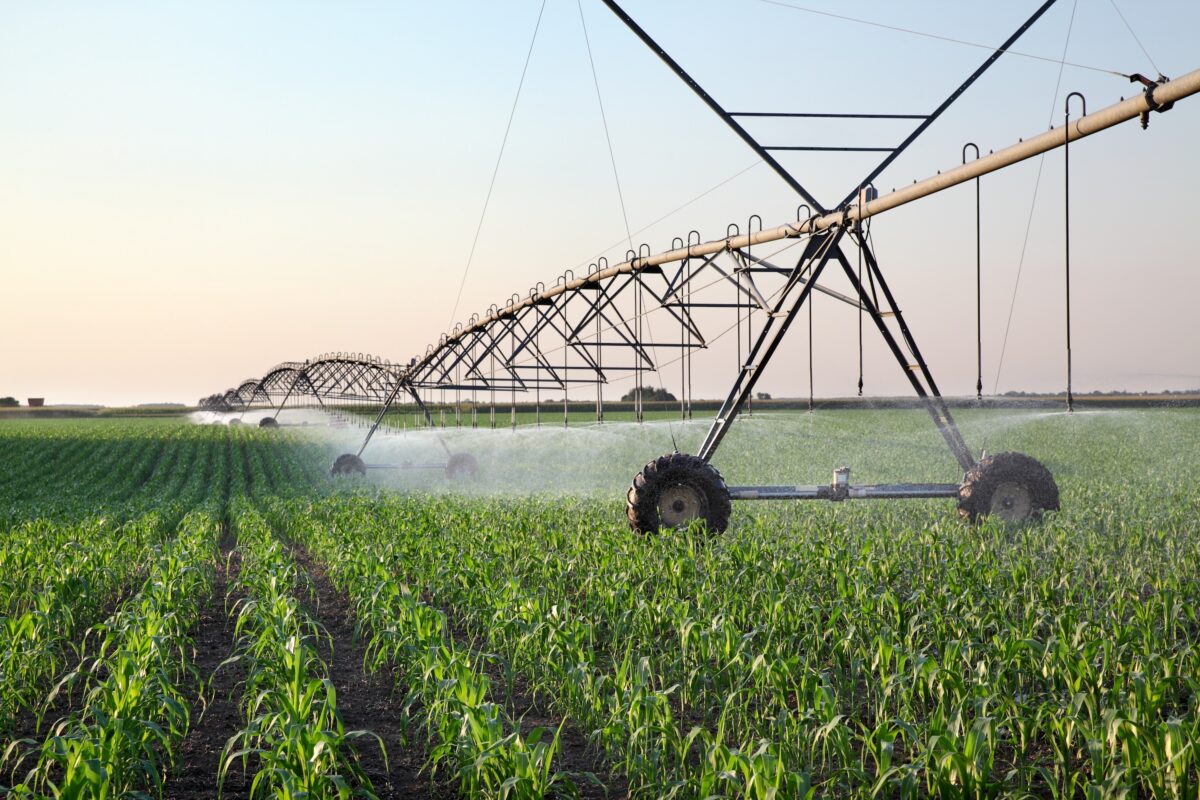
Land has a way of teaching patience. Anyone who’s worked a piece of ground for a season, or for three generations, knows that water is the thread running through every decision a farm makes. Long before the first seed goes into the soil, the question of which agricultural irrigation systems will carry that ground through the season shapes what can be grown, how much labor it’ll demand, and what kind of return the land can offer back.
Choosing among agricultural irrigation systems is one of the most important decisions a farmer or landowner will make, and there are several factors at play that can impact the decision. Between drip lines, pivots, sprinklers, and flood systems, there’s no shortage of irrigation options, and every farm’s mix of crops, soil, terrain, and water source pulls the decision in a slightly different direction.
This guide was built for the people who actually work the ground: local farmers, ranchers, and landowners managing anywhere from a few acres to a few hundred. Whether you’re installing your first agricultural irrigation system, replacing one that’s served its purpose, or trying to make sense of a system you inherited when you bought your property, the goal here is the same: to help you choose an agricultural irrigation system that fits your land, your crops, and your way of farming, so that the water you have goes where it’s needed most.
Table Of Contents
The Different Types Of Agricultural Irrigation Systems
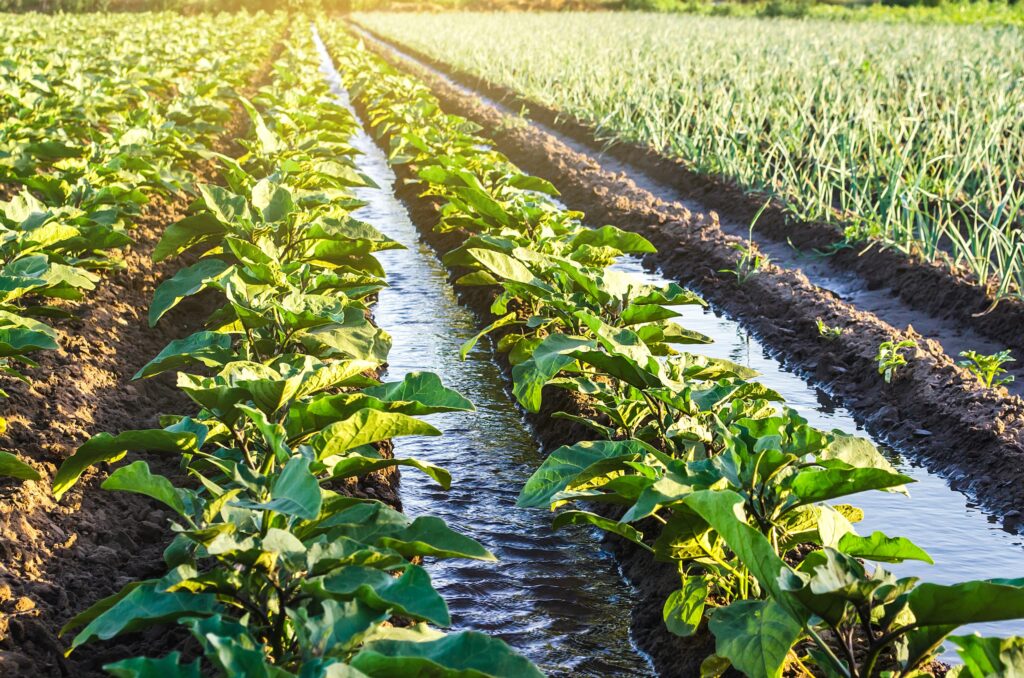
Every generation of farmers has worked out its own relationship with water, and today’s agricultural irrigation systems reflect decades of refinement built on much older methods. Understanding the main types of agriculture irrigation systems is the starting point for everything else in this guide.
- Surface Irrigation: This is one of the oldest agricultural irrigation systems still in wide use, and it relies on gravity to move water across a field. Flood irrigation floods the field directly, while furrow irrigation channels water through shallow trenches between crop rows. Surface systems tend to have lower upfront costs and simpler equipment, which is part of why they remain a common form of irrigation on pasture, forage crops, and row crops in areas where fields are naturally level or graded for water flow. The tradeoff is less precise control over how much water reaches each plant.
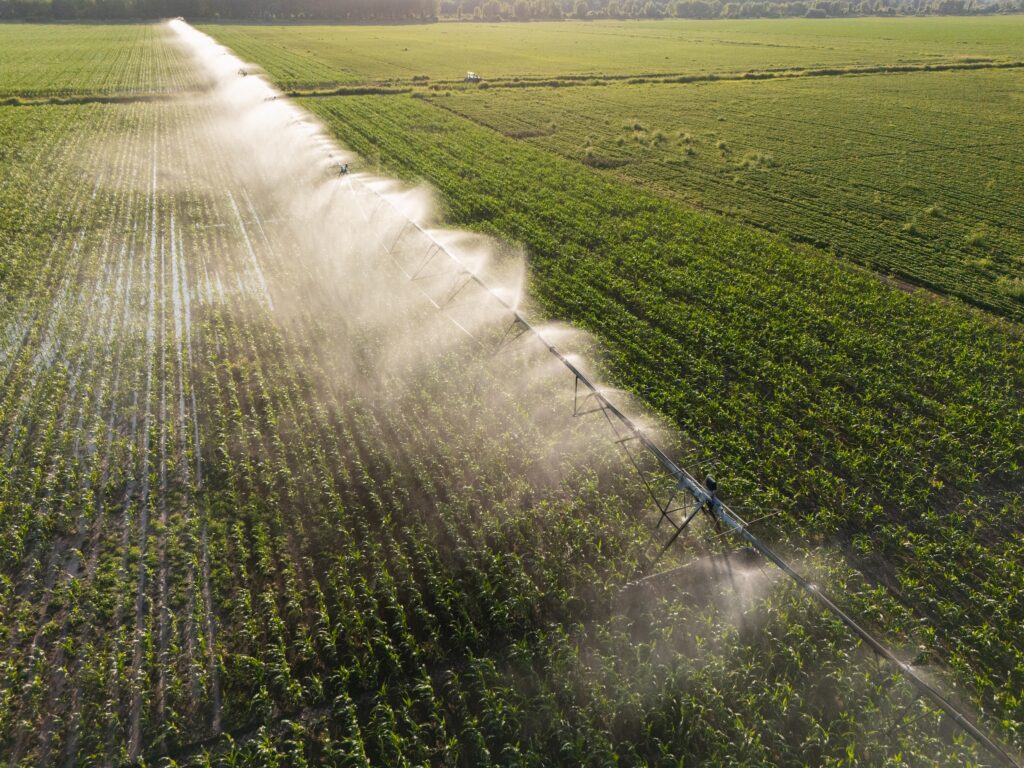
- Sprinkler Irrigation: This is among the more widely used agricultural irrigation systems, and it applies water through a network of pipes and nozzles, spraying it across the field in a pattern that mimics rainfall. Center pivot and lateral move systems fall into this category and are a familiar sight across the West and Midwest, covering large, uniform areas with relatively even coverage. Solid set and portable sprinkler setups offer more flexibility for smaller or irregularly shaped fields.
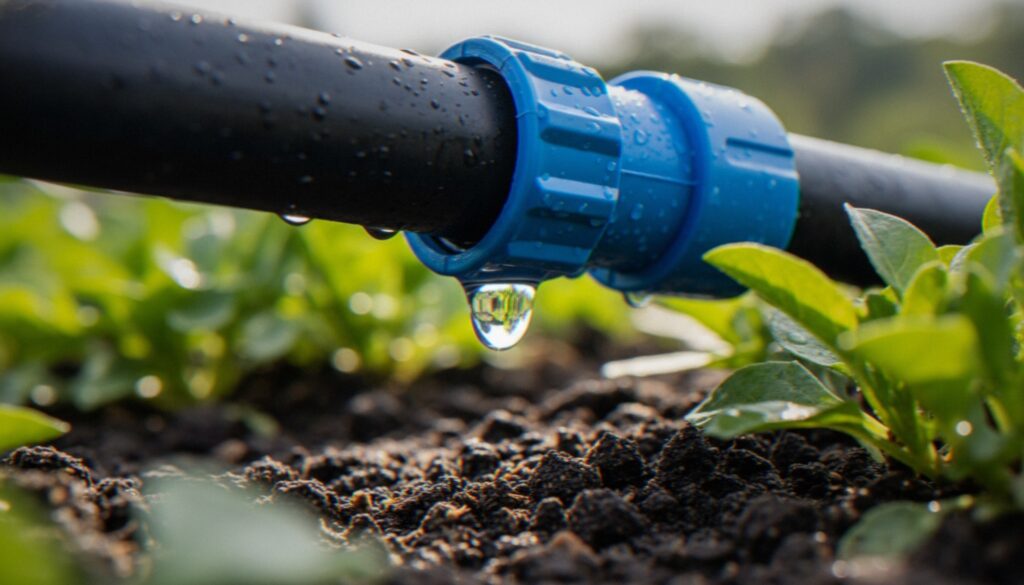
- Drip Irrigation: This is also known as agri drip irrigation, and it uses a network of tubes and emitters to send water directly to a plant’s roots. Because water is applied slowly and precisely, agri drip irrigation systems are known for using water efficiently and reducing the amount lost to evaporation or runoff. This makes drip a popular agricultural irrigation system for row crops, orchards, vineyards, and vegetable operations where water use and crop uniformity matter.
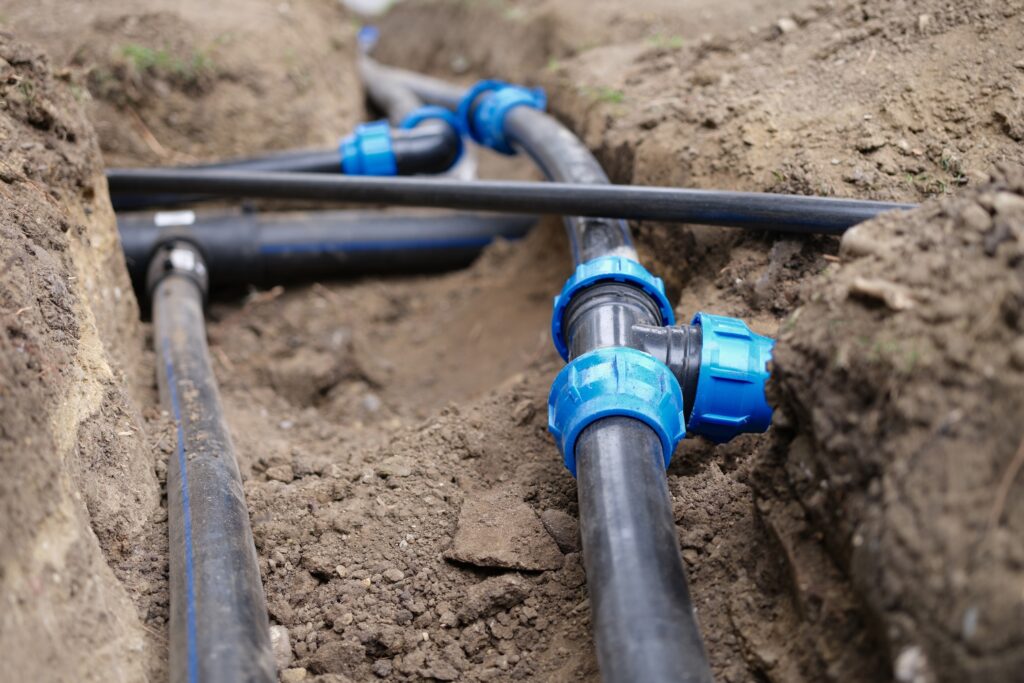
- Subsurface Drip Irrigation: This system takes the same principle below the surface, burying the drip lines beneath the soil so water reaches the roots directly while further reducing evaporation and weed growth. It requires a more involved installation but can pay off over time on farms where water conservation is a priority, which is part of why it has become one of the more discussed agricultural irrigation systems in drier growing regions.
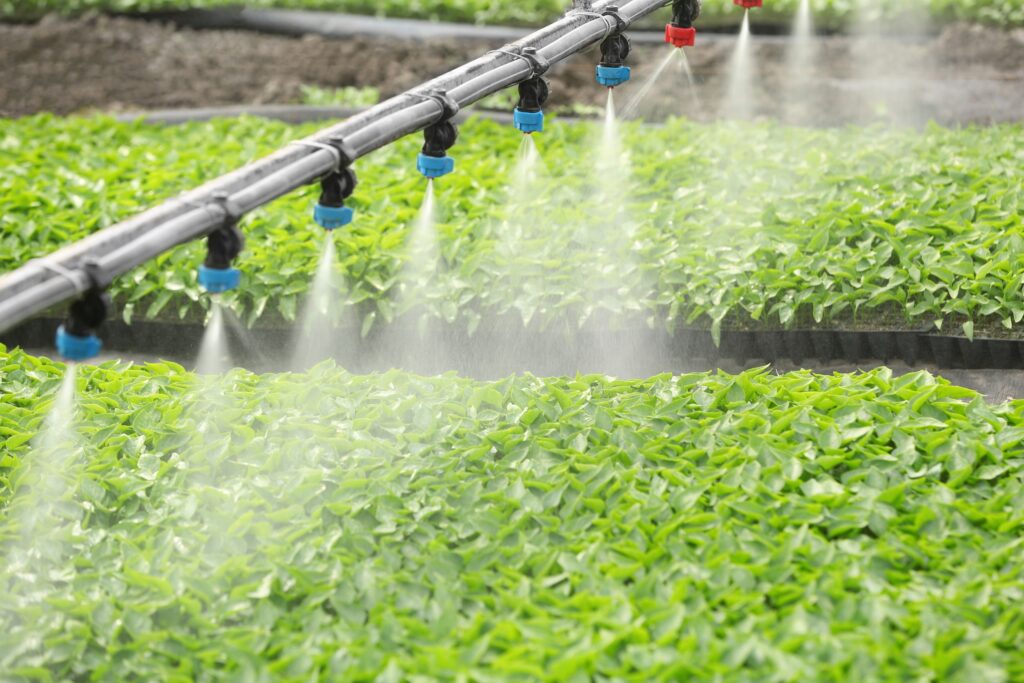
- Micro-sprinkler and Micro-irrigation Systems: These sit between drip and traditional agricultural sprinklers, delivering a wider spray pattern than drip emitters while still operating at low pressure. These are often used in orchards and specialty crop operations where a broader wetting pattern benefits the root system.
Most working farms end up using more than one of these approaches, pairing different agricultural irrigation systems to different fields or crops based on what each area needs.
There’s no universal answer here, only the right fit for your particular ground, and understanding these agriculture irrigation system basics is the foundation for every decision covered in the rest of this guide.
Factors That Determine Which Agricultural Irrigation System Is Right For Your Farm And Crops
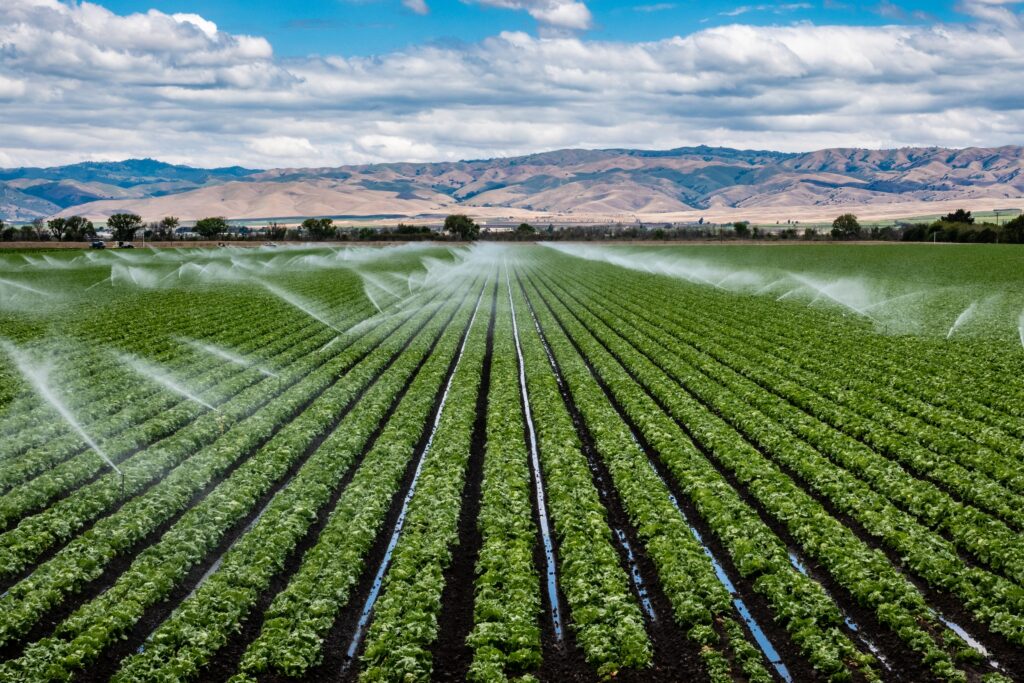
Before getting into the details, it helps to see the full picture of what goes into this decision. The sections that follow will expand on each of these factors in turn, but here is the short list of what typically shapes the choice of an agricultural irrigation system:
- The type of crops you’re growing and their specific water needs
- Your region’s climate, average rainfall, and seasonal water availability
- The terrain and slope of your fields
- Your soil type and how well it drains or holds moisture
- The overall size of your farm or the acreage you intend to irrigate
- Your water source and any water rights or permitting requirements tied to it
- The efficiency of water delivery you’re hoping to achieve
- Upfront material costs, ongoing maintenance, and labor requirements
- Whether you’re installing a new agricultural irrigation system or working with one already in place
Every farm weighs these factors differently when narrowing down its options for crop irrigation systems. A vineyard on a hillside in a dry climate is going to approach this decision differently than a row crop operation on flat, well-irrigated bottomland. That’s the nature of working with land that has its own character. The rest of this guide walks through each factor so you can weigh them against your own farming operation to identify the right agricultural irrigation system.
How Crop Type Can Impact Which Irrigation Systems Are A Good Fit
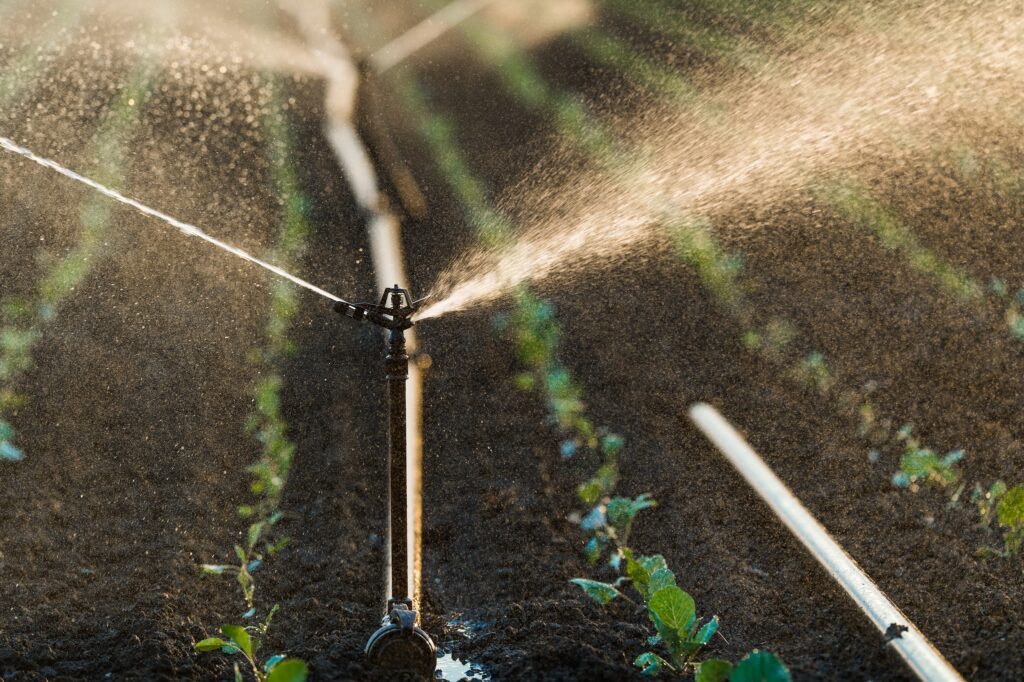
Crops have always dictated the systems and rhythm of farm work, and irrigation is no exception. The water demands of a given plant, along with its root structure, spacing, and growth cycle, all play a role in which agricultural irrigation systems make sense, and this is where crop irrigation systems really start to diverge from one operation to the next.
Row crops such as corn, soybeans, and wheat are frequently irrigated with center pivot or lateral move sprinkler systems, which can cover large acreages efficiently and are well suited to crops planted in uniform rows across open fields.
Orchards, vineyards, and other perennial crops tend to favor drip or micro-sprinkler irrigation systems, since these deliver water precisely to each tree or vine without wasting it on the open ground between plants.
Vegetable operations, particularly those growing crops with shallow root systems, often benefit from agri drip irrigation because it keeps moisture consistent at the root zone without oversaturating the surrounding soil.
Pasture and forage crops are sometimes irrigated with flood or sprinkler systems, since the goal is broad, even coverage across a large area rather than precision at the level of an individual plant.
Specialty and high-value crops, on the other hand, often justify the higher upfront investment of agri drip irrigation because the return on a strong yield outweighs the added cost of the system.
The takeaway: there’s rarely a single agricultural irrigation system that works equally well for every crop on a diversified farm. Many landowners end up running multiple different types of agricultural irrigation systems across their property, matched field by field to the type of crop that’s actually growing there.
How Region And Climate Can Play A Role In Crop Irrigation System Selection
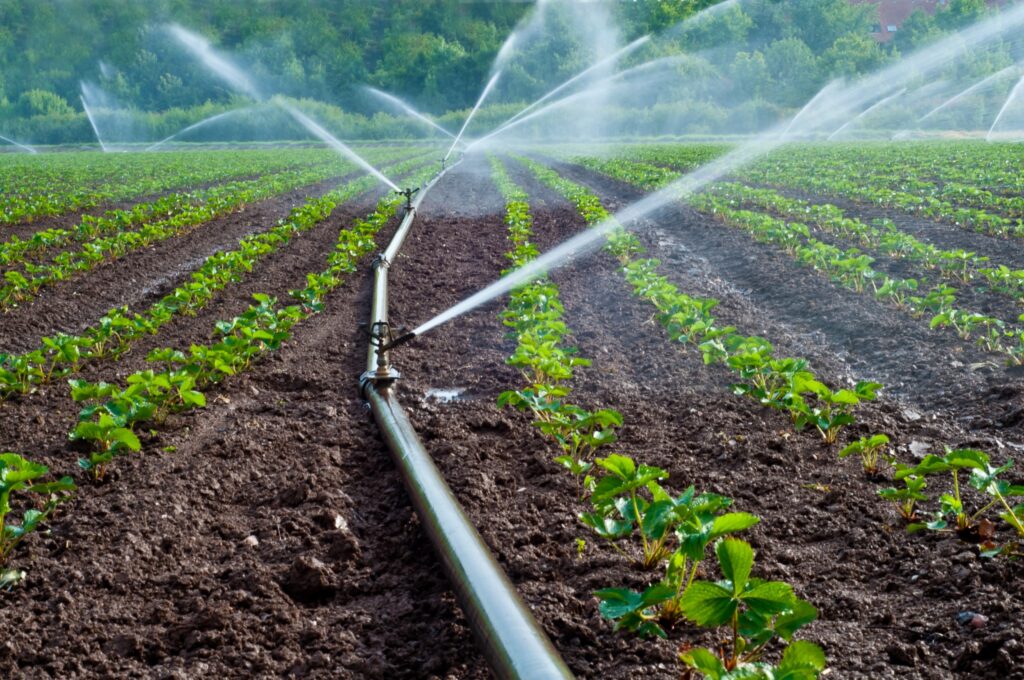
The land tells you a great deal about what it needs, but so does the sky above it. Rainfall patterns, humidity, temperature swings, and the length of the growing season all influence which agricultural irrigation systems make the most sense for a given region.
In arid and semi-arid regions, where natural rainfall can’t be relied upon to carry a crop through the season, efficient water delivery becomes a priority when deciding between agriculture irrigation systems.
This is part of why drip and subsurface drip irrigation systems have grown so popular across parts of the West, where every drop of water carries real cost and consequence. In regions with more consistent rainfall, surface and sprinkler-based agricultural irrigation systems may be entirely adequate as a supplement rather than a primary water source.
Wind is another regional factor worth considering. Sprinkler-based agricultural irrigation systems that spray water into the air are more susceptible to evaporation and drift in windy areas, which can reduce their overall efficiency. Drip systems, by contrast, are largely unaffected by wind since water is delivered to the crop at or below ground level.
Seasonal extremes matter too. Farms in regions with hot, dry summers and limited winter precipitation often need agricultural irrigation systems capable of covering peak water demand during the driest stretches of the growing season, while farms in more temperate climates may only need supplemental irrigation during shorter dry spells.
Understanding your regional water patterns, ideally over several years rather than a single season, gives you a much clearer picture of what your agricultural irrigation system actually needs to deliver.
How To Choose The Best Agriculture Irrigation System For Your Farm’s Terrain Type
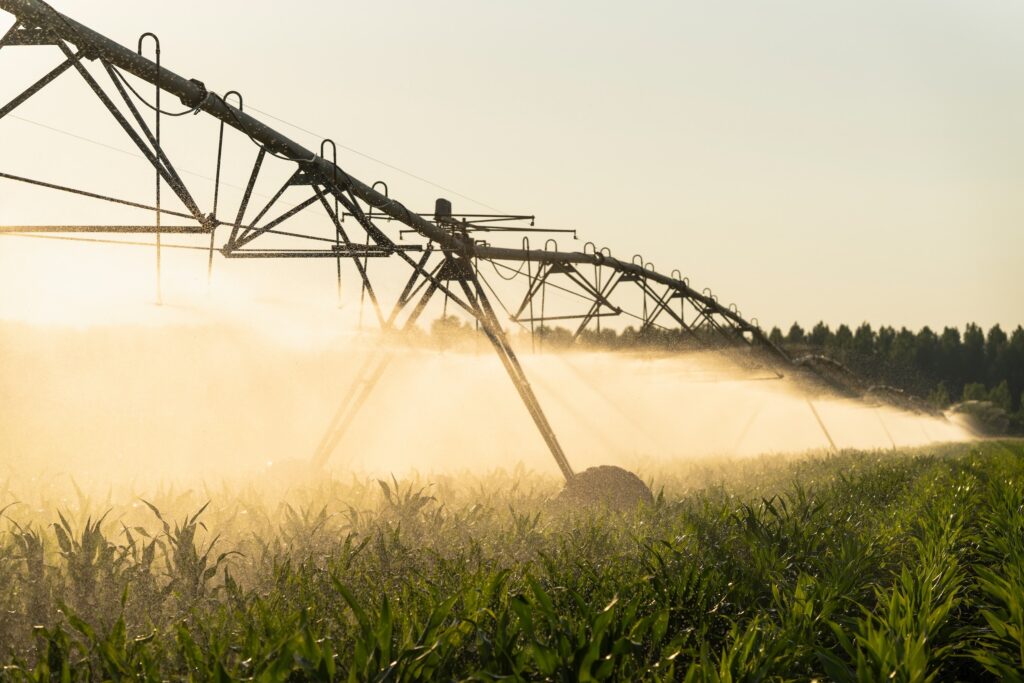
Terrain has always shaped how people farm, and it remains a core ground-level consideration in choosing the right agriculture irrigation system for your crops. The reality is, the shape of the land itself often narrows down which systems will actually function well.
Flat, level fields are well suited to a wide range of agriculture irrigation systems, including surface, sprinkler, and drip irrigation, since gravity and pressure both behave predictably across even ground.
Sloped or hillside terrain requires more careful planning. Surface irrigation on a slope can lead to uneven water distribution and soil erosion, with water pooling at the bottom of the field while the top stays dry. In these agricultural situations, drip irrigation systems are often favored because they can be engineered with pressure-compensating emitters that deliver a consistent amount of water regardless of elevation change across the field.
Irregularly shaped fields, common in agricultural areas that have been divided or expanded over generations, may call for more flexible or modular irrigation layouts rather than the fixed geometry of a center pivot system, which works best on large, roughly circular or rectangular fields. Rocky or uneven agricultural ground can also complicate the installation of buried subsurface irrigation systems, sometimes making surface-mounted drip lines or sprinkler systems a more practical choice.
Walking your own fields with these questions in mind: where the high and low points are, how water naturally moves across the ground, and where equipment access might be limited. This can tell you as much about the right agricultural irrigation system as any general guideline can, since every property carries its own terrain story.
How To Choose The Right Type Of Agricultural Irrigation System For Your Soil Type
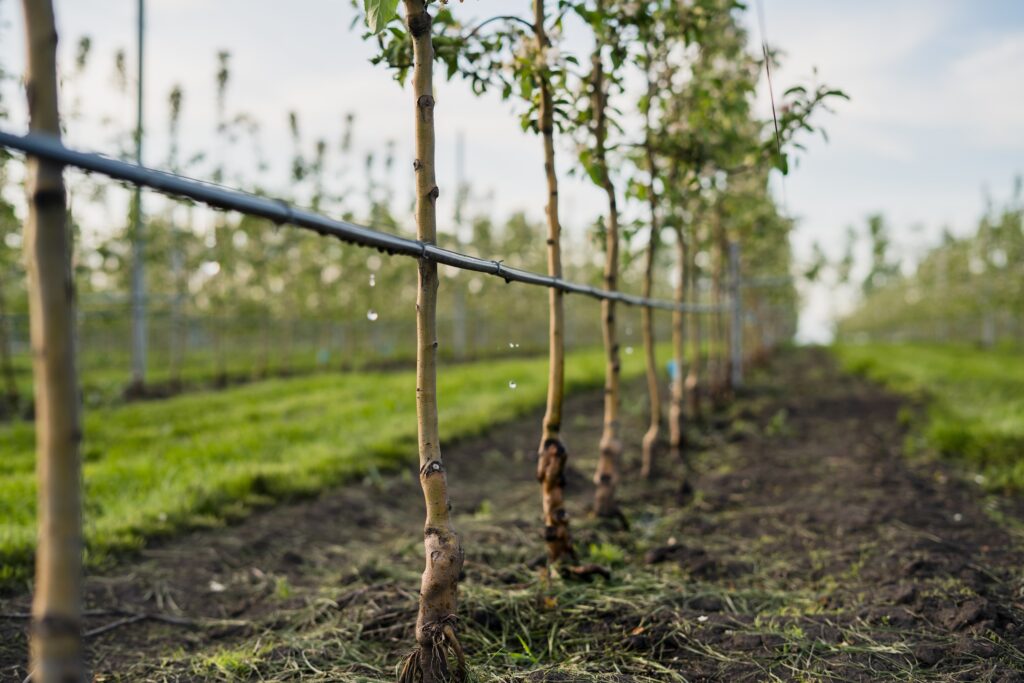
Soil is often called the memory of the land, holding onto generations of what’s been grown and how it’s been cared for. It also plays a direct role in how water moves once it reaches the ground, which makes it one of the more important factors in selecting an agricultural irrigation system (and a common reason two neighboring farms end up with different agriculture irrigation systems altogether).
Sandy soils drain quickly and hold relatively little water, which means they often benefit from more frequent, lower volume irrigation. Agri drip irrigation systems are a natural fit here, since they can apply small amounts of water regularly without the runoff that heavier, less frequent watering might cause.
Clay soils sit at the other end of the spectrum, draining slowly and holding water for longer periods. Overwatering clay soil with a high-volume system can lead to standing water, poor root aeration, and disease pressure, so agricultural irrigation systems that allow for slower, more controlled application, such as drip or carefully managed sprinkler cycles, tend to work better.
Loamy soils, often considered the most balanced for farming, offer more flexibility and can generally support a wider range of agricultural irrigation systems without the same tight constraints that sandy or clay soils impose. Soil that varies significantly across a single field, which is common on agricultural properties with rolling terrain or mixed geological history, may require a more customized system and approach, sometimes blending irrigation zones within the same field to account for those differences.
A basic soil test, something many local extension offices can help with, is worth doing before finalizing plans for your agricultural irrigation system. Knowing your soil’s texture and drainage characteristics ahead of time can save considerable cost and frustration later.
How The Size Of Your Farm Impacts Which Crop Irrigation System You Select
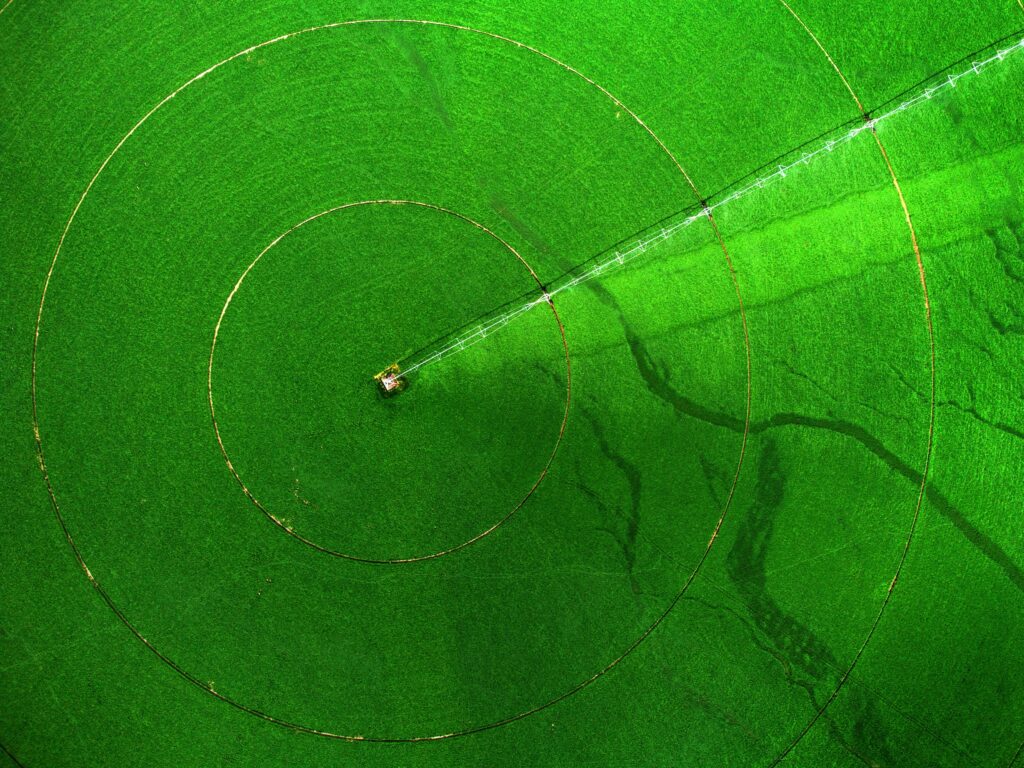
Scale changes the calculation for so many decisions on the farm, and agricultural irrigation systems are no different. What works well on five acres doesn’t always work for a fifty or five hundred acre property.
On smaller agricultural operations, drip irrigation and portable sprinkler systems are often practical choices, since the upfront investment stays manageable and the system can be adjusted or expanded as the operation grows. Smaller acreages also allow for more hands-on management, which suits systems that benefit from closer monitoring.
As farm size increases, the economics tend to shift. Center pivot and lateral move agricultural irrigation systems can become more cost-effective per acre on larger fields because their fixed costs, the pivot structure itself and the water source infrastructure, are spread across more irrigated ground.
Mid-sized farms and agricultural properties often land somewhere in between, sometimes running a pivot or larger sprinkler system on open row crop ground while using drip irrigation on a smaller orchard, garden, or specialty crop block. There’s no requirement to standardize on a single agricultural irrigation system across an entire property. In fact, matching different systems to different sections of land, based on size, crop, and terrain, is one of the more practical approaches available to a working farm.
It’s also worth thinking ahead. If there’s a reasonable chance your operation will grow in the coming years, choosing an agricultural irrigation system with some room to expand (rather than one that requires a full replacement to scale up) can save considerable cost down the road.
Understanding How Water Source And Water Rights Play A Role
Water rights are woven into the history of farming and ranching, especially across the West, where access to water has shaped land value, boundaries, and even family legacies for generations. Before settling on an agricultural irrigation system, it’s worth taking the time to fully understand where your water comes from and what rights or permits govern its use.
Most agricultural operations draw water from one of a few sources: groundwater accessed through a well, surface water from a river, stream, or irrigation ditch, or stored water from a pond or reservoir on the property. Each source carries its own considerations.
Well water often requires permitting through a state water resources office, sometimes called a state engineer’s office, and may be subject to limits on flow rate or annual volume. Surface water rights, particularly in states that operate under prior appropriation, are tied to seniority, meaning the age of the water right can determine how much water is actually available in drier years, since senior rights are met in full before junior rights receive anything.
Pond and reservoir water can offer flexibility, but it’s worth knowing that in most prior appropriation states, the act of storing water, not just diverting it, typically requires its own storage right or permit. A pond that looks like a simple asset on the ground may or may not come with the legal right to keep water in it long term.
The type of water right you hold, and the volume and flow rate it allows, can directly influence which agricultural irrigation systems are even feasible. A property with a modest but reliable well may be better suited to a more water-efficient system like drip irrigation, while an agricultural property with strong surface water rights and a high-volume irrigation ditch may have more flexibility to run a sprinkler or flood system.
If you’re purchasing land, it’s worth confirming exactly what water rights transfer with the property and reviewing them with a local water attorney or your state’s water resources office before finalizing any irrigation plans. For landowners who already know their water source and rights well, this step is simply about matching your agricultural irrigation system to what your water rights actually support, both today and in a drought year when every acre foot matters.
Efficiency Differences Between Agricultural Irrigation Systems
Efficiency, in irrigation terms, refers to how much of the water applied actually reaches the crop’s root zone rather than being lost to evaporation, runoff, or deep percolation past the roots. This is one of the core differences between agricultural irrigation systems, and it matters both for water conservation and for the operating cost of running the system.
Drip and subsurface drip irrigation are generally recognized as the most efficient agricultural irrigation systems available. A peer-reviewed Utah State University Extension fact sheet puts drip system application efficiency at 90 percent or higher, and University of California Cooperative Extension research places it in a similar 85 to 90 percent range, since water is delivered directly to the plant with minimal exposure to sun, wind, or soil surface evaporation. Micro-sprinkler systems fall not far behind, with data showing efficiencies in the 80 to 90 percent range.
Agricultural sprinkler irrigation systems, including center pivot and lateral move setups, cover a wider range depending on the technology involved. The USU Extension research found line-source systems, such as hand lines and wheel lines, operating at 60 to 80 percent efficiency, while center pivots equipped with low elevation or low energy precision application technology reached 80 to 97 percent, showing how much nozzle type and pivot design affect real-world performance.
Surface irrigation methods, including flood and furrow, are commonly cited in the 40 to 60 percent range for more basic, unoptimized setups, since a fair amount of water can run off the field or seep beyond the root zone before the crop can use it. That said, the same USU agricultural research found that well-designed and carefully managed surface irrigation systems, on the right soil and with the field properly leveled, can reach efficiencies as high as 90 percent. Efficiency has as much to do with design and management as it does with the type of system itself.
Efficiency isn’t the only factor worth weighing, since a less efficient system may still be the right call on a farm with abundant water rights and flat, well-suited terrain. But for farms working with a limited water allocation, particularly in drier regions, the efficiency gap between agricultural irrigation systems can translate directly into how many acres can be reliably irrigated with the water available.
Cost Considerations When Choosing An Agricultural Irrigation System
When it comes to irrigating a farm, one of the largest decision-making factors will inevitably be the cost considerations. And there are a few core components that’ll factor into this equation: materials, maintenance, and labor.
Material Cost Considerations
Material costs vary considerably by agricultural irrigation system type. According to the USDA Natural Resources Conservation Service’s national payment schedule for conservation practices, subsurface drip irrigation runs close to $1,940 per acre and surface drip tubing close to $1,730 per acre on a national average basis, figures that reflect materials and installation but can shift with site complexity and water source.
Center pivot systems show a wide range depending on water source and field size. Case studies published by the Alabama Cooperative Extension System put total investment costs, covering the pivot itself, the pump, and the water source, somewhere between $1,160 and $2,130 per acre across three real-world installations.
Surface irrigation systems generally carry the lowest material cost per acre for the delivery equipment itself, though land grading on your agricultural operation and furrow preparation can add expense depending on the starting condition of the field.
Maintenance Cost Considerations
Maintenance costs differ just as much between systems. Drip systems require regular filter cleaning and periodic replacement of drip tape and emitters to prevent clogging. A University of Florida IFAS Extension cost example for a 10-acre vegetable operation itemizes annual costs for drip tape, connectors, and filter replacements at $1,790 total for the 10 acres, or roughly $179 per acre, separate from the one-time cost of the filtration and control equipment and not counting well or pump upkeep.
Sprinkler and pivot systems need routine checks on nozzles, gearboxes, and pipe connections, along with attention to pump maintenance. Surface irrigation systems have lower equipment maintenance needs overall but often require more frequent attention to furrows, berms, and field leveling to keep water moving evenly.
Labor Cost Considerations
Labor costs are sometimes the most overlooked piece of this cost equation, yet they play a substantial role in the true cost of running an agricultural irrigation system season after season.
- Flood and furrow irrigation systems typically demand the most ongoing labor, since someone needs to monitor water flow, adjust furrows, and move water across the field by hand in many setups.
- Sprinkler and pivot systems reduce hands-on labor considerably once installed, particularly when paired with automated controls, though they still require periodic monitoring and mechanical upkeep.
- Drip irrigation, especially when automated with timers or basic sensors, tends to require the least ongoing labor of the common agricultural irrigation systems, which is part of why it has become popular even on smaller, owner-operated agriculture operations where labor hours are limited.
Installation labor is worth factoring in separately from ongoing labor. Farmers comfortable installing their own drip lines or sprinkler zones can noticeably reduce upfront costs compared to hiring a professional installer, since labor typically makes up a substantial share of total installation cost. That said, this tradeoff is worth weighing against the risk of costly mistakes on a first attempt, particularly for more technical subsurface or pivot installations.
Getting itemized quotes that separate materials, installation labor, and ongoing maintenance expectations will give you a far clearer picture than a single bundled price when comparing agricultural irrigation systems for your property.
Upgrading Or Retrofitting An Existing Crop Irrigation System
Many landowners don’t start from a blank field. Farms and ranches change hands, and it’s not uncommon to acquire land with an irrigation system already in place, sometimes one that has served the property well for decades, and sometimes one that’s been patched together over the years and could be due for a closer look.
A few signs can point to the possible case for a retrofit of your agricultural irrigation system, rather than a full replacement. Uneven water distribution across a field, rising water bills without a corresponding change in acreage, or visible wear on pipes, emitters, and pivot components are all worth investigating before assuming a complete system swap is necessary.
In many cases, converting a portion of an aging flood-irrigated field to drip, or upgrading older pivot nozzles to more efficient low-pressure heads, can noticeably improve performance without the cost of starting over with an entirely new agricultural irrigation system.
On the other hand, an agriculture irrigation system that’s decades old, poorly matched to current crops, or built around water infrastructure that no longer functions reliably may be a better candidate for full replacement. Walking the property with someone who understands both the existing infrastructure and your long-term plans for the land, whether that’s a local irrigation dealer, an extension agent, or an experienced neighbor, can help clarify which path makes sense for your particular situation before you invest further.
New vs Used Agricultural Irrigation Equipment: When Buying Secondhand Makes Sense
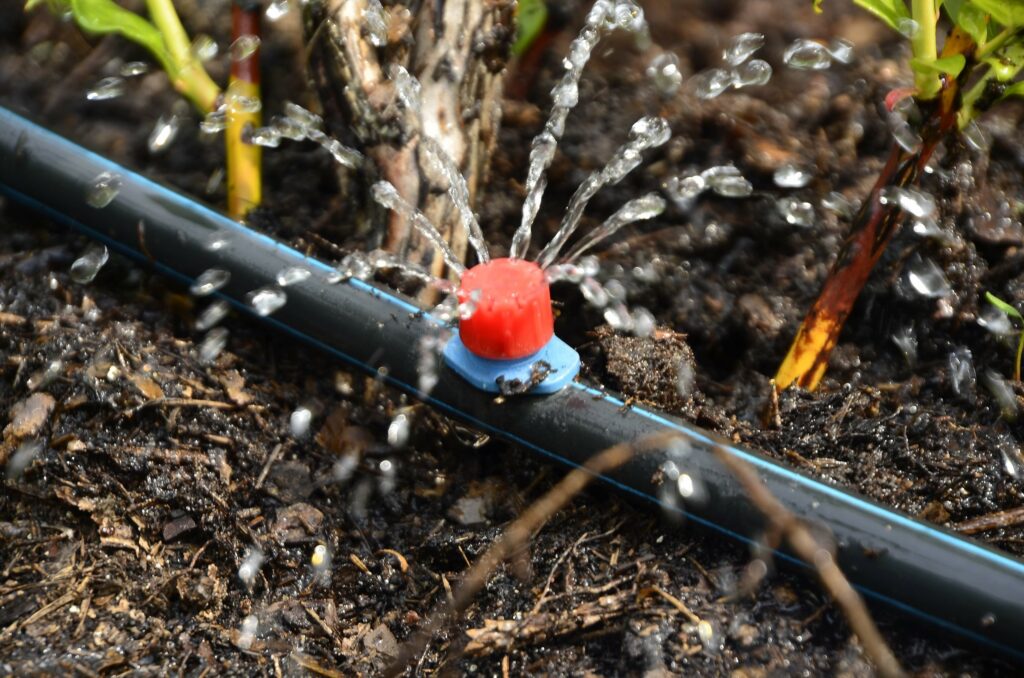
Not every piece of an agricultural irrigation system needs to come brand new off the shelf, and there’s a long tradition in farming of getting good use out of well-maintained equipment. Pumps, pivots, pipe, tanks, and fittings all hold up well when they’ve been cared for, and buying secondhand can noticeably lower the cost of building out or expanding your irrigation setup when you’ve done your due diligence to ensure the quality meets your needs.
Used equipment tends to make the most sense for larger, more expensive components of an agricultural irrigation system, such as center pivot structures, pumps, and mainline pipe, where the price difference between new and used can be substantial. A well-maintained used pivot, inspected carefully for wear on the drivetrain, tires, and span alignment, can offer years of reliable service at a fraction of new equipment pricing. Filtration systems, valves, and controllers are also commonly available secondhand and can work just as well as new components when properly inspected.
Where new equipment tends to make more sense is with items that wear out faster or are harder to evaluate secondhand, such as drip tape and emitters, which have a limited functional lifespan and can be difficult to assess for remaining service life once they’ve been in the field. Buying these components new, while sourcing larger infrastructure secondhand, can be a practical way to balance cost against reliability when upgrading or modifying your agricultural irrigation system.
For local farmers and landowners working within a defined budget, blending new and used equipment across your farm’s agricultural irrigation system is less about cutting corners and more about being a thoughtful steward of resources, a value that has always been part of good farming.
How The Right Agricultural Irrigation System Can Increase Your Land’s Value
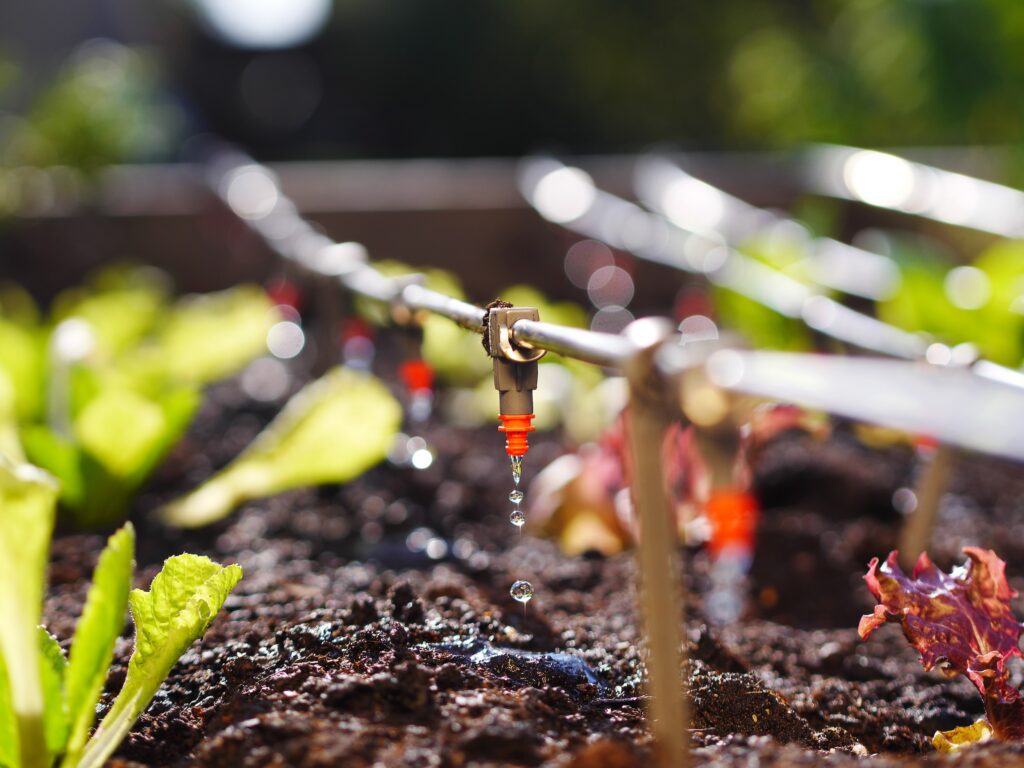
Land carries its history with it, and a well-planned agricultural irrigation system is part of that story, one that future owners, tenants, or your own family down the line will notice and benefit from. Beyond the immediate returns of a healthy crop, the irrigation infrastructure on a property can play a meaningful role in its long-term value.
Land with an established, well-maintained agricultural irrigation system is often more attractive to buyers and lessees than comparable acreage without one, since it represents both an investment already made and a reduction in the work and cost required to bring the ground into production. Properties with confirmed, senior water rights paired with efficient irrigation infrastructure, such as drip or modern pivot systems, tend to hold particular appeal in regions where water availability shapes what a piece of land can realistically support.
For landowners thinking beyond a single growing season, whether the plan is to farm the land for another generation, lease it out, or eventually pass it along or sell it, the agricultural irrigation system in place is a durable part of that land’s value and story. Choosing a system that fits the land well now, and maintaining it with care over the years, is one of the more lasting contributions a farmer or landowner can make to a property.
How To Find The Right Equipment For Your Farming Operation
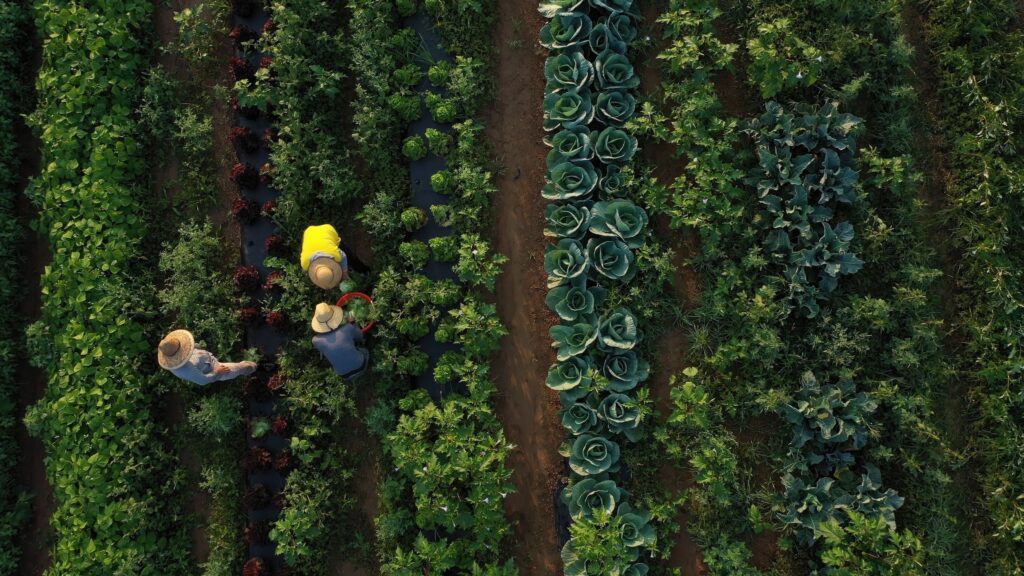
Every working farm eventually comes down to the equipment that makes the plan possible. Whatever direction your research has pointed you, from a new irrigation setup to the tractors, implements, and other machinery that keep the rest of the operation running, having a straightforward way to buy and sell equipment is part of running a farm or ranch well.
The Hayden Outdoors Equipment Marketplace gives local farmers, ranchers, and landowners a direct way to connect with each other, whether you’re looking to pick up used equipment at a fair price or list gear you no longer need. Sellers can list their own equipment and set the terms, buyers can reach out directly, and the money and pickup arrangements stay between the two of you.
Our marketplace also runs online equipment auctions for those who’d rather sell that way. It’s a place built on the same values this guide has tried to reflect: an appreciation for the land, respect for the work that goes into farming it, and a belief that good equipment, whether new or used, deserves to keep working rather than sit idle.
If you’re weighing your next equipment purchase or have machinery you no longer need, visit the Hayden Outdoors Equipment Marketplace to browse what’s listed or list your own, and keep your land (and the operation it supports) moving forward.
Browse Farm And Ranch Equipment
The Landowner’s Guide To Average Fence Cost For Farm And Ranch Properties
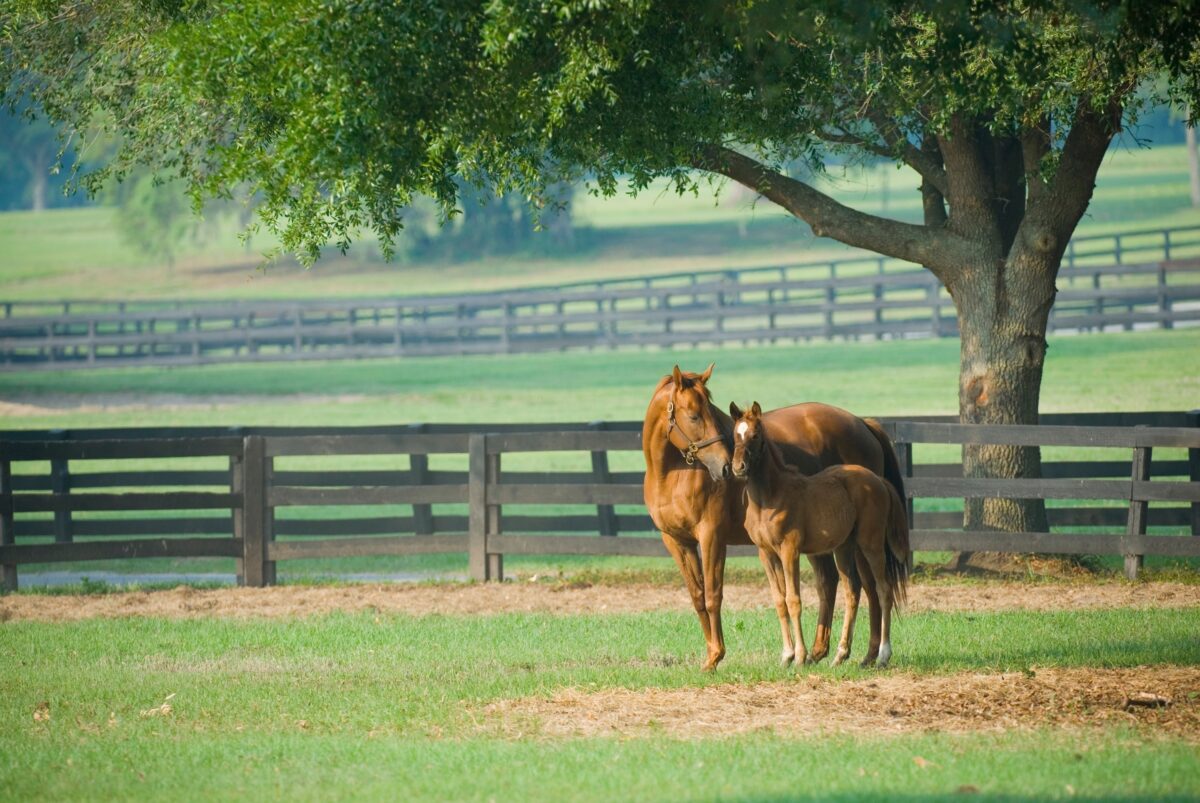
If you searched for the average cost of fence materials and installation hoping for one clean number, you’ve probably noticed a problem. Most guides price out a 150-foot backyard, not a quarter mile of a farm property, a full section of a ranch, or a boundary line running through timber and across a creek.
This guide is built for that larger acreage property instead. At Hayden Outdoors, our expertise is the world of farm and ranchland, and one thing we see is that fencing costs are one of the harder numbers for buyers and landowners to pin down, simply because most fence cost and installation guides weren’t written with acreage in mind.
Whether you call your land a farm or a ranch, the fence cost questions are largely the same: how much fence you need, what type fits your livestock, crop, and terrain, and what you should realistically expect to pay.
There’s no single correct cost or price point for fence materials and installation, especially when it comes to the world of large acreage. There’s a range, and where you land in it depends on decisions we’ll cover section-by-section throughout this guide.
Table Of Contents
What Drives Fence Installation Cost On Farm and Ranch Properties
Whether we’re talking about a farm, ranch, or a recreational property, the cost of rural fence installation isn’t based on one variable. It’s several stacked together: total footage, terrain, fence type/material, livestock species, gate count, water crossings, and how far a fencing contractor has to haul materials and equipment to reach you.
Two neighboring 40-acre parcels can have different fence installation costs even with the exact same fence type. One plot of land may have a flat, cleared perimeter. The other may have a creek crossing, a stand of timber, and a steep pitch along one boundary line, which can easily increase the overall cost of fencing materials and installation.
A farm or ranch fencing quote built without those details is really a cost average, not a price for your land. Throughout the rest of this guide, we’ll walk through the factors worth getting some clarity on before you call a fencing contractor, so the cost estimate that comes back is closer to your reality than to a national average figure.
The Factors That Impact Fencing Needs And Cost On Working Land
Farm and ranch properties don’t fence the same way a suburban lot does, and the layout itself changes the fence installation cost equation quite a bit. These are the factors that can impact that average price point:
1. Total Perimeter And Acreage
The bigger the parcel your farm or ranch sits on, the more linear footage you’re fencing, which is one of the key drivers of increased average fence installation cost on any acreage project. But the relationship isn’t purely linear.
A square-shaped 40 acres has a shorter perimeter, and therefore a lower total fence installation cost, than a narrow or elongated 40 acres with the same square footage. Irregularly shaped parcels, with jogs, indentations, or boundaries that follow a creek or road rather than a straight line, also tend to run longer perimeters than a compact, evenly proportioned parcel of the same acreage, though the exact difference depends on the specific shape.
2. Interior Cross-Fencing
Many working properties need internal fence lines to separate pastures, support rotational grazing, or keep livestock groups apart. This can add more total linear footage than the perimeter itself, thus driving up the cost of fence installation and materials. It’s a step first-time acreage buyers sometimes underestimate when they mentally calculate fence installation cost from the perimeter number alone.
If rotational grazing or multiple livestock groups are part of your plan, your real cost of fence installation should include this interior footage from the start.
3. Proximity Of Your Fencing To Other Structures
Fencing near barns, corrals, working pens, or a homestead often calls for different materials, tighter spacing, or more finish work than a remote perimeter run. This can shift the fence installation cost per foot in either direction depending on exactly what you’re building and where.
4. Terrain And Remoteness
Rolling ground, exposed rock, dense tree cover, and limited road access all raise fence installation cost by adding labor time, and sometimes by requiring specialized equipment just to reach the work site.
5. Water Features And Natural Boundaries
Creeks, ponds, seasonal washes, and wooded draws don’t have to stop a fence line, but they can add complexity to it. Planning for these upfront, rather than discovering them mid-project, keeps your fence installation cost estimate closer to what you were expecting to pay.
Depending on your specific property, some of these fence pricing factors will matter far more than others, which is why a fair, accurate fencing installation cost for your farm or ranch depends on which of these elements actually apply to your land.
This is also where a generic average fence cost figure tends to fall apart for farmers and ranchers. An average calculated from thousands of residential yards doesn’t carry information about perimeter shape, cross-fencing needs, or terrain, because those variables don’t always exist in the same way in a typical suburban neighborhood. Your fence installation cost estimate needs to be built from your land’s actual layout and complexities.
Fence Types By Livestock And Land Use (And How They Impact Installation Cost)
On working land, the fence type is chosen first by what it needs to hold in or keep out. That said, plenty of landowners weigh the aesthetics of their fence choices, especially near a homestead, entrance, or corral where the fence is part of the property’s overall look.
Either way, the choice of fence type has a direct effect on fence installation cost, since materials, post spacing, wire gauge, and labor requirements vary widely by type.
According to Iowa State University Extension’s Ag Decision Maker program, which compares construction costs across common permanent fence types used in livestock operations, the fence selected typically comes down to the species being contained and the terrain being crossed. That choice drives most of the differences in average fencing cost.
- Barbed wire: This is still one of the most common perimeter fencing choices for cattle on larger acreage, largely because it keeps fence installation cost comparatively low over long distances relative to other permanent options. It’s generally not considered a reliable standalone choice for horses, sheep, or goats, which changes the fence installation cost calculation if your operation runs mixed livestock.
- Woven or field wire: This is a tighter mesh fencing option often chosen where predator resistance or contact with smaller livestock is a real concern. It typically adds to fence installation cost per linear foot compared to barbed wire, but for certain species and risk profiles, it’s the more practical and ultimately more cost-effective fit over the life of the fence.
- High-tensile wire (electric or non-electric): This is a popular fencing option for rotational grazing systems and long perimeter runs, since high-tensile wire allows wider post spacing than standard wire. That can reduce material and labor needs over a long distance, even though the wire itself carries a modest premium.
- Net wire: This type of fencing is common for sheep and goats, which can slip through the wider-spaced wire types that would otherwise reliably hold cattle. Net wire typically pushes fence installation cost toward the higher end of the wire fencing range on a per-foot basis.
- Wood rail and pipe fencing: This type of fencing is frequently used for horse enclosures, corrals, and areas where visibility and reduced injury risk matter more than long-run economy. It tends to sit at the higher end of the fence installation cost range among common agricultural fencing types, a tradeoff many horse owners consider worthwhile given the added safety.
- Game and deer fencing: This type of fence is used to protect crops, orchards, or gardens from wildlife. It’s typically taller and built to a different structural spec than standard livestock containment fencing, which affects both material choice and the average fence installation cost.
Cost per linear foot within each of these fencing categories can range widely based on wire gauge, post material, post spacing, and local fence installation labor rates.
Getting quotes for the specific fence type, gauge, and post spacing you need, rather than just a total dollar figure, makes it easier to compare the fence installation cost between contractors bidding on the same job.
Mixing fence types across one property is also common on working land, and it’s something to consider when looking at your overall fence installation cost picture. A property might use barbed wire along a long, remote perimeter where cattle are the only concern, then switch to wood rail or pipe fencing around a corral or homestead area where visibility and durability matter more.
Pricing each stretch separately, by the fence type it actually needs, generally produces a more accurate total cost of fence and installation than applying one material’s per-foot rate across the entire project.
Fence Installation Cost By Fencing Type, With Labor Included
A per-foot pricing number is more useful than a single fence cost average, since farm and ranch fencing is rarely one material from corner to corner. Here’s the typical fence installation cost per linear foot by fence type, including labor.
Note: None of these ranges include gates, corner bracing, or land clearing costs; those get priced separately in most quotes, so it’s worth confirming that with any contractor you talk to.
| Fence Type |
Cost Per Linear Foot |
| Barbed wire (4–6 strand) |
$1.50 – $2.25 |
| Woven or field wire (also used for net wire/sheep and goat fencing) |
$1.75 – $2.10 |
| High-tensile electric |
$0.90 – $1.25 |
| High-tensile electric deer/game fencing |
$0.89 – $2.03 |
| High-tensile mesh deer/game fencing |
$4.00 – $6.00 |
| Pipe or heavy panel fencing (corrals, working pens) |
$13.50 – $40.00 |
For scale, applying the barbed wire, woven wire, and high-tensile electric fence installation cost ranges to a 40-acre parcel, which has roughly 5,280 feet of perimeter on a square lot, works out to approximately $7,900 to $11,900 for barbed wire, $9,200 to $11,100 for woven wire, and $4,800 to $6,600 for high-tensile electric, all before gates, corners, and site conditions are added.
That same perimeter in pipe or heavy panel fencing, a choice more common around corrals and working pens than full perimeters, would run roughly $71,300 to $211,200. Larger or smaller acreage scales the same way: multiply your parcel’s actual perimeter by the fence installation cost per-foot range for the fence type you’re considering.
One thing to keep in mind: this table covers perimeter fencing cost and installation. If your plans include cross-fencing for rotational grazing or separate paddocks, your real cost of fence and installation will run higher than the perimeter number alone, since interior fencing adds directly to total linear footage.
Factors That Can Raise Fence Installation Cost On Rural Land
A handful of site conditions tend to show up again and again in rural fencing projects. Planning for them ahead of time makes the eventual fence installation cost estimate a lot less likely to catch you off guard partway through.
- Terrain: Slopes, washes, and uneven ground generally raise average fence installation cost by requiring more labor time per foot than flat, cleared land, and may call for different bracing at high or low points to keep the fence properly tensioned over time.
- Remote material hauling: The further a property sits from a supplier or a contractor’s base of operations, the more mobilization and delivery time factor into the final fence installation cost figure, especially for large material orders like post pallets or full wire spools.
- Water crossings: Streams, ponds, and seasonal washes often need specialized crossing solutions to maintain livestock containment without damming or restricting natural water flow, which adds real fence installation cost relative to an equivalent length of open, dry ground.
- Cattle guards and gates: Vehicle access points across a fence line typically add more to fence installation cost per unit than an equivalent length of standard fencing. The number of gates you need scales directly with how many pastures, paddocks, or entry points your layout requires.
- Corner and end-post bracing: Long straight runs need substantial bracing at corners and ends to keep wire tension consistent over years of use. More corners in your layout generally raise fence installation cost through more of this heavier, more labor-intensive construction relative to your total footage.
- Rural labor availability: In some areas, fencing contractor availability and travel time can affect both fence installation cost and scheduling, particularly during peak building seasons in spring and fall.
Walk your land with these considerations in mind before you request fencing quotes, so the fence cost you compare across contractors reflects your actual site conditions rather than a generic, one-size-fits-all estimate.
Do-It-Yourself Fence Installation Cost vs. Hiring A Contractor For Acreage
Whether building your fencing yourself makes sense often comes down to scale, terrain, and what’s actually being contained. For capable landowners, time and access to the needed equipment are going to play a big role in whether you go this route.
Taking on the do-it-yourself portion of your fence installation can make sense for straightforward perimeter runs on relatively flat, cleared ground, particularly with simpler fence types like barbed or standard wire, where the primary cost savings come from labor rather than materials.
It requires a good bit of time, the right tools, including post drivers or augers for larger jobs, and a genuine willingness to do physically demanding work across long distances.
Hiring a contractor tends to be worth the added fence installation cost for cross-fencing with multiple gates, sloped or rocky terrain, water crossings, or any fence line that needs to reliably contain valuable or high-value livestock. A contractor’s fence cost estimate should also account for local soil conditions and any easement or boundary considerations that can be easy to miss without local, on-the-ground experience.
There’s also a middle path some landowners choose, splitting the work rather than picking one approach for the entire project. Handling a long, straightforward perimeter run yourself while hiring a contractor for gates, water crossings, or corral fencing near structures can bring your total fence installation cost down without taking on the full physical workload solo.
It’s worth discussing this kind of split scope directly with a contractor, since some price a partial job differently than a full one.
If you do request quotes, a few questions tend to make the comparison genuinely useful:
- Does the quote specify fence type, wire gauge, and post spacing, or just a flat per-foot rate?
- Are gates, corners, and bracing priced separately, or already included in the fence installation cost per foot?
- Who handles land clearing, if any is needed, and is that cost built into the fence installation cost estimate?
- What’s the expected timeline, particularly if terrain, weather, or material availability could affect it?
Comparing quotes built around the same specifications makes it easier to see where your fence installation cost actually lands for your ranch or farm property, since per-foot ranges alone can hide differences in what’s included.
Regional Differences In Fence Installation Cost
Where your ranch or farm property sits affects fence installation cost in a few fairly consistent ways, though the degree varies enough by county, and even by individual property, that these should be read as general patterns rather than fixed regional pricing.
Labor availability and rates differ by region, often tracking local demand for skilled agricultural labor more closely than general cost-of-living indexes. Material costs can also shift with distance from suppliers, since wire, post, and hardware pricing typically includes a transportation component that grows with remoteness.
Terrain itself varies by region in ways that matter more to fence installation cost than climate zone alone. Rolling or rocky ground in parts of the West and Mountain regions can add labor time relative to flatter agricultural land in parts of the Midwest, while properties with heavy timber cover elsewhere may need clearing work before fence installation can even begin.
If you’re comparing fence installation cost estimates across different states or counties as you weigh land in different markets, it’s worth asking a local contractor what’s typical in that specific area before assuming a national range applies directly.
This regional variability is another reason a single average fence cost figure, especially one built from mostly residential and suburban data, tends to undersell how much your own cost of fencing can shift based on where the property sits.
Two otherwise similar parcels in different states can have quite different fence installation cost totals, simply due to local labor markets and material transport distances (even before terrain or fence type enter the picture).
How Fencing Can Affect The Value Of Your Land
This is where the fence installation cost stops being purely a construction question and starts being a land transaction question. You’ll want to think through both angles if you’re buying, selling, or building on rural acreage.
Existing fencing can factor into how a property is appraised and negotiated, though the degree depends heavily on the market, the property’s intended use, and the fence’s condition at the time of the transaction.
Well-built, properly maintained fencing that matches the land’s actual use, whether that’s livestock containment or pasture management, is generally viewed as a functional improvement rather than a purely cosmetic one.
According to the Texas Department of Transportation’s right-of-way appraisal manual, which outlines how fencing is treated in formal property valuation, appraisers generally give allowance for a fence’s contributory value when a property’s ongoing land use depends on it.
Unfenced conditions can factor into a property’s assessed value differently depending on what that land is intended for going forward.
For a buyer, it’s worth factoring the fence installation cost of any needed cross-fencing or perimeter work into your overall budget and offer, rather than assuming existing conditions will automatically meet your plans once you close.
For a seller, documenting the type, age, and condition of existing fencing can help a buyer understand exactly what they’re getting, and what they might still need to budget for in their own cost of fence and installation planning.
None of this amounts to a guarantee of added value in any specific transaction. Land value depends on far more than fencing alone, and market conditions vary widely by region and property type. But treating fence installation cost as part of the broader land investment conversation, rather than an isolated construction line item, tends to lead to fewer surprises on either side of a deal.
Getting An Accurate Fence Installation Cost Estimate For Your Property
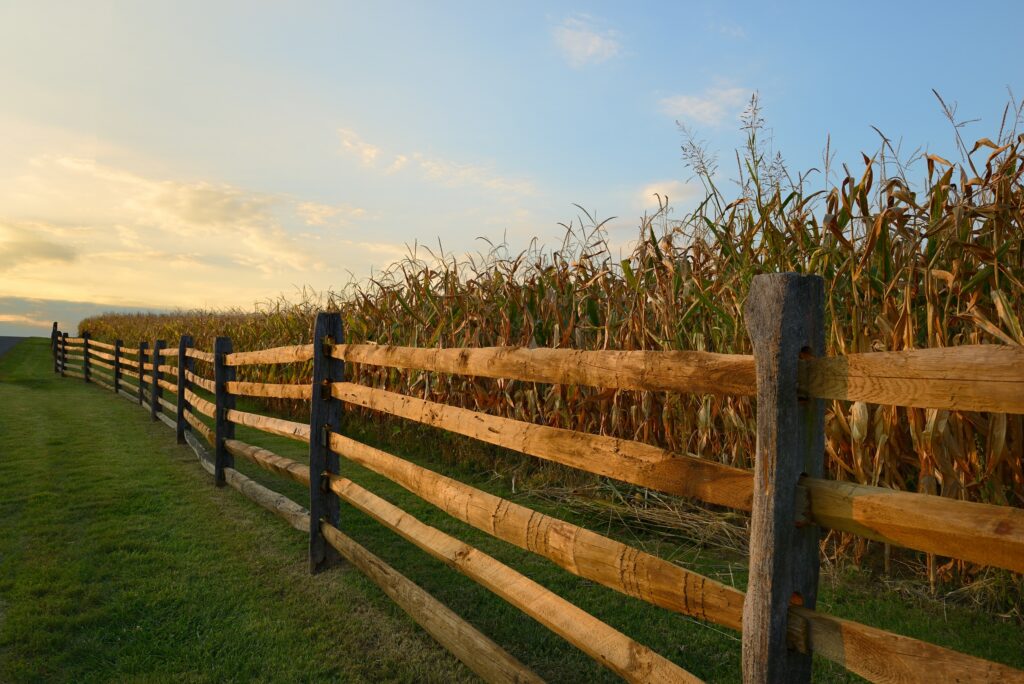
The more specific information a contractor has upfront, the more useful the fence installation cost estimate they return will actually be, and you’re less likely to see the number shift significantly once work begins.
Before reaching out, it helps to have a rough sense of the following:
- Total acreage and, if possible, a rough perimeter measurement or plat map.
- What livestock, if any, the fence needs to contain, since this drives fence type more than almost anything else.
- Notable terrain features, including slopes, water crossings, timber, or rock outcroppings.
- Existing structures or fence lines that need to tie into the new work.
- Roughly how many gates or vehicle access points you’ll need across the layout.
- Any known easements, right-of-way considerations, or boundary line questions worth clarifying before work begins.
Bringing this information to your first conversation with a fencing contractor tends to produce a more accurate fence installation cost estimate than a general phone inquiry, and it gives you a clearer, more consistent basis for comparing multiple quotes against each other.
Planning Fence Costs As Part Of Your Land Improvements
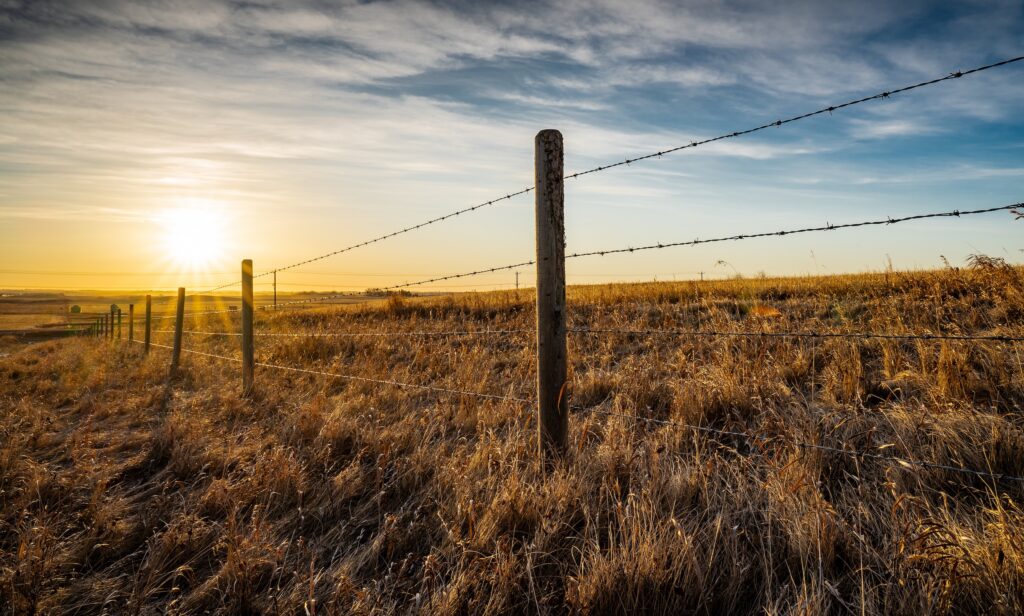
Fence installation cost on farm and ranch land isn’t a smaller or larger version of a residential number. It’s really a different calculation, shaped by acreage, terrain, fence type, livestock, and region in ways a backyard estimate was never built to capture.
The property-specific factors covered throughout this guide, from perimeter shape to terrain to fence type, are what actually determine where your fence installation cost lands. Working through them before you request fencing quotes is what turns a rough range into a workable, usable budget.
If you’re planning a fencing project as part of larger improvements on your land, whether you’re getting a new property ready for livestock or maintaining ground you’ve owned for years, it’s also worth thinking about the equipment that goes along with it.
Hayden Outdoors’ farm and ranch tools and equipment listings cover the kind of gear that makes land improvement and management projects more doable.
Browse Farm And Ranch Equipment
Four Wheeler Price Guide: How Much Does An ATV Cost?
If you’ve spent any time searching how much an ATV (also known as a four wheeler or quad) can cost, you’ve probably noticed the numbers are all over the map. That’s because ATV price genuinely depends on a handful of specific factors, and once you know what they are, it’s a lot easier to land on a number that makes sense for your situation.
Maybe you’re outfitting a working ranch and need something that can handle a full day of fence checking and feeding. Maybe you’re gearing up for trail season with the family. Or maybe you’re just ready to have your own quad instead of borrowing your neighbor’s every time a job comes up. Whatever brings you here, we want to give you a genuinely comprehensive answer on ATV cost, including the ownership costs that come after the purchase, what actually drives that number up or down, and how to land on a fair price for the way you plan to use your four wheeler.
That’s why we’ve written this ATV pricing guide. Hayden Outdoors has been rooted in the world of ranch, farm, and recreational land since 1976, and that family-owned, hands-on background is exactly why we’re a trusted resource here. We connect buyers and sellers of ranch, farm, and recreational equipment directly, with no fees or commissions on either side, so we see what real ATVs are actually listed and sold for across the market. We’re not here to sell you a specific machine. We’re here to help you understand that market so you walk into a purchase knowing what you’re actually looking at.
Table Of Contents
Factors That Impact How Much An ATV Is Going To Cost
Before you can pin down an accurate ATV cost picture for your own situation, it helps to know what’s actually moving the number behind the scenes. Four wheeler cost calculations aren’t random, and they aren’t determined by one single thing. They’re built from a handful of specific pricing variables, and once you know them, the wide ATV cost range starts to break down into something you can actually work with.
New vs Used: How Much Is An ATV Going To Cost Depending On Condition?
One of the biggest factors in determining how much an ATV can cost you is whether you’re buying a new or used four wheeler. A new quad carries the full manufacturer’s price tag, the newest features, and typically a warranty backing it up. A used ATV can cost a fraction of that new price, especially if it’s a few model years old with a reasonable number of hours on the engine. This is usually the first fork in the road for anyone asking how much an ATV will cost them, because the gap between new and used pricing is often larger than any other factor on the list.
The condition of the ATV you’re looking at also matters substantially. Two ATVs from the same model year can carry very different price tags depending on how they were stored, how hard they were ridden, and how well they were maintained. A machine that spent its life in a barn and got regular oil changes is going to hold more value than one that sat outside through a few rough winters. When you’re figuring out how much an ATV is going to cost you and comparing various quad listings, don’t just look at the year. Look at the hours, the maintenance records for the ATV (if the seller has them), and the overall condition of the tires, brakes, and body of the four wheeler.
What Engine Size And Type Mean For Your Budget
Engine size and drivetrain type play a direct role in how much a four wheeler costs. Small displacement, single-cylinder engines built for light recreational ATV use or younger riders sit at the lower end of the price scale. Larger displacement engines, four-wheel drive systems, and higher-performance ATV builds push the price up because they cost more to manufacture and tend to hold more value on resale down the road.
If you’re comparing how much a quad built for casual trail riding costs against one built for heavy work or higher speed, engine size is usually where that price gap starts to show up. It’s worth being honest with yourself about what you actually need here. A bigger engine isn’t automatically the better buy if most of your riding is light trail use or slow work around a property. Matching the engine to the job is one of the simplest ways to avoid overpaying for capability you won’t use.
How Where You Buy Your ATV Changes The Cost Story
The same ATV can carry a very different price tag depending on where it’s purchased, and price is only part of what changes. A dealership sticker price for a four wheeler often includes dealer fees, freight charges, and ATV setup costs included in the base price. But that price also typically comes with a warranty, an ATV that’s been inspected and serviced before sale, and someone to call if something goes wrong with your four wheeler shortly after you buy it. For buyers who want that safety net when buying an ATV, the dealership route has some clear benefits.
Buying your ATV directly from a private seller or through an equipment marketplace tends to remove a good bit of that markup from the four wheeler cost equation. That’s a big part of why the used four wheeler market, bought direct, often has some cost benefits. The trade-off is that a private ATV sale typically comes as-is, with no warranty and no recourse if the seller left something out or wasn’t fully upfront about the quad’s condition. The responsibility for verifying condition, service history, and any mechanical issues falls on you as the buyer of the quad.
Where you buy your quad also affects how much room you have to negotiate the price. A dealership price is usually more fixed. A private sale or marketplace listing often has more price flexibility built in, especially if the seller of the ATV wants a straightforward transaction. But that same flexibility means there’s typically no dealership backing up the deal after it’s done.
None of this means one path is right for everyone. A dealership can be worth the added cost for a buyer who wants a warranty and a fully vetted ATV. A private sale or marketplace listing can be worth the savings for a buyer who’s comfortable inspecting the four wheeler closely, asking the right questions, and taking on that responsibility themselves. It’s worth weighing that trade-off (and not just the sticker price) before deciding what a fair four wheeler cost looks like for the ATV you want.
The Hidden Cost Of Depreciation: How ATV Price Changes Over Time
This is an often-forgotten piece of the puzzle when determining how much an ATV can and should cost, but it’s quite possibly one of the most important price considerations you need to take into account. Every ATV loses value over time, but the rate at which it loses that value isn’t steady. Knowing the shape of that curve can help you time a purchase (or a sale) a lot smarter.
Why Depreciation Hits Hardest Early
According to ATV Trader, most four wheelers hold their value fairly well for roughly the first three years of ownership. After that point, the depreciation of your quad picks up, typically running between 10 and 25 percent annually. Essentially, a newer ATV tends to hold steady in value early on, then loses ground more noticeably once it’s a few years old.
This explains why two ATVs only a couple of years apart in age can sometimes carry surprisingly similar price tags early on, while the gap widens more once one of the four wheelers passes that three-year mark. It also means the calculus on new versus used isn’t as simple as “newer always costs more.” Where a four wheeler sits relative to that three-year point is often just as important as its age alone in the price calculation.
How To Find The Depreciation Sweet Spot
If you’re trying to get the most machine for your money, the sweet spot in used ATV price tends to show up once a four wheeler is a few years past new, after that initial depreciation has already run its course, but before it’s racked up enough hours or wear to start needing bigger repairs. Buying your quad in that window means someone else absorbed the steepest part of the value drop, and you get to buy in at a more stable, more predictable price.
This is also useful information if you’re planning to sell your quad down the road. A well-maintained ATV with clean service records tends to hold its position on that stabilized part of the curve much better than one that’s been neglected, which is one more reason maintenance isn’t just about keeping your four wheeler running. It’s about protecting what it’s worth.
Indirect ATV Costs You Should Consider When Assessing Price
Beyond the machine itself, where it’s purchased, and how far along it is on the depreciation curve, there’s a second layer of factors that shape what you’ll actually spend on an ATV, and just as important, what you’ll keep spending after the purchase is done.
Weighing A Lower ATV Price Against Higher Upkeep Costs
Here’s where a lot of buyers get tripped up chasing the lowest possible price for their ATV. A rundown, high-hour four wheeler might look like a bargain sitting on the lot or in a listing photo, but it often comes with a trade-off. More frequent repairs. Worn tires and brakes that need replacing right away. A higher chance of a bigger mechanical bill waiting just down the road.
Something as routine as a clutch job can run anywhere from $150 to $500, depending on what’s involved, and a full tune-up can run anywhere from $100 to $400. Those costs add up fast on an ATV that was already showing its age at the time of purchase. General annual upkeep can put you at roughly 10 to 15 percent of the vehicle’s purchase price under normal conditions, climbing higher for four wheelers ridden hard on rough terrain, like rocky trails or heavily wooded ground.
That doesn’t mean every used ATV is a bad buy. Plenty of them are excellent value. It means the real cost of an inexpensively priced four wheeler isn’t always the price tag you see up front; it’s also the corresponding maintenance and upkeep required. An ATV priced a bit higher but sold in solid mechanical condition, with service records to back it up, can often work out to a better overall price value than one that looked like a steal until the repair estimates started rolling in. When you’re weighing how much an ATV costs against another option, always ask what kind of shape the machine is actually in, not just what number is on the price tag.
Typical ATV Price Ranges By Type
With all these factors in mind, here’s how ATV cost typically breaks down by category. These are ranges, not exact figures, since condition, hours, region, and how far along the depreciation curve a four wheeler sits will all shift the final cost number.
Entry-level ATVs, the kind built for younger riders or light recreational use, sit at the bottom of the four wheeler cost scale. These are simpler builds with smaller engines, fewer features, and less overall capability, which keeps the price accessible for first-time buyers or families getting a young rider started. ATV models typically start in the $3,000 to $7,000 price range, with basic features like disc brakes and automatic transmission included as standard.
Mid-range ATVs make up the bulk of the market, and honestly, the bulk of searches into how much an ATV can cost. New mid-range ATVs generally fall in the $7,000 to $10,000 price range. These are the quads built for regular trail riding, hunting trips, or general ranch and property work, carrying a larger engine, more capable suspension, and often four-wheel drive, which puts them solidly above entry-level four wheeler pricing while still staying reasonable for everyday use.
High-performance and heavy-duty ATVs sit at the top of the price range, generally starting around $10,000 and climbing to $15,000 or more for fully loaded models with upgraded suspension, electric start, and towing packages built in from the factory. These four wheelers are built for serious work, serious trail speed, or both, and naturally, that added capability comes at a higher cost.
Where in these price ranges your own ATV purchase lands across these tiers comes down to what you actually need your four wheeler to do day to day. A weekend trail rider and a rancher checking fence lines every morning are shopping two very different corners of the same market, even if they typed the exact same question to get started in their search.
Elements That Impact The Total Lifetime Cost Of An ATV
The ATV purchase price is only part of the full cost picture. A handful of ongoing costs, and a few one-time costs that rarely get mentioned, factor into the true lifetime cost of buying and owning a four wheeler.
Insurance, Registration, Fuel, And Maintenance
Insurance is one of the more overlooked pieces of the ATV cost equation. Liability-only coverage averages around $88 a year, while full coverage averages closer to $327 a year, though your actual rate depends on the machine’s value, where you ride, and your driving history. Factors like engine size, location, how often you ride, and your riding experience all shift that number up or down, and you can often get discounts for bundling with an existing auto or home policy.
Routine ATV maintenance is the other recurring cost worth budgeting for at the start. Oil changes typically run $30 to $55, and tire replacement runs roughly $20 to $250 per tire, depending on what you choose (this is before installation). While none of these numbers is a dealbreaker on its own, stacked together over a full riding season, they need to be a part of the calculation of how much cost you’ll be taking on when buying your ATV.
Registration fees and fuel costs round out the recurring list, and both vary quite a bit by state and by how much you actually ride. Neither tends to be a major expense on its own, but building them into your budget up front means fewer surprises waiting for you after the sale is done.
ATV Gear, Hauling, And Storage Costs
There are a few other additional costs you’ll want to consider when investing in an ATV. These are the little, easy to forget items, but they’re a critical part of your gear lineup.
- Riding gear is the first piece. A helmet, boots, gloves, and basic riding apparel aren’t optional if you’re serious about safety. Factor this into your budget when looking into the total price you want to pay for an ATV and its associated gear.
- Hauling is the second element. Unless you’re only ever riding on the property where the machine lives, you’ll need a way to move it, whether that’s a trailer, a truck bed ramp setup, or a hitch-mounted hauler. This is a cost that a lot of first-time ATV buyers don’t think about until after they purchase their four wheeler.
- Storage is the third piece. An ATV left out in the elements year-round is going to show wear faster and lose value faster than one kept under cover, whether that’s a garage, a barn, or a dedicated storage unit. If you don’t already have covered space, that’s a cost worth factoring in before you buy your ATV.
How To Find An ATV At The Right Price Point For Your Budget
Once you know what drives ATV price, how that price changes over time, and what it costs to keep one running, the last question is the simplest one: where do you actually go to find a fair deal?
Why The Used Market Often Has The Best ATV Price
For most buyers, the used market is where the best ATV at the best cost is hiding. A well-maintained used four wheeler, especially one bought after the steepest part of its depreciation curve, gives you most of the capability of a new one at a meaningfully lower price. If you know what to look for in terms of hours, condition, and maintenance history, you can avoid the “inexpensive now, expensive later” trap we covered earlier in this guide. This is especially true if you’re buying for ranch or work use rather than needing the latest features on a brand new model straight off the line.
Shopping used also gives you room to negotiate price in a way that isn’t always possible when buying new. Private sellers and equipment marketplaces often have more flexibility than a showroom sticker price, especially if you’re paying cash or coming in with your own arrangements already made.
How Hayden Outdoors Connects You With The Right Four Wheeler
This is exactly the market Hayden Outdoors was built for. We connect buyers and sellers of ranch, farm, and recreational equipment directly, with no fees and no commissions standing between you and a fair deal on an ATV. You deal with the seller, they deal with you, and we stay out of the transaction entirely.
If you’re ready to find a four wheeler priced right for your budget, take a look at our current ATV listings and start the conversation directly with the seller to find the quad that matches your needs and your land.
View Available ATVs
The Farming Guide For How To Grow And Make Hay
There’s a reason so many landowners eventually end up asking the same question: how do you make hay? Maybe it’s watching your kids run through a field your grandparents once worked, and wanting to put that ground back to use the way it was always meant to be used. Maybe it’s a neighbor’s stacked bales catching the evening light, and the pride you can already imagine feeling looking out at your own. Hay farming has a way of connecting a family to their land in a way few other things do. It cuts your feed bill. It puts open acreage to work. For a lot of families, it becomes a tradition passed down right alongside the land itself.
But if you’ve never done it, the whole hay farming process can feel like it’s got too many moving parts. What grass do you plant? When do you cut it? What in the world do you actually need to buy? Fair questions, all of them, and they’re really just different ways of asking how to make hay in the first place.
That’s what this guide is for. We’re going to walk through hay farming from the ground up: the grasses worth growing, the regions where each one shines, the equipment that makes the work manageable, and the actual step-by-step of how hay is made, from a bare field to a stacked barn. At Hayden Outdoors, we work with farm and ranch families every day who are either starting a hay farming operation from scratch or looking to upgrade the equipment they already run. We get a firsthand look at the equipment, practices, and properties that support successful hay operations.
A quick word before we dig in. Hay farming isn’t complicated once you’ve done it a season or two. It just has a lot of small decisions that add up: crop, climate, equipment, timing. Get familiar with each piece and the whole process starts to feel a lot less like guesswork and a lot more like routine.
Table Of Contents
Farming Fundamentals: Understanding The Types Of Grass You Can Grow To Make Hay
Before anything else, you need to pick a crop. This is the decision everything downstream in hay farming gets built on, so it’s worth slowing down here rather than grabbing whatever seed is cheapest at the co-op. The right grass makes every later step of hay farming easier. The wrong one just means fighting your field all season.
- Alfalfa: The high-protein standard when it comes to hay farming. Dairy operations lean on it, horse owners like it, and goats do well on it. It also fixes its own nitrogen in the soil, which is a nice bonus down the line. It wants well-drained ground and steady water, so it tends to do best where you can irrigate.
- Timothy: The go-to for horses, mostly because it’s lower in protein and sugar than alfalfa, which matters more than people expect for equine diets. It cures easily and holds up in storage, and there’s a solid market for it if you ever want to sell the hay you grow.
- Orchard Grass: Palatable, quick to get established, and one of the few hay grasses that tolerates a little shade. Works fine on its own or blended with clover.
- Clover: When it comes to hay farming, clover is rarely grown solo. It’s mixed into a grass stand, it adds protein and fixes nitrogen for the whole field, not just itself.
- Bermuda Grass: The workhorse of Southern hay farming. It handles heat and drought better than almost anything else on this list, and with the right fertilizer program, it’ll give you several cuttings in a season.
- Brome Grass: Solid fiber-to-protein ratio, handles cold winters well, and pairs nicely with alfalfa in a mixed stand.
- Bird’s Foot Trefoil: A legume that doesn’t mind wet ground the way alfalfa does. Worth a look if you’ve got a field that stays soggy longer than you’d like.
- Fescue: Tough, forgiving, easy to establish. A common pick for operations that split a field between hay and grazing.
- Bahia Grass: Sandy soil, hot climate, low input. Common across the Deep South and Gulf Coast for exactly those reasons.
Not sure how to decide which type of hay you should grow? That call usually comes down to three things: your climate, your soil, and what you’re feeding. Let’s get into it.
Climates And Regions That Are Ideal For Hay Farming
Hay farming works in just about every corner of the country. What changes is which crop makes sense to grow where. Here’s the regional hay farming breakdown.
Upper Midwest and Northeast Hay Farming: Cool-season grasses and legumes run the show, with timothy and alfalfa especially. You’re usually looking at two to three cuttings a season before growth tapers off in the fall, so timing each cut matters more here than in longer-season climates.
Southeast Hay Farming: This is Bermuda and bahia country. The hay growing season stretches long and hot, and it’s not unusual to get four or more cuttings a year. If you’re thinking about hay farming as a volume business, this region has real advantages.
Plains and Mountain West Hay Farming: It all comes down to water. With irrigation, alfalfa thrives and produces some of the best quality hay grown anywhere in the country. Without it, you’re generally better off with native or drought-tolerant grasses, and plenty of operations here run both, depending on the field.
Pacific Northwest Hay Farming: Orchard grass and other cool-season options do well thanks to steady rainfall, but that same rainfall means you’ve got to watch your windows closely. Hay farming here rewards patience and weather monitoring.
Southwest Hay Farming: Almost entirely dependent on irrigation. Alfalfa is still the popular choice for hay here, since it can turn multiple high-quality cuttings when the water is there to support it.
No matter where your land sits, there’s a type of hay you can grow. The trick is choosing a crop that plays to your region’s strengths instead of fighting it. Trying to force a crop that simply doesn’t belong in your climate rarely ends up being worth the extra effort. Work with your region, and hay farming gets a whole lot easier.
Farming Equipment Needed To Make And Harvest Hay
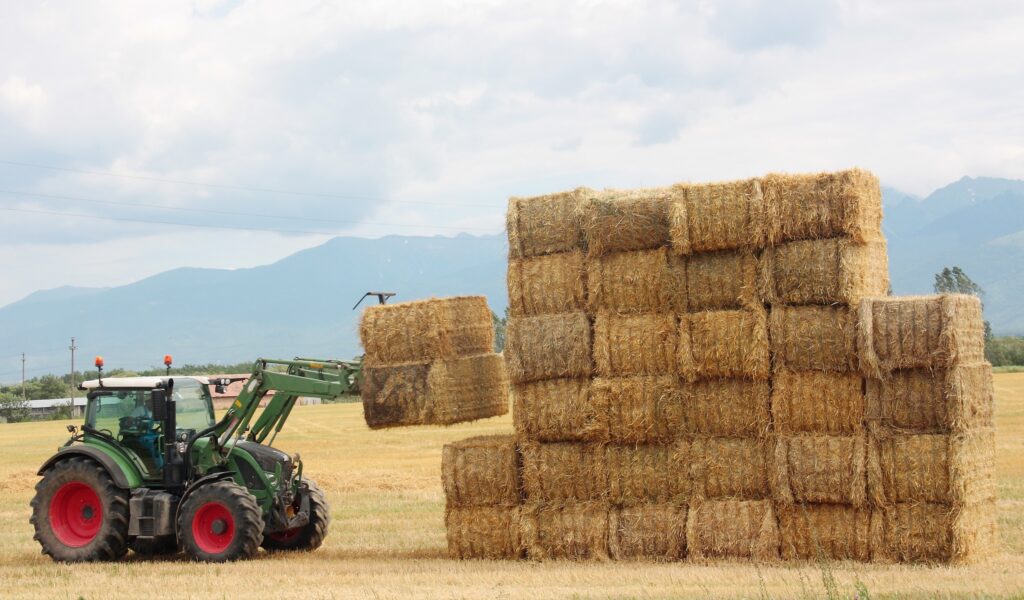
Once you know what type of grass you’re growing and where, the next question is what it actually takes to get that hay cut, dried, and baled. This is where hay farming stops being theoretical and starts being about horsepower and hours in the field.
The Core Gear Lineup For Successful Hay Farming
Five acres or five hundred, most hay farming operations lean on some version of this lineup:
- Tractor: Everything else on this list runs off it.
- Mower or Cutter: Cuts the standing crop. Could be a basic sickle mower, or a haybine that cuts, crimps, and windrows in a single pass.
- Tedder: Fluffs and spreads the cut hay so both sides dry evenly, which shaves real time off your curing window.
- Rake: Pulls dried hay into windrows so the baler can pick it up cleanly.
- Baler: Compresses hay into round or square bales. Round hay bales suit bigger operations and outdoor storage better. Square hay bales stack more easily and are usually the better call for smaller setups or hand feeding.
- Seed drills, broadcast seeders, and cultipackers are the primary items you’ll need for seed dispersal.
Choosing The Right Essentials For Your Hay Farming Operation
Match the necessary hay farming gear to your acreage, not the other way around.
- Under 10 Acres: A compact tractor, a small sickle mower, a hand or small ground-driven rake, and either a small square baler or a hand-baling setup will cover you. Plenty of small hay farming setups skip the baler entirely and just store loose hay or tie small bales by hand.
- 10 to 75 Acres: This is where most family hay farming operations sit. Mid-size tractor, disc mower or haybine, a tedder, a wheel rake, small square or round baler.
- 75 Acres and Up: Bigger horsepower, a wider haybine, a rotary rake, and a large round or square baler to keep pace when the weather window is tight and the acreage is not.
Tools And Accessories That Make Hay Farming Easier
A few smaller items pull more weight than their price tag suggests. A hay moisture tester takes the guesswork out of the single most important decision you’ll make each cutting: when to bale. Twine or net wrap keeps bales together for handling. A bale spear or grapple on your tractor turns moving and stacking finished bales from a half-day job into an afternoon. Keep a few spare knotter parts and belts on hand for your baler, too. A part that’s twenty minutes away by truck can still cost you your whole drying window if you don’t have it on the shelf.
What Hay Farming Actually Takes In Time And Labor
It’s worth knowing this part going in. Hay farming rewards flexibility as much as horsepower, since a cutting season means long, full days once the weather window opens and the work follows the weather more than the clock. Smaller operations often run fine with just one or two people handling everything from mowing to stacking. Larger ones tend to bring in extra hands during the busiest stretch, once several fields need cutting close together. Planning your equipment and your calendar with that rhythm in mind sets you up for a season that runs smoothly from the first cutting to the last.
New Versus Used Hay Farming Equipment: What To Look For
A lot of successful hay farming operations run on used equipment, and there’s nothing wrong with that. Buying smart here frees up cash for the acres and inputs that actually grow your crop.
On a used mower, check the cutting bar or discs and make sure the guards are all still there. On a rake, look at the spring tines for wear. On a baler, check the knotters, belts, and pickup teeth first, since those take the brunt of the work. And on any tractor, ask about hours and maintenance history, and whether it was run for hay farming specifically. That last detail tells you a lot about how hard it’s been used.
Getting gear that fits your acreage and runs well from day one means less time fixing things and more time in the field, which is really the whole point. Hayden Outdoors lists farm and ranch equipment for every stage of a hay farming operation, from a starter setup to a full production lineup, so finding the right match for your land doesn’t have to be a project of its own.
The Step-By-Step Guide For How To Grow Hay
Growing good hay starts well before the first cutting during harvest season. Here’s the process, start to finish.
- Test and prepare your soil. Growing good hay starts with good soil, full stop. Most hay crops want a pH somewhere between 6.0 and 7.0, so a soil test up front tells you whether you need lime or other amendments before anything goes in the ground. Get this step right before you grow your hay, and you’ll see it pay off in root strength and regrowth for every season of hay farming that field sees after.
- Choose and plant your crop. Match your seed choice to your region and your goals. Cool-season grasses generally go in during early spring or late summer, while warm-season grasses wait until after the last frost. Stick close to the recommended seeding rate. Too heavy and the stand crowds itself out. Too light and you’re leaving yield on the table.
- Fertilize to support growth. Every cutting pulls nutrients out of the ground, so build a fertility plan off your soil test and stick with it season over season. Legumes like alfalfa and clover need less nitrogen since they make their own. Grasses lean on it more.
- Manage competing weeds. Weeds compete for the same sunlight, water, and nutrients your hay crop needs, so staying ahead of them matters. Mow before they go to seed, and apply a targeted herbicide where it’s needed. A clean stand is a productive stand.
- Water consistently. Most hay crops want about one to one and a half inches of water a week during the growing season, whether that comes from the sky or an irrigation line on the farm. This matters most in the early going, while a new stand is still finding its footing.
- Monitor growth toward your first cutting. A new stand typically needs a full growing season before its first real hay harvest, though a partial cutting is sometimes possible sooner if conditions cooperate. Watch for early flowering or bud stage. That’s your signal that the crop is nearing peak quality for hay farming.
Every one of those steps is building toward one thing: a stand that’s ready to cut. Which brings us to the part most first-timers are really asking about.
How To Harvest Hay After You Grow It
This is where everything you’ve put into your hay farming operation either pays off or doesn’t, and it’s usually what people are picturing when they ask how is hay made, start to finish. Get the timing, technique, and moisture right, and you protect both the quality of the hay and everything you invested to grow it.
Timing Your Cut For Peak Hay Quality
Timing is one of the most powerful levers you have over hay quality. Cut grass hay in the early flowering stage. Cut legumes like alfalfa in the bud stage or at early bloom. It’ll feel early. It’s supposed to. Cutting sooner than instinct tells you protects protein content and keeps the stems from getting woody. Most hay farming operations also wait for a three-four day dry stretch before they start, since hay needs that field time to cure right.
Cutting, Tedding, And Raking
Mow, leaving one to two inches of stubble so the field bounces back quickly and the cut hay sits just off the ground where air can move under it. Once it’s down, run the tedder to fluff and spread it, which gets sun and air to both sides and speeds drying. When the hay feels crunchy rather than bendy, rake it into windrows, keeping the rake set high enough to leave the dirt in the field where it belongs.
Testing Moisture And Baling Your Hay
Moisture makes or breaks whether hay stores well, so this step deserves attention. Before baling, small square bales should be down around 18 to 22 percent moisture, and large round or square bales closer to 16 to 18 percent, since a denser bale holds heat and moisture longer. Twist a handful of stems and feel for dampness as a rough field check, or use a hay moisture tester for a precise reading, which takes the guesswork out of hay farming.
From there, pick your bale type. Round bales work well for bigger operations and shed rain better outdoors. Square bales are lighter, stack more easily, and tend to win out for smaller feeding setups. Cut, dry, rake, bale. That’s really the whole answer to how to make hay, on any size operation.
Planning Around The Weather When Hay Farming
Weather is the one part of hay farming and harvesting you don’t get to control, so planning around it is one of the best habits you can build. Watch the extended forecast before you cut, and hold off for that three-four day dry window rather than rushing. A lot of experienced operations build a little slack into their schedule for exactly this reason. It’s not about being cautious. It’s about giving your hay the best shot at curing right the first time.
Storing Your Hay To Protect Your Investment
Storage is where you protect everything the season’s work went into. Keep hay off the ground on pallets, poles, or a gravel pad so moisture doesn’t wick up into the bottom of the stack, and give it airflow, whether that’s spacing bales outdoors or keeping a barn properly ventilated, according to the Cornell Cooperative Extension. Check on fresh hay bales through the first several weeks of storage. It’s a normal part of good hay farming, and it buys you peace of mind while everything finishes curing.
Pro Tip: Aim to store bales at 20 percent moisture or less, since keeping moisture in check is one of the simplest ways to prevent hay fires and reduce spoilage. A quick check with a moisture tester before stacking is a small hay farming habit that pays off both in hay quality and risk reduction.
Getting The Most Value From Your Hay Farming Harvest
A good hay farming season is more than bales stacked in the barn. It’s understanding what you actually grew and getting full value out of it during harvest season, whether that’s feeding your own herd or selling to someone else’s.
If you’re selling, or you just want a clear picture of what you’re feeding, get a forage test done on your hay. A lab sample gives you real numbers on protein and quality, which helps you price fairly or match hay to the right animal. Buyers notice when a seller can back up their hay with actual data instead of just a handshake.
Yield rewards good management too. Hay fields that get fertilized properly and cut at the right stage consistently outproduce fields left to fend for themselves, and the market tends to pay more for hay that’s clearly been managed well. Equipment plays into this more than people think. A mower, tedder, and baler that are actually matched to your fields mean less hay left behind and less quality lost to delays, and that adds up fast across a full season of hay farming.
Keep simple records while you’re at it. Yield per acre, cutting dates, what you spent on inputs. It sounds like overkill until you look back after a few seasons of hay farming and harvesting and realize you can actually see what’s working and what isn’t. A lot of the long-time hay farming families we work with point to exactly this kind of record keeping as what took them from a few acres to a real operation.
At the end of the day, it comes down to a handful of things done consistently: healthy soil, the right crop, good timing, and equipment you can count on. That’s the difference between a hay farming operation that just gets by and one that actually thrives.
What To Expect Your First Season Of Hay Farming
Your first year of hay farming is really about getting to know your land. Every field has its own personality, its own microclimate, its own quirks, and the more seasons you put in, the better you get at reading it. That learning curve is part of what makes this journey so satisfying. There’s real pride in watching your timing and instincts sharpen year over year.
A few things can help that first season of hay farming go smoothly. Start with an acreage you can comfortably manage, so you’re building confidence rather than stretching thin. Lean on your local extension office for soil testing and crop guidance specific to your area, since regional knowledge beats generic advice every time. And talk to a neighbor who’s been growing and harvesting longer than you have. Most farmers are glad to share what they know, and a good conversation can hand you years of experience in an afternoon.
By your second or third season, the rhythm of hay farming starts to feel familiar. You’ll know your fields, your gear, and your own timing well enough that the whole process runs on instinct.
Find The Right Hay Farming Equipment For Your Harvesting Operation
Hay farming is one of the better things you can do with productive land. It brings your feed costs down, puts you in control of what your animals are eating, and for plenty of farms, it turns into a real revenue stream. Pick the right crop for your region, follow a solid plan for growing and harvesting, and get equipment that actually fits your acreage, and hay farming is well within reach, wherever you’re starting from.
That last piece, the equipment, is where Hayden Outdoors can help. Our farm and ranch listings help you fill in the gaps in your operation and find equipment that works for your acreage. Browse our current equipment listings and get your season started right.
View Available Hay Farming Essentials
The Complete List Of Essential Horse Riding Equipment And Gear
Few things in life compare to a full day on horseback with good country ahead of you. There’s a connection that’s crafted over time between horse and rider, across miles of trail and hours in the saddle, and the right horseback riding equipment and gear is what makes all of that possible from day one.
Get the horseback riding gear right, and your horse moves comfortably, communicates clearly, and stays sound. You ride with confidence, stay safe in situations that would otherwise catch you off guard, and spend your energy on the ride instead of managing problems that the right horseback riding equipment would have prevented.
Most horse riding gear lists hand you an equipment checklist and call it a day. We’re going to go a bit deeper. We cover every essential item, explain what each piece actually does, and give special attention to the trail and outdoor gear that most horse riding equipment guides leave out entirely. We’ll also tell you what to prioritize first, what a good fit looks like, and how to care for your equipment so it lasts.
Pro Tip: If you’re still in the process of selecting your horse, our guide to buying your first horse is worth reading before you build out your riding gear list.
Table Of Contents
Why Getting The Right Horse Riding Equipment Matters
We can really break horse riding equipment and gear into two core categories:
- Tack is all the riding gear and equipment that goes on the horse: saddle, pad, bridle, bit, halter, and all the hardware connecting those pieces.
- Rider gear is what you wear and carry.
Both sides of that list matter, and both have real consequences when something is wrong.
A saddle that doesn’t fit causes pain. A horse in pain acts out. A helmet that isn’t properly certified offers less protection than it looks like it does. Boots without the right heel can trap your foot in a stirrup. These aren’t abstract concerns. They’re the practical reasons why understanding your horse riding gear before you buy it is worth the time.
Horse riding gear and equipment also vary by discipline. English and Western tack are different. Trail and outdoor riders have needs that arena-focused horseback riding equipment guides rarely touch on. Our guide covers all of it, with particular depth on the trail and backcountry horseback riding equipment that tends to get left off other gear lists entirely.
Safety-Focused Horse Riding Equipment List
Safety gear is the first stop on any honest horse riding equipment list. This is where fit and quality matter most, and where cutting corners tends to have the most serious consequences.
Helmet: Your helmet is the most important piece of horse riding equipment you own. Look for ASTM F1163 certification and the SEI mark, which tells you the helmet has been independently tested to that standard. A bike helmet doesn’t qualify. The impact forces around horses are different from cycling falls, and an equestrian helmet is built around those specific dynamics.
Fit is just as important as certification. The helmet should sit level, roughly two finger-widths above your eyebrows, and should not shift when you push against it in any direction. Get it fitted by someone who knows what they’re looking at, and replace it after any significant impact, even if the shell looks fine. The foam inside can be compromised without showing visible damage.
Body Protector And Air Vest: Body protectors and air vests are pieces of horse riding equipment that both protect your torso in a fall, but they work differently. A body protector is a foam-padded vest that absorbs and distributes impact on contact. It’s always on and always working. An air vest inflates automatically with CO2 when the tether connecting it to the saddle pulls free during a fall, and it wraps the rider in cushioning in the moment it’s needed most.
A lot of serious trail and backcountry horseback riders wear both pieces of equipment. If you’re choosing just one to start, a body protector rated to BETA Level 3 or higher covers most situations well.
Reflective Equipment And Gear: This one gets left off most horse riding equipment lists, but it belongs in your gear lineup if you ride early mornings, at dusk, or on trails that run near roads. Reflective vest overlays for riders and reflective strips for horses are inexpensive additions to your horseback riding equipment setup and can prevent the kind of accidents that have nothing to do with horsemanship at all.
Riding Boots: When it comes to essential horse riding gear, it’s worth noting that a standard work boot or hiking boot isn’t a substitute for a riding boot. The defining feature of purpose-built horseback riding boots is the heel, typically at least one inch, which prevents your foot from sliding through the stirrup and getting caught in a fall. That’s one of the most important design elements in this piece of horse riding gear.
Tall boots are traditional for English riding and offer more leg coverage. Paddock boots paired with half chaps are common in Western and trail contexts where you spend more time moving around on foot. Either way, fit snug through the heel with room to flex through the ankle.
Breeches And Riding Pants: Riding-specific pants are cut to remove the inseam bulk that causes friction where your leg contacts the saddle. Full-seat breeches add a grippy panel for stability. Western riders typically reach for riding jeans, which accomplish the same thing with a different look. Whatever you choose, loose fabric at the inner leg is the enemy. It creates chafing fast and gets uncomfortable even faster.
Gloves: Riding gloves protect your hands from blisters on longer rides, improve grip on the reins, and keep your hands working in cold weather. A well-fitted glove lets you feel what the reins are doing while taking the wear off your skin. It’s a small piece of horse riding gear, but you’ll notice when you don’t have them.
Weather-Appropriate Horseback Riding Outerwear: Horseback riders who spend time riding on the trails need to think about outdoor-appropriate outerwear gear more seriously than arena riders do. A packable rain shell, layering pieces for cold mornings, and UV-protective tops for summer riding all earn a spot on a complete horseback riding equipment list. Weather moves fast in open country, and being caught unprepared on horseback is a different problem than being caught on foot.
List Of Essential Riding Equipment For Your Horse
Tack is where the majority of your horse riding equipment budget goes, and where the gear decisions you make have the most direct effect on how the horse moves, responds, and stays healthy over time.
The List Of Core Horse Riding Equipment Every Rider Needs
Saddle: The saddle is the foundation of any solid horse riding equipment list. A well-fitted saddle distributes weight evenly across the horse’s back, allows the shoulders to move freely, and sits level without rocking.
There are two things to understand when evaluating saddle fit: tree width and gullet clearance. The tree is the internal frame of the saddle, and it needs to match the width of your horse’s back. If it’s narrower than it should be, it can pinch the withers. If it’s too wide, the saddle drops forward and loads the spine. The gullet is the channel along the underside of the saddle, and it needs to clear the horse’s spine completely from front to back. If you’re not sure, a professional saddle fitter is worth investing in. Getting saddle fit wrong costs you in the horse’s soundness and behavior over time.
Saddle Pad: Every ride starts with a saddle pad layered under the saddle, cushioning the contact point between the tree and your horse’s back. It cushions contact, pulls sweat away, protects the saddle from dirt and oils, and helps manage heat. A good pad doesn’t fix a poorly fitted saddle, but it’s still an important part of a complete horse riding equipment setup.
Pad thickness and material depend on discipline and climate. Contoured pads work better for horses with high withers. Wool pads breathe well and handle moisture in variable conditions. Check the underside regularly for embedded grit and debris. Even through padding, that material creates pressure points.
Girth Or Cinch: When it comes to horse riding equipment, the girth in English riding and the cinch in Western riding do the same job: wrapping around the horse’s barrel to hold the saddle in place. It’s a straightforward piece of horse riding equipment with a job that matters.
Check the fit every time you tack up. A loose girth allows the saddle to shift. Overtightening too fast can cause discomfort and defensive behavior. Tighten gradually, walk the horse for a few minutes, then check and adjust again.
Bridle, Bit, And Reins: The bridle is a piece of riding equipment that fits over the horse’s head and holds the bit and reins in place, connecting you to your horse through the most direct communication channel in riding. English bridles and Western headstalls are built differently, and bitless options like hackamores serve specific horses and training situations.
Bit selection is its own deep topic, but the practical starting point for most riders building their first horseback riding equipment setup is a simple, softer bit suited to where the horse is in its training. If you’re unsure, ask a trainer or an experienced tack shop staff member rather than guessing.
Reins come in leather, rubber, and synthetic materials. Longer split reins are standard for Western and trail riding. Shorter loop reins are more common in English contexts. Whatever style suits your riding, the reins need to be long enough to give relief when the horse needs it and short enough to maintain real contact when you want it.
Halter And Lead Rope: The halter and lead rope come before everything else on the horse riding equipment list. Before the saddle is on, before the bridle is fitted, you need a way to catch, lead, and tie your horse safely. A well-fitted halter gives you that control on the ground. Bring a halter and lead rope on trail rides, too. There are plenty of situations out on the trail where having them accessible is not optional.
Horse Riding Gear List For Leg And Body Protection
Bell Boots: Bell boots fit over your horse’s hoof and protect the heel bulbs from overreach injuries, which happen when a hind foot strikes the back of a front foot during movement. Horses with long strides, horses working on uneven terrain, and horses in any kind of active work benefit from this piece of gear.
Splint Boots And Sport Boots: Splint boots protect the cannon bone and fetlock from interference strikes, where one leg contacts another during movement. Sport boots add support alongside protection and are common in disciplines that demand lateral movement and quick direction changes. For trail riders, a lightweight protective boot gives a practical middle ground without the bulk of full competition gear.
Leg Wraps: Leg wraps cover some of the same ground as boots and are also used for shipping, stall rest, and therapeutic support. They require more skill to apply correctly than boots do. An improperly applied wrap creates pressure problems instead of preventing them. For most recreational and trail horseback riders, boots are the more practical gear choice. Leg wraps become more relevant as your horsemanship develops and you have specific support needs to address.
Trail And Outdoor Horse Riding Equipment List
If you ride off property or in the backcountry at all, this section of the horse riding equipment list is where the standard guides fall short. Arena-focused horseback riding equipment guides simply don’t address what happens when you’re five miles from the trailer and something goes sideways. This gear does.
Saddlebags And Horn Bags: Saddlebags are essential horse riding equipment the moment you leave your starting point for anything more than a short trek. They carry water, food, a first aid kit, rain gear, a hoof pick, and whatever else the day might require. Horn bags attach to the saddle horn for quick-access items you want to reach while still mounted. Cantle bags handle heavier loads at the rear. A good saddlebag system sits balanced and secure at a trot and over uneven ground.
Breastcollar And Crupper: On flat arena ground, a saddle stays put with the girth alone. Add any real terrain, and that can change. A breastcollar connects the front of the saddle to the girth and keeps the saddle from sliding back on uphills. A crupper runs from the back of the saddle under the tail and prevents it from sliding forward on descents. Both are standard horse riding equipment for anyone riding in hilly or mountainous terrain. If your horse rides include elevation change, a breastcollar at a minimum belongs on your horseback riding equipment list.
Trail First Aid Kit: A purpose-built trail first aid kit is horse riding gear you pack, hoping you never open it. The kit should cover wound care for the horse (antiseptic, gauze, self-adhesive bandage wrap), basic rider care (bandages, pain reliever, emergency contacts), and a hoof pick for debris issues mid-ride. A compact, dedicated kit beats improvising from whatever happens to be in your saddlebag.
Hoof Pick: A hoof pick lives in the barn, and it’s a piece of gear that also needs to live on your horse or in your saddlebag every time you leave the property to go riding. Rocks and packed debris lodge in the hoof during trail rides. A horse that picks up a stone and goes unaddressed can end up lame miles from the trailer. This is one of the smallest but most impactful pieces of horse riding equipment on this list.
Rain Gear And Layering: Weather in open country can shift rapidly, and being caught on horseback in a cold downpour without rain gear can become quite the mess. A packable waterproof shell that fits over your riding clothes is non-negotiable horse riding equipment. Add layering pieces for cold mornings and a lightweight base layer for summer riding, and you’re covered for most of what the outdoors throws at you.
Trail Tools: Riders in timbered country should think seriously about carrying a compact folding saw or hand axe as a part of their horse riding gear lineup. This is specialized horse riding equipment that rarely makes it onto standard gear lists, but experienced backcountry riders carry it as a matter of course. A downed tree across a narrow trail with a horse is not a minor inconvenience.
Headlamp Or Helmet Light: If your ride has any chance of extending past daylight or starting before sunrise, a headlamp or helmet-mounted light is practical horse riding gear. It keeps you visible to others, helps you navigate terrain safely, and gives you light to handle the horse and check tack in low-light conditions. Clip-on lights designed for equestrian helmets are a clean solution that doesn’t interfere with your riding.
Priority Gear List: What Horse Riding Equipment To Buy First
Must-Have Horse Riding Equipment Before Your First Ride
You won’t want to get in the saddle without these.
- ASTM/SEI-certified riding helmet, properly fitted
- Riding boots with at least a one-inch heel
- Halter and lead rope
- Properly fitted saddle with matching saddle pad
- Girth or cinch
- Bridle, appropriate bit, and reins
- First aid kits (for you and the horse you’re riding)
Horse Riding Gear To Add In Your First Season
Once the essentials are in place, this horseback riding equipment rounds out your setup.
- Riding gloves
- Body protector or air vest
- Bell boots and leg protection for the horse
- Basic grooming kit (curry comb, stiff brush, soft brush, hoof pick)
- Saddlebags for trail riding
- Weather-appropriate outerwear
Nice-To-Have Horse Riding Equipment As You Progress
This tier of horse riding gear and equipment becomes relevant as your riding develops and your needs get more specific.
- Air vest (upgrade from body protector)
- Breastcollar and crupper for trail and mountain riding
- Specialty bits suited to your horse’s training stage
- Trail tools (folding saw, hand axe)
- Reflective gear for horse and rider (higher priority if you venture off-property)
- Helmet light for low-light riding
How To Know If Your Horse Riding Equipment Fits Correctly
Even if you have the right horse riding equipment and gear, the wrong fit creates its own set of problems. Here’s what to look for across the pieces that matter most:
- Saddle Fit Red Flags: A saddle that rocks forward and back when you sit in it has a tree fit problem. Check for bridging by pressing firmly along the length of the pad after a ride and looking for dry spots in the middle zone where the saddle contacts the horse at the front and rear but gaps in the center. The gullet should never touch the spine. If your horse pins its ears, wrings its tail, or gets difficult when being tacked up, saddle fit is the first place to look. A certified saddle fitter can assess the situation objectively and tell you whether you need an adjustment or a different saddle entirely.
- Bridle And Bit Fit: The bit should sit in the corners of the mouth with one or two light wrinkles, not pulling tight. A noseband, if your bridle has one, should allow two fingers of clearance. The browband and crownpiece should not pinch the ears or pull the headstall out of position. Recheck bridle fit any time the horse’s weight changes significantly through the year.
- Rider Helmet Fit: Place two fingers flat against your forehead just above your eyebrows. The helmet brim should rest on those fingers when the helmet is properly positioned. Push against the helmet from the front, back, and sides. It should not move. If it passes all of that but still does not feel right, get it professionally fitted. This is the piece of horse riding equipment where improper fit has the most direct consequences.
How To Care For Your Horse Riding Equipment
Quality horse riding gear and equipment lasts for years when it’s taken care of. Neglect it and the timeline shortens, potentially creating safety problems before creating visible ones.
Leather Tack Care
Leather saddles, bridles, and girths need regular cleaning and conditioning. Wipe down leather with a lightly damp sponge and a pH-balanced cleaner after a few rides or whenever it is visibly dusty or sweated through. Follow with a conditioner to keep the leather supple. Dry leather cracks and gets brittle, and brittle leather fails. Every six months, do a more thorough cleaning and inspect every stitched joint, buckle, and billet strap for wear.
Saddle Pad Care
Saddle pads pick up sweat, hair, and dried dirt from every ride. That buildup becomes abrasive against the horse’s back over time. Shake or brush pads out after each ride and wash them on a regular schedule according to the manufacturer’s instructions. Dry them completely before storage. A damp pad in a closed tack trunk develops mildew fast, and that’s problematic for both the material and the horse.
Hardware Inspection
Buckles, snaps, D-rings, stirrup leathers, and billets are the structural connection points of your horse riding equipment. Check them regularly for corrosion, deformation, and cracking. A buckle with a hairline fracture in the frame looks fine until it doesn’t. Replace anything that shows structural wear.
Storage
Saddles belong on proper saddle racks that support the tree and keep it off the ground. Bridles hang best from rounded pegs that hold the leather in shape. Keep your tack room dry, out of direct sunlight, and at a reasonably stable temperature to protect your horse riding equipment. Heat and moisture break down leather and delaminate synthetic materials quickly.
The Right Gear Deserves The Right Land
Once your horse riding equipment is dialed in and you have the right horse to adventure with, the next move is finding land that’s worth riding on. Room to move. Established trails. Pasture and infrastructure that makes keeping horses practical, rather than a constant logistical challenge.
That kind of equestrian property exists across the country, and here at Hayden Outdoors, we know where to find it. From working ranch land with existing horse facilities to private acreage with direct trail access, our agents understand what makes a property genuinely suitable for horses, beyond just the square footage.
Browse our current equestrian property listings and find land that matches the investment you have already made in your horseback riding.
View Available Equestrian Properties
The Sustainable Farmer’s Guide To No Till Farming Equipment
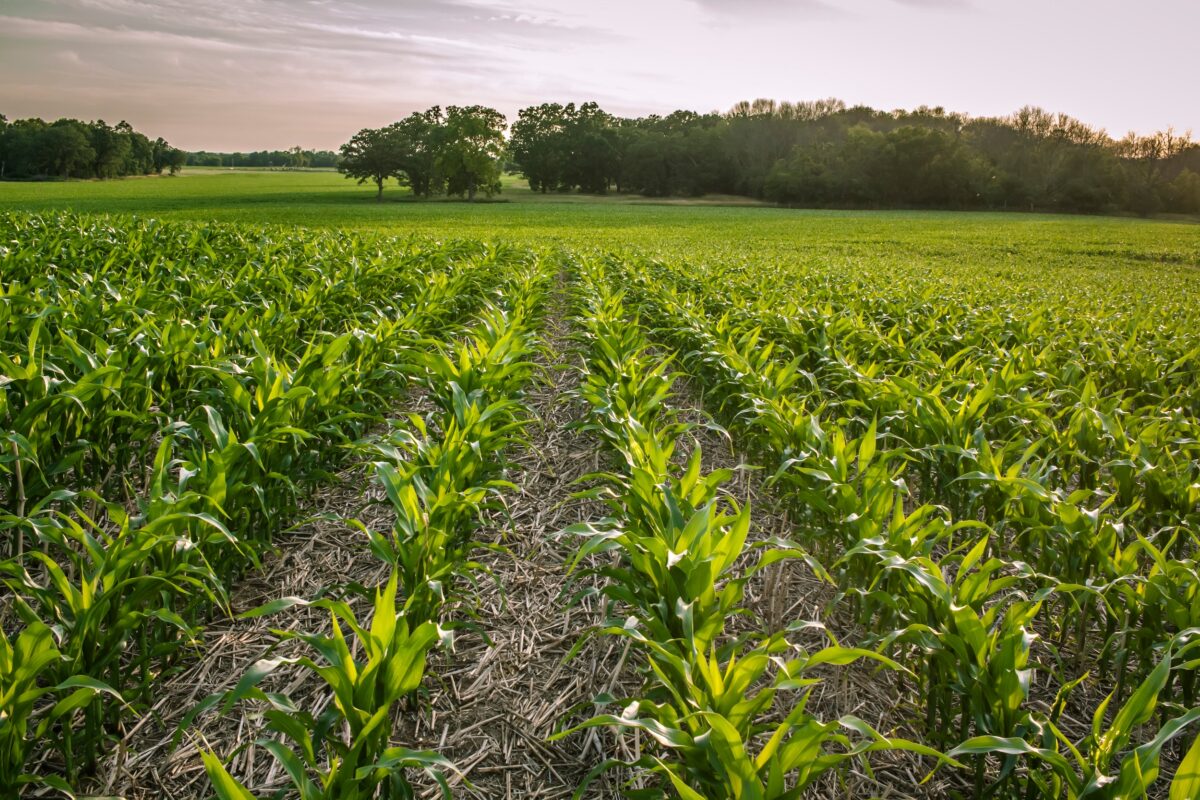
There’s a quiet revolution happening across American farmland. Farmers who once measured their success by how thoroughly they turned the soil are rethinking everything, reaching instead for no till farming equipment as a path toward a more productive, more resilient, and more sustainable operation.
Input costs are climbing. Soil quality on intensively tilled ground is declining over time. And the pressure on farmers to produce consistently, year after year, without degrading the land beneath their feet, has never been greater. If you’ve been asking whether there’s a better way, no till farming equipment is worth looking into.
This guide covers what no till farming is, which farming operations are best suited for it, the honest pros and cons, the core equipment involved, how to acquire and adapt that equipment, and what it takes to keep it running well.
Whether you’re a seasoned farmer exploring a transition or a land buyer evaluating a property’s agricultural potential, we’ll give you a grounded, practical understanding of no till farm equipment and what it means for the land you work.
Table Of Contents
What Is No Till Farming And Why Does It Matter?
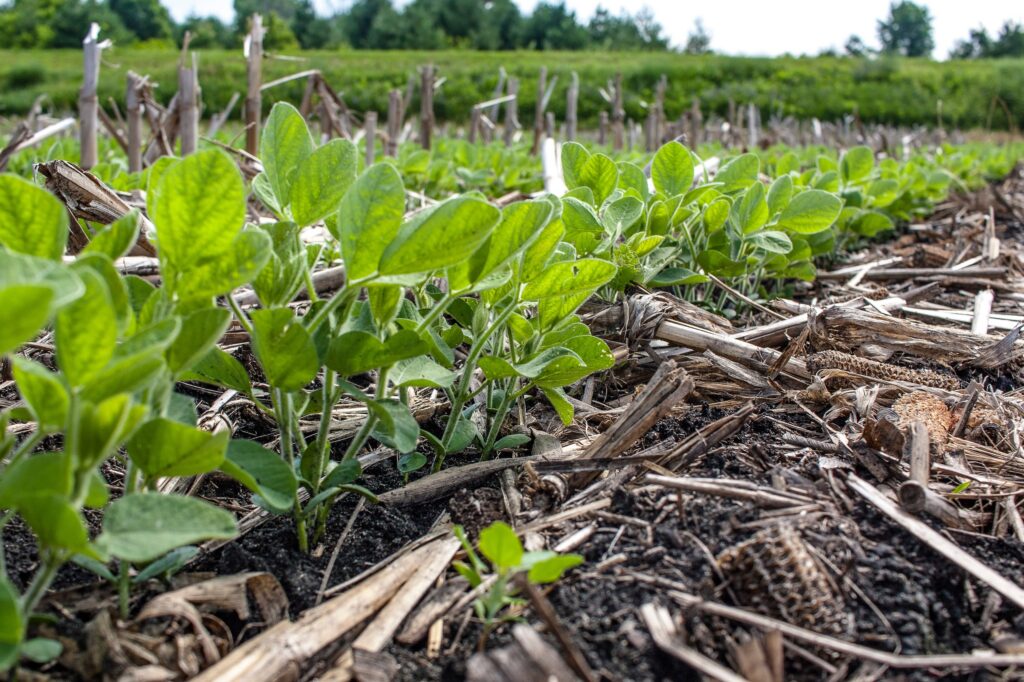
No till farming, sometimes called zero tillage or direct seeding, is an approach to crop production that eliminates the need to mechanically disturb the soil before planting.
In a conventional system, farmers plow, disc, and work the ground repeatedly to prepare a seedbed, kill existing weeds, and incorporate residue from the previous crop. No till farming skips those passes entirely. Instead, specialized no till farming equipment places seeds directly into undisturbed soil, cutting through crop residue and surface material with minimal ground disturbance.
The idea isn’t new. No till farming gained significant momentum in the United States starting in the 1970s, when broad-spectrum herbicides became widely available and gave farmers an alternative tool for weed control that didn’t rely on tillage. Since then, adoption has grown substantially.
Today, roughly a quarter of US cropland is managed using zero tillage methods and equipment, and the practice has been described in agricultural literature as one of the most significant shifts in modern farming.
How No Till Farm Equipment Differs From Conventional Tillage Tools
The equipment that makes no till farming possible is purpose-built for a very different task than conventional tillage tools. In conventional farming, a plow, disc harrow, or field cultivator is designed to aggressively disturb the soil across a wide swath.
No till farm equipment, by contrast, is engineered to do the opposite: open a precise, narrow slot in undisturbed ground, place seed at the correct depth, and close the furrow behind it, all while leaving the surrounding soil structure intact.
This fundamental difference in purpose drives every design decision. No till drills and planters are heavier than their conventional farming equipment counterparts because they must push through crop residue and firm, untilled soil. Their coulters, openers, and press wheels are built to take on tougher conditions than machines designed for a freshly worked seedbed.
And the way these pieces of no till farming equipment interact with the land is categorically different. Where a conventional tillage tool is meant to destroy existing structure, no till farming equipment is built to work with it.
This difference is important because the structure of undisturbed soil is one of its most valuable assets. When soil is tilled repeatedly, it loses the network of pores, channels, and aggregates that allow water to move through it, oxygen to reach plant roots, and microorganisms to do their work. No till farm equipment preserves that structure season after season, which is a central reason why the long-term trajectory of zero tillage fields tends to look very different from conventionally tilled ground.
The soil health and land value benefits of no till farming are well-documented. Fields managed over several years with zero tillage equipment generally develop higher water-holding capacity than conventionally tilled fields, which matters enormously in drought-prone regions where water availability is tied directly to crop survival.
No till farming and the equipment that’s used for it can also reduce soil erosion, which helps keep sediment out of nearby waterways and protects water quality. Organic matter from previous crops stays on and in the soil rather than being buried or dispersed, feeding microbial life and building long-term fertility.
For landowners and hunters, the wildlife habitat benefits of no till farming are quite compelling. The residue and cover left on the soil surface by no till farming systems provide year-round habitat for birds, beneficial insects, and small mammals. Research has found that zero tillage fields support significantly more bird species and earthworm populations than conventionally tilled ground, making no till farm equipment a genuine tool for land stewardship, not just crop production.
Types Of Farms That Are Best Suited For No Till Farming Equipment
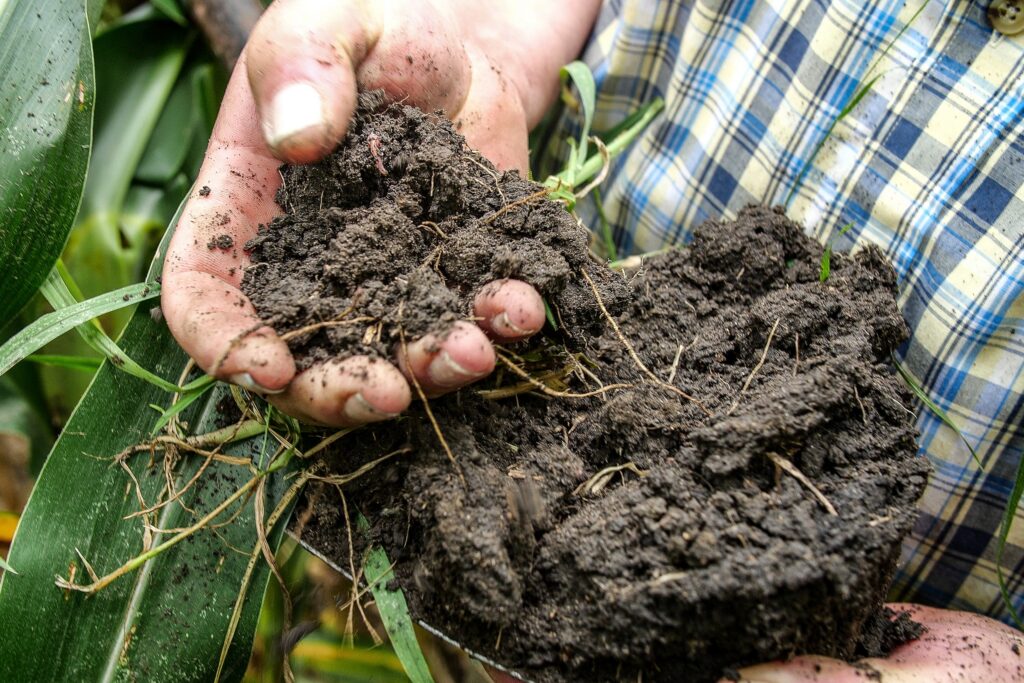
No till farming equipment is not a universal fit for every operation, and understanding where it performs best will help you determine whether it makes sense to implement zero tillage on your land.
Soil type plays a significant role. Well-drained soils with good natural structure tend to transition to no till farming systems more smoothly than heavy clay soils that are prone to compaction and slow to drain. That said, no till farming equipment has been successfully implemented across a wide range of soil types when managed carefully. In clay-heavy ground, the transition to zero tillage may require more patience and a stronger emphasis on cover crops to build the biological activity needed to maintain pore structure without mechanical intervention.
Crop rotation is another key factor. No till farming equipment performs well in diverse rotations that break pest and disease cycles and reduce weed pressure over time. Corn and soybean rotations, small grains like wheat and barley, and forage crops are all commonly grown with no till farm equipment. Monoculture systems, on the other hand, can make weed and residue management more challenging without tillage as a reset tool.
Terrain matters too. Sloped, erosion-prone ground is often where no till farming equipment provides the most visible benefits, since the residue cover and undisturbed soil structure dramatically reduce the movement of soil and nutrients during rain events. Flat, highly productive ground may see subtler benefits from no till farming equipment use in the short term, but still gains in the long run through the improved soil health of a zero tillage process. Extremely rocky or irregular terrain can create challenges for some types of zero tillage equipment, particularly equipment with rigid coulter or opener configurations that struggle to follow uneven ground closely.
Farm scale is less of a limiting factor than many assume. No till farm equipment is available in configurations suited to small operations, mid-size family farms, and large commercial producers. Smaller operations may find that renting no till farming equipment or working with a custom hire operator is a practical entry point, while larger operations may justify dedicated equipment more quickly. The key is matching the equipment’s capacity and configuration to your specific acreage, row spacing requirements, and the crops you grow.
Finally, consider your willingness to manage a transition period to zero tillage. No till farming does not always deliver its full benefits immediately. In the first one to three years after switching to zero tillage, some farmers see modest yield reductions as soil biology adjusts to the new system and management practices evolve. This is a normal part of the transition to no till farming equipment and should be factored into any decision to adopt a zero tillage approach.
Pros And Cons Of No Till Farming Equipment
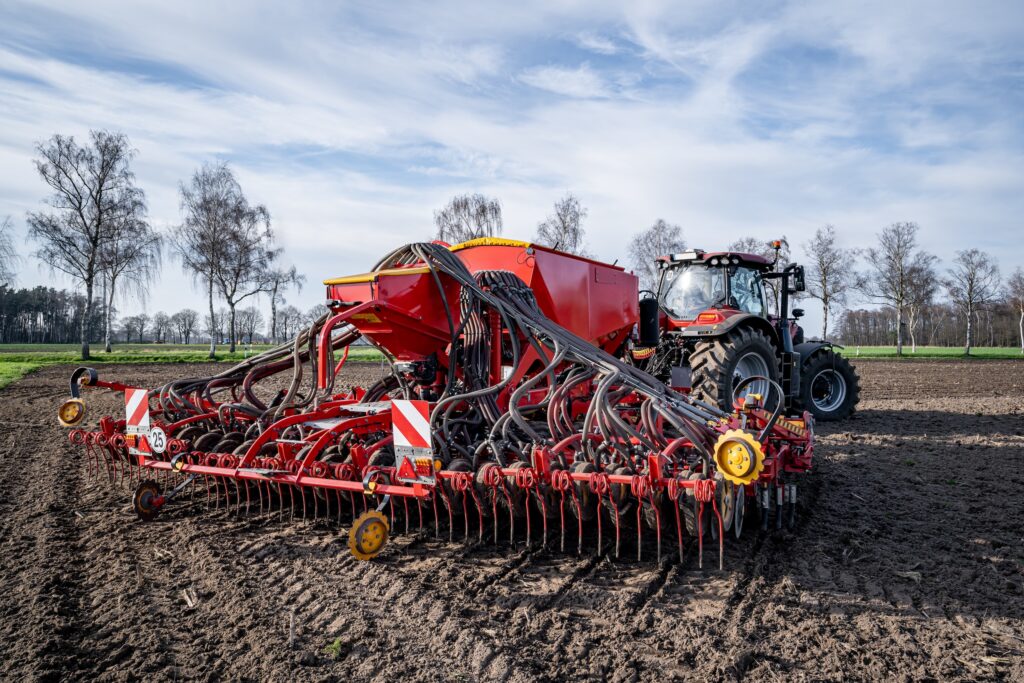
The Real Advantages
The case for no till farm equipment is built on a foundation of well-documented, long-term benefits that compound over time.
Fuel and labor savings are among the most immediate and tangible benefits of zero tillage. Conventional tillage requires multiple passes over a field before planting, each one burning fuel and logging hours on equipment. No till farming equipment eliminates most or all of those passes. The USDA has noted that continuous no till requires a fraction of the diesel fuel per acre compared to conventional tillage systems, and that labor savings from eliminating pre-plant tillage passes can be substantial on large acreage operations.
Soil health improvement is the most consequential long-term advantage of using no till farming equipment. No till farming preserves soil structure, reduces erosion, and builds organic matter over time. Fields that have been managed with no till farm equipment for years tend to have greater water-holding capacity, better infiltration, higher levels of biological activity, and more earthworm populations than tilled fields. This translates into greater resilience during drought, better nutrient cycling, and a more productive soil ecosystem over the long run.
From a land value standpoint, well-managed no till fields with improving soil health are increasingly attractive to buyers. As awareness of soil health’s role in long-term land productivity grows among agricultural land investors and farmers alike, a documented history of using no till farming equipment and improving soil organic matter can be a meaningful asset.
For landowners with wildlife and hunting interests, the habitat benefits of no till farming practices and equipment usage add another layer of value. The surface residue and cover that zero tillage equipment leaves behind creates food and shelter for game birds, pollinators, and the full range of wildlife that makes a property thrive.
The Honest Challenges Of Zero Tillage Equipment
Any thorough guide to no till farming equipment requires diving into the challenges and obstacles.
The upfront equipment investment is one of the most commonly cited barriers to implementing zero tillage. Quality no till farming equipment is typically more expensive than conventional planting equipment because of the heavier construction, more complex opener systems, and additional components required to handle residue and undisturbed soil. Farmers who already own conventional planters may find that converting or adding components is a cost-effective option, but those starting from scratch should expect a substantial equipment investment choosing no till farming.
Weed management becomes more complex without tillage as a tool. Tillage has historically served as a primary method of weed control, physically destroying germinating weeds and disrupting seed banks. No till farming replaces that function with a combination of crop rotation, cover crops (e.g., cereals, grasses, and legumes), and herbicide programs. Managing herbicide-resistant weeds is one of the most significant challenges in no till systems, and it requires active, thoughtful management rather than a set-it-and-forget-it approach.
Residue management can also add complexity, particularly in high-yield corn systems where stalk residue is heavy and dense. Too much residue can interfere with seed placement, slow soil warming in spring, and create slug-friendly conditions. Row cleaners on no till farming equipment help address this, but residue management remains an ongoing consideration that influences both equipment selection and agronomic decisions.
Lastly, there’s the transition period. Yields in the first one to three years after switching to no till farm equipment can dip modestly as the soil adjusts. Farmers who enter the transition expecting immediate gains from adopting a zero tillage approach may be disappointed, while those who understand the longer arc of the system tend to stick with it and reap the rewards.
Core Types Of No Till Farming Equipment
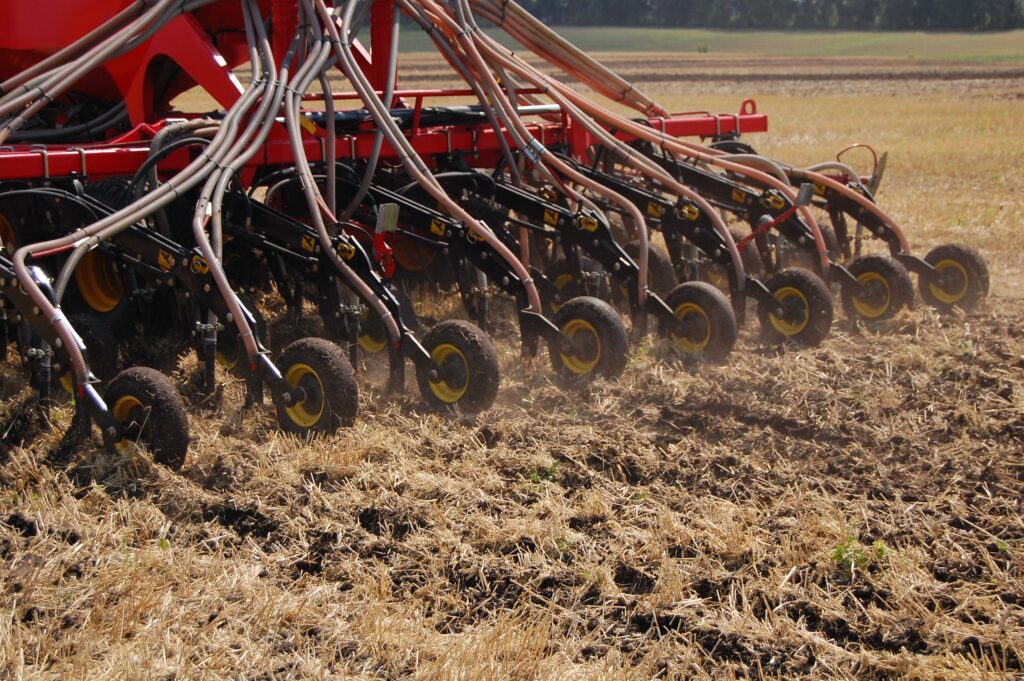
No Till Drills And Planters
Ask any farmer who has made the switch to no till farming equipment and they’ll tell you the same thing: the drill or planter is where it all starts. Get that piece of no till farming equipment right, and everything else becomes manageable. Get it wrong, and you will be fighting the system all season.
A no till drill is the go-to choice for small grains like wheat, oats, barley, and rye, as well as cover crops and forage species. It works in closely spaced rows, covering a wide swath of ground in a single pass.
What sets a no till drill apart from a conventional grain drill is what happens at the front of this piece of farming equipment. In heavy residue conditions, aggressive coulters lead the way, slicing through last year’s crop material before the seed opener ever touches the soil. The sequence matters more than most people realize. The coulter opens a path, the disc opener places the seed at the right depth, and the press wheel or closing wheel seals everything behind it. If you get the order wrong or run worn-down components, you’re planting into a mess instead of a clean furrow.
No till planting equipment works differently because farming row crops like corn and soybeans demand a different approach. Each row unit operates on its own, placing individual seeds at precise spacing and depth.
In a no till system, those row units are heavier and carry stronger down-pressure systems than what you would find on a conventional planter. They have to be. Firm, undisturbed ground doesn’t give way easily, and consistent planting depth is critical when it comes to emergence. Most no till planters also run row cleaners ahead of each unit to move residue out of the path before the opener gets there, which makes a noticeable difference in heavy corn stalks or thick cover crop biomass.
Calibration is where experience pays off with any no till farming equipment. Seed depth, down pressure, row cleaner aggressiveness, closing wheel tension, all of it shifts depending on soil conditions, residue levels, and what you’re planting. Dialing in those settings takes time, and frankly, it takes a few seasons of paying close attention to what the ground is telling you.
No Till Farm Equipment For Residue And Cover Crop Management
A no till drill or planter gets the seed in the ground, but the rest of your farm equipment lineup is what keeps the system working throughout the year.
Row cleaners are a good example. They mount ahead of each row unit on the planter and do the unglamorous work of sweeping residue out of the planting zone before the opener arrives. In a corn-on-corn rotation or after a high-yield year with heavy stalks, a row cleaner is not an optional piece of equipment in a no till farming lineup. Without one, you’re asking the opener to fight through material it was not designed to handle, which leads to skips, hairpinning, and uneven emergence. The design varies, from finger-style units to basket-style to coulter-based, and the right fit depends on your residue, your soil, and the specific planter you’re running.
Cover crop seeding equipment has become a bigger part of the zero tillage conversation as more farmers pair cover crops with their no till systems. The combination makes sense. Cover crops suppress weeds, hold soil in place over winter, add organic matter, and, in the case of legumes, fix nitrogen from the air. They can be seeded with a dedicated drill, broadcast from a high-clearance applicator into a standing cash crop, or interseeded between rows during the growing season. Each approach has its own timing considerations and establishment trade-offs, and most farmers end up finding what works through some trial and error. Terminating those cover crops before planting is its own equipment question. Herbicide is still the most common method, but roller-crimpers have drawn real interest in recent years.
A roller-crimper lays the cover crop flat and crimps the stems, killing the plant and leaving a thick mat of biomass on the surface that suppresses weeds and holds moisture. For farmers moving toward organic or reduced-input systems, it is a compelling option worth understanding.
Rounding out the no till farm equipment picture is the sprayer. Herbicide does more heavy lifting in a no till system than in a conventional one, because tillage equipment is no longer there to serve as a mechanical weed control pass.
Whether you’re running a pull-type sprayer or a self-propelled unit, calibration and timing matter. A late or off-target application in a no till system can set weed pressure back weeks, and in a bad year, that pressure is hard to recover from without reaching for the tillage tool you’re trying to avoid.
Buying, Adapting, Or Renting No Till Farming Equipment
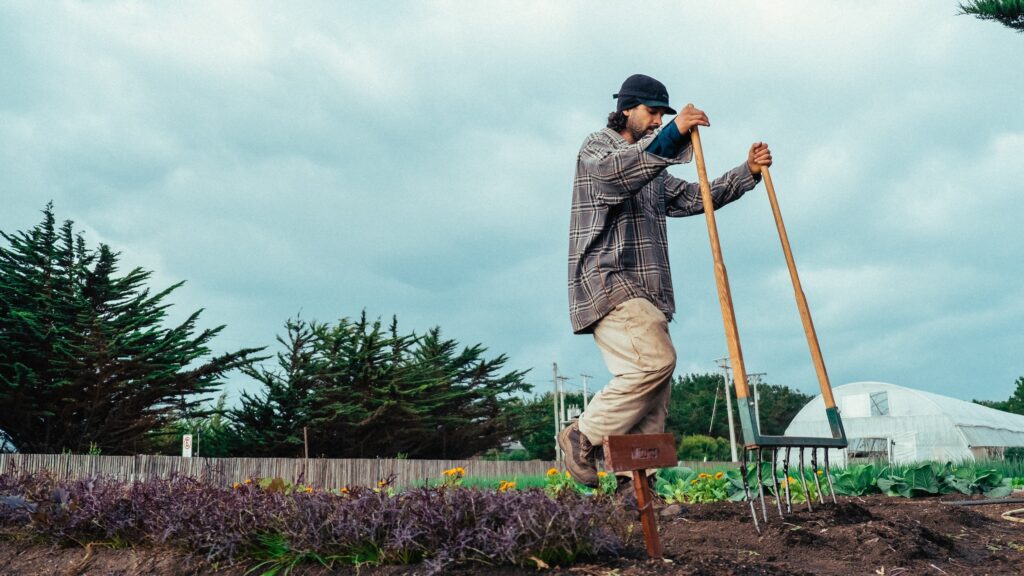
Getting into no till farming doesn’t have to require writing a big check on day one. There are a few different ways to get access to the no till equipment you need, and the right approach depends less on what is ideal and more on what fits your farm right now.
The most common no till starting point for farmers who already have a planter is adapting the farming equipment they already own for a zero tillage approach. Adding row cleaners, upgrading to heavier down-pressure springs, and bolting on a no till coulter package can make a conventional planter functional in lighter residue conditions without a full equipment replacement.
It’s not a perfect solution, and experienced no till farmers will be quick to tell you that a converted planter is not the same as a purpose-built machine. In heavy corn stalks or very hard, dry ground in late spring, a converted planter will have some limitations. But it gets you started, it lets you learn the system, and it keeps the entry cost manageable.
Buying dedicated no till farming equipment, whether new or used, is the right call for farmers who are committed to the zero tillage approach and farming enough acres to justify it. Purpose-built zero tillage equipment is engineered from the frame up for undisturbed soil, with heavier construction, more aggressive coulter systems, and down-pressure mechanisms that conventional machines simply don’t have.
New no till farming equipment comes with current technology and dealer support. Used no till farm equipment can be a smart buy, especially if you’re buying equipment that’s already experienced a substantial amount of its depreciation. Pay attention to coulter diameter and condition, the wear on disc openers, the integrity of press wheels and closing wheels, and the overall condition of seed tubes and the frame. Those are the components of no till farming equipment that take the hardest beating and the ones most likely to need attention on a used zero tillage machine.
For smaller operations, landowners farming limited acreage, or anyone who wants to test no till on part of their ground before going all in, renting farming equipment or hiring a custom operator is worth considering.
Equipment rental arrangements through co-operatives or dealers, and custom hire operators who will come in and do the planting for a per-acre fee, lower the barrier to entry considerably. Plenty of farmers have planted no till for years through custom hire while they build experience with the system and decide whether full equipment ownership makes sense for their situation.
Maintaining Your No Till Farm Equipment
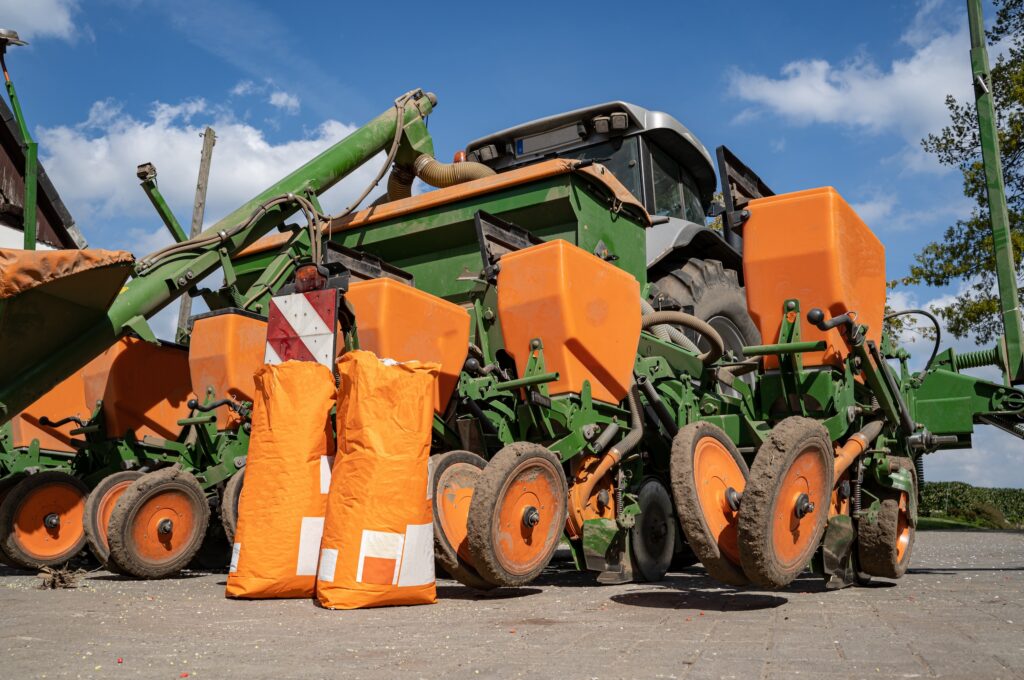
No till farming equipment takes a beating that most conventional tillage tools typically don’t see. Coulters, disc openers, row cleaners, and closing wheels are working through undisturbed ground and heavy residue every single pass, and the wear can add up. The farmers who get the most out of their no till equipment are the ones who treat pre-season maintenance as seriously as planting day itself.
Coulters are the first to experience some wear. They hit the soil before anything else does, slicing through residue and opening the initial slot. When a coulter wears down past its serviceable diameter, it stops cutting and starts pushing. That means residue getting folded into the seed furrow instead of being cut away from it, inconsistent slot depth, and the hairpinning problem that causes seeds to germinate in a pocket of plant material rather than soil. Pull a tape measure on your coulters before the season starts. If they’re worn below spec, replace them. It’s one of the highest-return equipment maintenance calls you can make on a no till drill or farming planter.
Disc openers are next. They wear gradually with every acre, and once they drop below their minimum diameter, they stop forming a clean V-slot. The result is variable seed depth and poor seed-to-soil contact, two things that could cost you in the stand and in your yield. Many farmers check opener disc diameter as a routine pre-season task, the same way they check tire pressure and grease fittings, and replace or adjust as needed before the first field.
Row cleaners, press wheels, and closing wheels all belong on the same inspection checklist. Worn row cleaner fingers lose their ability to move residue cleanly and start leaving material in the path of the opener. Damaged or misaligned closing wheels leave the seed furrow open instead of sealed, which affects emergence in both wet and dry conditions. These are not glamorous parts of the machine, but their condition shows up directly in your stand.
Beyond the components that contact the soil, the rest of the maintenance picture for no till farming equipment is straightforward: grease everything on schedule, check gauge wheel and transport tire pressure, inspect seed tubes for blockages or wear, calibrate seed meters before you plant, and store the equipment somewhere dry where rodents can’t get to the wiring and plastic tubes over winter.
One thing worth calling out specifically for no till equipment is coulter-to-opener alignment. These components need to track in line with one another for the system to work the way it was designed. If the opener is not following the slot the coulter cut, you lose the whole benefit of having a coulter out front. It’s a quick check before the season and the kind of thing that’s easy to overlook until you’re trying to figure out why emergence is uneven across the field.
The Economics Of No Till Farming Equipment Over Time
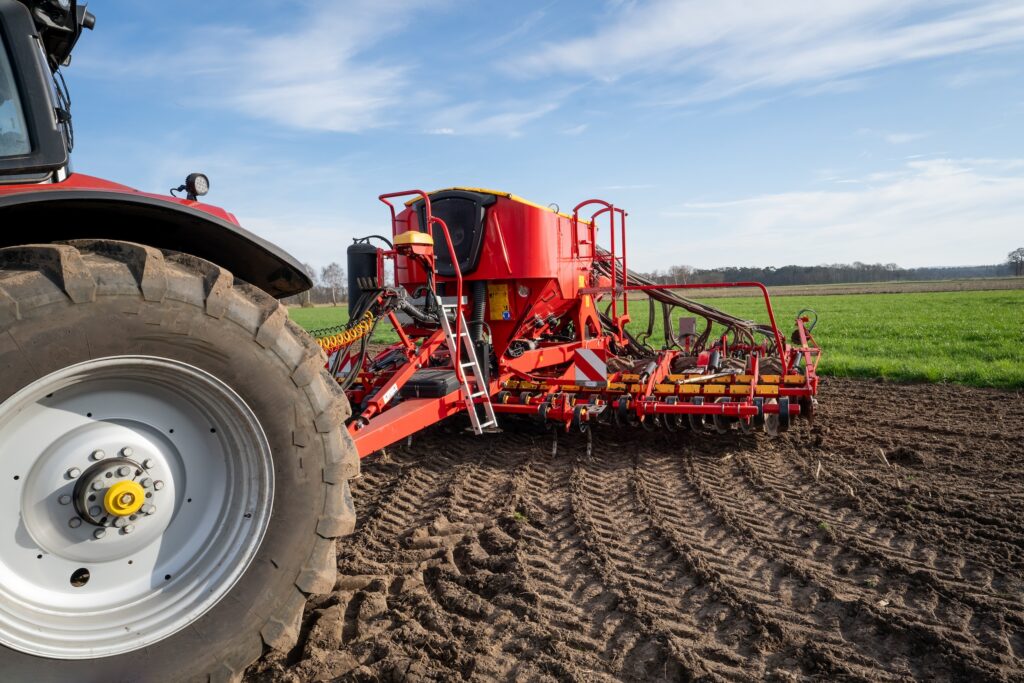
Anyone who tells you no till farming equipment pays for itself in year one isn’t presenting the full picture. The honest version of this conversation starts with acknowledging that the upfront costs are real, the transition takes time, and the payoff is not linear.
Purpose-built no till drills and planters cost more than comparable conventional seeding equipment, and there’s a reason for that. They’re heavier, more complex, and built to work in conditions that would stop a conventional planter in its tracks. Farmers who adapt existing equipment lower that initial cost, and those who start with rental or custom hire arrangements lower it further. But for anyone committed to no till farming as a long-term management approach, equipment investment is part of the picture.
What makes zero tillage farming equipment worth that investment over time is what stops happening when you go no till. Pre-plant tillage passes disappear from the schedule, which means less fuel burned, fewer hours logged on aging tractors, and less maintenance on the plows and cultivators that no longer need to run. The USDA has documented that continuous no till farming requires significantly less fuel per acre than conventional tillage, and those eliminated tillage passes also free up meaningful labor hours during the busiest stretch of the year.
Soil health is where the economics of no till farming equipment get interesting in ways that are harder to see at first. No till farm equipment, used consistently over the years, builds water-holding capacity, organic matter, and biological activity in the soil. Those improvements translate to greater yield stability during dry years, reduced inputs as soil fertility improves, and land that holds its productivity over the long run. For farmers who own their ground, that has real bearing on land value too. Agricultural land buyers increasingly pay attention to soil health, and a documented history of no till management is not invisible to the market.
The transition period is where farmers sometimes lose faith in the system before it has had a chance to show what it can do. A modest yield dip in the first season or two after switching to no till farming equipment is common. The soil is adjusting, management practices are evolving, and the full biological benefit of undisturbed ground takes time to develop. Farmers who stick with it past that window are typically the ones who look back years later and wonder why they waited so long to make the switch.
Ready To Buy Or Sell Your No Till Farming Equipment?
The farmers who get no till farming right are not necessarily the ones with the newest equipment or the most acres. They’re the ones who found the right tools, learned their ground, and stayed with the zero tillage system long enough to see what it can do.
Getting there starts with getting your hands on the right no till farming equipment, whether that means buying, selling, or finding the right connection to make it happen.
Here at Hayden Outdoors, we work with farmers, landowners, and agricultural land buyers across the country. Our equipment marketplace is built to connect people who have quality no till equipment with the people who need it, and to make that transaction straightforward on both ends. If you’re looking to buy no till farm equipment, you’ll find listings from real sellers. If you have no till equipment to move, we can help you find the right buyer.
Browse current farming equipment listings or get your tools in front of the right audience. The land is worth farming well. We’re here to help make that possible.
Learn More About The Hayden Outdoors Equipment Marketplace
UTV vs ATV: What’s The Difference And How To Choose The Right One
Our agents at Hayden Outdoors don’t just sell land. They work it. They check fence lines before sunrise, run feed out to pastures in the dark, and pack into elk country on machines that need to perform under real pressure. When a buyer asks us about the UTV vs ATV decision, we’re not guessing. These are the tools we depend on, and we know from firsthand experience that picking the right one comes down to one thing: how you actually use it.
We’ve written this ATV vs UTV guide to help you make that call confidently. Whether you’re farming, ranching, hunting, off-roading, or just trying to get more out of your property, the ATV vs UTV choice matters. Pick the right machine, and it pays for itself in time and capability. Pick the wrong one, and you’ll feel that mismatch every time you fire it up.
Here’s how we’ll help you figure it out:
- We’ll help you understand what each machine actually is
- We’ll guide you to match the machine to your lifestyle and land
- We’ll give you the insights to get out there with confidence
Table Of Contents
Let’s Define A Few Things
People use “ATV” and “UTV” (also referred to as a side-by-side) interchangeably all the time, and that’s where a lot of buyer regret starts. These are two genuinely different machines built around different purposes. Understanding the difference between a UTV vs an ATV is step one.
What Is A UTV?

A UTV, short for Utility Task Vehicle, is an off-road machine where riders sit side-by-side, which is exactly why “side-by-side” has become the go-to nickname for them in the field. You’ve got a steering wheel, bucket seats, a roll cage, and on most models, a rear cargo bed. It feels less like a traditional off-road vehicle and more like a stripped-down truck that happens to go places trucks can’t.
Most UTVs seat two to six people and are built to haul, tow, and carry. They range from no-nonsense farm workhorses to high-performance sport machines. If the job involves carrying gear, moving people, or working the land day in and day out, the UTV was built with that in mind.
What Is An ATV?

An ATV, short for All-Terrain Vehicle, is a straddle-seat off-road machine with handlebars, most often built for one rider. Quads, four-wheelers: same thing, different name. ATVs are lighter, narrower, and more nimble than UTVs, which makes them a natural fit for tight trails, dense timber, and anywhere that maneuverability matters more than carrying capacity.
Some ATVs are built purely for sport. Others come loaded with utility features: racks, 4WD, tow hitches, and real-world capability. If the work is solo and the terrain is tight, an ATV is built for that.
Factors To Consider When Deciding Between A UTV vs An ATV

The ATV vs UTV decision is not a specs debate; it’s a lifestyle and land-use question. Understanding the real UTV vs ATV difference means looking at the full picture before you buy. Here’s what actually moves the needle:
Terrain and trail access. This one can make a difference before you even set foot in a dealership. Many public lands, state parks, and trail systems have width restrictions that rule out UTVs entirely. Before you commit, check the specific trail systems and access points you plan to use. Because of their narrower profile, ATVs can reach terrain that a UTV/side-by-side simply cannot.
Intended use. Are you working the land, riding for recreation, hunting, or some combination? Each use case has a machine that fits better than the other. We’ll break that down in the lifestyle section below.
Passengers. Riding with family, a partner, or a crew regularly? Passenger capacity is one of the most practical parts of the UTV vs ATV difference. UTVs are built for multiple riders vs ATVs that are primarily solo machines.
Cargo and towing. UTVs come with rear cargo beds and stronger tow ratings. If you’re moving feed, gear, or equipment on a regular basis, the side-by-side wins this comparison hands down. ATVs can pull small trailers, but they’re not built for heavy hauling like UTVs are.
2WD vs 4WD. Both recreation vehicle types come in 2WD and 4WD configurations, but the ATV vs UTV difference in how those systems are engineered is worth noting. Most ATV 4WD systems engage manually and perform well in mud and loose ground. UTV 4WD systems on higher-end models tend to be more sophisticated, with electronic engagement and front differentials that handle more demanding terrain more consistently.
Seasonal and weather use. If you need a machine that works twelve months a year, including through snow and cold, the side-by-side vs ATV comparison tilts in favor of the UTV. Cab enclosures, windshields, and heater kits make UTVs genuinely adaptable to year-round work. ATVs handle snow, but unlike UTVs, there’s no cab to hide behind when it’s fifteen degrees and blowing.
Land access rules. Worth repeating because it catches buyers off guard: local ordinances, HOA rules, and public land regulations can restrict which machines are allowed and where. Know your rules before you buy an ATV or UTV.
Budget. When assessing a UTV vs an ATV, sticker price is just the start. Factor in insurance, tires, fuel, maintenance, and transport. We’ll dive into those details a bit more when we discuss pricing.
Storage and transport. An ATV fits in most standard truck beds, while a UTV typically needs a trailer and takes up more dedicated storage space. If you’re working with limited space or towing capacity, that matters.
Lifestyle Needs: Which Lifestyles Warrant A UTV vs ATV?

The best way to work through the ATV vs UTV question isn’t by reading a spec sheet. It’s by being honest about how you spend your time outdoors. Let’s break down the difference between a UTV vs an ATV when looking at lifestyle use cases.
Trail riding and sport: ATVs win here. If single-track trails, technical terrain, and the pure experience of riding are your main goals, an ATV delivers a level of responsiveness and agility that a side-by-side can’t match. The lighter weight and narrower footprint of an ATV lets you go places a UTV won’t follow.
Farm and ranch work: UTVs win here. Hauling feed, moving implements, towing equipment across large acreage, carrying a crew from one end of a property to the other: this is what side-by-sides are built for. The cargo bed alone makes the UTV vs ATV difference obvious for working-land applications.
Hunting: This one earns a more nuanced answer in any honest UTV vs ATV comparison. ATVs have long been the favorite for hunters going deep into tight timber. A quad slips through places a side-by-side can’t touch. On the other hand, UTVs are hard to beat for hauling game out of the field or running a full camp’s worth of gear into a remote spike camp. Electric UTVs are becoming a real consideration here, too, given how quiet they run. The right side-by-side vs ATV call for hunters depends on terrain, hunting style, and how far you’re packing in.
Family and group recreation: UTVs win here, and it’s not particularly close. If you’re riding with family, the side-by-side is the right call. Everyone is seated and strapped in, the ride is comfortable for varying ages and skill levels, and you’re not asking inexperienced riders to manage a machine that demands active balance.
Solo adventure riding: ATVs win here. For the rider who wants to move independently, explore unpredictable terrain, and keep the setup simple, an ATV is the natural fit. Easier to load, easier to manage, and purpose-built for one.
Snow and winter use: UTVs win here. With a plow blade, a cab enclosure, and the right tires, a side-by-side works as a capable year-round machine. ATVs can push snow, but extended cold-weather riding without a cab is a hard ask for most people, which is why UTVs win out here.
Older riders or those with physical limitations: UTVs are the winner in this case. The seated, strapped-in ride of a side-by-side asks a lot less of your body than actively balancing an ATV. For riders dealing with back issues, joint problems, or reduced physical stamina, the UTV vs ATV difference in comfort over time is significant.
Flexibility: Do UTVs or ATVs Offer More Versatility?

When the conversation turns to long-term value, flexibility is one of the most underrated parts of the UTV vs ATV comparison.
UTVs have a deep aftermarket ecosystem. Doors, windshields, roofs, heaters, cargo bed extensions, winches, light bars, stereos: the list of available add-ons is long, and most of them are genuinely useful. A UTV bought for farm work can be outfitted for hunting season, winterized for snow removal, and configured for a family ride without buying a new machine. In the side-by-side vs ATV comparison on versatility, the side-by-side carries a clear advantage for buyers whose needs change with the seasons.
ATVs aren’t short on accessories either. Winches, front and rear racks, sprayers, plows, and cargo bags are all widely available. But the nature of the machine puts a practical ceiling on how much you can layer on before the setup gets awkward.
The honest answer to the ATV vs UTV flexibility question is that UTVs scale better as your needs evolve. If your uses shift seasonally or multiple people in your household will use the machine differently, a side-by-side gives you more room to grow.
An ATV is harder to outgrow if solo riding is your primary and ongoing use. It’s a machine that’s genuinely excellent at what it’s built to do.
One factor that often gets left out of the UTV vs ATV conversation: portability. An ATV loads into most standard truck beds without a trailer, which means you’re not tied to a trailer every time you want to ride somewhere new. For buyers who move their vehicle around regularly, that kind of mobility has real everyday value.
Safety Considerations Between ATVs and UTVs
Both machines are safe when they’re matched to the right rider and used responsibly. That said, there are real differences in the ATV vs UTV safety picture worth knowing before you commit.
UTVs come with built-in structural safety advantages: roll cages, three-point seatbelts, and doors on many models. Those features matter in the event of a tip or rollover, which is why side-by-sides are generally considered the more approachable option for beginners and the better fit when kids are part of the equation.
ATVs require active input from the rider. Steering, balance, and body positioning all play a role in keeping the machine stable, especially on slopes and uneven terrain. That’s not a knock against the ATV in the side-by-side vs ATV safety comparison. Riders who take the time to learn their machine and respect the terrain ride ATVs safely every day. The ATV Safety Institute offers training courses that are well worth the time for anyone new to the machine.
Practical safety notes that apply to both sides of the UTV vs ATV comparison:
- Always wear a helmet. For UTVs, pair that with a seatbelt as your baseline.
- Match the machine to the rider’s experience level and physical capability.
- Never carry passengers on an ATV that isn’t rated for it.
- Know your terrain before you ride it.
Recovery is another area where the ATV vs UTV difference shows up in a practical way. UTVs are heavier, which means getting one unstuck usually requires a winch or another vehicle. ATVs are lighter and can sometimes be moved manually in a pinch. That said, a quality winch is worth adding to either machine if you’re riding in remote areas.
Price Point Differences Between A UTV vs An ATV

Most buyers lock in on the sticker price first. That’s just one piece of the real cost picture in the UTV vs ATV decision.
Purchase price. New ATVs typically run between $5,000 and $12,000, depending on brand, engine size, and how it’s equipped. New UTVs start around $10,000 for basic utility models and climb well past $30,000 for performance or fully-loaded configurations. The ATV vs UTV price gap can get quite large, and so is the capability gap on the upper end. Used machines in both categories are widely available and can represent solid value.
Insurance. UTVs generally cost more to insure than ATVs. The gap is driven largely by higher replacement value and passenger liability. Rates vary significantly based on state, intended use, and whether the machine stays on private land or rides public trails. Get actual quotes before you lock in a budget.
Tires and maintenance. UTVs are heavier and tend to burn through tires faster under hard use. Routine maintenance is generally comparable across both sides of the ATV vs UTV equation, though UTVs with more complex drivetrain setups can carry higher service costs over time.
Resale value. Brand matters here, but condition, maintenance history, and mileage are the main drivers regardless of which side of the UTV vs ATV fence you land on.
A note on buying used UTVs. A used side-by-side that’s been rolled or involved in a hard impact can have a compromised cage, and that damage isn’t always visible from the outside. If you’re shopping used, inspect the roll cage closely for bends, welds, and any sign of structural repair. When in doubt, have a mechanic look it over before you hand over a check.
Total cost of ownership. Add up purchase price, insurance, fuel, tires, storage, and maintenance over several years, and the gap between owning an ATV vs a UTV is real. For buyers working within a tighter budget, an ATV delivers strong capability at a meaningfully lower overall cost. For buyers who genuinely need what a UTV offers, the investment tends to pay off through utility and versatility over time.
Questions To Ask Yourself When Deciding Between An ATV And UTV

Before you pull the trigger on either machine, run through these questions. The answers tend to cut through the noise quickly when deciding between a UTV vs an ATV:
- How many people will typically ride with me? If the answer is regularly more than one, a UTV may be the better fit. Passenger capacity is one of the clearest dividing lines in the side-by-side vs ATV comparison.
- What is my primary use? Solo sport riding and hunting tight trails are great for ATVs. Farm work, family riding, and regular hauling make UTVs a great option.
- What terrain and trail systems will I use most? If your trails are narrow or have width restrictions, the terrain may settle the UTV vs ATV question for you before anything else.
- Do local access rules restrict vehicle width? Look into this before committing. This is especially relevant for anyone riding public land or hunting in managed areas.
- What is my total realistic budget, including gear and ongoing costs? One of the biggest differences between an ATV vs a UTV is the up-front and lifetime costs of ownership.
- Will I need to haul or tow equipment regularly? If yes, the UTV’s cargo bed and tow rating will earn their keep fast. This is one area of the UTV vs ATV difference that’s hard to argue against for working-land buyers.
- Do I feel comfortable actively balancing a machine? If balance, core strength, or joint issues factor into your daily life, the seated ride of a side-by-side is a real quality-of-life advantage in the ATV vs UTV comparison.
- Have I taken the time to test ride both options? A demo ride should be a part of your buying decision. Many dealerships or resellers will let you get seat time before you buy. Take them up on it. No amount of reading replaces actually riding the machine.
Whatever Your Adventure, Hayden Has The Equipment You’re Looking For

The right machine opens up more of the land you love. At Hayden Outdoors, we understand what it means to put equipment to real use, because that’s how our team operates every day.
Browse our current ATV and UTV listings and find the vehicle that fits your land, your life, and your next adventure.
View Available UTVs and ATVs
Best Gardening Essentials: Must Have Supplies And Tools For Beginners
Picture this: you walk into a garden center for the first time, cart in hand, ready to begin your growing journey. Within ten minutes you’ve got a broadfork, a three-piece cultivator set, a soil blocker, and a specialty dibber in your cart, and you haven’t even found the seeds yet. This is the trap most beginner gardeners fall into, and it starts with the same problem: nobody told them which gardening tools for beginners actually matter before they opened their wallets.
Our gardening must haves list does exactly that. Whether you’re planning a few raised beds out back or turning over a plot of ground for the very first time, we’ll walk you through the gardening essentials, tools, and supplies that genuinely move the needle, and the ones that can wait.
We’ve organized everything by stage, because that’s how gardening actually works: you plant, you tend, you harvest. As a beginner, the best way you can invest in gardening tools is to follow that same sequence.
By the time you finish reading, you’ll know what gardening tools are best to buy first, what to skip entirely, and how to build a kit with supplies for beginners that grows with you season by season.
Table Of Contents
As a beginner, before you spend a dollar on any gardening supplies or tools, it helps to have a filter. Not every tool that shows up in a beginner gardening list is essential.
Some are genuinely useful. Some are useful only for specific situations. And some are solutions to problems you won’t have until you’re further into your gardening journey.
Here’s a three-question test you can apply to any gardening tool before you buy it:
- Do you plan to use that particular gardening tool or supply several times throughout the season? If the answer is no, it probably doesn’t belong in a first-year beginners gardening tools and supplies kit.
- Can you accomplish the same task well with something you already own? A chopstick makes a perfectly adequate dibber for transplanting seedlings. A kitchen knife handles plenty of tasks that a dedicated harvest knife would cover. Yes, there are advantages to upgrading your tools, but when you’re a beginner just getting into gardening, you want to be intentional about what essentials and supplies you invest in and which ones you hold off on.
- Are you buying it before you know whether you enjoy gardening? The first season is a trial run. Buy the minimum, see what you actually reach for, and fill in from there.
That filter alone can save most gardening beginners a couple of hundred dollars in tools and supplies that aren’t essential at this point.
Beyond those three questions, scale matters more than most gardening blogs admit. The best gardening tools for a 4×4 raised bed look almost nothing like the best gardening tools for a 20×20 in-ground plot.
A hand trowel and a watering can are gardening essentials that can cover roughly 80% of tasks in a small raised bed setup. That same hand trowel becomes an afterthought if you’re breaking ground on a large in-ground vegetable garden, where a full-size spade and a garden fork earn their keep every single week.
Think about your gardening setup in three tiers:
- A micro garden (e.g., containers, window boxes, or one or two small raised beds) needs very little in the way of ground-breaking gardening equipment. Most of the best gardening tools at this beginner scale fit in a single canvas tote.
- A starter garden (covering three to six raised beds or a modest in-ground plot) opens up the need for a few more gardening tools and supplies, particularly for weeding and watering at scale.
- An ambitious first-year garden (anything larger and especially in-ground) calls for a more complete set of gardening essentials from the start, including soil-working tools that smaller setups simply don’t require.
One more thing worth mentioning before we get into our list must have gardening essentials recommendations: start with renting before buying for large, one-time tasks. This will help you narrow down which equipment really works for you in your garden before you fully invest.
The single biggest gap in most beginner gardening guides is this: they hand you a generic list of tools and supplies without asking what you’re actually growing. The planting tools list for someone growing container herbs on a patio is inevitably different from the gardening tools a beginner needs for root vegetables in clay-heavy ground.
Before we get into stage-by-stage recommendations, here is how garden type shapes your tool decisions.
Essentials For Container And Patio Gardens
For beginners growing in pots, window boxes, or a small collection of containers, your list of essential gardening supplies and tools is quite short. The work is small-scale and precision-driven. You need a hand trowel, a watering can with a fine rose head, a small pair of pruning snips, and a potting scoop. That’s genuinely close to the full list.
Tools you don’t need: a full-size spade, a garden fork, a wheel hoe, or a tiller. None of those gardening tools have a job to do in a container setup.
Essentials For Raised Garden Beds
Raised beds are the most forgiving setup for beginner gardeners, and they’re also the gardening setup where your soil investment matters more than the tools you invest in. If your beds are filled with quality amended soil, loose, well-draining, and rich in organic matter, most of the work happens with your hands and a basic hand trowel.
The best gardening tools in a raised bed setup are a long-handled stirrup hoe for weeding between rows, a watering wand with a shutoff valve for reaching across beds without leaning, and a basic drip or soaker irrigation setup if you’re managing more than two or three beds.
Essentials For In-Ground Vegetable Gardens
An in-ground garden is where your planting tools list expands a good bit. You’ll need gardening tools for initially breaking and amending soil, tools for sustained weed pressure, and implements that can handle the physical demands of working real ground rather than a contained bed.
Here’s something most beginner guides skip entirely: your soil type changes which specific gardening tools you need. Clay-heavy soil requires a heavy-duty spading fork and a flat spade that can cut through compacted ground. Sandy loam is far more forgiving and works with almost any standard tool.
Pro Tip: If you’re not sure what your soil is made of, try the ribbon test: take a handful of moist soil and squeeze it into a ribbon between your thumb and forefinger. If it ribbons out smoothly past two inches, you’ve got significant clay content. If it falls apart immediately, you’re working with sandy soil. Knowing this before you buy any gardening tools and supplies can save you from buying the wrong equipment.
Essentials For Herb And Pollinator Gardens

Herb gardens and pollinator plantings are usually compact, border-style, or tucked into tight spaces. They call for precision over power. A narrow hand trowel or a hori hori knife, a small pair of snips, and a compact watering can are the best gardening tools for this setup.
What You Plan To Grow In Your Garden Changes Which Tools Are Essential
Beyond garden type, the specific crops you’re planting in your garden shift your gardening essentials list in ways worth knowing upfront.
Root vegetables like carrots, beets, and parsnips need deep, loose, stone-free soil to develop properly. A garden fork becomes an essential gardening tool at harvest time for loosening soil without slicing through roots, and it’s also useful during bed prep if your ground has any compaction at all.
Vining crops like cucumbers, squash, and pole beans need vertical support. Most beginner gardening guides label staking and trellising as optional extras, but if you’re growing vining crops, support structures are functionally required supplies for a healthy harvest and absolutely should make it on any list of best gardening tools.
Heavy feeders like tomatoes, peppers, and corn benefit enormously from a soil test kit. Most beginner gardeners skip soil testing and wonder later why their plants plateau. A basic soil test kit from a garden center or your local cooperative extension service comes at a pretty low cost and tells you exactly what amendments your soil needs before you plant.
Leafy greens are the crop that generally requires very little in the way of gardening tools. Lettuce, spinach, kale, and arugula are forgiving, fast-growing, and don’t ask much of either your soil or your tool kit. A hand trowel and a pair of scissors are the tools that cover most of what you’ll do with leafy greens in your garden.
One must have gardening tool worth singling out here, regardless of what you’re growing, is the hori hori knife. This Japanese soil knife does the job of a hand trowel, a weeder, a transplanting tool, and a soil probe all in one.
It has a serrated edge on one side, a smooth edge on the other, and depth markings on the blade. It’s one of the most versatile tools in beginner and experienced gardener tool kits alike, and it’s consistently overlooked in North American beginner guides simply because it’s less common on big-box retail shelves.
Most beginner gardening guides dump every tool recommendation into a single list, which means you either feel like you have to buy everything at once or don’t know where to start. We’ve organized our tool recommendations by stage instead, because gardening is sequential, and your supply purchases can be too.
Start with the seeding and planting essentials. Add maintenance tools as your garden gets established. Wait on harvest tools until you’re actually close to harvest. This approach keeps upfront costs manageable and means every tool you buy has an immediate job.
Here’s what actually belongs in each stage.
Best Gardening Tools And Supplies For Seeding And Planting

These are the gardening tools you need before anything goes into the ground. Get this stage right and the rest of the season runs more smoothly.
Hand trowel: The hand trowel is hands-down one of the best and single most-used gardening tools in most beginner gardens (and frankly, in most experienced gardens, too). Look for one with depth markings stamped into the blade (genuinely useful for planting at the right depth), a comfortable ergonomic grip, and a stainless steel or carbon steel head rather than aluminum (which can bend under pressure).
Garden spade or digging fork (for in-ground gardens): If you’re working in in-ground garden beds, a full-size spade or digging fork is an essential part of your core gardening equipment list. A spade is for cutting, edging, and moving soil. A fork is for loosening and aerating without fully turning the soil over, which is better for preserving soil structure and for breaking up clods after initial digging. If you can only buy one, a digging fork is your best bet; it’s the gardening tool that handles more tasks in a vegetable garden context.
Hori hori knife: As mentioned above, this is one of the best gardening tools that most beginner guides miss. A good hori hori handles transplanting, weeding, dividing, and soil probing in one.
Seed starting trays and dome lids: If you’re starting seeds indoors before your last frost date, which is the right move for tomatoes, peppers, eggplants, and most brassicas, you need seed starting trays with clear dome lids. The domes hold humidity during germination and lift off once seedlings are established. For most home gardeners, 6-cell or 12-cell trays strike the right balance between space and root room. Avoid very small cell sizes, like 72-cell plug trays, for large-seeded crops. Roots get crowded fast.
Seed starting mix: This is one of the most misunderstood distinctions in beginner gardening, and getting it wrong is one of the most common reasons germination fails. Seed starting mix, potting mix, and garden soil are three different products for three different purposes. Seed starting mix is fine-textured, lightweight, and low in nutrients. It’s designed to hold moisture without compacting around delicate emerging roots. Potting mix is coarser, nutrient-rich, and designed for established plants in containers. Garden soil is typically too heavy and poorly draining for either container or seed starting use. Seeds started in the wrong medium have a much harder time emerging. Use seed starting mix for germination, then transplant into potting mix or your amended garden bed once seedlings have their first true leaves.
Soil thermometer: Most beginner gardeners plant by calendar date, which leads to planting too early in cold soil or too late in warm climates. Soil temperature is what actually drives germination. Tomatoes, for example, germinate poorly below 60 degrees Fahrenheit and ideally want soil at 70 degrees or above. According to the Old Farmer’s Almanac, many beginner gardeners lose weeks of growing time by relying on calendar dates alone, which is why having tools like a soil thermometer on your gardening essentials list is a worthwhile move.
Plant markers and labels: Every variety looks the same after a week underground. Tomato seedlings don’t announce which cultivar they are. Buy a pack of plastic or wooden plant markers and label everything you start. This becomes even more important if you’re starting multiple tomato or pepper varieties, which is almost impossible to track visually once they’re in trays.
Measuring tape: Spacing errors are among the most common and consequential mistakes beginner gardeners make. Overcrowded plants compete for light, water, and nutrients, and they’re far more susceptible to disease. Seed packets list spacing requirements for good reason.
What tools and supplies to skip at this stage of gardening: heat mats (useful for peppers and eggplants but not essential for most crops), soil blockers (an advanced technique with a learning curve that doesn’t help beginners just getting into gardening), and specialty dibbers (a pencil or your finger works perfectly well).
Recommended Maintenance Gardening Tools And Supply Essentials

Once your seeds are in the ground or your transplants are settled, the work shifts to protecting your investment through the growing season. These are the essential gardening tools you’ll reach for most consistently from planting through pre-harvest.
Stirrup or oscillating hoe: The hoe is one of the most underestimated tools in a beginner gardening kit. Most gardeners picture the flat-headed garden hoe, which works fine but requires more effort. The stirrup hoe, also called an oscillating hoe or hula hoe, cuts on both the push and the pull stroke, slicing weed seedlings just below the soil surface with significantly less effort. Cultivation timing is one of the most important factors in weed management: the goal is to disturb weed seeds in the top inch of soil before they establish root systems. A stirrup hoe is the right tool for that job and one of the best gardening tools a beginner can own for ongoing season maintenance.
Watering can with a rose head: For seedlings and recent transplants, a garden hose on even a gentle setting delivers too much force. A watering can with a fine rose head, the perforated cap that breaks the flow into a soft spray, gives you precise, gentle control over how much water hits the soil and where. This is a genuine gardening essential in the early weeks after planting.
Garden hose with a watering wand: Once plants are established, a watering wand attached to your garden hose becomes one of the most practical tools in your gardening kit. The wand’s extended reach lets you water at soil level, which is where you want water to go, without leaning awkwardly over raised beds or straining across a wide in-ground garden. Look for a wand with a shutoff valve at the handle, so you’re not fighting the hose every time you move between beds.
Drip irrigation or soaker hose: This is consistently framed as an upgrade or luxury item in beginner gardening tool guides and lists. We’d push back on that. Consistent soil moisture is one of the single most important factors in healthy plant development, and it’s one of the hardest things to maintain manually if you have more than two or three garden beds or a schedule that doesn’t allow for daily watering. Not only can drip irrigation reduce water use, but it can also deliver moisture more consistently to plants when compared to overhead watering.
Hand pruners: A quality pair of bypass hand pruners, the type where two curved blades pass each other like scissors, rather than an anvil design where a blade crushes against a flat surface, handles deadheading, stem trimming, harvesting, and general shaping all season long. Bypass pruners make cleaner cuts that heal faster and reduce disease entry points, making them an essential gardening tool.
Well-fitted garden gloves: Garden gloves sound simple until you’ve used a pair that fits badly. Loose, one-size gloves are one of the most common beginner frustrations. They reduce dexterity, bunch at the fingers, and make precise work feel clumsy. Look for fitted gloves with nitrile-coated fingertips, which give you grip and sensitivity without sacrificing protection. A well-fitted pair makes every gardening task more comfortable and more precise, which is why it’s on our list of best gardening tools.
Knee pads or a garden kneeler: This one is almost never mentioned in lists of the best beginner gardening essentials and tools, and that’s a real gap. Back and knee discomfort are some of the top reasons beginners cut sessions short or stop gardening altogether before the season ends. They make a meaningful difference in how long and how comfortably you can work in the garden.
Organic mulch: Mulch is technically a supply rather than a tool, but it belongs on any honest list of maintenance gardening essentials because its impact is outsized relative to its cost. A two to three-inch layer of organic mulch, straw, wood chips, or shredded leaves suppresses weed germination, retains soil moisture, moderates soil temperature, and breaks down over time to feed soil biology.
A basic fertilizer system: Beginners take note: soil fertility is the invisible gardening supply that determines whether your plants thrive or just survive. Liquid fertilizers work fast and give you precise control, which is useful for container plants and heavy feeders mid-season. Slow-release granular fertilizers work steadily over weeks, making them a lower-maintenance choice for in-ground or raised bed gardens. The most common beginner mistake here is over-fertilizing with nitrogen, which pushes lush green growth at the expense of fruit and root development. If you soil-test before planting, your amendments will be based on actual data rather than guesswork.
What tools and supplies to skip at this stage: Pesticide sprayers and broad-spectrum pest treatments (address pest problems when and if they arise, not preemptively, because most early-season pest pressure resolves on its own or with simple interventions), and elaborate trellising systems (assess your vining crops mid-season and build what you actually need rather than pre-building for a worst case).
Best Harvesting Gardening Tools And Supplies For Beginners

Harvest season is the payoff for everything you’ve put into the ground. The right tools at this stage protect the quality and longevity of what you’ve grown in your garden. These are the best, most essential gardening tools to have by your side come harvest time.
Garden trug or harvest basket: A flat-bottomed garden trug, the classic oval-shaped garden basket, is more practical than a round bucket or a deep basket for harvesting. The flat base keeps produce from rolling and bruising, and the wide opening makes it easy to lay longer crops like zucchini or beans flat rather than bending them.
Garden snips or sharp scissors: For herbs, beans, leafy greens, and flowers, clean cuts matter. Tearing stems rather than cutting them stresses the plant, slows regrowth, and leaves ragged entry points for disease. A dedicated pair of garden snips or sharp kitchen scissors kept in your kit handles the vast majority of soft harvesting work cleanly and efficiently.
A harvest knife: For melons, winter squash, cabbage, and root vegetables, a dedicated harvest knife earns its place on the list of best gardening tools for beginners. You don’t need a gardening-branded product here. A quality paring knife or a Japanese produce knife with a comfortable handle works perfectly well. The key is sharpness, which protects both the produce and your hands.
Breathable produce bags or harvest storage supplies: Most beginner gardening guides and tool lists end at the moment of harvest. But what you do in the first 30 minutes after picking significantly affects how long your produce stays usable. Breathable mesh or cloth bags extend the life of most vegetables and herbs by preventing the moisture buildup that accelerates spoilage in plastic bags. Beyond bags, it’s worth knowing which crops need to cure before storage. Garlic, onions, winter squash, and potatoes all benefit from a period of drying in warm, well-ventilated conditions before they go into long-term storage.
A garden journal: If the goal is to become a more confident and capable gardener season over season, a garden journal is one of the most underrated beginner gardening tools on this entire list. Tracking what you planted, when you planted it, what the soil conditions were, what worked, what failed, and what you harvested gives you a compounding advantage that no tool purchase can match. Your second season becomes dramatically more informed when you have real data from your first.
What tools and supplies to skip at this stage: specialty root harvesters and potato forks (a standard garden fork does this job cleanly), and post-harvest processing equipment like dehydrators and pressure canners (useful eventually, but well outside the scope of a beginner gardening tool kit).

One of the most practical things we can offer any beginner gardener is a realistic sense of what a functional starter gardening tool kit actually costs, and where you can save without compromising your experience.
A Phase 1 starter gardening tool kit for most beginner gardeners covers the absolute minimum needed to get through a first planting season: a hand trowel or hori hori knife, a pair of fitted garden gloves, a watering can with a rose head, a stirrup hoe, bypass hand pruners, plant markers, and a bag of seed starting mix. Going for a mid-range version of each of these beginner gardening tools could cost around $100.
On where to find quality without overpaying: end-of-season sales in late August and September offer some of the best pricing on gardening equipment and tools. Estate sales are genuinely underrated. Older American-made hand tools are often forged rather than stamped, which makes them heavier, better balanced, and longer-lasting than much of what’s available at the same price point. Farm supply stores or your local independent co-op consistently often stock high quality gardening essentials.
The general rule on what beginner gardening tools to invest in versus what to buy at a lower price point: spend on tools with handles you’ll grip repeatedly and tasks you’ll perform constantly. Save on consumables like plant markers, grow bags, and seed starting trays, and on tools with limited seasonal use.
Even with a list of the best gardening tools for beginners in hand, a few consistent mistakes can undermine your setup.
Buying your gardening tools before understanding your soil. Investing in the wrong gardening tools for your soil type creates more work, not less. A standard spade in dense clay is a frustrating fight. A digging fork in that same clay is far more manageable. Know your soil type first.
Skipping maintenance of your gardening equipment. A hand trowel caked in dried soil, a spade head going orange with rust, or a pair of pruners that won’t close cleanly. These aren’t just aesthetic problems; they make every gardening task harder and shorten the life of your tools significantly. Five minutes of maintenance after each gardening session, wiping blades clean, tapping soil off metal, applying a light coat of linseed oil to wooden handles once a season, extends the lifespan of your tools.
Storing tools on bare ground. Wooden handles left in direct contact with soil absorb moisture and rot from the base up. Hang your gardening tools on a wall rack or store them vertically in a bucket of sand lightly oiled with mineral oil. This keeps metal heads clean and dry and handles off the ground.
Over-buying in year one. The YouTube and Instagram rabbit hole is real. There’s always a new specialty gardening tool being demonstrated by someone whose garden has been running for fifteen years. Resist the pull to buy these gardening tools until you know what you actually need from your own experience, which is usually once you’re no longer a beginner.
Having The Right Tools In Your Garden Is Just the Beginning
A first garden is one of the most satisfying things you can build. The right gardening tools and supplies for beginners make it achievable. The right plan makes it stick. And a realistic, stage-based approach to what you buy, and when, means you’re never spending more on gardening tools than the season in front of you requires.
Most beginner gardeners who stick with it past that first season start to notice something: the instinct to grow things doesn’t stay contained to a raised bed or a backyard plot. It expands. The more you learn to read soil, manage a growing season, and work with land on its own terms, the more land starts to feel like something worth having more of.
At Hayden Outdoors, we spend our days helping people find properties where that instinct has real room to run. Acreages, rural parcels, and working land with room for serious gardens, orchards, and everything that grows from a genuine connection to the ground.
If you’re starting with a 4×4 raised bed today and dreaming about what a few acres might look like someday, we’d love to help you find your own piece of ground.
View Available Farming Properties


 866-741-8323