Full Trailer vs Semi Trailer: Which Is Right For Your Work Truck?
You already know you need a trailer. What you may not know yet is whether a full trailer vs semi trailer is the right call for your truck and your operation. That single decision has more downstream impact than most operators expect: it shapes what freight you can haul, how your rig handles on rural roads and tight job sites, how efficiently you can scale, and how much productive time you gain or lose on a typical workday.
The full trailer vs semi trailer conversation comes up constantly in agriculture, construction, oilfield work, and general freight. Yet the distinction between the two gets blurred by loose terminology and conflicting advice.
At Hayden Outdoors, we work alongside the kind of operators who live by the equipment decisions they make. This guide cuts through the noise so you can make a confident call before you invest in a trailer for your work truck.
Table Of Contents:
The Core Differences Between A Full Trailer vs Semi Trailer

Before comparing performance, it helps to understand what actually separates a full trailer vs a semi trailer at a structural level.
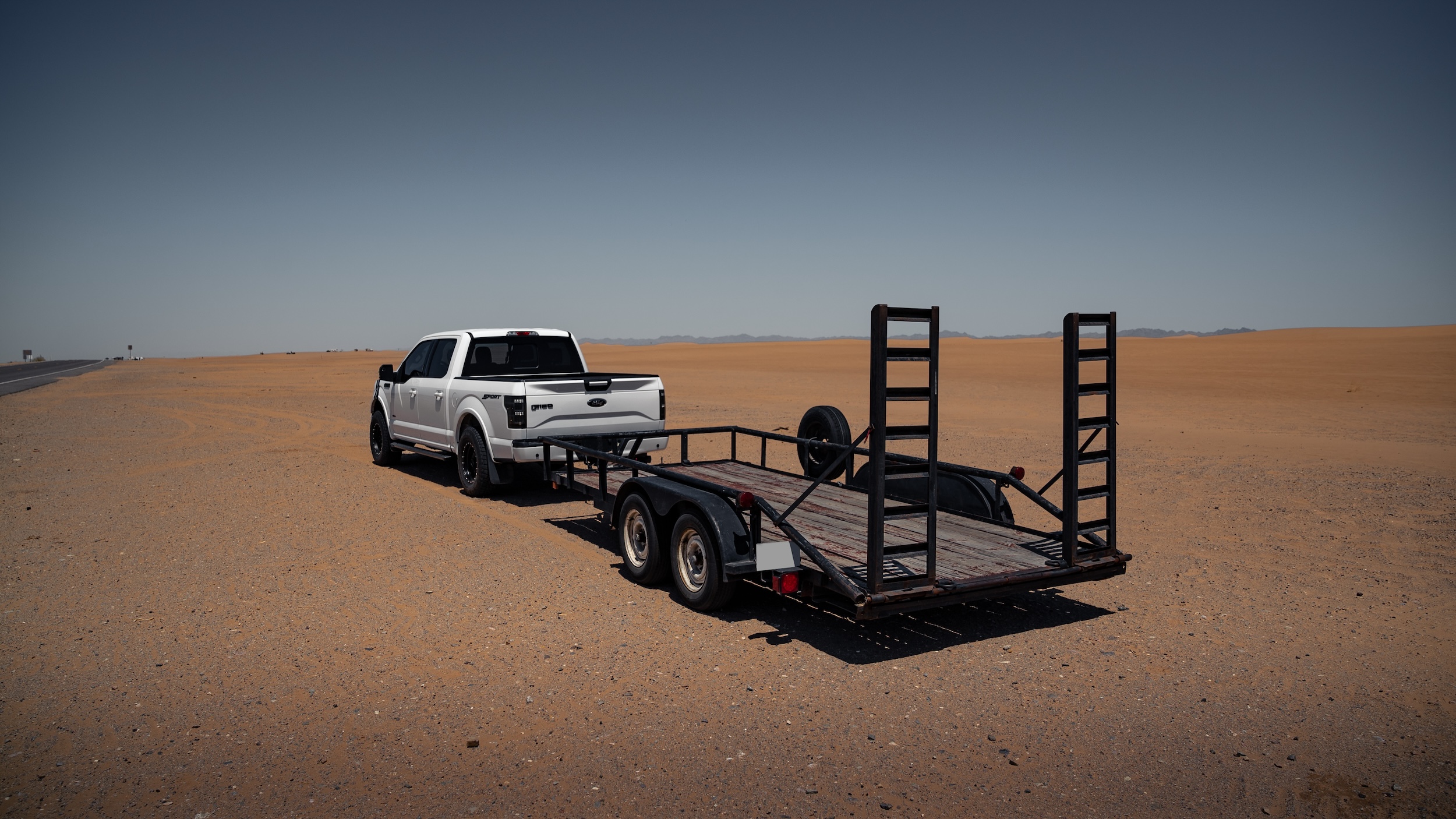
A full trailer is a self-supporting unit. It has both front and rear axles, meaning it carries its entire load on its own wheels. It connects to the towing vehicle through a drawbar or pintle hitch at the front. Because a full trailer is fully supported by its own axles, it does not transfer load to the tow truck the way a semi trailer does. A full trailer can be parked, staged, and loaded independently, without any tractor or truck attached.
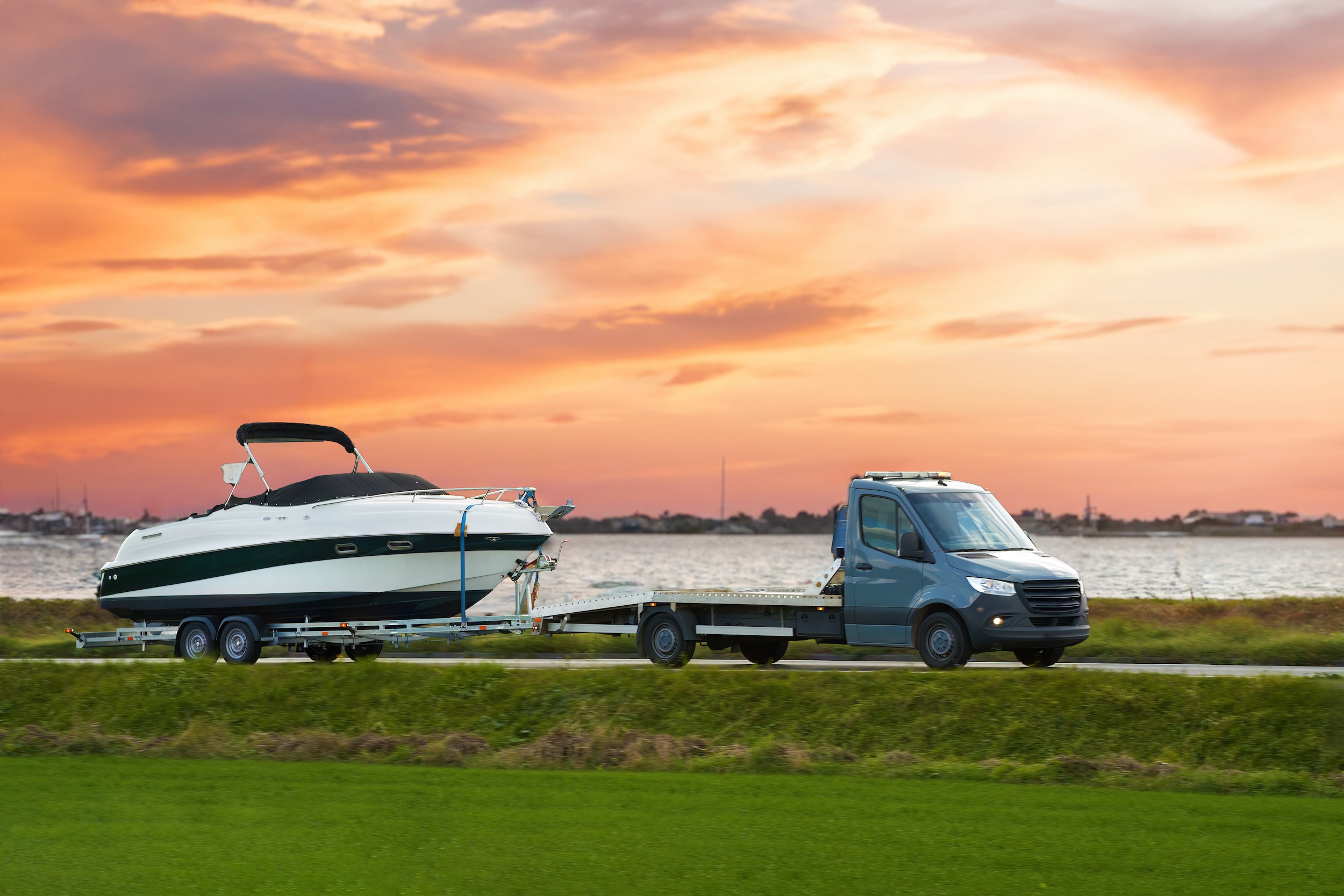
A semi trailer works differently than a full trailer. It has axles only at the rear. The front of the semi trailer rests on the tractor’s fifth wheel, and the tractor bears a meaningful share of the trailer’s weight. That coupling point is the kingpin, and the fifth wheel locking mechanism is what holds the rig together. When a semi trailer is uncoupled, it deploys landing gear to hold itself upright.
The word “semi” literally refers to the partial nature of the trailer’s support: a semi trailer is semi-supported by its own wheels vs a full trailer that is fully supported by its own axles. That single design difference cascades into every practical comparison between the two.
|
Full Trailer |
Semi Trailer |
| Axle configuration |
Front and rear axles |
Rear axles only |
| Coupling type |
Drawbar/pintle hitch |
Kingpin / fifth wheel |
| Independent support |
Yes, stands on its own |
No, requires landing gear |
| Weight distribution |
Entirely on trailer axles |
Shared with tractor |
| Typical length range |
Up to ~40 ft |
48 to 53 ft (standard US) |
Mechanical Difference Takeaway: A full trailer supports its entire load on its own front and rear axles and connects to the tow vehicle via a drawbar, vs a semi trailer, which has no front axle and depends on the truck or tractor’s fifth wheel for front-end support.
Flexibility Of Full Trailer vs Semi Trailer

When operators talk about flexibility, they usually mean two things: how the trailer handles in the field, and how it fits into the day-to-day rhythm of their operation. On both counts, a full trailer and semi trailer behave in genuinely different ways.
A full trailer’s independent axle setup makes it well-suited for trucks navigating uneven ground. Weight is distributed across its own axles and places minimal extra load on the tow vehicle, which matters when you’re pulling across soft farm ground, gravel access roads, or the kind of terrain a conventional semi rig would strain over. The tradeoff is maneuverability: full trailers are harder than semi trailers to back up because the drawbar pivot point behaves differently than a fifth-wheel pivot, and on tight turns, the rear of a full trailer tracks wider than many truck operators expect.
A semi trailer offers tighter maneuvering for your truck than a full trailer in most on-road conditions. The fifth-wheel coupling creates an articulation point that truck drivers can use to position the trailer precisely in loading docks, tight yard spaces, and multi-point delivery stops. A semi trailer also enables drop-and-hook freight: a truck driver drops a loaded trailer at a destination and picks up a pre-staged loaded trailer without waiting for unloading.
A semi trailer can also swap between compatible tractors, which is valuable in fleet operations where equipment is shared. A full trailer, once hitched to a truck, is operationally paired to its tow vehicle until it is physically disconnected and repositioned.
FAQ: Can a semi truck pull a full trailer? Not directly. A semi truck’s fifth wheel is designed for a kingpin coupling, while a full trailer uses a drawbar or pintle hitch. The connections are not interchangeable without an adapter, and purpose-matched setups typically perform better.
Load Capabilities Of A Truck With A Full Trailer vs Semi Trailer
This is where the full trailer vs semi trailer conversation gets genuinely nuanced, and where a lot of truck operators make assumptions that cost them.
Semi trailers dominate the freight market for good reason. The federal gross vehicle weight limit on US interstates is 80,000 pounds for a standard tractor-trailer combination. With a typical empty tractor and trailer combination weighing between 30,000 and 36,000 pounds, most standard semi trailers carry between 43,000 and 48,000 pounds of usable cargo, depending on axle configuration and trailer type. Dry van semi trailers are the single most common configuration in commercial freight, consistently representing the majority of trailer production and demand in North America.
Full trailers, with their independent axle setup, are designed around a different kind of truck load: stable, distributed, and well-suited to terrain where road surface conditions matter as much as payload volume. Because a full trailer does not transfer load to the towing truck, all weight sits directly on its own axles. That design works in its favor when stability and field-level access are more important than maximizing linear payload.
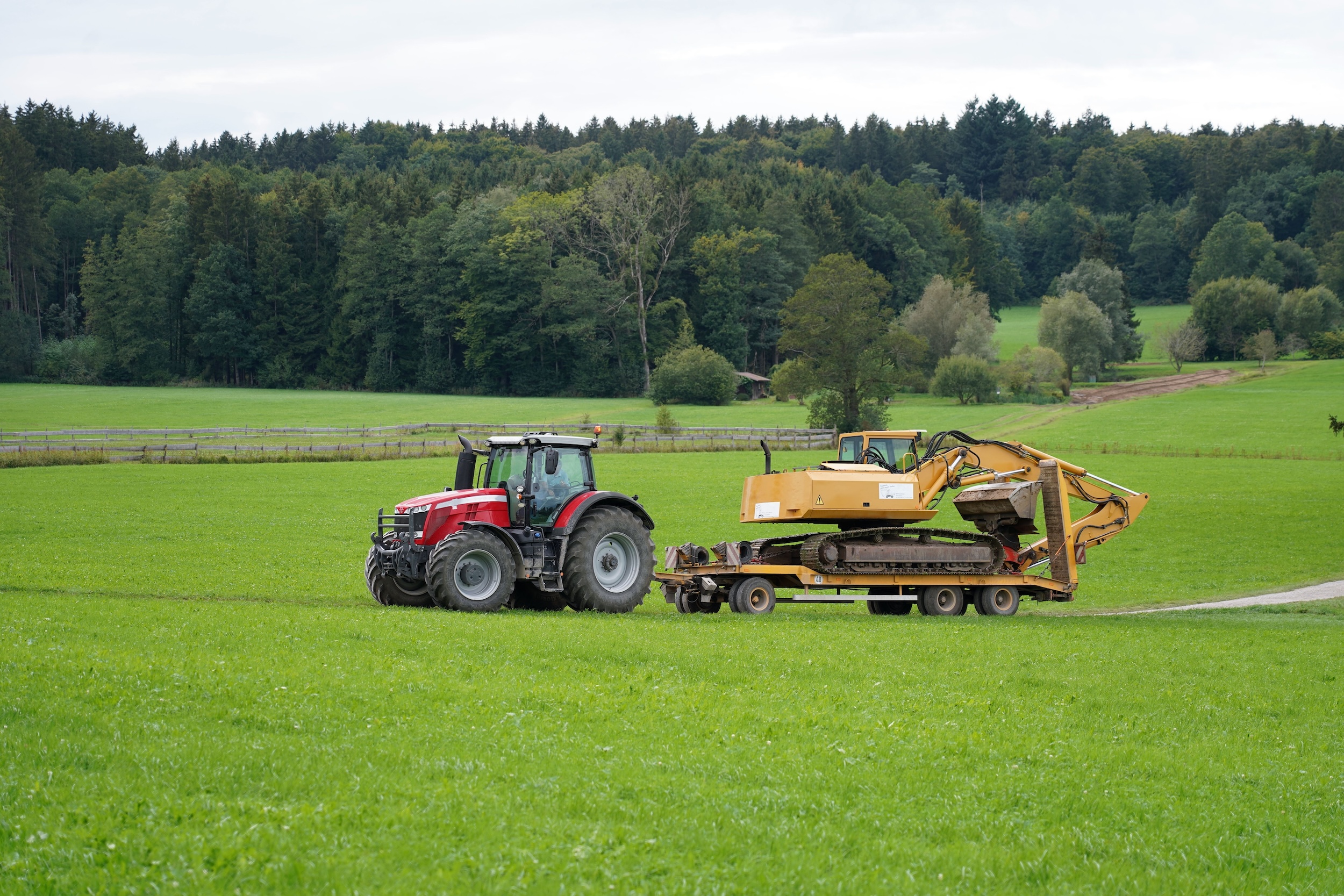
In agricultural and construction contexts, full trailers earn their place on trucks when the cargo type calls for it. Grain, hay, pipe, and aggregates load well into full trailer configurations, particularly where the goal is staged delivery or field access rather than highway efficiency. For oversized or particularly heavy equipment, specialty semi trailer configurations such as lowboys and step-decks handle loads that no standard full trailer configuration can practically match.
The cargo type question is the key filter here. Ask yourself what your truck is hauling most of the time, and whether that cargo demands the length and fifth-wheel load-sharing of a semi trailer vs whether the simpler, more terrain-friendly profile of a full trailer serves you better.
FAQ: Which trailer type holds more weight? In most common configurations, semi trailers carry higher total payloads vs full trailers, because the tractor’s drive axles share the load. Full trailers are self-contained but typically have shorter frames and lower gross weight ratings in standard configurations.
Scalability Differences Of A Full Trailer vs Semi Trailer
Single-trailer operations eventually face a growth question: what happens when the work outgrows the rig? The answer looks different depending on whether you started with a full trailer setup vs a semi trailer setup for your work truck.
Semi trailers are the standard across the commercial freight industry. That ubiquity means parts availability is strong, service networks are widespread, and adding trailer units to a fleet is straightforward because the equipment ecosystem is built around the fifth-wheel standard. If you need to grow from one trailer to three, the path is well-traveled.
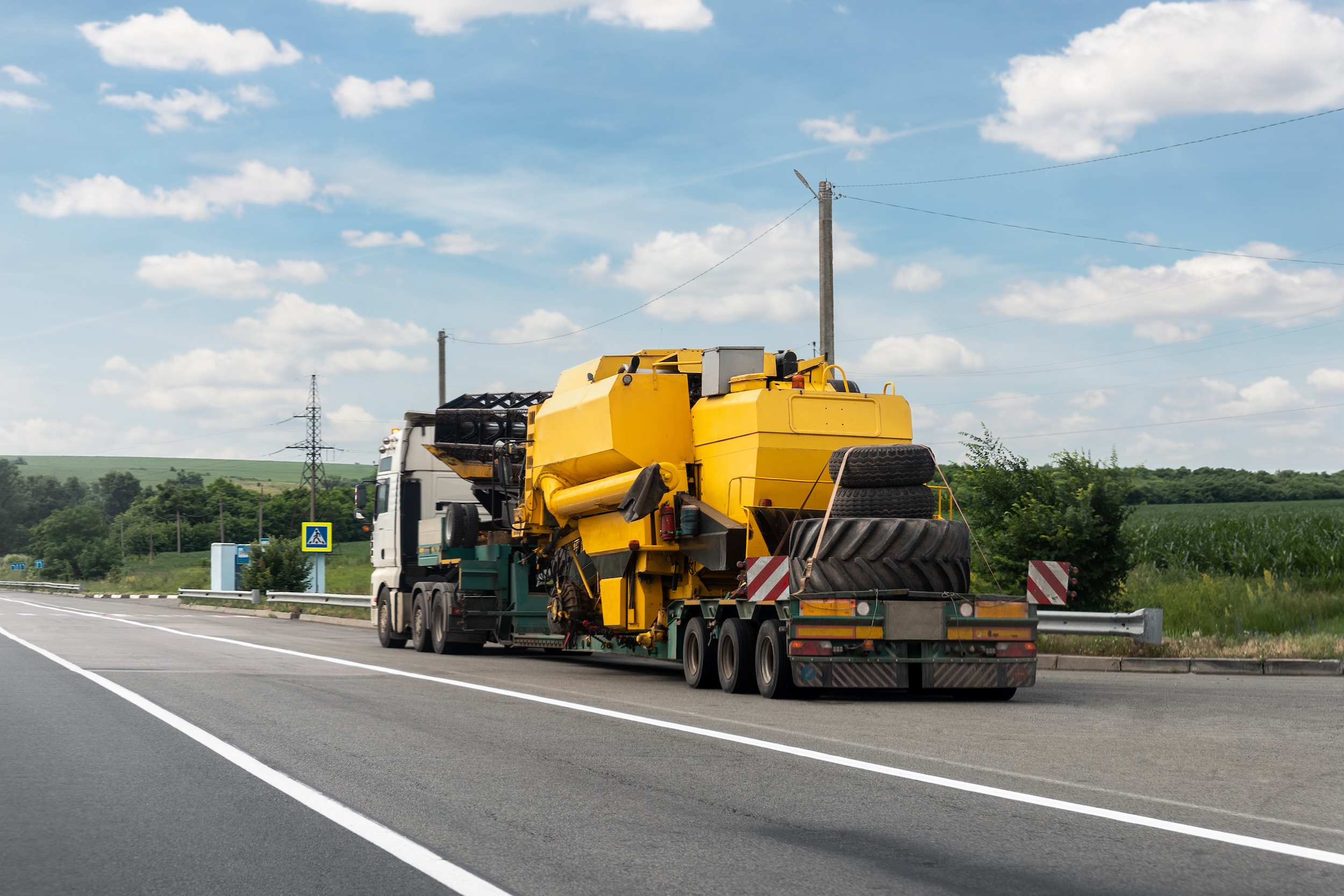
Full trailer scalability works differently. The defining advantage here is the B-train or road train configuration, where multiple full trailers are linked in sequence behind a single truck or tractor. This setup is used in agriculture and bulk hauling contexts where the goal is maximizing payload per trip on routes where road conditions allow it. A road train configuration can move significantly more material per run than a standard semi setup, but it trades off maneuverability and requires routes and sites that can accommodate the combined length.
From a maintenance standpoint, full trailers have the edge in simplicity vs what you get with a semi trailer. Without a kingpin or fifth wheel to maintain, and with a more straightforward axle and brake configuration, full trailers are generally easier and less expensive to service. Semi trailers carry more moving parts and more sophisticated brake integration because of how they interact with the tractor or truck they’re hitched to.
Long Haul vs Short Haul: Are Full Trailers Or Semi Trailers Better?
Truck haul distance is one of the clearest filters in the full trailer vs semi trailer decision, and it is worth applying it early.
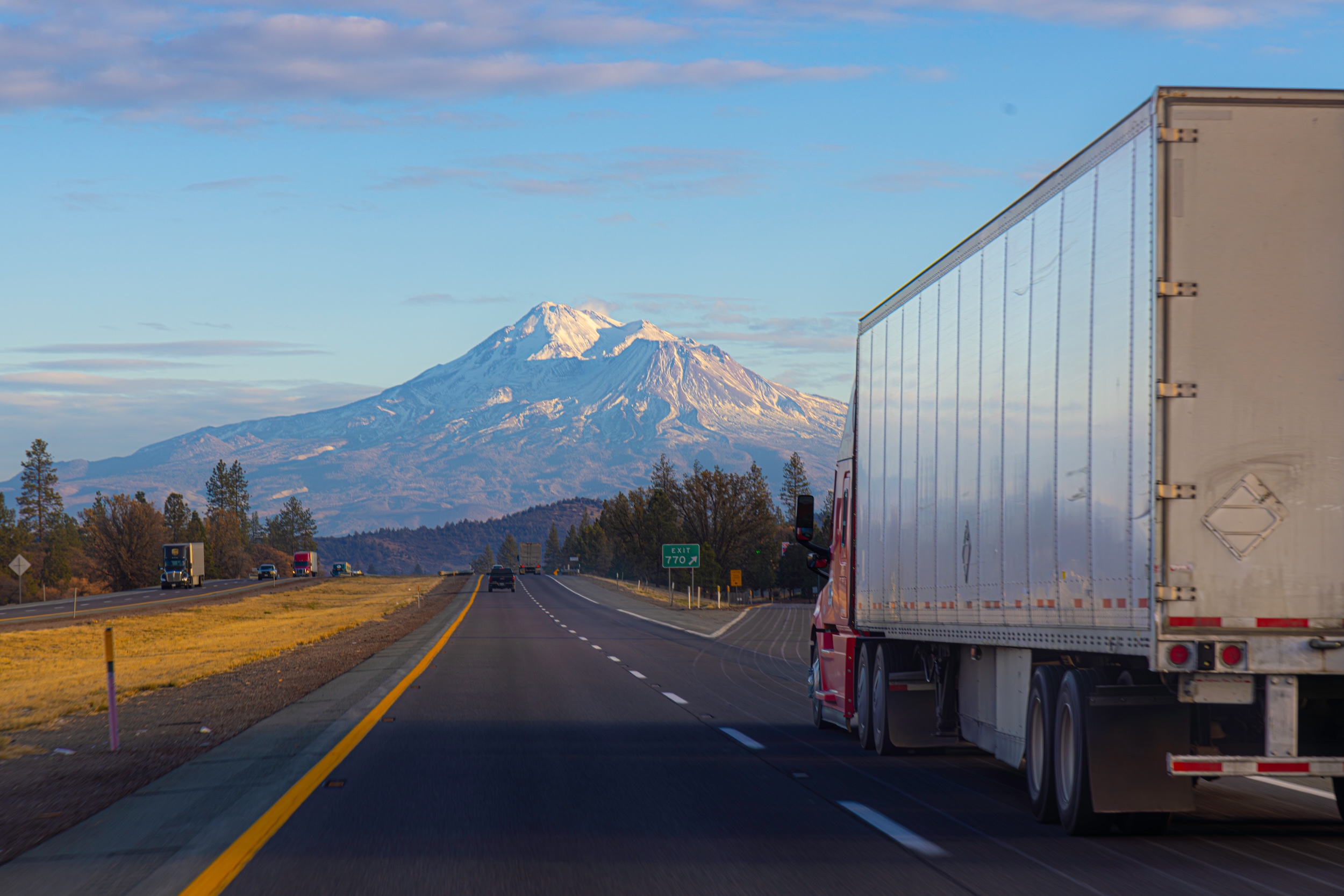
Semi trailers were built for long haul trucking. Their fifth-wheel design is optimized for highway use: stable at speed, efficient under sustained load, and fully compatible with the interstate freight network. The semi trailer vs full trailer comparison on long-haul routes is not much of a competition. Semi trailers dominate that job. When comparing semi trailer trucks vs full trailer trucks across the breadth of the US freight market, the semi configuration wins on distance, payload efficiency, and freight network compatibility.
Full trailers are stronger candidates for short-haul work, particularly in agricultural, construction, and regional contexts where haul distances are measured in tens of miles rather than hundreds. A truck moving grain from field to elevator, hauling equipment from yard to job site, or delivering bulk materials within a county does not need the interstate-grade payload architecture of a semi rig. A full trailer gets the material where it needs to go with a simpler setup and better terrain tolerance.
Fuel consumption follows the same logic. A truck running long haul benefits from the shared axle load of a semi trailer that reduces rolling resistance per ton carried. A full trailer on a short, variable-terrain run can often be pulled by a lighter tow vehicle, which carries its own fuel efficiency benefit.
The honest answer on haul distance: if your truck routes are interstate and your freight is general commercial cargo, a semi trailer is typically the the right call. If your truck routes are local and your work involves terrain, staging flexibility, or agricultural access, a full trailer deserves a serious look.
Which Trailer Type Is Better For Owner-Operators

Trucking owner-operators carry a different set of pressures than fleet managers. There is no dispatcher to absorb a mismatch between equipment and freight type. Every empty mile and every declined load is your cost to bear. That raises the stakes on the full trailer vs semi trailer call considerably.
For most owner-operator truckers working general freight, the semi trailer is the practical choice. The load board market is structured around semi trailer configurations. Dry van, flatbed, and refrigerated semi trailer freight make up the vast majority of available loads, and an owner-operator with a semi truck has access to all of it. Drop-and-hook freight, one of the most time-efficient load types in the market, is essentially exclusive to semi trailer setups.
That said, owner-operators who specialize in agriculture, equipment hauling, or regional bulk work sometimes find that a full trailer configuration for their truck opens opportunities a standard semi rig cannot serve. An ag hauler running grain or hay on familiar routes may find the terrain handling and staging flexibility of a full trailer a better operational fit vs a semi trailer, particularly if their existing tow vehicle is not configured for fifth-wheel coupling.
The buying decision for owner-operators also involves vehicle compatibility. If you already have a tractor or truck you plan to use for hauling, the trailer you choose needs to match its coupling and weight rating. Choosing a trailer type that requires reconfiguring your existing equipment adds cost and complexity that can erode the margin on which owner-operators depend.
Which Is Right For Your Operation: Full Trailer vs Semi Trailer?
Four questions cut through most of the noise in the full trailer vs semi trailer decision:
- What is my truck hauling, and how does my cargo behave on terrain?
- What are my typical haul distances?
- Do I need to stage, swap, or position trailers independently of my truck?
- What is the towing capacity of my vehicle?
If your cargo is standard commercial freight, your routes are predominantly highway, and your operation benefits from drop-and-hook capability, the semi trailer is likely a better answer for your truck vs a full trailer. If your work is agricultural, construction, or regional bulk hauling with terrain access requirements, the full trailer deserves serious consideration.
Industry Match: What Tends To Win By Sector
| Industry |
Common choice |
Primary reason |
| Agriculture and farming |
Full trailer (grain/hay); semi for long-haul livestock |
Terrain access, field staging, load type |
| Construction and heavy equipment |
Semi (lowboy, step-deck) |
Oversized load capacity, highway access |
| Oilfield and energy |
Semi configurations |
Long-haul pipe, specialized loads |
| Landscaping and turf |
Full trailer/gooseneck |
Equipment transport, short runs |
| Logging and forestry |
Semi log trailers |
Volume, length requirements |
| General freight and retail |
Semi (dry van dominant) |
Load board access, freight network compatibility |
Questions To Ask Yourself Before Investing In A Trailer For Your Truck
Getting this decision right starts with honest answers to a short list of practical questions. Work through these before you commit to a trailer type for your truck:
What will I haul 80% of the time? Your most common cargo type should drive the full trailer vs semi trailer decision more than your edge cases.
What are my typical haul distances? Short, terrain-heavy routes favor full trailers. Long interstate runs favor semi trailers in almost every case.
What vehicle do I already have, and what is it rated and configured for? Choosing a trailer that requires reconfiguring or replacing your tractor or truck changes your math significantly. Your GCWR (Gross Combined Weight Rating) is the maximum allowable combined weight of your loaded tow vehicle and loaded trailer together. Your trailer choice must fit within that ceiling. Your vehicle’s curb weight (its weight with a full tank but no passengers or cargo) eats into that GCWR before you load a single pound of freight. And if you are running a full trailer or a gooseneck, pay close attention to tongue weight, the downward force the trailer exerts on the hitch, typically 10 to 15% of total trailer weight. Exceed your hitch’s tongue weight rating, and you lose steering control fast. Choosing a trailer that requires reconfiguring or replacing your tractor or truck changes your math significantly.
Do I need to stage trailers independently of my tractor? If detaching, repositioning, and reloading without your tow vehicle present is a regular part of your workflow, the full trailer’s independent support is a genuine operational advantage over a semi trailer.
Am I buying for today’s volume, or for where I want to be in three to five years? A trailer that fits your current operation but limits your growth options may cost more in the long run than one that gives you room to scale.
The mistake operators most commonly make is buying for a use case they imagine rather than the one they actually run. A full trailer bought with interstate freight ambitions will spend most of its time mismatched to the loads available. A semi trailer bought for short agricultural runs may offer more overhead than the operation needs. When deciding between a full trailer vs a semi trailer, buy for the job you actually do.
Whichever Trailer You Need, Hayden Outdoors Can Help You Find It

Here at Hayden Outdoors, we connect equipment buyers and sellers across the country, with no fees and no commissions. Whether you have a trailer to sell or you’re looking for new or used inventory, our platform brings both sides of the transaction together directly. You list, buyers inquire, and the deal happens between you.
Browse trailers for sale on Hayden Outdoors to see what’s currently available, or list your own equipment and put it in front of buyers who are actively looking.
The full trailer vs semi trailer decision is worth getting right. The right equipment means more productive days, better access to the work you want, and an operation that runs on your terms.
View Available Trailers For Your Truck
What Is A Skid Steer Loader Used For And What Can It Do?
When it comes to must-have equipment on your property, it’s easy to feel like there are too many options. One of the most versatile and useful pieces of machinery for most operations is a skid steer loader, but what is it even used for, and what can it do?
We get it; you’ve got real work to do. Maybe you’re staring down a property that needs grading, a barn that needs mucking out, a fence line that needs digging, or a pile of storm debris that isn’t going to move itself.
You need a machine that can keep up with all of it, fit through a gate, and not require a separate piece of equipment for every task on the list. And yet if you’ve tried to research that question online, you’ve probably run into the same problem: vague lists, recycled bullet points, and guides written by people who don’t work the land day in and day out.
At Hayden Outdoors, we’ve spent decades working alongside the farmers, ranchers, and landowners; we know how to actually run these machines inside and out. And we know what questions matter when you’re making a real equipment decision.
Our guide breaks down every major skid steer loader use case, walks through the different types (and what they do), and gives you the straight, practical information you need to put the right machine to work on your land.
Table of Contents
Why The Skid Steer Is Such A Crucial Piece of Equipment For So Many Operations
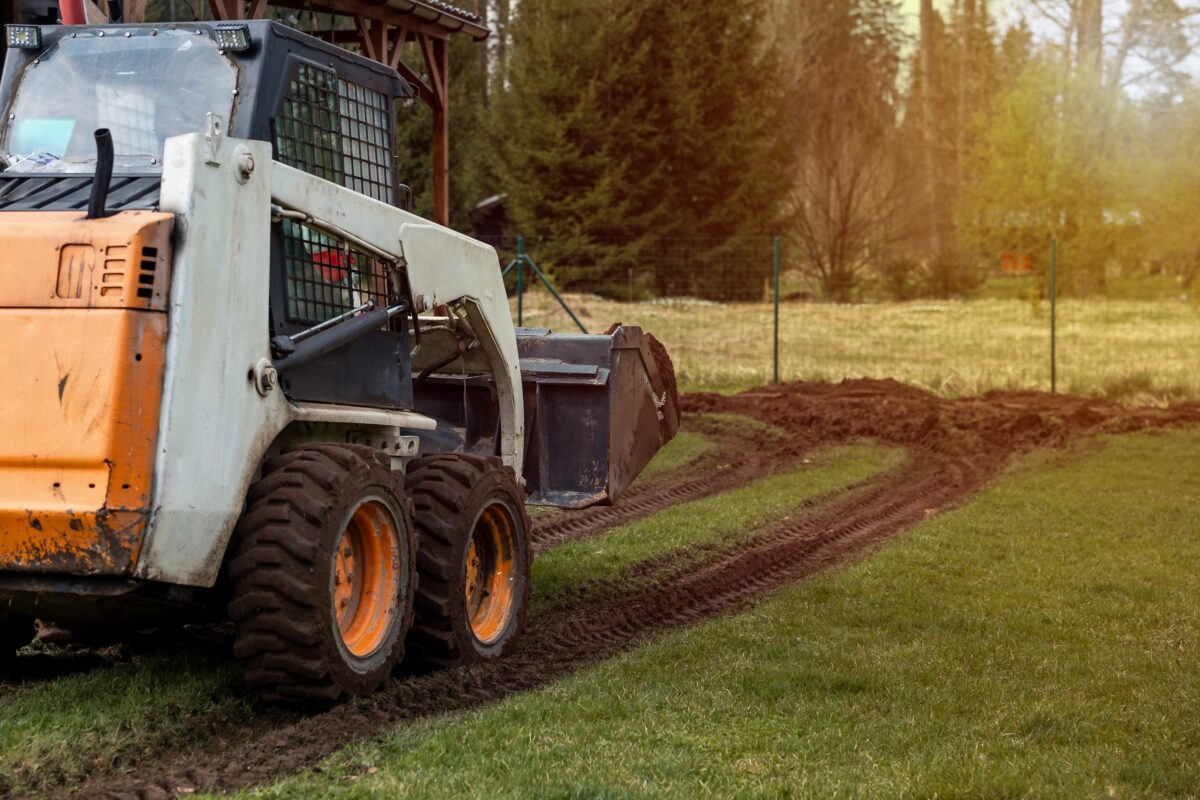
A skid steer loader is a compact, engine-powered machine with lift arms at the front that accept a wide range of interchangeable attachments for different uses.
What sets the skid steer apart from other compact equipment is its steering method (which ultimately impacts what it’s used for): the wheels or tracks on each side are powered independently, so the machine changes direction by varying the speed between sides rather than turning its wheels. This design allows it to pivot in its own footprint, which is where the name comes from.
Skid steers are consistently some of the most frequently rented pieces of construction and farming equipment in the US, which is a clear reflection of the broad ways in which the machine is used across industries.
That combination of compact size, strong hydraulic power, and attachment versatility is why skid steer loaders are used on farms, ranches, construction sites, landscaping operations, and rural properties of every kind.
To fully understand the capabilities, it helps to start with three core advantages that set it apart from every other piece of compact equipment.
The One-Machine Advantage: Skid Steer Attachments Change Everything
The biggest reason skid steer loaders are so frequently used across a variety of industries is the attachment ecosystem built around them that allows them to do so much. With a wide variety of attachment types available from major manufacturers, a single skid steer can be used as a loader, a trencher, a mower, an auger, a snowblower, a brush cutter, a grader, a demolition tool, and more.
It’s like the Swiss Army Knife of compact equipment. You change the attachment, and you effectively have a different machine for a different job.
For a farm, ranch, or rural property operation where the work shifts by season and by the day, the kind of flexibility that a skid steer offers has direct financial value. One capital investment covers a wide range of tasks that would otherwise require separate equipment purchases, separate maintenance overhead, and separate storage.
When people ask what a skid steer is used for, this attachment flexibility expands those uses to a wide variety of tasks, significantly expanding what the equipment can do.
Zero-Turn Maneuverability: The Feature That Sets Skid Steers Apart
Most equipment steers by angling the front wheels. A skid steer cannot do that. Its wheels stay fixed and point straight ahead at all times. The operator changes direction by varying the speed between the left and right sides.
Speed up the right side, and the machine pivots left. Do the reverse, and it pivots right. Drive both sides in opposite directions, and it spins in place, executing a zero-radius turn.
When it comes to use cases, that capability means a skid steer loader can work in spaces where nothing else fits: between buildings, inside a barn aisle, through a standard farm gate, along a fence line, or on a residential job site hemmed in by neighboring structures.
For landowners and operators working in tight conditions, zero-turn maneuverability is often the deciding factor in choosing a skid steer over anything else available at the same price point that can’t do this.
How Skid Steers Compare To Other Equipment On Your Property
One of the most common questions from rural landowners figuring out what a skid steer can be used for (and whether it belongs in their lineup) is how it compares to other machines they already own or are considering purchasing. Most equipment guides don’t touch this at all. Here is a straightforward breakdown.
Skid steer vs. a tractor: A tractor wins on drawbar work, pulling implements across large acreage, and powering rear-mounted PTO equipment. A skid steer wins on tight-space maneuverability, push-and-lift tasks, and attachment versatility for jobs that don’t require traveling across wide-open ground. On most working properties, they complement each other rather than replace each other.
Skid steer vs. mini excavator: A mini excavator is purpose-built for deep, precise digging and is hard to beat when you need to trench a utility line at significant depth. Skid steers are more versatile across job types and can dig with a backhoe or auger attachment, but they won’t match an excavator’s reach or precision for that specific task.
Skid steer vs. wheel loader: A full-size wheel loader moves more material per pass and cycles faster on large-volume jobs. A skid steer costs less to buy and operate, fits in spaces a wheel loader cannot enter, and handles a much broader range of tasks and uses through its attachment system. For most small-to-medium property operations, the skid steer is the more practical investment.
What They Can Do: Breakdown Of Skid Steer Loader Use Cases
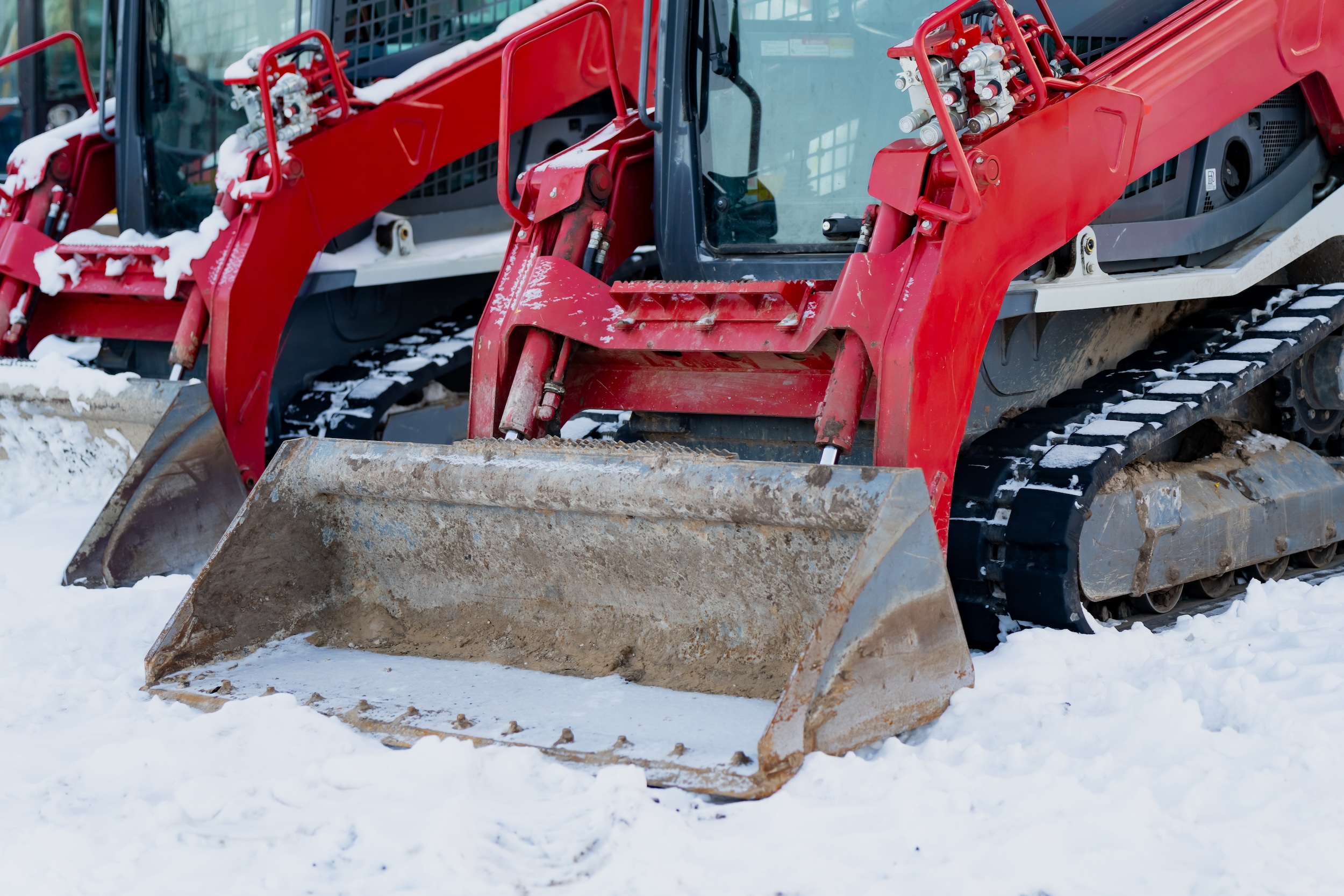
The honest answer to what a skid steer can do is simply: a lot. The skid steer loader uses we’ve listed below span construction, agriculture, landscaping, and beyond. We’ve organized them by application so you can get straight to what is most relevant for your operation.
Farm And Ranch Applications
This is where a skid steer and what it can do truly earns its reputation as the workhorse of rural operations. While most online guides reduce farm and ranch skid steer loader uses to a short bullet list, the reality is that a properly equipped machine handles a significant portion of the daily and seasonal workload on a working operation.
- Livestock and feed management: A bale spear or bale grapple attachment is used for moving round and square bales faster and more safely than manual handling. You can also transport hay, dispense feed rations, and handle palletized bags of grain without a separate forklift.
- Barn and pen cleaning: This is one of the most time-consuming jobs on any livestock operation. A skid steer with a bucket or manure scraper attachment is used for cutting the time dramatically, and its compact size lets it work inside barn aisles and through standard doorways that exclude larger machines.
- Fence work: An auger attachment drills post holes faster than any manual method. A post driver pounds them in. The bucket clears brush and old wire from fence lines. For operations managing miles of perimeter fence, a skid steer can be used to cover the full job from clearing to setting posts.
- Manure management and spreading: Cleaning corrals, scraping lots, and spreading manure as fertilizer are all straightforward tasks with the right bucket, scraper, or spreader attachment.
- Seeding and soil preparation: Skid steer tiller attachments can be used for preparing ground for new seeding, and hopper-style spreader attachments handle efficient seed and fertilizer distribution across larger areas.
- Water and irrigation infrastructure: Skid steer trencher attachments can be used for handling the digging for irrigation lines, water lines, and drainage systems. Combined with an auger for pipe and post setting, a skid steer covers most of the labor-intensive digging work associated with water system installations across a property.
- Road and lane maintenance: Farm roads take a beating, especially during wet seasons. A skid steer loader with a blade or grader attachment can be used to spread and grade gravel, fill ruts, repair drainage, and keep access lanes passable year-round.
- Year-round utility: Brush clearing in summer. Material handling and harvest assistance in fall. Snow removal in winter. Ground prep in spring. If you’re still wondering what a skid steer loader is used for on a working ranch, this is the simplest answer: whatever the season demands.
Construction And Site Work
On a job site, a skid steer earns its keep from the first day. The compact frame of the skid steer allows it to be used where larger equipment cannot go, and its power-to-size ratio makes it useful across every phase of a project.
Skid steer loader uses on a job site include:
- excavating and digging building foundations
- grading and leveling building pads and site areas
- backfilling after trenching or footer work
- demolition of concrete slabs and structures with a hydraulic breaker attachment
- loading and moving debris and materials
- roadwork and asphalt patching with a cold planer or cement mixer attachment
- general site cleanup throughout a build.
On urban or residential sites where the space between structures is measured in feet rather than acres, a skid steer is often the only compact piece of equipment that can be used to do the job at all. Its ability to swing around in a tight footprint and work close to existing structures without damaging them is a genuine operational advantage and is one of the core uses for the skid steer.
Landscaping And Property Improvement
For landscaping and property development work, the skid steer loader is one of the most practical tools available. Small and medium frame machines are particularly well-suited here, with enough power for meaningful work and enough control to avoid tearing up finished areas.
Skid steer loader uses in landscaping include:
- grading soil for lawns, patios, driveways, and building pads
- spreading and moving topsoil, mulch, and gravel
- trenching for irrigation systems and drainage lines
- stump grinding
- brush and vegetation clearing
- placing large landscape features like boulders and specimen trees
- seeding and aerating with the right attachments.
For landowners developing raw acreage or improving an existing property, this is a clear answer for what a skid steer loader is used for in a residential or rural context: it handles the majority of site prep work that would otherwise require hiring out multiple equipment types on separate days.
Snow Removal And Seasonal Work
Another practical answer to what a skid steer can do in colder climates: it’s one of the most effective snow removal machines available at this size and price point, because of the combination of pushing power and attachment flexibility.
Plow blades, snow pushers, and snowblower attachments all mount to a standard machine, and the skid steer’s weight and low center of gravity provide solid traction on packed or icy surfaces.
For rural properties with long driveways and access lanes, ranch facilities with large lot areas to keep clear, or commercial operations that need consistent snow management, a skid steer with a snow attachment functions can be used as a year-round asset, rather than single-purpose equipment that sits idle for most of the year.
Specialty And Less-Obvious Applications
There are a few skid steer applications and uses that most guides overlook but are worth knowing about, particularly for buyers trying to evaluate total utility from a single machine.
- Small-frame skid steers fit through standard commercial doorways, which makes them genuinely useful for interior demolition work. Concrete floors, partition walls, and structural debris can all be broken up and removed with the appropriate attachments in spaces where you simply cannot bring anything larger.
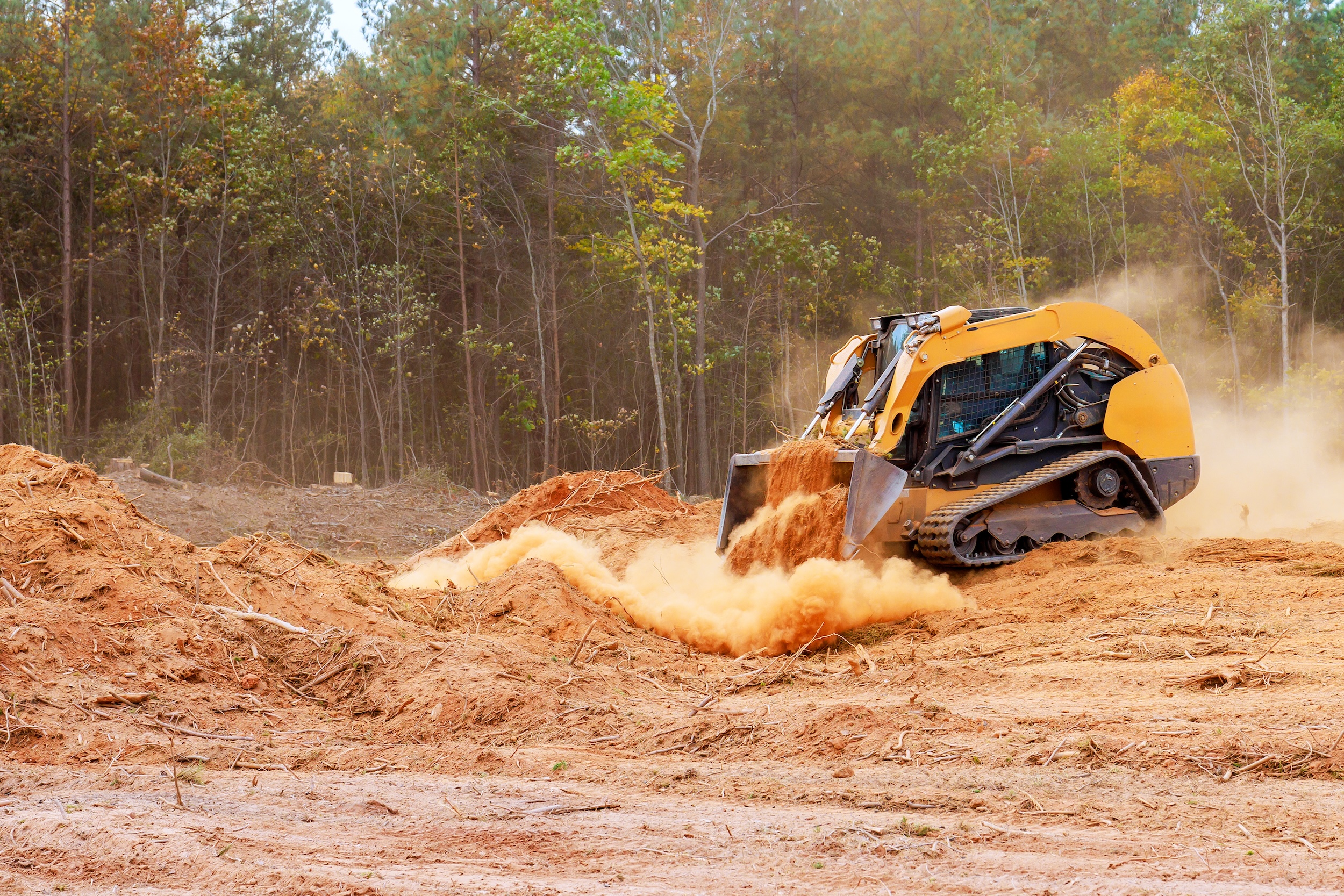
- Land clearing and forestry work is another area where skid steers are used and are more capable than most people realize. Mulcher attachments, brush cutters, and tree shears make a mid-to-large frame skid steer an effective clearing tool for acreage that doesn’t justify the cost of a full-size forestry machine.
- Skid steers also used regularly in municipal maintenance operations using sweeper attachments for lot and road cleanup, and cold planer heads for asphalt work. On larger rural properties, those same capabilities apply to maintaining private roads, clearing culverts, and managing storm cleanup and debris removal.
Type Breakdown: Understanding What Each Type Of Skid Steer Is Used For
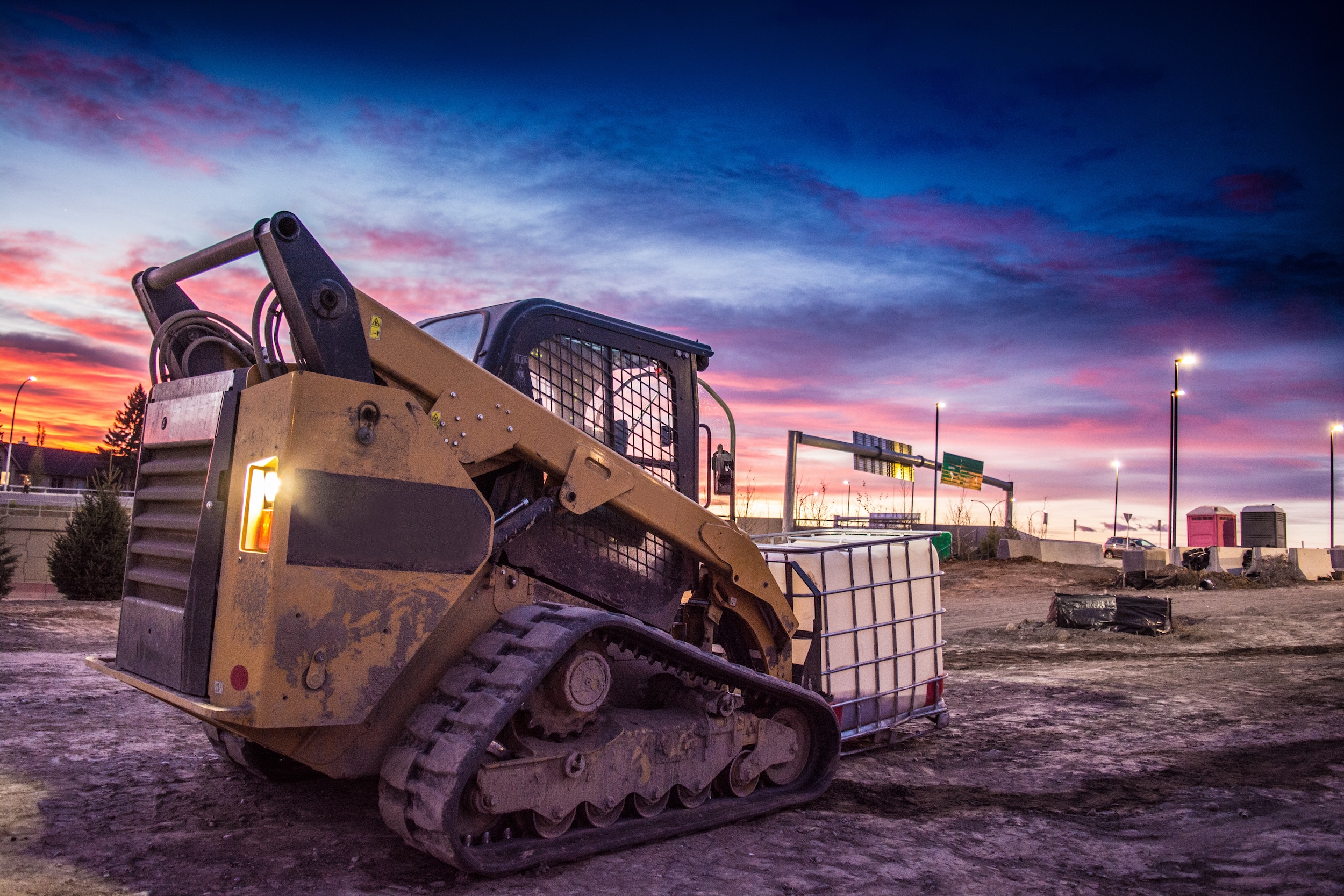
When evaluating what a skid steer loader can be used for and do on your property, there are two dimensions that directly affect suitability: whether the machine runs on wheels or tracks, and what size frame it carries.
Get both of these right and the machine works with you. Get either one wrong, and you’ll spend your time fighting your equipment instead of getting work done.
Wheeled Skid Steers: Best For Hard, Flat, And Developed Surfaces
Wheeled skid steers are the more common configuration that’s used on developed ground. They move faster than tracked machines, execute true zero-radius turns, and cost less both to purchase and to maintain over time.
Wheeled skid steers are the right call when used for:
- construction sites with gravel, asphalt, or concrete surfaces
- barn interiors and feedlot areas
- landscaping work on firm ground
- commercial and residential snow removal on paved surfaces
- operations where the speed of movement between tasks matters.
The tradeoff is traction and ground stability. Wheels lose grip in mud, sand, and soft, saturated soil. On turf, the skidding motion of a turn tears up the surface. If your primary working environment involves wet fields, undeveloped ground, or slopes, a wheeled skid steer will fight you in those conditions, thus limiting its uses.
Compact Track Skid Steer Loaders: Best For Soft, Wet, Or Uneven Terrain
A compact track skid steer loader, commonly abbreviated as CTL, runs on two continuous rubber tracks rather than wheels. The tracks distribute the machine’s weight over a much larger ground contact area, which reduces ground pressure per square inch and provides dramatically better traction on soft, muddy, or uneven surfaces.
CTLs are the right choice of skid steer for:
- wet-season farm and ranch work when fields and lots turn to mud
- undeveloped land clearing where the ground is rough and variable
- post-storm cleanup on saturated ground
- working on slopes and hilly terrain where wheel traction would be marginal
- applications where getting stuck is a serious operational risk.
The tradeoffs are cost and surface limitations. Track loaders cost more upfront, tracks are more expensive to replace than tires, and these skid steers can mark hard paved surfaces when they’re used there. They also move more slowly and do not execute the true zero-turn of a wheeled machine without some risk of track wear.
Radial Lift vs. Vertical Lift: Why The Lift Path Matters For Your Use Case
This is a specification that so many equipment guides skip, but understanding it changes what a skid steer loader is used for in a practical sense, and should factor into any purchase or rental decision.
A radial lift skid steer raises its boom arms in a curved arc, reaching maximum forward reach at mid-height. It’s that arc path that makes these particular types of skid steers great when used for grading, backfilling, trenching, scraping; essentially tasks that require staying close to the ground. Radial lift machines are generally the lower-cost option and work well for most farm, ranch, and landscaping applications.
A vertical lift skid steer raises its boom in a path that keeps the load closer to the machine as it rises, then extends it forward near the top of the arc. The result is a higher maximum reach and more consistent dump height throughout the lift cycle. A vertical lift skid steer is the better choice when you regularly do the following: load trucks, fill elevated hoppers, stack materials, or work with attachments that need maximum height clearance. If loading out over high truck bed walls is a regular part of your operation, the use of a vertical lift skid steer is worth the additional cost.
Small vs. Medium vs. Large Frame: Matching Machine Size To The Job
Skid steer loaders are categorized into three frame sizes, which can directly impact the ways the equipment is used and what it can do. The three frame categories below map directly to the range of jobs each machine is built to handle.
Small frame (under 50 HP, under 1,750 lb rated operating capacity): This is the most maneuverable skid steer configuration and the one that fits through standard farm gates and commercial doorways. It’s best for residential and small-property landscaping, interior demolition, tight job sites in developed areas, and light farm and property maintenance tasks. It also has lower operating costs and is easier to transport than larger machines.
Medium frame (50-70 HP, 1,750-2,200 lb rated operating capacity): This is the most commonly owned and rented skid steer size, and for good reason. It handles the broad middle range of construction, landscaping, and agricultural work without the bulk of a large machine. Most working farms and ranches find that a medium frame skid steer loader covers the overwhelming majority of daily tasks and uses. This is the configuration most rental fleets stock in the greatest volume.
Large frame (over 70 HP, over 2,200 lb rated operating capacity): This skid steer size provides maximum lifting capacity and horsepower for heavy demolition, high-volume grading, large-scale land clearing, and any application that regularly pushes the limits of what a smaller machine can sustain. These machines tend to be less maneuverable and more difficult to transport, but they’re capable of work that smaller skid steers are unable to do within a full production day timeframe.
How To Choose The Right Size Skid Steer Loader For What You’re Using It For
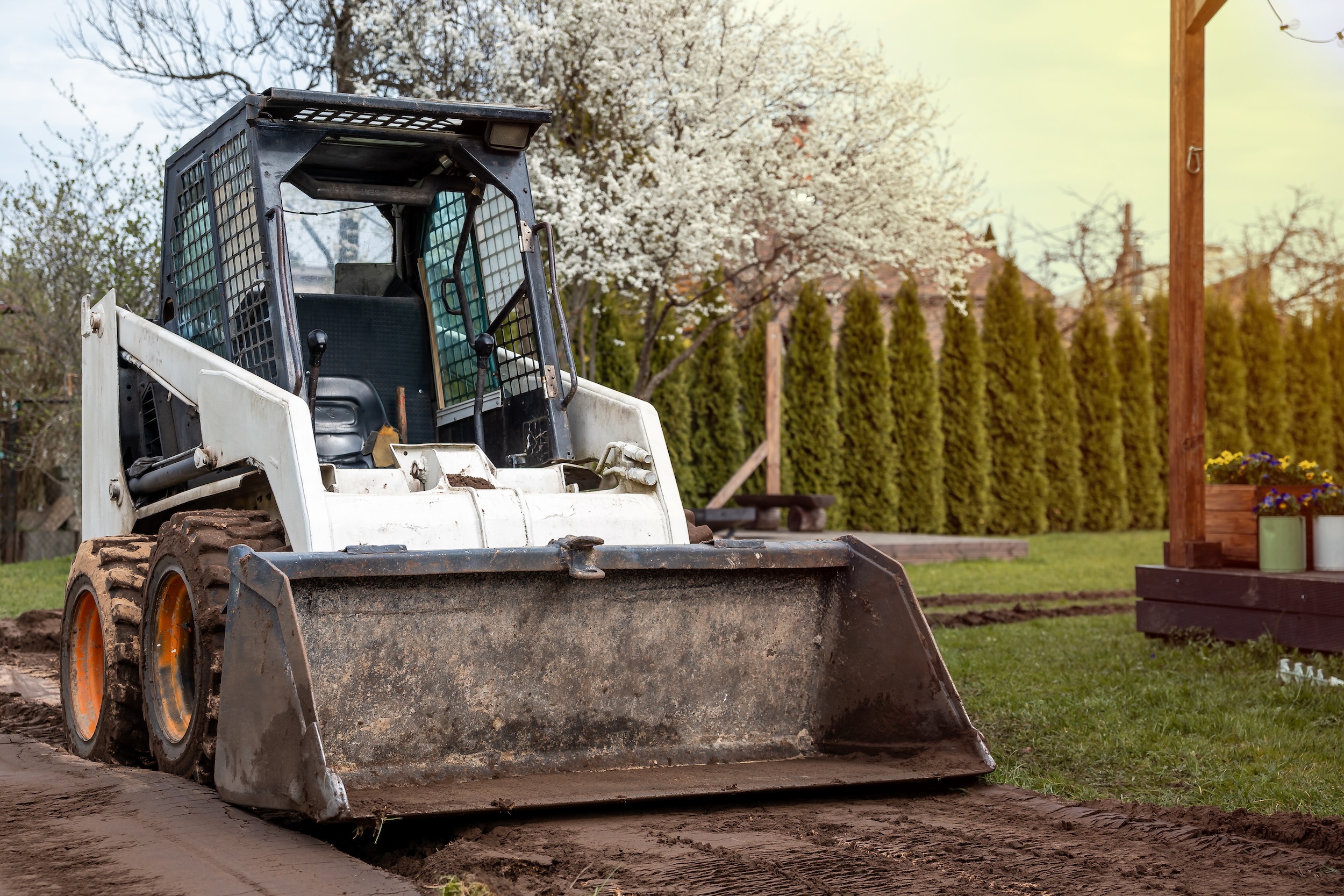
Once you understand what a skid steer is used for across all its applications, the next step is matching the right machine to your specific work.
The most common mistake buyers and renters make is sizing to the average of their expected tasks rather than the most demanding one. Start with your hardest requirement and size from there.
Match Your Rated Operating Capacity To Your Heaviest Load
Every skid steer has a rated operating capacity, or ROC. Per OSHA’s material handling guidelines, for wheeled machines the ROC is set at 50 percent of the machine’s tipping load. For compact track loaders, the standard is 35 percent. That safety margin exists for good reason: operating close to the tipping load is dangerous and puts stress on both the machine and the ground beneath it.
The practical approach is to know the weight of your heaviest expected load, add a comfortable safety buffer, and use that number to set your minimum ROC requirement.
If you regularly move round bales weighing 1,500 pounds, you want a machine with a ROC well above that figure, not one that barely meets it. Getting this right is the most mechanical part of figuring out what a skid steer loader can be used for on your specific property.
Think About Where You Work, Not Just What You Move
Terrain and site conditions often determine the right type of skid. steer more definitively than lift capacity alone. Work through these questions before finalizing a configuration:
- Is your primary working surface developed and firm, or undeveloped and variable?
- Do you work through wet seasons where soft ground and mud are regular factors?
- Do you need to move the machine through standard gates or doorways?
- Are slopes a consistent feature of your terrain?
- Does your work require moving quickly between tasks across a larger area?
Answer these questions honestly, and you’re that much more likely to arrive at the right type and size of skid steer without second-guessing your purchase later. down the line.
Consider Hydraulic Flow Before You Commit To Using Specific Attachments For Your Skid Steer
This is a specification that trips up a lot of first-time buyers. Skid steers come with either standard-flow or high-flow hydraulics, and the difference determines which attachments you can use at full capability.
Standard-flow hydraulics handle the majority of common attachments well: buckets, augers, grapples, bale spears, post drivers, and most landscaping tools. High-flow hydraulics are required for power-hungry attachments including cold planers, high-speed mulchers, large brush cutters, and some trenchers.
If you intend to run high-demand attachments, verify that the skid steer you’re considering has high-flow capability before you plan to use it on your property. Adding it after the fact is not always possible and is never inexpensive.
Buying vs Renting A Skid Steer To Use On Your Property
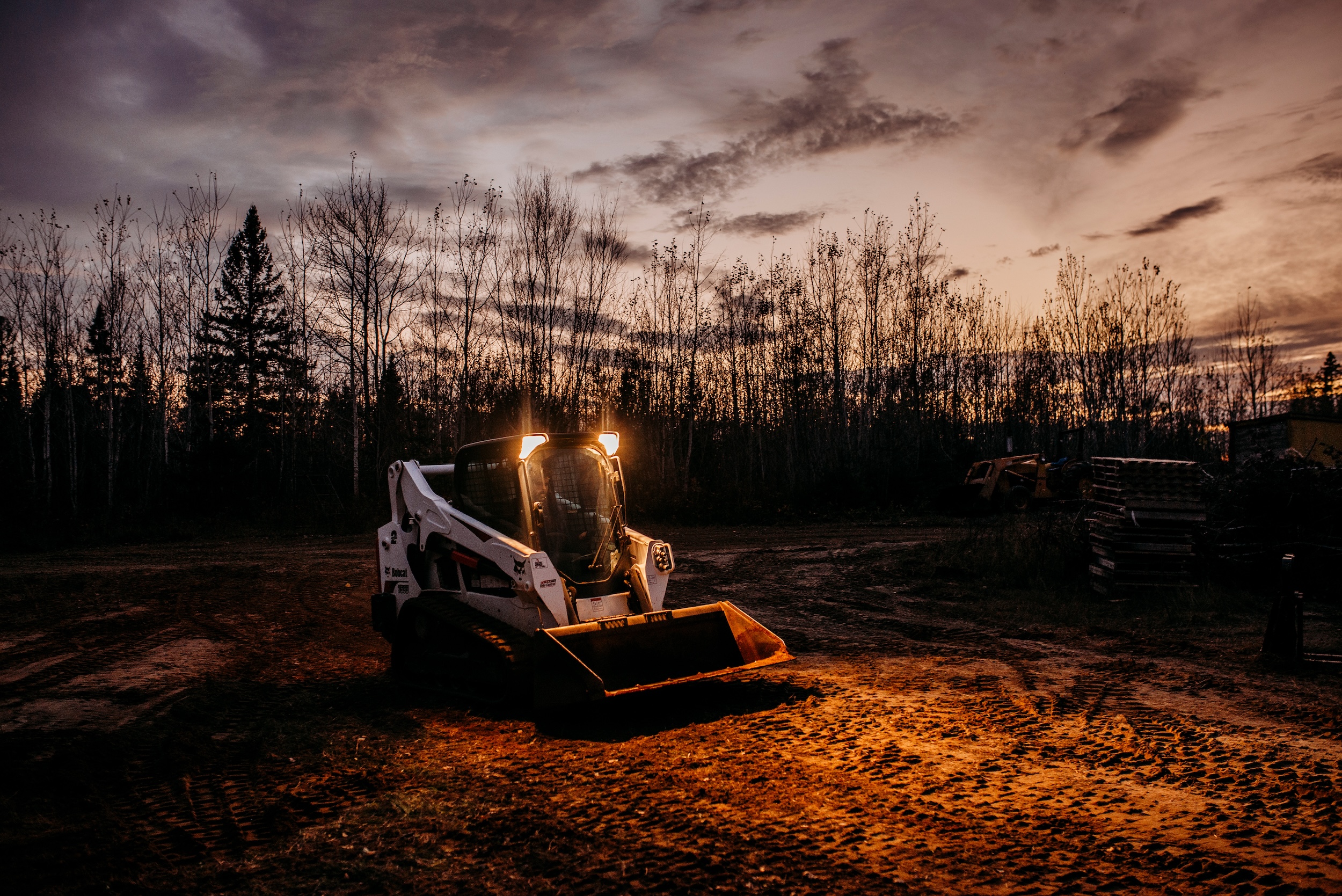
Part of knowing what a skid steer is worth to your operation is deciding whether renting or owning one is right for your particular use case. Both paths make sense depending on your situation, and the straight answer is that neither is universally right for everyone.
When To Rent: Renting a skid steer makes sense when you have a one-time or short-duration project, you’re not yet certain which type or size fits your operation, you want to avoid the overhead of ownership, including maintenance and storage, or you need a specialized configuration for a task that doesn’t come up regularly.
When to Buy: Buying makes sense when you’re putting a skid steer to work multiple times per year across different tasks, you have ongoing farm, ranch, or property needs that justify year-round availability, and the economics of ownership hold up against repeated rental costs. For most working rural properties, if you’re renting a skid steer more than two or three times annually, ownership starts to make financial sense.
The Used Skid Steer Option: Skid steers hold their value well and are built for demanding work, which means a well-maintained used machine with documented service hours is often the smart middle-ground purchase. Buying used lets you get into the right configuration without paying new-equipment pricing, and the major manufacturers build machines with long service lives that make used purchasing a sound long-term investment.
Ready To Put A Skid Steer Loader To Work On Your Property?
You’ve got a clear picture now of what a skid steer is used for across construction, agriculture, landscaping, and beyond, which type fits your terrain, and how to size the machine to the work. The next step is finding the right machine at the right price from someone who understands what you’re actually going to do with it.
At Hayden Outdoors, we connect buyers and sellers of farm, ranch, and rural equipment directly, with no fees or commissions collected on either side. Whether you’re looking for your first skid steer or adding to an existing fleet, our equipment listings are the place to start.
View Skid Steer Equipment
Complete Buying Guide: How Much Does a Combine Harvester Cost?
Picture this: you’ve spent years building up your grain operation, and the time has finally come to put a combine harvester on your farm. You start browsing listings, talking to combine harvester dealers, and asking around; the pricing numbers you get back are all over the map. One machine is listed at $40,000. Another looks nearly identical and carries a $200,000 price tag. A brand-new model from a major dealer clocks in at over $800,000. And suddenly the question “how much does a combine harvester cost” starts to feel a lot more layered than you expected.
Here’s the good news: the wide price range for combine harvesters actually makes complete sense once you understand what’s driving it. Combine harvester pricing reflects everything from machine size and crop capacity to technology level, age, and condition.
A compact used unit suited to a few hundred acres of small grain is a completely different animal than a high-capacity rotary harvester designed to chew through thousands of acres without missing a beat. The gap in combine harvester price ranges reflects the gap in capability, and that means there’s a machine at the right price for nearly every farming operation.
In this guide, we’ll walk you through everything that shapes the cost of a combine harvester, what you’ll want to budget for beyond the sticker price, the renting versus buying debate, your financing options, and how to find a great machine at a great value. By the time you’re done reading, you’ll know exactly how to approach the combine market with confidence.
Table Of Contents
How Much Does a Combine Harvester Cost?
Before we get into the factors that shape how much a combine harvester actually ends up costing you, it helps to have a general sense of the pricing landscape. Combine harvester costs come in a pretty massive price range: from around $10,000 for an older, smaller used machine all the way up to over $1,000,000 or more for a fully loaded new flagship model.
Most late-model used combines trade somewhere in the price range of $100,000 to $400,000 range, depending on age, hours, and condition.
If you’re wondering how much a new combine harvester costs specifically, expect to start somewhere around the price range of $200,000 to $300,000 for a newer entry-level model, with mid-range and high-capacity machines climbing from there. At the top of the market, premium new models from major combine harvester manufacturers can comfortably exceed a cost of $500,000 to $700,000 fully configured.
Those pricing numbers represent the full spectrum of what’s available. How much a combine harvester costs for your specific operation depends on your acres, your crops, and what you actually need the machine to do. That’s exactly what the rest of our guide will help you figure out.
Factors That Impact How Much A Combine Harvester Will Cost

Understanding those wide combine harvester price ranges starts with understanding what you’re paying for in the first place. Several key variables drive combine harvester costs up or down, and knowing them helps you compare machines intelligently and find the best fit for your budget.
How Size And Harvesting Capacity Impact The Cost Of A Combine Harvester
Machine size is one of the most direct drivers of combine harvester price. Combines are built in different harvesting classes, and each step up the class ladder brings more processing capacity, more engine power, a larger grain tank, and faster throughput.
For a smaller or mid-sized farming operation, a lower-class combine harvester will do everything you need at a price that fits comfortably within your budget. For large-scale operations harvesting thousands of acres in tight weather windows, a higher-class combine harvester is a better fit for the job, and its cost reflects that capability.
The practical takeaway: match the machine to your acres. A combine harvester price that seems high in isolation is often more reasonable than it seems when you divide it across the number of productive acres it will cover each season.
The Cost Difference Between New vs. Used Combines
New or used is the biggest single lever you can pull to determine how much a combine harvester could cost you. A brand-new machine gives you the latest technology, full factory warranty coverage, and zero hours on the clock.
A used combine harvester gives you a significantly lower cost, and with the right inspection and history, it can deliver many more years of dependable service at a more approachable price point.
How much does a new combine harvester cost compared to the price of a used one? Generally speaking, a well-used machine can come in at 30 to 60 percent of the equivalent price of a new combine harvester, sometimes less, depending on hours and age.
That kind of spread is why the used combine market stays so active, and why it’s worth exploring thoroughly before committing to a new one.
Using Separator Hours To Determine How Much A Combine Harvester Will Cost
When evaluating used combine harvester prices, separator hours are the most important number on the spec sheet. Separator hours measure how long the threshing and separation system has been running, and they are the clearest indicator of mechanical wear on a used machine.
A used combine harvester with low separator hours (under 1,000 or so) will carry a higher price that approaches a similar cost to that of a new machine. As hours increase, the price of the combine harvester comes down accordingly, which creates some of the best value opportunities in the market.
Higher-hour combine harvesters are often the most negotiable on price, and with a solid inspection, many of these machines have plenty of productive seasons ahead.
Technology And Precision Agriculture Features That Drive Up Combine Harvester Price
When it comes to determining how much a combine harvester could cost you, it’s important to remember that modern combines can be equipped with GPS guidance, yield mapping, automated speed control, moisture sensing, and remote diagnostics.
These features deliver genuine daily value: better data, higher efficiency, and more precision across every acre you harvest. However, they can also drive up the cost of a combine harvester, which is worth understanding when comparing the price on various listings.
Factory-integrated precision ag packages on newer machines can add a meaningful amount to the base price of a combine harvester. When shopping, note exactly which technology features each machine includes, since two combine harvesters with a similar price may be configured quite differently under the hood.
It’s also worth asking whether any technology features carry annual software or connectivity subscription fees, as these recurring costs can drive up the lifetime cost of owning (or renting) a combine harvester.
Pricing Impact Of The Combine Threshing System: Conventional vs. Rotary
Combines use one of two primary threshing systems. Conventional combine harvesters, sometimes called straw-walker combines, carry a lower price and work exceptionally well for small grains like wheat, oats, and barley.
Rotary combines handle a broader range of crops with higher throughput and are common on larger, more diverse operations. Rotary combine harvesters carry a higher price, but for farms that depend on their capacity and versatility, that cost reflects real daily productivity.
When you see two combine harvesters that look similar in size but carry noticeably different prices, the threshing system is often part of that cost equation.
How Market Timing And Regional Conditions Impact The Cost Of A Combine Harvester
The cost of a combine harvester doesn’t exist in a vacuum. Equipment market conditions, regional demand, and where you are in the model cycle all play a role.
When manufacturers release new machine generations, the previous generation depreciates, and prices on those combine harvester models soften, creating a solid opportunity for buyers who don’t need necessarily need the latest technology on their farms.
Regionally, combine harvester prices can vary based on local crop mix and inventory levels. Fall listings, right after harvest season, typically bring the widest selection of used combines to market as farmers upgrade or transition out, which tends to be a buyer-friendly time to shop.
Elements That Aren’t Built Into The Price You Pay For A Combine Harvester

One of the most useful things you can know going into a combine harvester purchase is that the listed price is almost always the starting point, not the complete cost picture. Understanding the additional line items up front helps you budget accurately and walk into a price negotiation fully prepared.
Grain Headers And Harvest Attachments
A combine harvester is typically sold as a base machine. The header (the front attachment that cuts and gathers the crop) is priced and purchased separately in almost every transaction.
Header costs vary based on type and cut width, and depending on your crops, you may eventually want more than one configuration.
The good news is that used headers are widely available through equipment auctions and third-party marketplaces at prices well below dealer new pricing, which is a great way to get fully outfitted while keeping your total cost for your combine harvester down.
Freight And Delivery Of Your Combine Harvester
Moving a combine harvester from the seller or dealer to your farm requires a flatbed or lowboy trailer. Freight costs depend on the distance involved, but this is a real line item that’s worth building into your budget early, especially when buying remotely through an auction or private sale.
Pre-Purchase Inspection Of Your Combine Harvester
For new machines purchased through a dealer, a pre-delivery inspection is part of the standard process. When purchasing a used combine, an independent inspection from a qualified ag mechanic is one of the smartest steps you can take.
Knowing the mechanical status of a combine harvester before you finalize a purchase gives you full confidence in your decision and the price you’re paying. And if the inspector finds anything worth discussing, it gives you useful information to leverage during the negotiation process.
A thorough inspection typically runs from a few hundred to a couple thousand dollars, which is a very small number relative to the total price of the combine harvester and its attachments.
Insurance And Annual Maintenance
Farm equipment insurance and routine annual maintenance are the ongoing operating costs that come with owning a combine harvester. Insurance protects the substantial investment and price you’ve made.
Routine maintenance (belts, bearings, fluids, and seasonal prep) keeps the machine running at its best and extends its useful life.
Both are predictable, plannable costs, and building them into your annual budget from the start makes owning a combine harvester sustainable for the long haul.
How To Decide Between The Cost Of Renting vs Buying A Combine Harvester
When farmers look at how much a combine harvester can cost, one of the first questions that comes up is whether ownership is the right path for them.
Renting, custom hiring, and leasing are all strong options, and for certain operations, and sometimes they make financial sense. In other scenarios, owning a combine harvester truly is the most viable path from a long-term cost perspective.
Let’s talk through the factors you’ll want to consider:
The Acreage Foundation
Acreage is the clearest starting point for this analysis. The more acres you harvest per season, the more efficiently a purchased combine harvester pays for itself, even at a higher price tag.
Operations farming larger acreages can spread the cost of a combine harvester across more productive use, which makes ownership increasingly efficient over time.
For smaller acreages where a machine wouldn’t be in the field very many hours per season, renting or custom hiring often delivers more value per dollar.
That said, as your operation grows, the economics of buying a combine harvester begin to make more financial sense. Many farmers start by renting or custom hiring, then make the move to ownership when their acreage supports it.
How Much Does It Cost To Rent A Combine Harvester?
If you’re farming a smaller acreage or want to run a machine type before committing to a purchase, renting a combine harvester is a practical and flexible path from both a cost and logistics perspective.
Daily rental cost for a combine harvester typically runs around $1,000 to $3,000, depending on model and region, with hourly rates in the $150 to $225 range for larger machines.
Maintenance is typically the rental provider’s responsibility, which can simplify your harvest season logistics considerably.
Custom Harvesting
Custom harvesting, hiring a contractor who brings both their combine and an operator, handles a significant share of crop acres in major grain states.
Custom harvesting rates typically run $35 to $45 per acre, but this cost can also vary quite a bit, depending on your region and crop type.
For operations with limited labor, or for growers who want to focus their energy on grain hauling and logistics during harvest, custom hiring can be an efficient, more price friendly way to get the crop in without taking on the full cost of combine harvest ownership.
Leasing Your Combine Harvester
Leasing a combine sits between renting and buying. It typically requires less upfront capital than purchasing outright, provides consistent access to a machine, and some lease structures allow you to upgrade to a newer model at the end of the term.
Lease payments are often fully deductible as a business expense, which can be a meaningful tax advantage. If staying current with technology matters to your operation, leasing is worth a conversation with your ag lender.
Choosing The Right Path
The right choice among buying, renting, leasing, and custom hiring comes down to your acreage, your crops, your labor, and your cash flow.
Farmers harvesting large acreages with tight timing windows get the most from owning a combine harvester, even with the up-front cost factored in.
Farmers who are scaling up or running smaller operations often find that the flexibility of leasing or renting a combine harvester works better at their current stage. There’s no wrong answer; just the right answer for where your operation is today and where it’s headed.
How To Finance The Purchase Cost Of A Combine Harvester

Combine harvester costs at the higher end of the market represent one of the largest single investments some farming operations make, and most buyers finance at least part of the purchase price.
The ag lending world is well-equipped for this, and you have several different routes to choose from:
Manufacturer and Dealer Financing: The major equipment manufacturers offer their own financing programs, and dealers frequently run promotional rates during key buying seasons. These programs are convenient and sometimes very competitive for financing, especially for new combine harvesters with higher price tags. Comparing rates from at least one outside lender gives you a fuller picture and makes sure you’re getting the best deal available.
Farm Credit and Agricultural Lenders: Farm Credit institutions specialize in agricultural lending and are often one of the strongest options for financing the combine harvester purchase price. Regional ag banks and credit unions with farm lending experience are worth contacting as well.
USDA Farm Service Agency Loans: The USDA Farm Service Agency offers loan programs specifically designed to help farmers access the financing they need to grow. FSA Operating Loans can be used to purchase farm equipment, including combine harvesters, with terms built around the realities of farm income and cost structures. Newer farmers and operations looking for flexible financing will find FSA programs especially worth exploring.
Section 179 Tax Deduction: The IRS Section 179 deduction allows farm businesses to deduct the full purchase price of qualifying equipment in the year of purchase rather than spreading depreciation across multiple years. On a combine harvester purchase, this can meaningfully improve your first-year tax position and reduce your effective combine cost. A conversation with your tax advisor is critical to understanding your options.
How To Find A Combine Harvester At The Best Value For The Cost
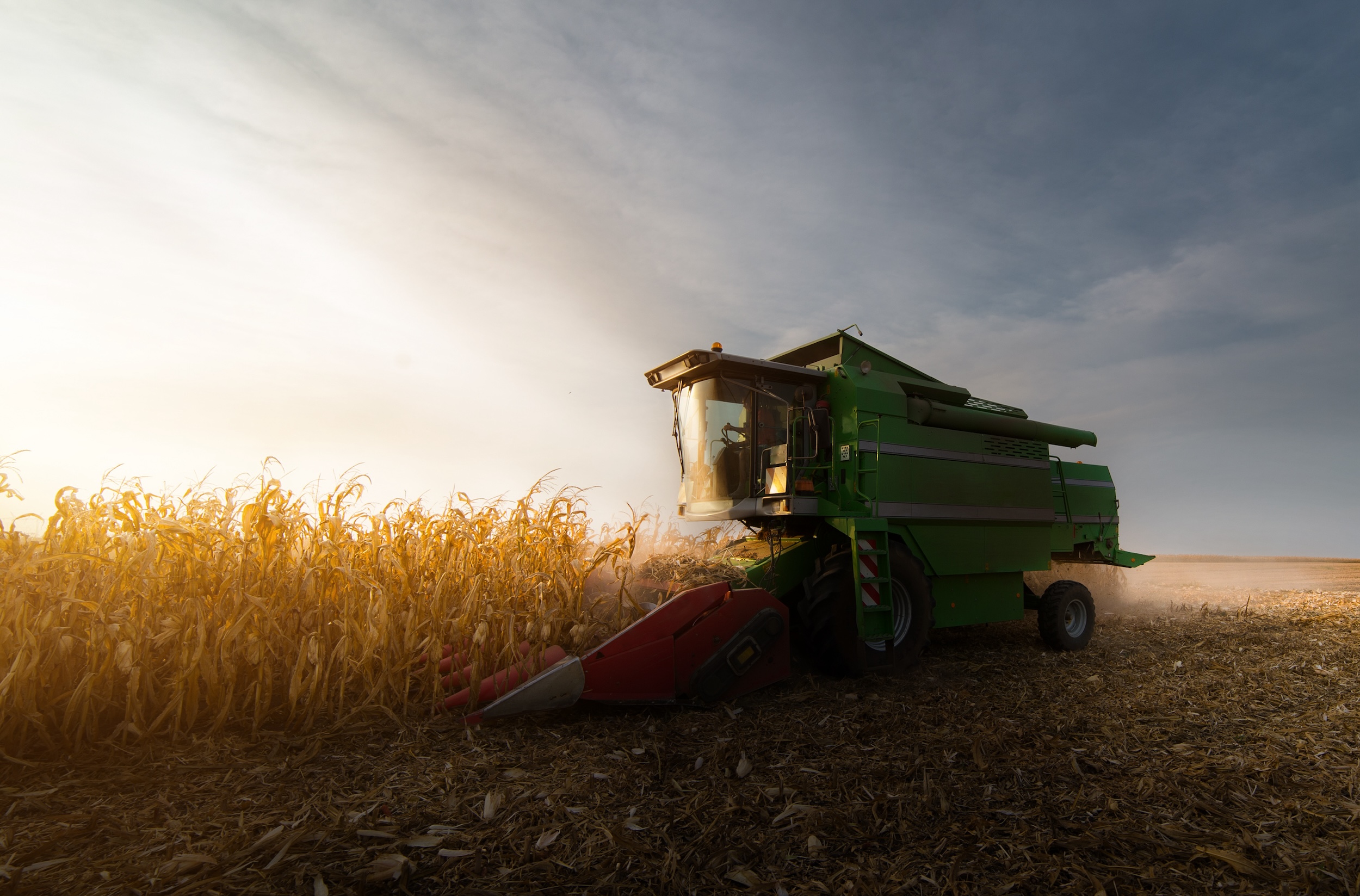
Understanding combine harvester prices and how much you can expect this equipment to cost you is one thing. Knowing how to shop for the best value is another. Here are the habits that help farmers find the right combine harvester at the right price.
Shop In The Fall: Fall is prime time for used combine inventory. After the harvest wraps up, farmers who are upgrading or transitioning their operations list their machines, which means more selection and more motivated sellers (which can often translate to a lower cost for that combine harvester you have your eye on). Shopping in the fall or early winter typically gives you more options and a stronger negotiating position than you’d find in the spring.
Focus On Hours Over Year: When comparing used combine harvester price tags, prioritize separator hours over model year to truly understand the value in relation to the cost. A machine with fewer hours and a slightly older year often represents better value than a newer machine with significantly more hours on it. Always ask for a full maintenance history alongside the hour meter reading. A seller who can provide detailed records cared for the equipment, and that history supports the asking price for the combine harvester.
Commission An Independent Inspection: An independent pre-purchase inspection gives you a clear, objective picture of your combine harvester’s mechanical condition before you commit to the price. It’s also a useful tool for price negotiation. If the inspector identifies items that need attention, that’s a fair and constructive basis for revisiting the combine harvester with the seller. This step is especially valuable when buying through an auction or private sale.
Compare Across Channels: Traditional dealerships are a great starting point for understanding what a given machine class should cost and for exploring warranty and trade-in options for combine harvesters. Equipment auctions and third-party marketplaces are where you’ll often find the most competitive prices for a combine harvester, because you’re working directly with motivated sellers without dealer overhead built into the price. Browsing both channels gives you a full picture of the market and helps you recognize genuine value when you see it.
Explore The Used Header Market: Headers and attachments depreciate quickly and are widely available through equipment auctions and marketplaces at prices well below new dealer pricing. Pairing a solid used combine harvester with a used header sourced separately is a smart way to get fully operational without paying new prices across the board. And it’s a great way to manage how much a combine harvester could cost you in total, without compromising your harvest capability.
Find The Right Combine Harvester, At The Right Price, For Your Farm
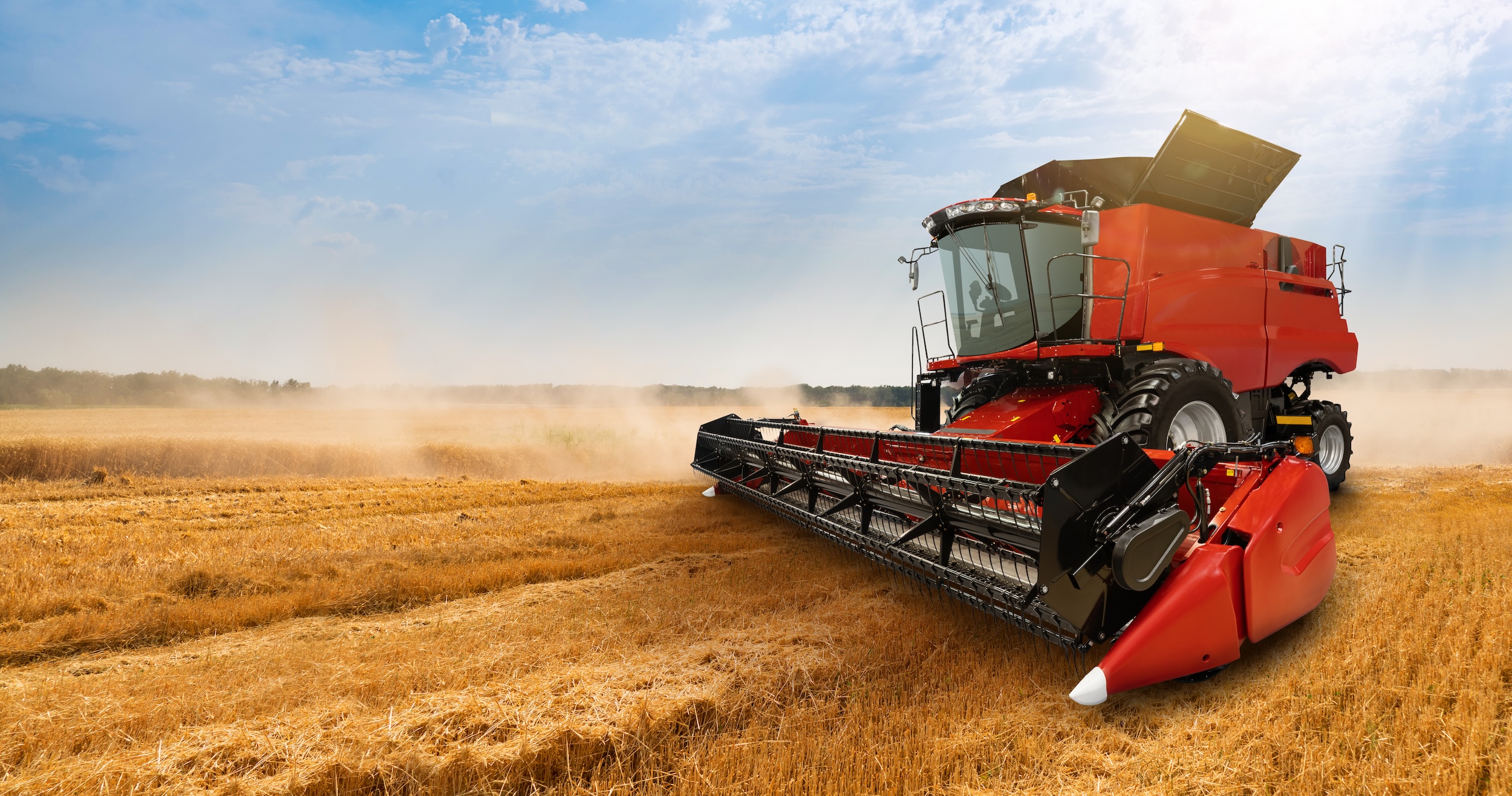
You’ve done the research. You understand what factors can impact how much a combine harvester could cost your farm, what to budget beyond the sticker price, how to think through renting versus buying, and how to shop the market effectively. That’s a strong foundation for making a confident, well-informed purchase decision.
At Hayden Outdoors, our equipment marketplace connects equipment sellers directly with buyers across the country. Sellers list their own equipment directly, which means transparent pricing and direct communication; no dealer overhead stands between you and a fair price for a combine harvester.
Whether you’re looking for a late-model combine to power a growing operation or a solid used machine to get your farm off to a strong start, browse what’s available.
View Combines and Harvesting Equipment
The information in this article is for educational purposes only and should not be considered legal or tax advice. Always consult with attorneys, tax professionals, and financial advisors before making decisions about your farming operation.
How To Clear Land: The Complete Step-By-Step Clearing Guide
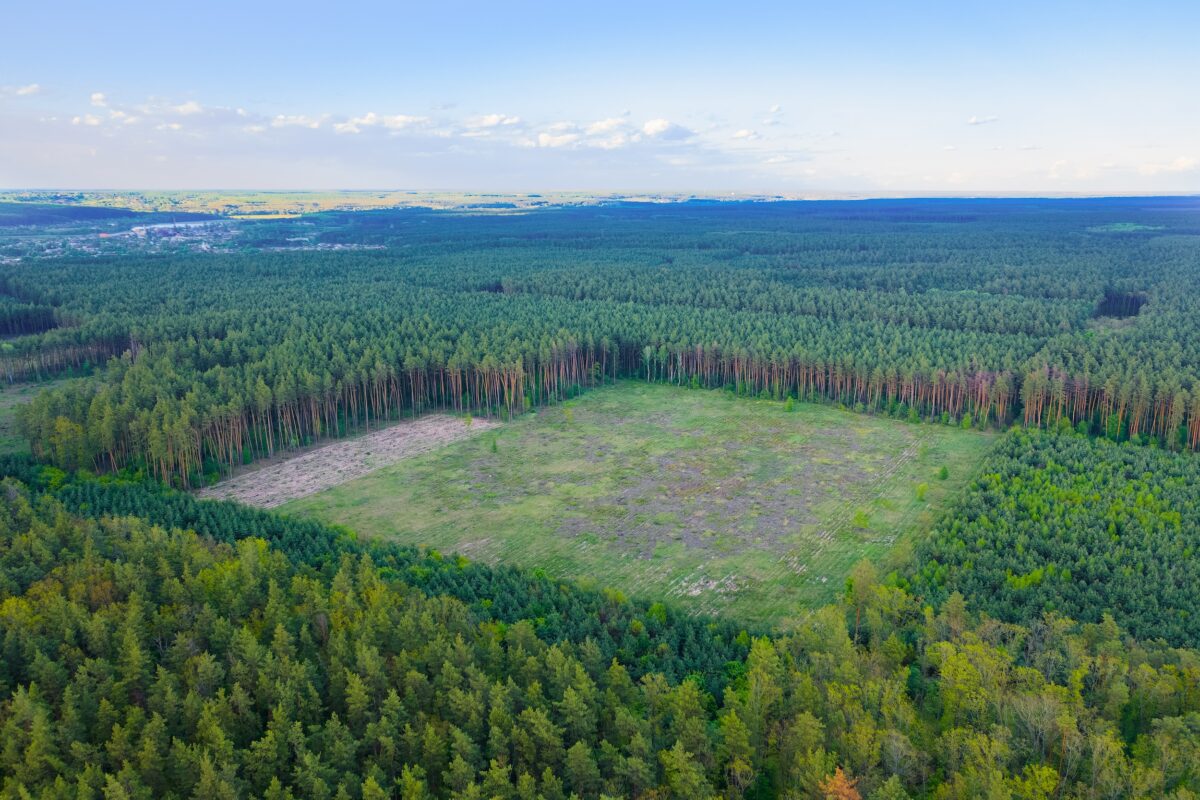
Whether you’re preparing a homesite, creating pasture, or developing recreational property, knowing how to clear land properly is a critical element to using your property to the fullest. Clearing ground involves more than simply removing trees and other plant life. It’s about understanding the right methods, timing, and techniques that will save you money while protecting your investment for years to come.
At Hayden Outdoors, we specialize in making the most out of life on the land. We regularly work with landowners looking to optimize the usage of their property, whether it’s clearing space for their cattle ranch or simply increasing the value of their acres.
Our guide will walk you through everything you need to know about land clearing, from choosing the right method to executing each step with confidence.
Table Of Contents
How Long Should You Expect It To Take To Clear An Acre Of Land?

The time required for land clearing varies dramatically based on several factors. Professional crews can clear anywhere from one to fifteen acres per day depending on the method and conditions, but understanding what influences these timelines can help you plan realistic schedules.
Vegetation density plays the largest role in how to clear land efficiently. Light vegetation with sparse brush might take just 1-2 days per acre for a professional crew. Moderate density with mixed brush and small trees can extend this timeline to 3-5 days per acre. Heavy forests with large mature trees can require 1-2 weeks per acre when using traditional land clearing methods.
The type of equipment makes an enormous difference in how long it takes to clear land. You can expect forestry mulchers to process 1-3 acres per day when dealing with moderate vegetation, while large commercial mulchers are capable of taking on 15 acres daily (assuming ideal conditions). Traditional bulldozing and grubbing typically clears 1-3 acres per day depending on tree density.
Terrain and accessibility also affect how long it takes to clear land. Flat, easily accessible land clears faster than steep slopes or rocky terrain. Wet or frozen ground creates different challenges, depending on your region and season. Areas requiring careful navigation around obstacles or preservation of specific trees naturally take longer.
Ground Clearing Pro Tip: For DIY projects, we recommend multiplying professional estimates by three to five times. A quarter-acre with light brush might take several weekends for a landowner working alone. Larger properties or denser vegetation can stretch into months of weekend work.
The Different Methods Of Land Clearing And How They Can Change Your Approach
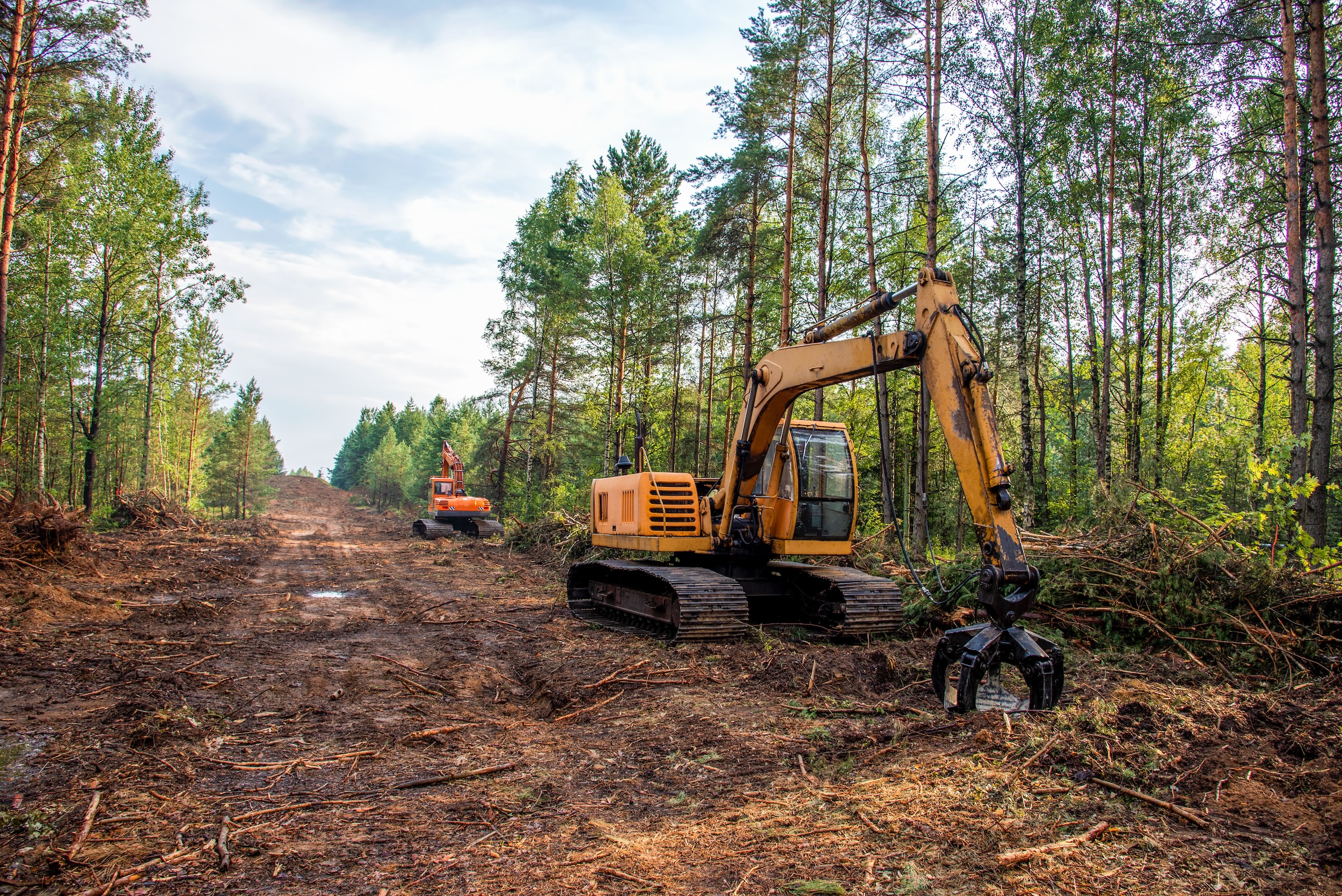
Choosing the right land clearing method affects everything from your budget to soil health to how quickly you can use your property. Each approach has distinct advantages for specific situations. Here’s the breakdown:
Forestry Mulching
This increasingly popular method uses a single machine to grind vegetation into nutrient-rich mulch that stays on-site. The process involves a rotating drum or disc with hardened steel teeth that shreds trees, brush, and undergrowth into chips.
Forestry mulching typically costs $400-$800 per acre for moderate vegetation, with denser areas reaching $1,000-$2,500 per acre. The method excels at clearing properties where you want to preserve topsoil and prevent erosion. It’s ideal for pasture preparation, fire prevention zones, and recreational land where you’re not building immediately.
The mulch layer left behind when clearing land this way suppresses weeds, retains moisture, and returns nutrients to the soil as it decomposes. However, forestry mulching typically can’t handle trees larger than 8-12 inches in diameter, and you’ll still see stumps at ground level rather than complete removal.
Grubbing And Dozing
When it comes to how to clear land, traditional bulldozing remains the go-to method for construction sites requiring complete vegetation removal. This approach uses heavy equipment to push over trees and excavate root systems entirely.
The major advantage of this land clearing method is its thoroughness. Everything gets removed, leaving a clean slate ready for grading and construction. Bulldozers handle any tree size and cover large areas quickly. Costs range from $1,500-$5,600+ per acre, depending on vegetation density.
The significant downside is soil disturbance. Grubbing destroys topsoil structure, creates erosion risks, and leaves large holes requiring fill. You’ll also face substantial debris disposal costs unless you can burn on-site or repurpose the material.
Cut And Grind
This selective ground clearing method combines chainsaw felling with stump grinding. It works well for lighter density clearing or when you want to preserve certain trees while removing others.
The approach offers more control than bulldozing and less soil disturbance. Professional services typically charge $1,000-$3,000 per acre. The cut and grind land clearing method is popular for residential lots and properties where maintaining existing landscape features matters.
Cut and grind takes longer than other land clearing methods but provides a cleaner finish. Roots remain underground but won’t sprout new growth with proper stump grinding.
Hand Clearing
For very small areas, tight spaces, or selective thinning, manual clearing with chainsaws and hand tools offers maximum control. This method makes sense for properties under a quarter-acre or for clearing around existing structures where heavy equipment can’t access.
The only significant costs are tools and your labor time. However, the physical demands and time investment make this impractical for larger projects. Most landowners use hand clearing to supplement professional services rather than as a primary method.
Land Clearing Pro Tip: Before clearing land on your property, you may want to consider doing an assessment of available resources and material value on the land. This could include anything from timber to minerals on the property. Extracting resources in the land clearing process can help offset the costs of clearing the ground, and anyone who wants to purchase those resources may assist in covering some of the land clearing costs.
How Time Of Year Impacts The Land Clearing Process

When learning how to clear land effectively, it’s important to keep in mind that seasonal timing affects equipment performance, ground conditions, and overall project success.
Fall: The Land Clearing Sweet Spot
Many land clearing professionals consider fall the optimal season for clearing ground. Cooler temperatures reduce heat stress on workers and equipment, and ground conditions remain firm in most regions, supporting heavy machinery without the mud of spring or frozen challenges of winter.
Deciduous trees drop their leaves, improving visibility and making it easier to identify what needs clearing. Wildlife nesting seasons have ended, reducing environmental concerns. And contractors often offer better ground clearing rates during the fall, since demand typically decreases after the summer peak season.
Winter: Frozen Ground Advantages
Winter land clearing works exceptionally well in regions with frozen ground. The frozen conditions provide excellent support for heavy equipment and prevent the mud issues that plague spring projects. And snow cover can actually protect topsoil during clearing operations.
Dormant vegetation is easier to see and assess when you do your ground clearing in the winter months, and lower contractor demand often means better pricing. However, the downside is that shorter daylight hours limit daily productivity, and extreme cold can create equipment challenges.
Spring: Planning And Preparation
Spring offers moderate temperatures and, once the ground firms up, good working conditions for land clearing. The season works well for projects that need completion before summer construction starts.
The main challenge of figuring out how to clear land in the spring comes from the wet and muddy conditions, especially during the early spring thaw. Equipment can get bogged down, and wet soil is more susceptible to compaction damage. Many regions also have nesting bird restrictions during spring that may limit when you can clear.
Summer: Maximum Accessibility
Summer provides dry ground conditions and long work days. Visibility through full foliage helps you see exactly what you’re clearing. This is peak season for land clearing, which often means higher contractor rates and longer wait times for scheduling.
That said, heat creates worker safety concerns and increases fire risk in dry regions, so if you’re trying to figure out how to clear land in a high-risk region, you’ll need to factor this in. Many areas implement burn bans during summer, eliminating controlled burning as an option for debris disposal.
At the end of the day, the best season for your land clearing project depends on your region, the ground clearing method you choose, and your timeline. In northern climates, late fall and winter often work best. Southern regions may find winter ideal for avoiding summer heat while maintaining good ground conditions.
Equipment Needed For Land Clearing
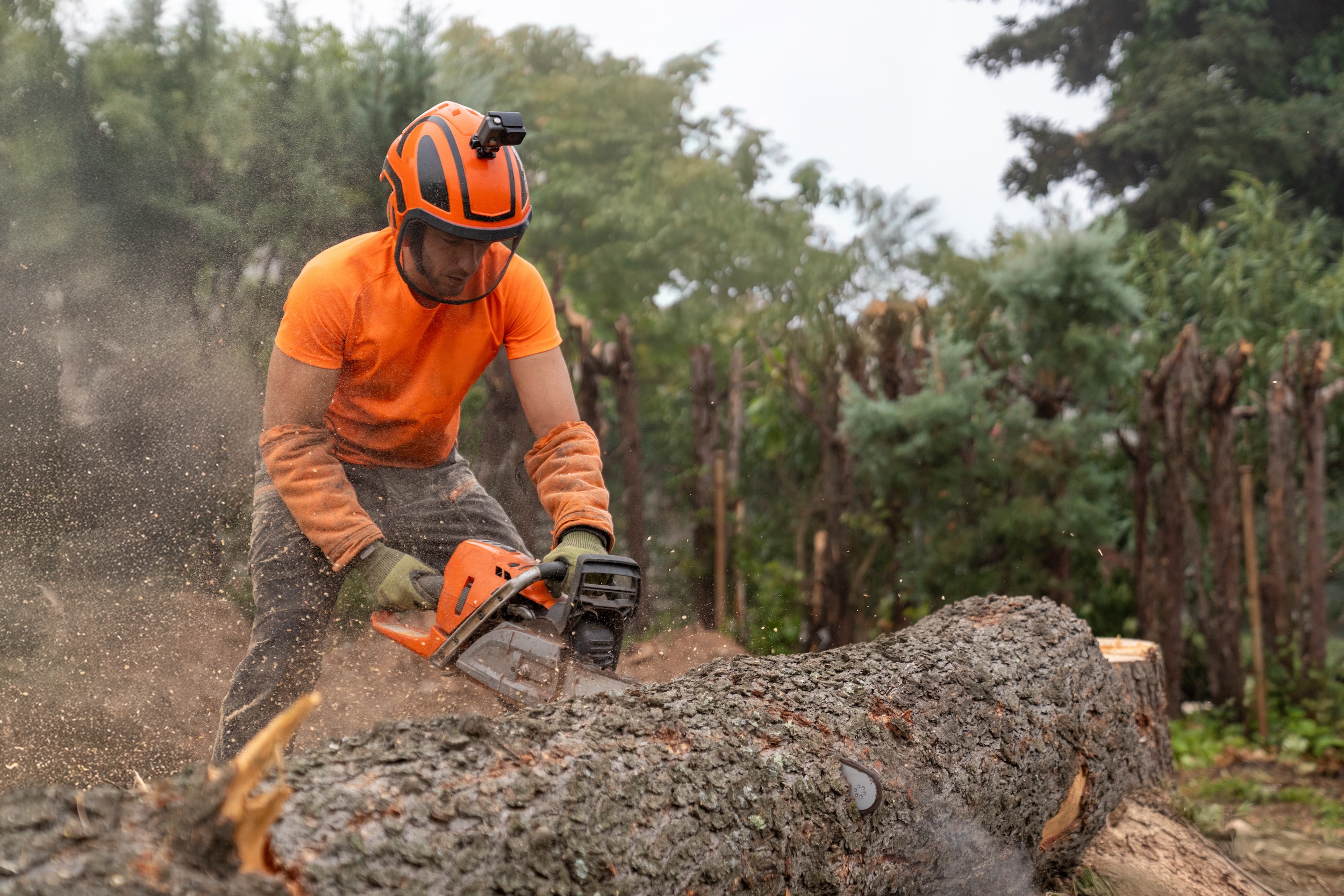
The right equipment makes the difference between an efficient ground clearing project and a frustrating struggle. Your needs depend entirely on your chosen land clearing method and the size of your property.
Equipment Needed For For Forestry Mulching
Professional forestry mulchers are specialized machines that few landowners own. These units can run over $100,000 to purchase, making rental or contractor services the practical choice for most land clearing projects. Rental rates run $1,500-$5,000 per day, including an operator.
Skid steer mulching attachments offer a more accessible option for landowners who already own equipment.
Equipment Needed For Traditional Ground Clearing
Bulldozers are the workhorses of land clearing. For DIY projects, understanding what size tractor you need can help you determine if your existing equipment can handle the job or if you need to rent larger machinery.
A compact tractor with 25-50 horsepower works for light brush clearing with a bush hog attachment. Serious clearing requires larger dozers or excavators, which cost $1,200-$2,500 per day to rent with an operator.
Browse Available Tractors
Land Clearing Hand Tools And Safety Equipment
Even when hiring professionals to clear your land, having basic equipment helps with site preparation and cleanup. A quality chainsaw runs $200-$800 depending on size and power. Safety gear is non-negotiable: chainsaw chaps ($50-$100), hard hat with face shield ($40-$80), safety glasses, steel-toe boots, and hearing protection.
For landowners considering living the rural ranch life, investing in basic land management equipment often makes financial sense. Land clearing is something you’ll likely spend a good bit of time doing. A good brush mower or bush hog attachment ($500-$3,000) handles ongoing maintenance after initial clearing.
Understanding Land Clearing Costs And Budgeting For Your Project
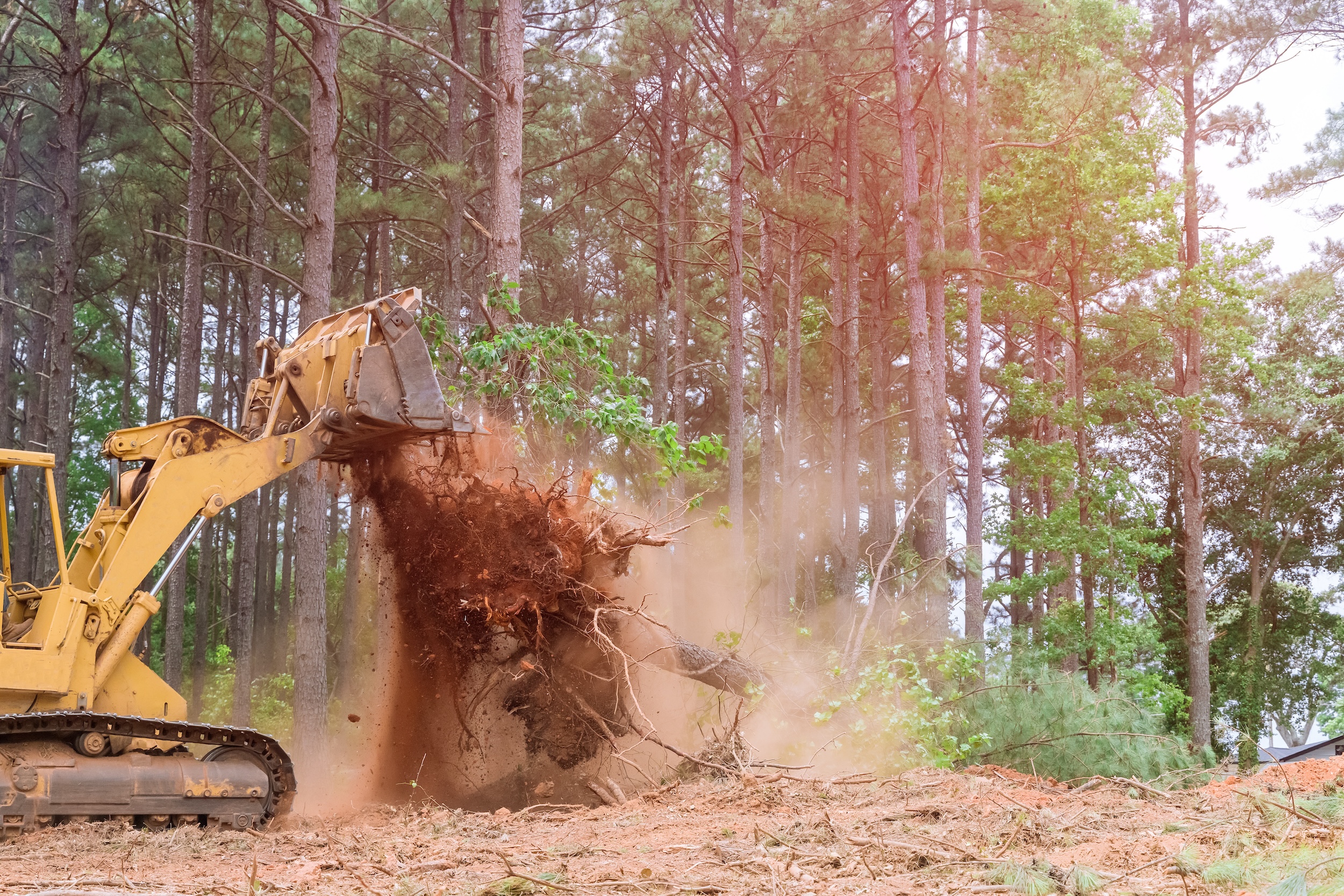
Realistic budgeting is key to preventing surprises and can help you choose between DIY ground clearing efforts and hiring land clearing professional services. The reality is, land clearing costs vary widely based on your specific situation. We’ll explain the nuances you need to be aware of.
How To Calculate Cost To Clear Land Based On Acreage
Professional land clearing averages $500-$8,000 per acre, depending on vegetation density and terrain. Light brush with few trees falls on the lower end at $500-$2,000 per acre. Moderate vegetation with mixed trees and undergrowth runs $2,000-$4,000 per acre. Heavy forest with large mature trees can reach $4,000-$6,000+ per acre.
These figures include basic clearing but often exclude extras like stump removal, debris hauling, grading, or erosion control measures.
Ground Clearing Method-Specific Pricing
Understanding how much ground clearing equipment like tractors and their attachment could cost you will help you determine whether you can feasibly go the DIY route or if hiring a professional land clearing service makes more sense. Forestry mulching services typically charge by the hour at $150-$300 or by the acre at $400-$2,500 depending on density of vegetation.
Traditional grubbing and dozing run higher at $1,500-$5,600 per acre but provide complete removal suitable for immediate construction. Cut and grind land clearing services fall in the middle at $1,000-$3,000 per acre.
Hidden Costs To Consider When Determining How To Clear Land
Many landowners underestimate the expenses associated with land clearing (that aren’t the act of ground clearing itself). Take permits, for example. Permit fees to clear land range from $100-$500 in most areas, though some ground clearing projects requiring environmental assessments can reach several thousand dollars.
When determining how to clear land, you’ll also need to budget for debris disposal. This can add $500-$2,000+ if you plan to haul material off-site. Erosion control measures like silt fencing, seeding, and erosion blankets can run $300-$2,000 per acre. Grading and leveling, particularly relevant if you’re clearing land for construction, can cost another $1,500-$5,000 per acre.
Profitability Pro Tip: Some ground clearing projects generate revenue through timber sales, especially on properties with mature, valuable trees. This is why we often recommend having your timer assessed before beginning a ground clearing project, so you can offset some of the clearing costs (or even turn a profit) from the trees you have on your land.
It’s also worth noting, financing options exist for land clearing as part of larger development projects. Understanding how you can get a loan for land improvement can make hiring a professional ground clearing team more accessible.
Investment Pro Tip: For landowners considering whether investing in land is the right decision, remember that cleared, usable land typically commands 20-50% higher value than raw, overgrown property. The clearing cost should be viewed as value added rather than pure expense.
The Step-By-Step Guide For How To Clear Land
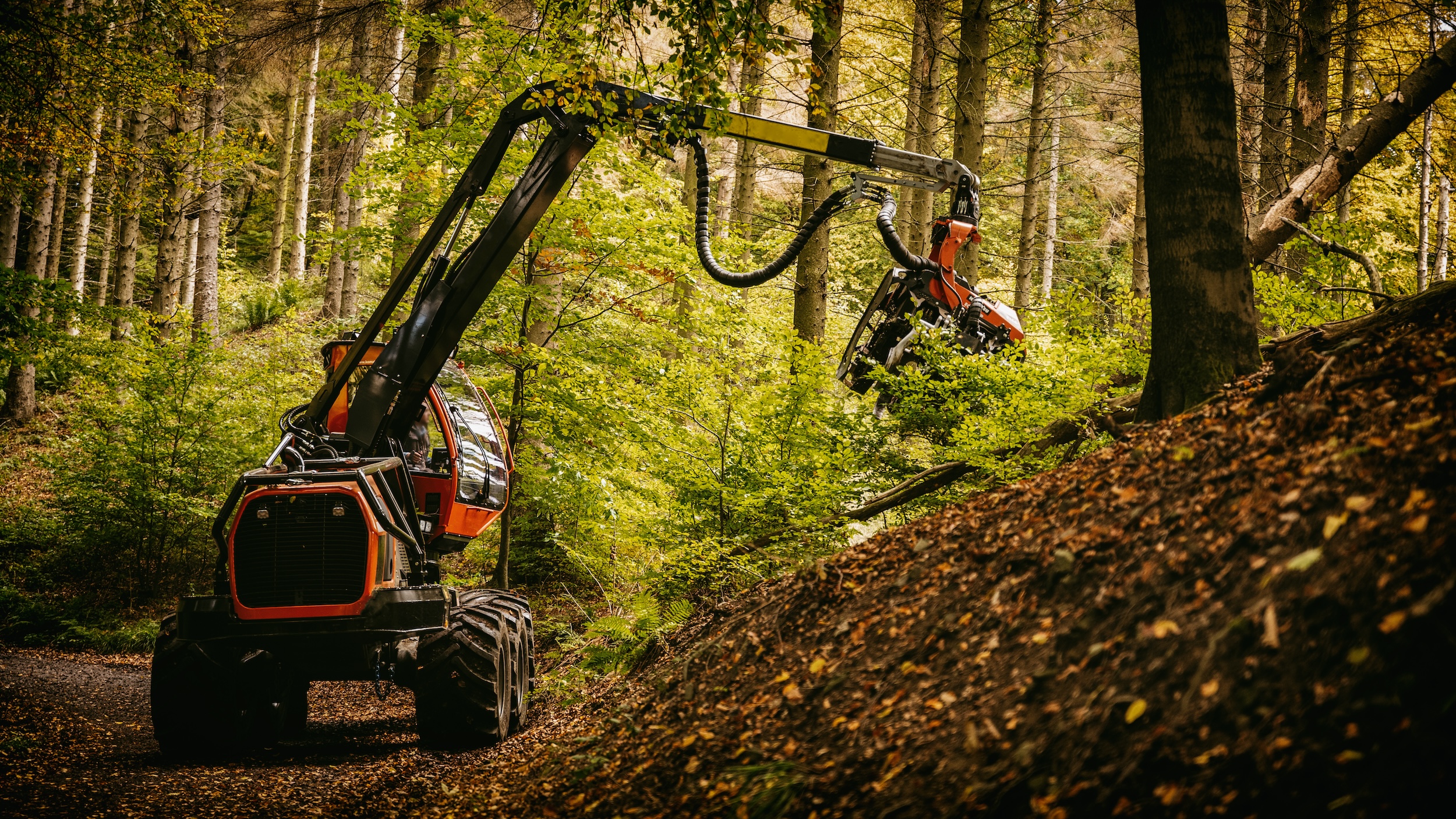
Let’s get into the weeds. Following a systematic land clearing process ensures efficient ground clearing while avoiding costly mistakes. Each step builds on the previous one for the best results.
Step 1: Assess Your Property And Create A Land Clearing Plan
Before any land clearing begins, thoroughly evaluate what you’re working with. Walk the entire property, noting tree sizes, vegetation density, terrain features, and any obstacles like rocks or old structures.
Identify and mark trees or features you want to preserve. Flagging tape in bright colors works well for communicating your intentions to equipment operators. Check for underground utilities by calling 811 several days before starting work.
Determine your clearing boundaries precisely. Property line disputes can create expensive problems, so verify your boundaries with existing survey markers or hire a surveyor if needed.
Create a basic site map showing access routes for equipment, areas to clear vs preserve, and where you’ll stage debris. This planning phase prevents confusion once work begins and ensures everyone working on your ground clearing project understands the scope.
Step 2: Secure Necessary Permits To Clear The Land
Many jurisdictions require permits for land clearing, especially on larger properties or near waterways. Contact your local planning or building department to understand requirements specific to your area.
Common permit triggers include clearing more than a certain acreage, working near wetlands or streams, removing protected tree species, or any clearing on commercial properties. Permit costs typically run $100-$500 but vary widely.
Budget adequate time for permit processing, which can take 2-8 weeks, depending on your location, time of year, and project complexity. Working without required permits can result in stop-work orders, fines, and requirements to restore cleared areas, so don’t skip this step as you’re figuring out how to clear your. land.
Step 3: Clear Access Routes And Stage Equipment For Ground Clearing
Before tackling main clearing areas, establish access to your land for equipment. This might mean widening existing paths or creating temporary roads to reach your property’s interior.
Access routes need sufficient width for your largest equipment, typically 12-14 feet minimum. Remove low-hanging branches and ensure the path can support heavy machinery.
Set up a staging area near your property entrance for equipment parking and debris collection. Keep this area organized to maintain efficiency throughout your ground clearing project.
Step 4: Remove Vegetation Using Your Chosen Land Clearing Method
With preparation complete, actual land clearing can begin. We recommend working systematically, rather than randomly jumping around the property. Many ground clearing professionals start at one end and work progressively across, which keeps the project organized and makes it easier to track progress.
- For forestry mulching, operators typically make multiple passes. The first pass knocks down larger vegetation, and subsequent passes refine the material into smaller mulch. Leave the mulch layer 2-4 inches thick for optimal erosion control and soil benefits.
- Traditional dozing works best when pushing material in one consistent direction. This creates organized piles for disposal rather than debris scattered throughout the site.
- Cut and grind land clearing methods require careful planning of tree felling directions to avoid damage to trees you’re keeping. Always plan escape routes when felling trees and never work alone on this type of project.
Step 5: Address Stumps And Root Systems
Stump removal decisions depend on your land’s future use. Building sites require complete removal, typically grinding 8-12 inches below grade or deeper if constructing over the area.
Pasture or recreational land often works fine with stumps ground flush to the surface. The remaining roots gradually decay and actually help prevent erosion on slopes.
Ground Clearing Pro Tip: Stump grinding creates wood chips you can spread as mulch or remove from the site.
Step 6: Manage Debris And Erosion Control
How you handle cleared vegetation significantly impacts the cost and timeline of your land clearing project. Forestry mulching eliminates this concern by leaving material as beneficial ground cover.
Meanwhile, other methods generate substantial debris requiring disposal. Options include on-site burning where permitted, hauling to disposal facilities, or chipping for mulch. Each approach for how you get rid of debris after you clear your land will have different cost and regulatory implications.
Regardless of disposal method, implementing erosion control immediately protects your property. Bare soil erodes dramatically faster than vegetated ground, especially on slopes or in areas with significant rainfall.
We recommend installing silt fencing along downslope edges to catch sediment that does erode. Spread mulch or straw across bare areas. Seed cleared ground within days if possible, using fast-growing cover crops that stabilize soil while you plan permanent vegetation.
Step 7: Grade The Cleared Land And Prepare For Final Use
Most cleared land needs some grading to create proper drainage and usable space. Even slight grading makes a significant difference in how water moves across your property.
Maintain at least a 2% slope for drainage, directing water away from building sites and toward stable outlets. Fill low spots that might collect water and create problematic wet areas.
Grading also smooths the surface, removing ruts from equipment and creating level areas for structures or activities. Professional grading runs $1,500-$5,000 per acre, depending on complexity.
Save topsoil when possible by stockpiling it before grading, then spreading it back over the finished grade. This preserves valuable organic material and soil biology that help establish vegetation.
Step 8: Establish Vegetation And Long-Term Maintenance
Cleared land needs revegetation to prevent erosion and support your intended use. The approach you take will ultimately depend on your goals.
- Pasture requires appropriate grass and legume species for your region and planned livestock. Agricultural extension services provide excellent guidance on seed selection, and most pasture mixes establish in 8-16 weeks with proper care.
- Wildlife habitat benefits from native species that support local ecosystems, and these often establish more slowly but require less maintenance long-term.
- Cleared land around future building sites might use temporary erosion control seeding now, with final landscaping after construction completes.
Seeding costs vary from $300-$1,500 per acre including seed, fertilizer based on soil tests, and application. Water if possible during establishment, though many rural properties rely on natural rainfall.
First-year maintenance includes mowing to prevent weeds from going to seed, monitoring for erosion issues, and reseeding thin areas. This ongoing care ensures your cleared land remains in good condition and continues improving rather than reverting to overgrown conditions.
Making The Right Choice: DIY vs. Professional Land Clearing
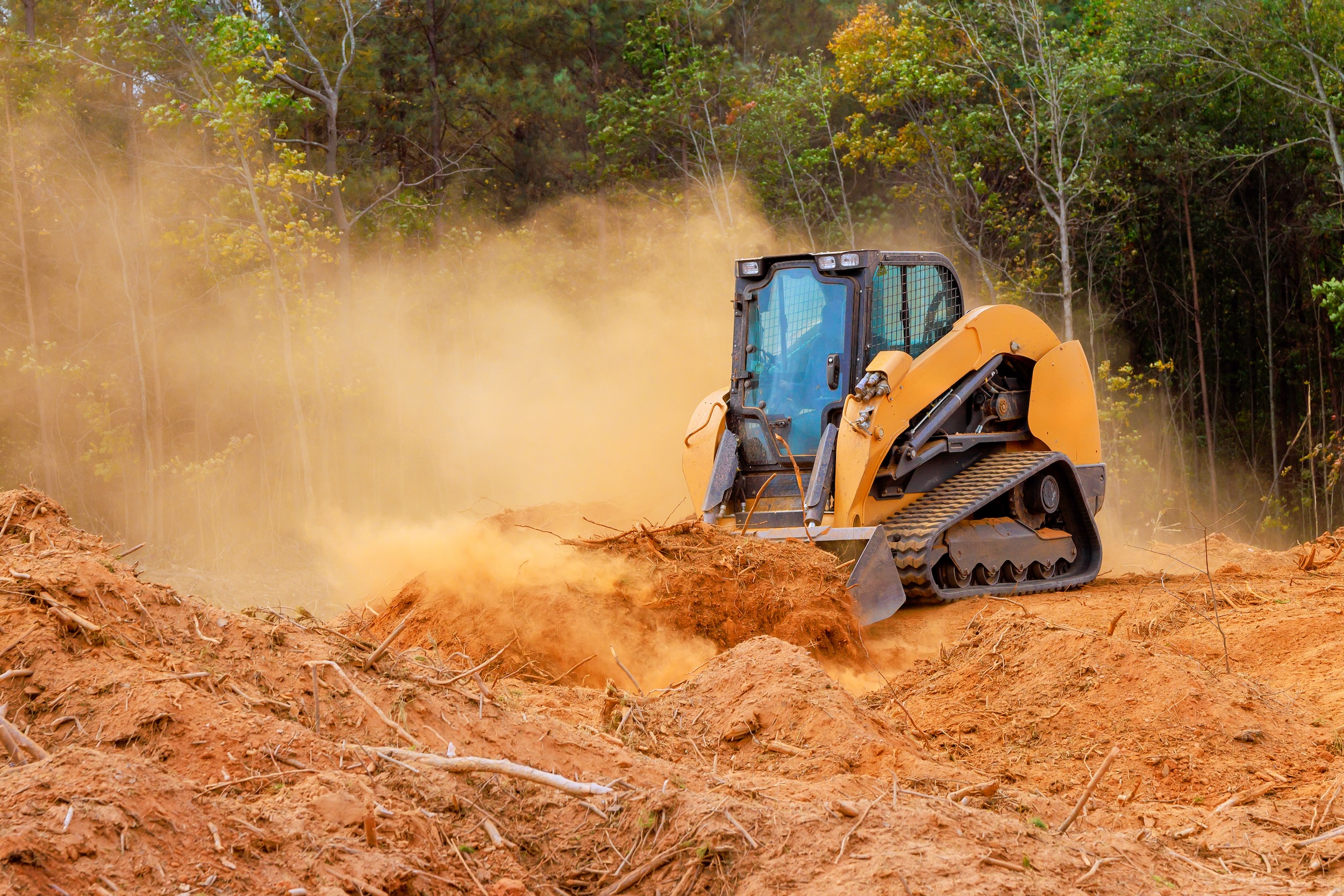
One of the biggest decisions when figuring out how to clear land is determining whether to tackle it yourself or hire ground clearing professionals. Both approaches have merit, depending on your specific situation.
When DIY Land Clearing Makes Sense
Small properties under one acre with light vegetation are often the best suited for the DIY route, especially if you own or can borrow suitable ground clearing equipment. Projects where you have flexible timelines and enjoy physical outdoor work can save substantial money with DIY clearing.
The key requirements are physical capability for demanding work, mechanical aptitude for operating land clearing equipment safely, and realistic time expectations. A quarter-acre weekend project can easily stretch into months of work when dealing with anything more than light brush.
How To Know When Professionals Are Necessary To Clear Your Land
Properties over two acres with moderate to heavy vegetation almost always justify professional land clearing services. The time and equipment investment for DIY ground clearing quickly exceeds professional costs on larger projects.
Safety concerns around large trees, especially near structures or utilities, really make professional expertise the better route. One mistake felling a large tree can cause property damage or injuries far exceeding contractor costs.
Regulatory requirements often specify licensed contractors for certain types of clearing, particularly near wetlands or in areas with protected species. Projects with tight timelines for construction or development rarely allow for DIY approaches that take months to complete.
How To Choose The Right Contractor To Clear Your Land
Choosing the right contractor for your land clearing project ultimately starts with verifying licensing and insurance. Request proof of both general liability and workers’ compensation coverage. Contractors working without proper insurance create enormous liability risks if someone is injured on your property.
Get at least three detailed quotes that specify exactly what’s included. Vague quotes or significant price differences between contractors warrant careful scrutiny.
Check references from recent similar ground clearing projects. Speaking directly with past customers reveals how contractors handle challenges, communicate during work, and stand behind their results.
Red flags include contractors who won’t provide written quotes, demand large upfront payments, can’t show insurance certificates, or pressure you to sign immediately. Quality contractors understand land clearing is a significant investment and give you time to make informed decisions.
For landowners looking into buying a ranch property, establishing relationships with reputable land clearing contractors provides long-term value. These professionals often handle multiple aspects of land management beyond initial clearing.
It’s also important that you and your contractor understand the nuances of surface rights vs mineral rights matters when planning extensive clearing, as some subsurface rights agreements may restrict surface alterations. Review all property rights documentation before committing to large-scale land clearing projects.
Setting Up Your Cleared Land For Long-Term Success
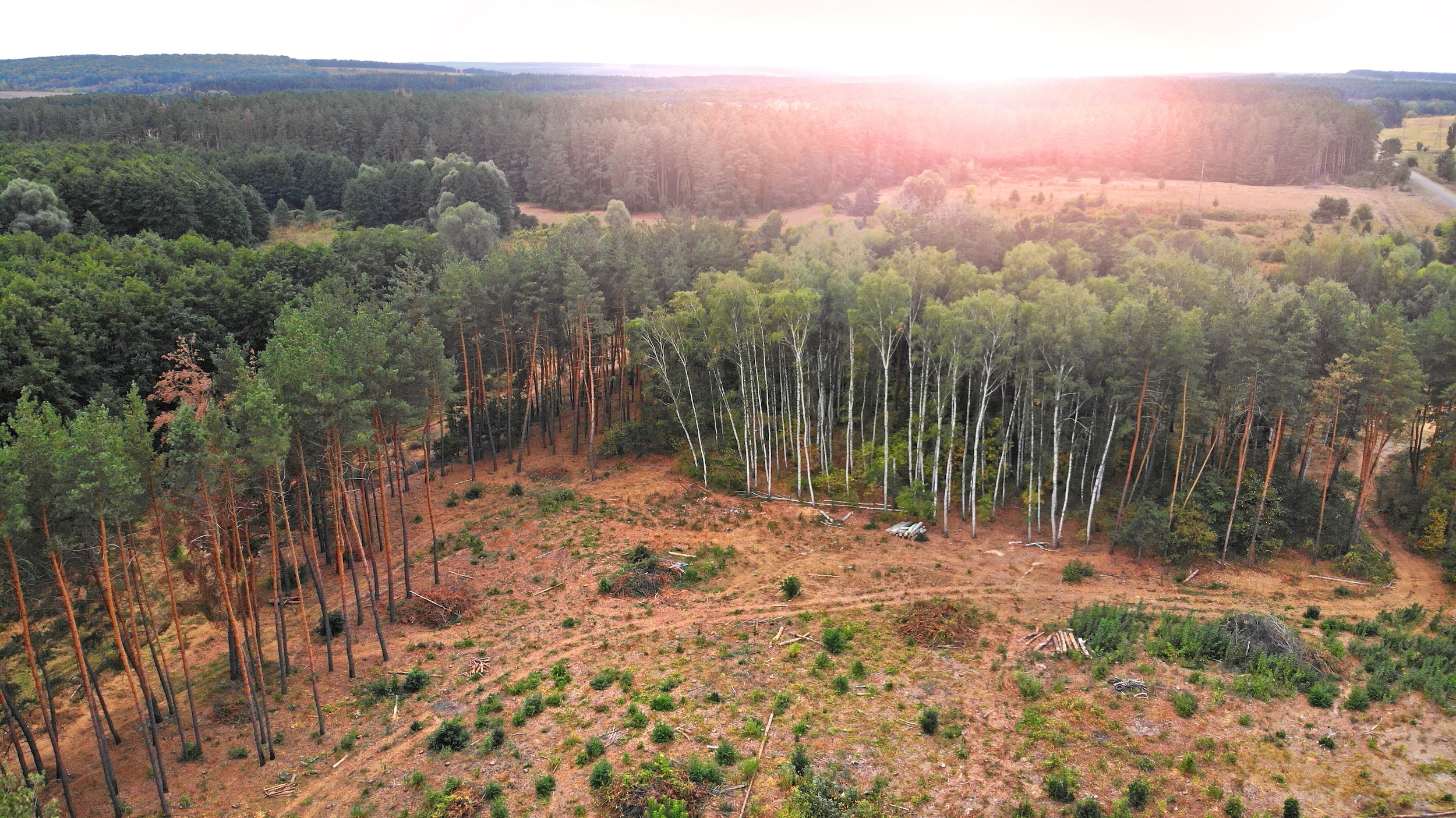
The work doesn’t end when the last tree falls. How you manage newly cleared land in the following months determines whether your investment thrives or requires expensive remediation.
Soil Health And Testing: Land clearing disrupts soil biology and structure. Testing soil pH, nutrients, and organic matter levels provides a baseline for amendments. Most county extension services offer inexpensive soil testing, or you can use home test kits for basic information.
Common amendments after clearing include lime to raise pH in acidic soils, organic matter to improve structure and water retention, and fertilizers to replace depleted nutrients. Apply amendments based on test results and your intended land use rather than guessing.
Preventing Invasive Species: Disturbed soil (often inevitable with land clearing) creates ideal conditions for invasive weeds and plants. These species often outcompete desirable vegetation, creating ongoing management headaches.
Quick establishment of intended vegetation is your best defense. Dense ground cover from pasture grasses, native plants, or cover crops leaves little room for invasives to establish.
Monitor cleared areas regularly during the first year, addressing invasive species while they’re small and manageable. Hand removal, spot herbicide treatment, or mowing before seed set all help control problems before they become overwhelming.
Maintaining Drainage And Erosion Control: Initial erosion control measures need monitoring and maintenance, especially after heavy rains. Check silt fencing for gaps or damage. Repair any erosion gullies immediately before they expand.
Drainage patterns may change as vegetation establishes and soil settles. You’ll want to walk the property after significant rainfall to identify any new problem areas requiring attention.
Planning For Structures And Development: For landowners who have cleared land with future building in mind, maintaining those cleared areas during planning and permitting phases prevents vegetation from reclaiming your work.
Periodic mowing or bush hogging keeps brush from returning. This ongoing maintenance is far less expensive than re-clearing overgrown areas when you’re ready to build.
Consider implementing your land clearing in phases if development will take several years. Clear only the ground you’ll use within 1-2 years, then expand as needed. This approach reduces maintenance costs and environmental impact of your ground clearing initiatives.
Key Takeaways On How To Clear Land Successfully
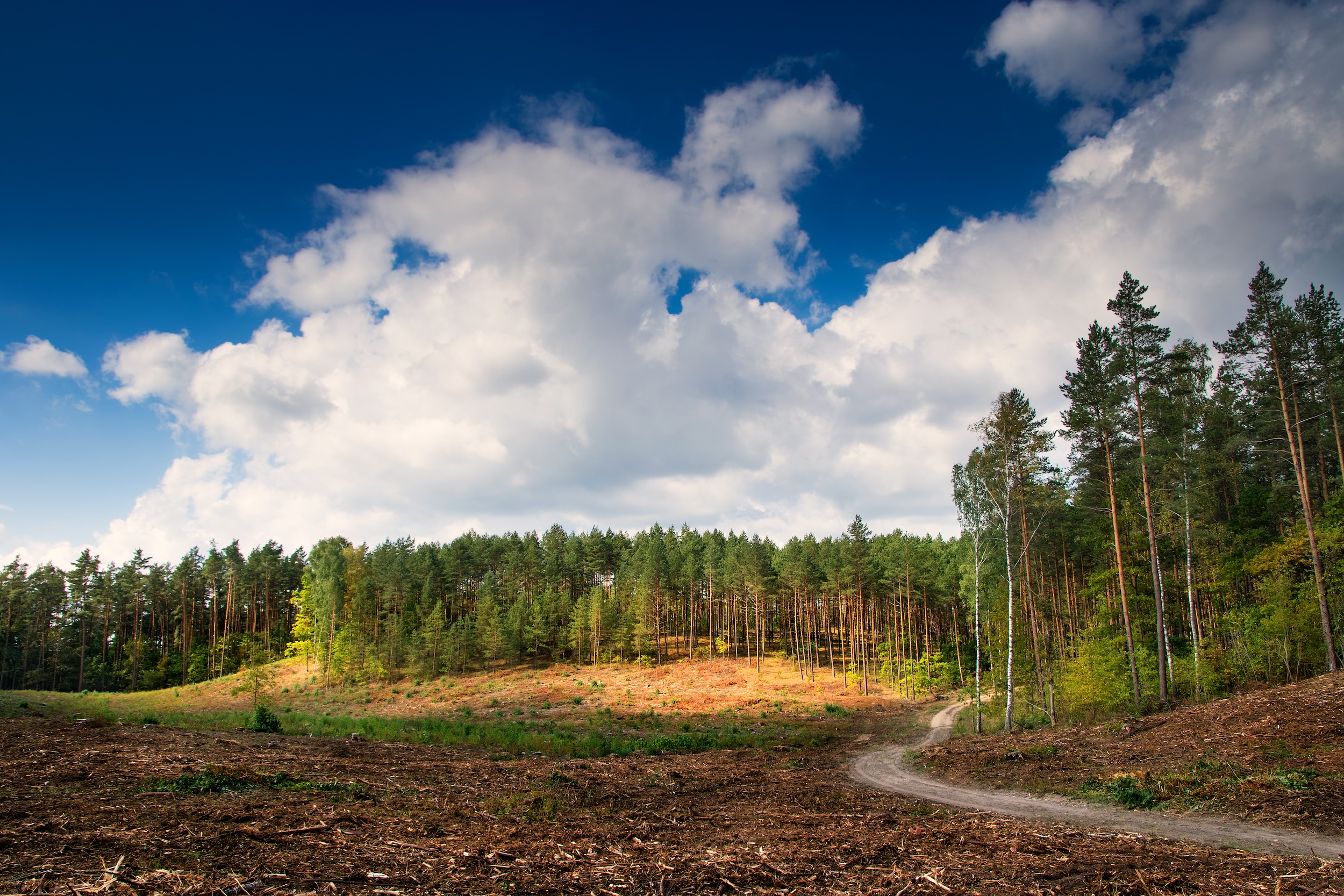
Learning how to clear land effectively requires balancing immediate the immediate needs of your project with long-term land health. The right approach depends on your specific property, goals, timeline, and budget. Let’s do a quick recap.
- Start with thorough assessment and planning. Understanding your property’s characteristics and challenges before any land clearing equipment arrives on-site. Make sure you secure necessary permits early in the process to avoid legal complications.
- Choose ground clearing methods based on your land’s future use rather than just upfront cost. Forestry mulching costs more initially but preserves soil health for agricultural or recreational use. Traditional grubbing provides the clean slate construction requires, despite higher immediate expense and soil disturbance.
- Consider seasonal timing’s impact on efficiency and cost. Fall and winter often provide the best conditions for ground clearing in most regions, with frozen ground supporting heavy equipment and dormant vegetation simplifying the work.
- Be realistic about DIY land clearing capabilities. Small projects with light vegetation are better suited for DIY ground clearing, but most properties benefit from professional expertise and equipment. The time investment and safety concerns of larger DIY projects typically outweigh cost savings.
- Budget for the complete project, including permits, clearing, debris disposal, erosion control, and revegetation of the land. Hidden costs often exceed basic ground clearing expenses, especially if you need extensive grading or environmental mitigation.
- Finally, view land clearing as the first step in long-term land management rather than a one-time project. Proper maintenance after clearing land, including erosion control, vegetation establishment, and ongoing monitoring, protects your investment and ensures the ground you’ve cleared serves its intended purpose for years to come.
Whether you’re preparing a homesite, creating agricultural land, or developing recreational property, the principles of effective land clearing remain constant: plan thoroughly, choose appropriate methods, execute systematically, and maintain consistently. And if you’re still on the hunt for the perfect land to clear for your next project, our land pros at Hayden Outdoors are here to help you find your perfect plot.
Connect With A Land Expert
How To Know When Corn Is Ready To Harvest: The Complete Farmer’s Guide
At Hayden Outdoors, we’ve spent decades helping families find, protect, and build legacies on the land. We understand that successful farming goes far beyond just owning good ground. It’s about knowing your crop, understanding your fields, and making the right decisions at the right time. That’s why learning how to know when corn is ready to harvest stands as one of the most valuable skills you’ll develop as a farmer.
The quality of your harvest directly reflects the care you’ve put into your land and crops all season long. When you know when your corn is ready to harvest and act on that knowledge with confidence, you’re protecting the investment you’ve made in every acre.
Whether you’re continuing a multi-generational farming tradition or establishing your own agricultural legacy, mastering corn harvest timing is critical both to profitability and your farm’s reputation.
This guide is designed for new farmland owners, agricultural investors, and those who have inherited farmland and are looking to understand the fundamentals of corn harvest timing.
While experienced farmers have developed intuitive harvesting knowledge through years in their corn fields, understanding when to harvest corn can easily transform good yields into exceptional ones for those newer to growing corn.
The signs are there in your fields, waiting for you to read them. In this guide, we’ll break down how to recognize when exactly your corn is ready to harvest and how to execute that harvest with precision.
Table of Contents
What Happens If You Harvest Corn Too Early Or Too Late?
Timing your corn harvest correctly protects the hard work you’ve invested throughout the growing season. The window for when corn is ready to harvest can be a bit of a challenge to narrow down, but understanding what’s at stake helps you make confident decisions that serve your operation well.
When you harvest corn early, it often means dealing with excess moisture content. You’ll need to invest in artificial drying before storage, which adds cost to the harvesting process.
High-moisture corn requires careful handling to maintain quality, and you’ll want to monitor stored grain closely to prevent any issues. The good news is that early harvest problems can be solved.
Grain dryers handle excess moisture effectively, and starting your harvest a bit early can actually protect yields when weather forecasts suggest challenging conditions ahead.
Waiting too long to harvest your corn brings an entirely different set of challenges. As corn stands past its optimal harvest window, you face increasing exposure to lodging and weather events.
Research shows that severe lodging leads to annual yield losses of 5 to 25% in the U.S. When stalks go down or ears drop, that’s yield you won’t recover. Overly dry corn can also shatter during combining, leaving more grain in the field than you’d like.
Here’s the practical reality: harvesting a bit late typically presents more challenges than harvesting early. Early harvest moisture can be corrected through drying, though this does impact your profit margins (as a result of the costs associated with drying).
On the other hand, when you harvest your corn too late, lodging, ear drop, and weather damage are issues that can’t really be recovered from.
So when is that sweet spot to know when to harvest corn? We’re aiming for a moisture content low enough to minimize drying expenses with timing early enough to capture your full yield potential.
When you understand how to know when corn is ready to harvest, you’re better positioned to hit that target consistently, season after season.
Understanding How Corn Moisture Content Impacts When It Is Ready To Harvest
Moisture content serves as your primary guide for when to harvest corn. Field corn destined for grain storage performs best at around 15% moisture. At this level, you can store corn safely without artificial drying, maximizing your return on every bushel.
Most farmers begin harvest when moisture sits between 20% and 26%, balancing economics with practical risk management. The math tells an important story here. Research shows that corn harvest losses increase to 10% – 15% when harvested at a moisture content of 15%, compared with 1% – 3% harvest loss at a moisture content of 26%.
Put simply, when you harvest your corn at higher moisture, you protect your yield by getting corn out of the field before lodging or weather events can cause damage. Yes, you’ll invest in drying capacity and energy costs, but you’re preserving the bushels you grew.
Many successful corn farmers find this trade-off works in their favor, particularly when weather forecasts suggest potential problems on the horizon.
Sweet corn follows entirely different timing when you’re growing for fresh market or processing. You’re harvesting based on kernel development and sugar content rather than storage moisture targets. Sweet corn comes out of the field at much higher moisture, typically in the milk or early dent stage, just 18 to 24 days after pollination.
For grain storage, your timeline depends on your marketing strategy. Long-term storage through spring or summer requires moisture at or below 15% to maintain quality. Shorter storage periods with good aeration systems may allow slightly higher moisture, giving you flexibility in when corn is harvested while still protecting grain quality.
Measuring moisture accurately helps you track when corn is ready to harvest. Handheld moisture testers provide quick field readings, letting you monitor drydown progress across your acres.
Sampling from multiple field locations gives you the complete picture, since moisture can vary significantly based on soil type, drainage, and elevation within a single field.
Elevator testing with calibrated equipment confirms your field readings and ensures you know exactly what you’re delivering.
The economic trade-off between drying costs and field losses varies by operation size (what works for a hobby farm can be quite different than a large commercial operation), available infrastructure, and local grain markets. The answer often depends on your total acreage, typical harvest window, and local elevator availability.
How The Type Of Corn You Grow Impacts When It Is Ready For You To Harvest It
Different corn types have different harvesting time windows, though the fundamental principles of when to harvest corn remain pretty consistent. Understanding your specific crop can help you apply those principles effectively.
When selecting corn cultivars, consider that varieties vary by maturity timing, growing characteristics, and intended use, with options ranging from traditional grain corn to specialty types suited for specific farming goals.
How To Know When Field Corn Is Ready To Harvest
Field corn for grain production follows the traditional timeline tied to physiological maturity and natural drydown. You’re watching for black layer formation signaling maturity, then monitoring as moisture drops from around 30% at physiological maturity toward your harvest target.
This type of corn gives you the most flexibility in harvest timing, as field corn can stand for extended periods if stalk quality remains strong.
How To Know When Sweet Corn Is Ready To Harvest
Sweet corn requires much tighter harvesting timing windows. When corn is ready to harvest for fresh consumption, you’re working with just a few days of peak quality.
Sweet corn hits its stride 18 to 24 days after pollination, in that window when kernels have filled with sugars but haven’t yet begun converting those sugars to starch.
Miss this harvesting window and quality declines quickly. Sweet corn operations demand careful planning and often staged plantings to maintain consistent harvest readiness across the season.
How To Know When Heirloom Corn Is Ready To Harvest
Specialty varieties and heirloom corn types may mature on different schedules than modern hybrids. If you’re growing corn for direct marketing, organic production, or specific processing uses, knowing the unique characteristics of those corn cultivars helps you determine when the corn is ready to harvest.
Some heritage varieties mature earlier, others later. And the drydown rates can differ from standard field corn hybrids.
For flint corn (an heirloom variety), look for indicators including dried, brown silky tassels at the top of each ear, kernels that resist denting when pressed with your thumbnail (no milky liquid present), and stalks showing browning and drying characteristics, usually occurring in the late summer through early fall months. This will help you determine when the corn is ready to harvest.
How To Know When Silage Corn Is Ready To Harvest
Silage corn brings whole-plant considerations into harvest timing. You’re targeting 60% to 70% whole-plant moisture, typically when kernels reach the dent stage. The entire plant gets chopped and ensiled, creating high-quality livestock feed. Silage harvest comes earlier in the calendar than grain harvest, giving you a head start on clearing fields.
The beauty of understanding these differences in when specific types of corn are ready to harvest is that you can potentially spread your harvest window across multiple corn types.
This reduces the pressure to get everything combined in a narrow timeframe and allows you to match your equipment capacity to your total farm acreage more effectively.
Regional Timing: How To Know When Corn Is Ready To Harvest By US Region
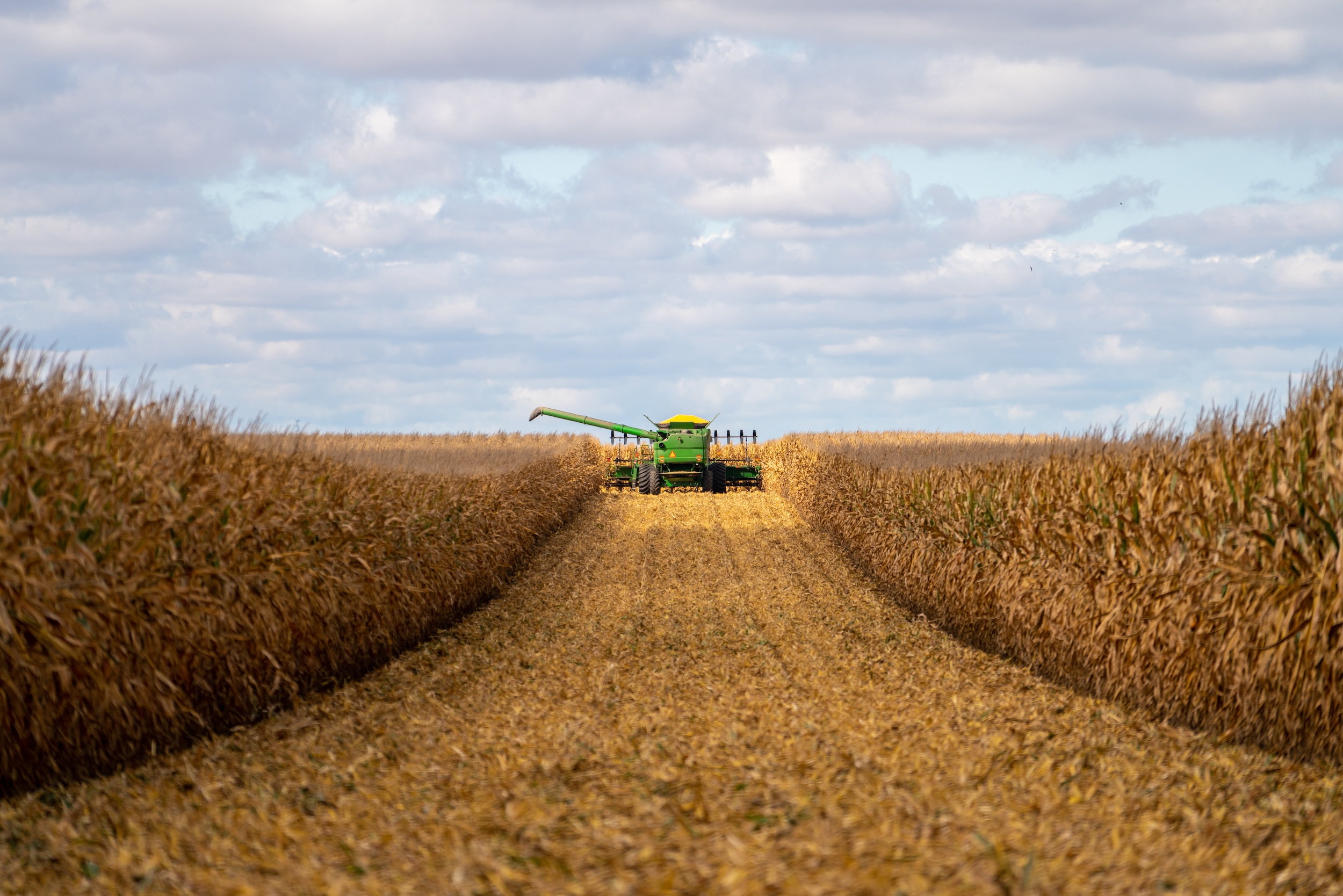
Geography plays a substantial role in determining when to harvest corn across your farming operation. Harvest dates range from as early as July to as late as mid-December, with optimal timing varying by state climate and yearly weather patterns.
Understanding regional patterns helps you plan logistics, line up equipment, and anticipate when your corn crop will be ready.
When To Harvest In Corn Belt States
Corn Belt states including Iowa, Illinois, and Indiana typically see harvest beginning in September, with October representing prime combining season.
These states benefit from consistent growing seasons and moderate fall weather supporting natural field drying. Most farmers who grow corn in this region can count on good harvest conditions through October, with November serving as the backup window if weather or logistics push harvest later.
When To Harvest Corn In Northern Midwest States
Northern states such as Minnesota, Wisconsin, and the Dakotas face later harvest timing, often not starting until October. Shorter growing seasons and cooler fall temperatures mean less opportunity for natural drydown in the field.
However, these regions also produce excellent corn, and farmers there have developed effective strategies for determining when the optimal time has arrived to harvest their corn crop.
It’s worth noting, however, that understanding when corn is ready to harvest in northern climates often means accepting higher moisture content and investing in quality drying infrastructure, due to the storm potential.
When To Harvest Corn In Southern States
Southern states have earlier harvest seasons, frequently beginning in August and running through September. Warmer temperatures and earlier planting dates mean the corn physiologically matures quite a bit sooner.
Within any region, elevation and latitude can impact when corn is harvested. Higher elevation farms typically see later maturity dates, while lower elevation ground may be ready earlier.
These geographic factors affect growing degree day accumulation and fall weather patterns, both of which influence when corn is ready to harvest on your specific farming operation.
The Impact Of Drydown Rates On When Corn Is Ready To Harvest
Drydown rates explain much of the regional timing variation. During warm September weather, corn may naturally lose 0.5% to 1% moisture per day under favorable conditions.
As temperatures cool through October and November, this rate slows considerably. And by late November, natural field drying nearly stops, which is why delaying harvest into December rarely provides moisture reduction benefits.
Weather patterns vary year by year, of course. A wet spring that delays planting pushes everything later. An unusually hot, dry summer may advance maturity.
Tracking your own farm’s patterns over multiple growing seasons provides the best foundation for anticipating when to harvest corn on your ground. Every season adds to your knowledge and refines your timing.
How To Test Your Corn Fields To See When They’re Ready To Harvest
Testing your fields as the harvest window approaches can provide you with concrete information for getting the timing just right. Several proven field tests, performed regularly, help you understand crop condition and readiness.
The Push Test: Walk into your field and select a consecutive section of about 10 to 12 corn plants. Push each plant to approximately 35 to 45 degrees from vertical, then release. Healthy stalks with good structural integrity will spring back upright. When more than 10% fail to return to an upright position or show stalk breakage, you’re seeing signals that it’s time to consider harvesting, even if moisture content sits higher than your ideal target. This test gives you early warning of lodging potential.
The Pinch Test: As you move through your field, pinch stalks between the nodes, checking for firmness. Solid, firm tissue indicates good stalk health and structural strength. Softer tissue or any discoloration suggests declining stalk quality. The lower internodes matter most here, as this is where structural issues typically develop first. This quick check helps you assess whether your crop can safely stand for additional field drying.
Moisture Sampling Techniques: Rather than relying on one spot, take representative samples from multiple locations across each field. Edge rows often dry faster than interior sections. Low-lying areas may hold more moisture while hilltops dry quicker. This variation within a single field affects your harvest strategy. Comprehensive sampling tells you whether you need to split harvest timing by field section or if you can proceed to harvest the entire field at once.
When to Scout: Begin regular field checks in late summer as corn approaches physiological maturity. Weekly scouting when harvest season nears keeps you informed about drydown progress, stalk health changes, and any developing issues that would warrant harvesting your corn early. This regular monitoring builds your confidence in knowing when corn is ready to harvest.
Visual Maturity Indicators: Beyond the specific tests, general observation provides valuable information. Black layer formation, kernel dent development, and husk appearance can all help you assess the maturity and readiness of your corn to know when it is ready to harvest. Experienced farmers develop an eye for these indicators, complementing their formal field tests with visual assessment.
Common Signs That Indicate When Corn Is Ready To Harvest
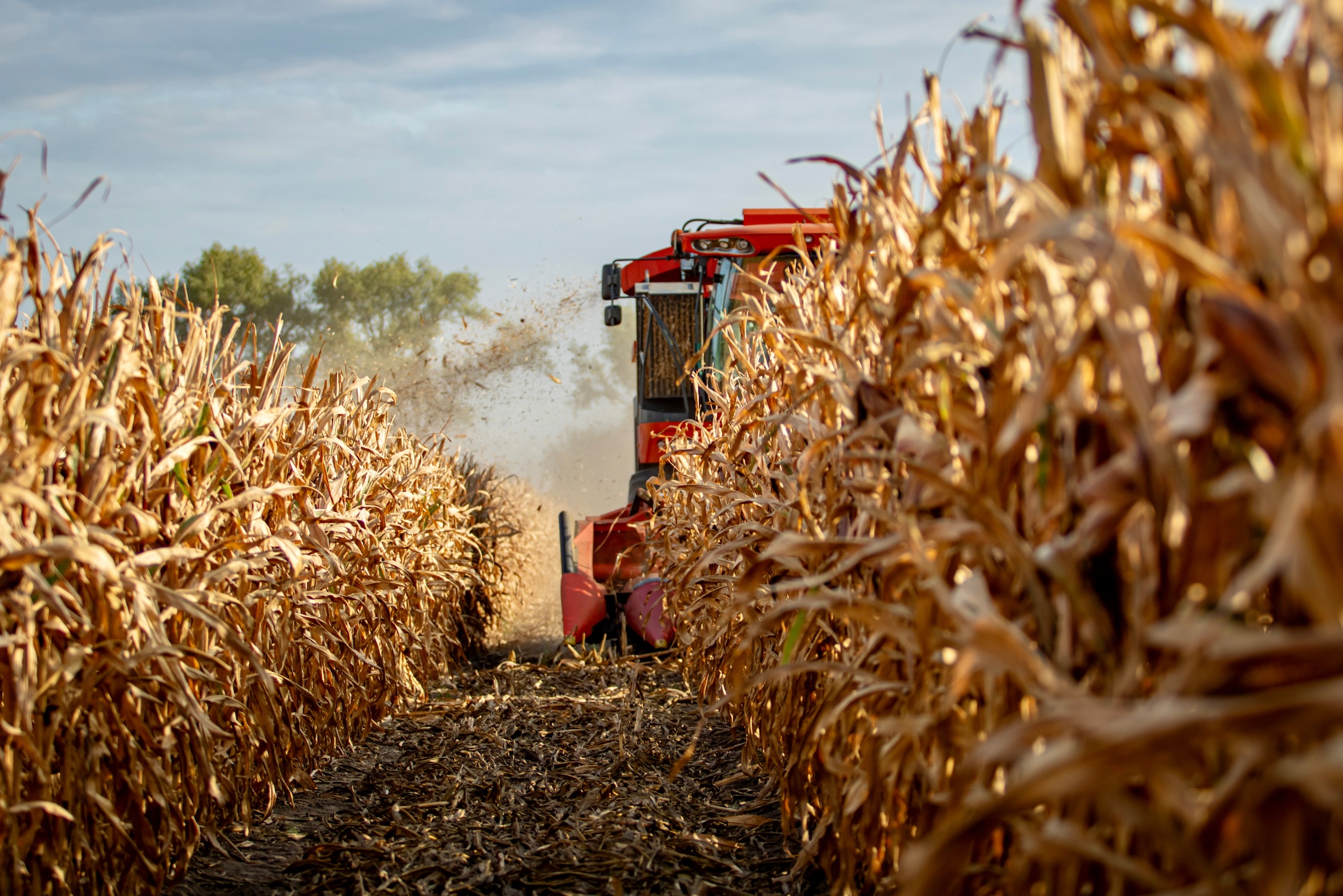
Recognizing the physical markers of corn maturity is key to helping you make informed harvest decisions. Each sign can tell you something about your crop’s developmental stage and readiness.
Black Layer Formation: This definitive marker of physiological maturity appears at the kernel base, where it connects to the cob. The dark line indicates the plant has completed nutrient movement into the kernel, reaching maximum dry weight. While black layer signals maturity, corn at this stage typically holds 25% to 35% moisture. Understanding this helps you know when corn is ready to harvest from a maturity standpoint, even though additional field drying may be beneficial.
The Milk Line and Starch Line: Earlier in development, these internal kernel markers track progress. Breaking a kernel in half reveals the milk line, showing the transition from liquid to solid starch. As kernels mature, this line moves from crown to tip. When the milk line reaches the kernel tip, you’re approaching maturity. The progression of these internal markers gives you advance notice that corn harvest season is approaching.
Kernel Dent Development: The characteristic dent forming at the kernel crown marks advancing maturity. As moisture leaves and the crown collapses slightly, that dent becomes more pronounced. The progression from no dent to slight dent to full, well-defined dent provides a visual timeline you can track as harvest approaches.
Ear Positioning: Watch how corn ears hang on stalks as the season progresses. Maturing, drying corn naturally tips ears downward. This positioning helps shed water and protect grain quality. Ears still pointing upward suggest active maturation is ongoing. Downward-tipping ears indicate good drying progress and that you’re getting closer to when corn is ready to harvest.
Husk Texture Changes: Fresh, actively growing corn displays tight, green husks. Through maturation, husks gradually dry and become papery in texture. They loosen from ears and fade from green toward tan or brown. While husk appearance alone shouldn’t determine when it’s time to harvest your corn, it adds one more data point to your overall harvesting assessment.
Stalk Integrity: Stalk appearance changes through the maturation process. Green, firm stalks indicate active plant function. As the plant senesces naturally, stalks fade toward tan or brown and gradually lose strength. Monitoring this progression helps you understand whether your corn crop can safely stand for additional field drying or whether declining stalk strength suggests it’s time to begin harvest.
The Experienced Farmer’s Touch and Taste Test: Farmers with years on their ground often have the firsthand experience and intuition to understand when corn is ready to harvest. Some taste kernels to assess moisture and maturity. Others judge by the feel of the grain. These traditional methods passed through generations complement modern testing and data, bringing experience-based wisdom to harvest decisions.
Weather Factors That Affect When Corn Is Ready To Harvest
Weather shapes harvest timing as much as crop maturity does. Understanding how weather influences your decision on when to harvest corn is key to optimizing your timing.
Those warm, dry September days offer an excellent opportunity for natural field drying. Every percentage point of moisture your corn sheds in the field rather than in a grain dryer saves on propane and energy costs.
When favorable weather prevails, taking advantage of natural drying makes solid economic sense. However, balancing field drying benefits against weather risks requires a bit of judgment.
Extended forecasts suggesting storms, high winds, or early cold snaps may warrant starting your corn harvest at higher moisture rather than risking losses than can occur when the weather turns sour. This is where understanding how to know when corn is ready to harvest includes factoring in what’s coming, not just what conditions are today.
Storm season timing varies by region, but it affects operations nationwide. Southern farmers watch for late-season tropical systems. Upper Midwest operations monitor for early snowfall. Plains states anticipate strong wind events.
Any of these weather patterns can affect standing corn, so incorporating weather outlook into harvest planning will serve your farming operation well.
Fall weather patterns create natural urgency as the season advances. October typically allows continued field drying, though at slower rates than September. By November, shorter days and lower temperatures mean moisture reduction slows considerably.
Understanding this seasonal progression helps you set realistic expectations for when to harvest corn based on the calendar and weather patterns.
Sometimes starting harvest at higher moisture to prevent potential lodging makes the best financial sense. If forecasts suggest prolonged wet or windy conditions, combining your crop at 22% to 25% moisture protects yield, even though you’ll invest in corn drying.
The associated costs for drying corn with higher moisture content can be less than losing 10% to 20% of your yield to lodging or weather damage.
Creating a field priority plan based on stalk strength and lodging risk helps manage harvest logistics effectively. Scout all your acres and identify which fields show the most vulnerability. Harvest these first, even if other fields have slightly more favorable moisture content.
Corn fields with strong stalks and low lodging risk can safely wait for additional natural drying before the harvest. This prioritization approach protects your most vulnerable acres while optimizing overall moisture management.
Once You Know Your Corn Is Ready To Harvest, How Do You Begin The Process?
Knowing when corn is ready to harvest is just the start. Executing an efficient harvest with minimal loss requires both good preparation and attention throughout the process. Your pre-harvest checklist is key to setting your farm up for success.
Inspect equipment thoroughly to make sure everything’s running smoothly before you need it. This includes verifying combine settings, checking corn head components, and ensuring grain handling systems are ready. Addressing maintenance before you begin prevents delays once harvest starts rolling.
Next, you’ll want to make sure you test moisture content across all fields to confirm readiness and establish harvest order. Scout for any lodging to identify areas needing special attention.
Optimal daily harvest timing can enhance both quality and efficiency. Morning hours, after any dew has dried, offer good conditions for maintaining grain quality, particularly at higher moisture levels. Starting as soon as conditions permit allows you to maximize each day’s progress.
Extremely hot afternoons may warrant a break if temperatures could contribute to excessive kernel damage, though most modern equipment handles various conditions well.
Combine speed recommendations ultimately depend on the conditions of your field and your crop’s characteristics. In healthy, standing corn with good stalk integrity, you can maintain reasonable speeds while achieving clean harvest results.
The goal is efficiency balanced with quality. In any areas showing lodging or down stalks, slowing to two miles per hour or less reduces losses significantly. The extra time invested in careful combining of challenging spots pays dividends in captured corn yield.
Proper header height and operation minimize what’s left behind. Set your corn head to pick ears cleanly without gathering excessive trash or missing low-hanging ears. Throughout each day, monitor combine performance and check what’s being left in the field.
Adjust settings as needed when moisture content or field conditions change to ensure you get the best possible yields when you harvest your corn. Good operators stay attentive to these details rather than assuming initial settings remain optimal all day.
Corn Harvesting Tip: Record keeping builds knowledge for future seasons. Document moisture content by field, note yield results, record any areas with issues, and track harvest timing.
This information becomes valuable when making variety selections, adjusting planting dates, or planning logistics for upcoming years.
The patterns you identify over multiple seasons help refine your approach to determining when corn is ready to harvest on your specific operation.
What Equipment Do You Need When You’re Ready To Harvest Corn?
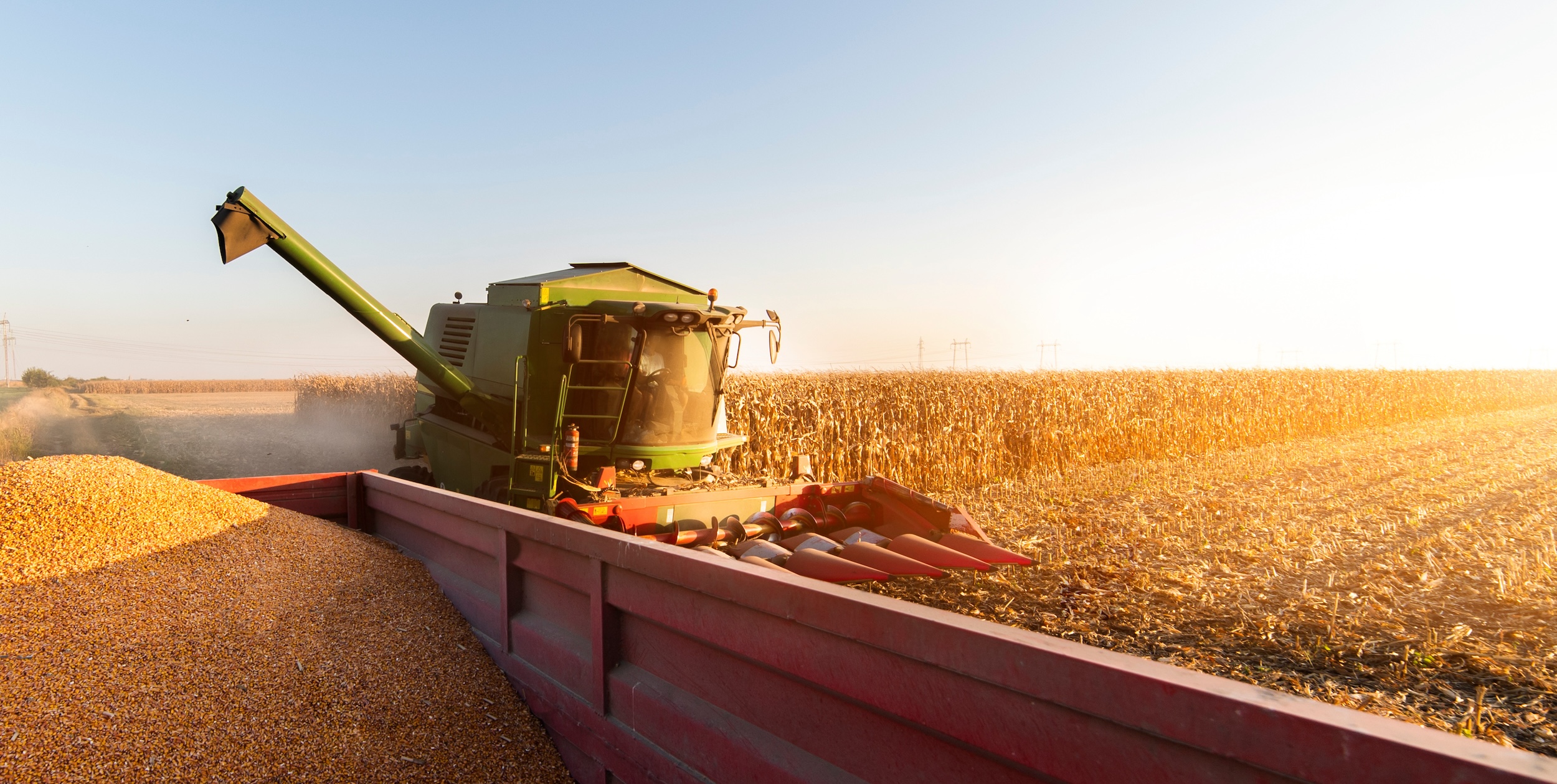
Quality equipment makes the corn harvest season more efficient, while also protecting grain quality. Your farm’s scale determines exact equipment needs, but there’s a core set of tools that are valuable across various farm sizes.
1. Combine Harvester
Commercial operations rely on capable combines as the foundation of harvest infrastructure. Modern machines offer monitoring systems, automated adjustments, and the capacity to cover substantial acreage efficiently.
Your corn head should match your combine’s capacity and your typical field conditions. Row spacing and the number of rows your header handles affect daily progress and overall efficiency.
Different moisture levels and field conditions call for adjusted combine settings to minimize grain damage while maximizing clean grain in the tank.
Higher-moisture corn often needs different cylinder speed, concave clearance, and fan speed compared to drier grain. Learning your specific machine’s optimal settings for varying conditions has the ability to improve your corn harvest yields significantly.
2. Grain Cart
Efficient corn harvesting operations use grain carts to keep combines running productively. Carts allow unloading on the go, transporting full loads to storage or trucks while your combine continues harvesting. This coordination minimizes downtime and maximizes acres covered daily.
3. Grain Dryer
When harvesting corn above storage moisture, drying equipment becomes essential. Bin dryers, continuous-flow systems, or batch dryers each serve different scales and offer distinct advantages. Investment in drying capacity often enables earlier harvest timing, reducing field loss exposure while capturing full yield potential.
4. Aeration And Storage Systems
Proper storage infrastructure protects grain quality after harvest. Aeration fans, temperature monitoring, and adequate bin capacity maintain harvested grain in excellent condition until sale or use. Quality storage complements quality harvest.
5. Moisture Testing Equipment
Handheld moisture meters provide quick field testing to guide decisions about when to harvest corn. While not matching elevator-grade precision, portable testers deliver the information you need during the decision-making process.
6. Aftermarket Harvest Aids
Specialized reels, dividers, and lifters designed for challenging field conditions can improve results when harvesting lodged corn. These accessories help guide down stalks into gathering chains, reducing losses in difficult situations.
For Small Operations: Hand harvesting your corn remains practical for smaller acreages or specialty crops. Basic tools include harvest containers, cutting tools if needed, and drying racks for processing grain manually. Equipment options for smaller operations can make hand harvesting more manageable and efficient.
When you’re ready to upgrade or expand your harvest capabilities, finding quality combines from a trusted source ensures you’re investing in machines that serve your operation reliably, season after season.
Browse Harvesting Equipment
Special Considerations For Harvesting Lodged Or Damaged Corn
Some seasons bring lodging challenges come harvest time, despite excellent management of your corn crop. Knowing how to handle these situations protects yield and keeps harvest progressing.
Corn fields with considerable lodging require more time to harvest than standing corn, often taking three to four times longer to combine the same acreage. Factor this reality into your planning.
If significant acreage is down, you may need to start harvesting your corn earlier, adjust your schedule, or bring in additional equipment or help to complete the corn harvest in a reasonable timeframe.
Lodged corn is what you’ll want to harvest first. It continues deteriorating as it sits in the field. Stalks break down, ears may drop, and grain quality can decline.
Once you identify a lodged area, prioritize getting that corn harvested rather than waiting for slightly better moisture in other fields.
Slowing down significantly when harvesting lodged corn protects yield. As we mentioned earlier, operating at two miles per hour or less allows your combine and corn head to pick up more down stalks and reduces grain left behind. Yes, it takes longer, but the alternative of leaving substantial amounts in the field doesn’t serve your bottom line well.
When possible, harvest against the direction of lodging. If stalks are leaning northeast, approach from the northeast so plants lean back toward your corn head. This orientation helps gathering chains catch stalks and guide them into the header more effectively.
Adjust gathering chains and deck plates based on lodging severity. You may need lower header height and adjusted chain tension to better catch flat stalks.
Some operators add aftermarket gathering aids specifically designed for down corn, which can improve performance significantly in challenging conditions.
Safety Note: Never attempt clearing stalks from your corn head with power engaged. Shut down completely before addressing any blockages. The slower, more demanding nature of harvesting lodged corn can create frustration, but safety always comes first.
Build Your Legacy On the Right Piece Of Cropland

Understanding when corn is ready to harvest is critical knowledge, but that knowledge becomes truly meaningful when applied to quality farmland.
The foundation of any agricultural legacy starts with the land itself. Quality cropland with proper drainage, appropriate soil types, and strong production history creates opportunities for consistent harvesting success year after year.
Whether you’re expanding your existing corn farmland or establishing new ground, finding the right acres matters tremendously. Here at Hayden Outdoors, we connect farmers like you with properties supporting your agricultural vision.
From established cropland with existing infrastructure to undeveloped ground offering development potential, the right land provides the foundation for applying everything you know about corn production and harvest timing.
Find Your Dream Farmland
Complete Farming Guide: What Equipment Is Needed For A Dairy Farm?

Starting or expanding a dairy farm is more than a business decision. It’s a commitment to a way of life that has sustained families and communities for generations. Understanding what equipment is needed for your dairy farm is fundamental to your success, protecting herd health, ensuring milk quality, and building the foundation for a sustainable operation that can be passed down through generations.
At Hayden Outdoors, we have deep roots in dairy farming in places like Nebraska, Kansas, and across the heartland of the US. And in our guide, we’ll walk you through the essential categories of dairy farming equipment, help you understand how different farming approaches influence your needs, and provide practical guidance for making informed purchasing decisions.
Table Of Contents
How The Types Of Dairy Farming You Do Impact What Equipment Is Needed
The type of dairy farm you’re running will have a pretty big influence on both the scale and specific types of equipment and accessories you’ll need for your operation. Understanding these differences is key to helping you invest wisely in dairy farm equipment and avoid purchasing machinery that doesn’t align with your farming needs.
Conventional dairy operations typically involve housing cattle in barns or freestall facilities with mechanized feeding and milking systems. These farms require substantial investments in milking parlor equipment, automated feed systems, and climate control infrastructure. Needs typically scale with herd size, but the fundamentals remain consistent whether you’re milking 50 cows or 500.
Organic dairy farming adds another layer of complexity to the equipment needed for your dairy farm. Beyond meeting the same basic needs as conventional dairy farm operations, organic dairies must comply with specific standards regarding feed handling, pasture access, and medication administration. You may need additional dairy farm accessories for managing rotational grazing, specialized feed storage that prevents contamination, and enhanced record-keeping systems to maintain organic certification.
Grazing-based dairy systems rely heavily on pasture as the primary feed source, which can shift the priority on these types of dairy farms considerably. While you’ll still need milking equipment and basic infrastructure, these types of dairy operations typically require less investment in feed storage facilities. Instead, you’ll focus more on pasture management tools, portable water systems, and fencing that allows for rotational grazing patterns.
Intensive confinement operations represent the other end of the spectrum, with cattle housed year-round in controlled environments. These farms demand significant investment in ventilation systems, manure handling automation, and sophisticated feeding equipment, offering greater control over production conditions.
Herd size serves as another critical factor in determining what equipment and accessories are needed for a dairy farm. A small family operation milking 20 to 30 cows might thrive with a bucket milking system and basic farm equipment tools, while a mid-sized farm with 100 to 200 cows typically requires a dedicated milking parlor and more automated systems.
Understanding where your dairy farm fits within these types of farming categories can help you prioritize what equipment and accessories are needed to support your farm’s unique goals.
Questions To Ask Yourself Before Determining What Equipment Is Needed For Your Particular Dairy Farm
Before investing in any piece of dairy farm equipment, an honest self-assessment is key. We’ve crafted this list of questions to help you distinguish between equipment you truly need and dairy farm accessories that might be nice to have but aren’t genuinely essential:
- What is your current and projected herd size over the next five years? This question influences nearly every equipment decision you’ll make for your operation. Dairy farming equipment and accessories that work well for 30 cows may become a bottleneck when you have 60 cows. Planning for reasonable growth helps you invest in equipment that won’t need immediate replacement as your dairy operation expands.
- What is your daily milk production goal, and what quality standards must you meet? Understanding your target market will help you right-size your dairy farm equipment to match your anticipated output. Premiums for higher-quality milk can justify investing in more sophisticated cooling and handling equipment.
- Do you have adequate power supply, water access, and infrastructure? Some dairy farming equipment requires three-phase electrical power or substantial water volume. Assessing the existing infrastructure on your dairy farm before purchasing equipment will help you prevent costly surprises.
- What is your labor situation? Family operations with multiple people available daily have different equipment needs than farms relying primarily on hired labor. More automated systems reduce skilled labor requirements but can involve larger upfront investments.
- What are your local and state regulations regarding milk handling and storage? Understanding the specific requirements in your area prevents investing in dairy farm equipment and accessories that won’t meet inspection standards. Many regions have specific requirements for bulk tank capacity, cooling times, and sanitation systems.
- What is your maintenance capability and preference? Being honest about your mechanical skills and available time helps you select dairy farming equipment and accessories that match your skillset and what you feel comfortable handling. Simpler dairy equipment that you can maintain yourself might serve you better than more sophisticated systems that require the involvement of a specialist.
- How does this particular piece of farming equipment support the long-term legacy of your dairy farm? Quality dairy farm equipment that’s well-maintained can serve multiple generations.
With these questions in hand, you have what you need to honestly determine whether or not a specific type of dairy farm equipment is needed and is genuinely going to contribute to your farm’s success.
The Essential Categories And Types Of Dairy Farming Equipment
So what equipment is actually needed for a dairy farm, and which is just nice to have? These categories represent the foundation of any successful dairy farm and where we’d recommend dedicating most of your budget. Focus on these elements to build a strong foundation for your dairy operation.
Milking Equipment: The Heart Of Your Dairy Operation
Your milking system represents the most critical investment for your dairy farm. This category of dairy farming equipment directly impacts milk quality, cow health, and the efficiency of your daily operations.
- Bucket milking systems offer the most accessible entry point for small dairy farms, working well for herds under 20 cows. While labor-intensive, they require minimal infrastructure investment and provide quite a bit of flexibility.
- Pipeline milking systems route milk directly from the cow to a central collection point, working efficiently for herds ranging from 20 to 100 cows. This type of dairy farming machinery significantly reduces labor compared to bucket systems, making these pipeline systems ideal for many family dairy farms.
- Parlor systems become essential as herd sizes grow beyond 100 cows. Whether you choose a herringbone, parallel, or rotary parlor design depends on your specific layout, herd size, and management preferences. Modern parlor equipment can include automated takeoffs, individual cow identification, and milk metering systems that provide valuable herd management data.
- To support your primary milking system on your dairy farm, you’ll also need reliable vacuum pumps, pulsators, and milking clusters with quality inflation systems. These dairy farm accessories work together to ensure efficient, gentle milk removal that keeps cows healthy and productive.
Milk Storage And Cooling Equipment: The Backbone Of Dairy Quality
Proper handling after milking not only determines if you’ll meet quality standards, but it also factors into whether you can earn available premiums.
Similarly, maintaining premium milk quality requires regular testing and monitoring. While your milk buyer will conduct official testing, on farm dairy testing equipment is needed to identify potential issues before they impact your milk check.
- Bulk milk cooling tanks maintain milk at the required temperature until pickup, with sizing determined by your daily production and pickup frequency.
- Plate coolers provide an economical way to pre-cool milk using well water before it reaches your bulk tank. This simple piece of dairy farm machinery can significantly reduce cooling costs and extend the life of your refrigeration equipment.
- Temperature monitoring equipment gives you peace of mind that your milk remains within acceptable ranges, protecting the milk quality and helping prevent costly losses.
- Cleaning and sanitation systems maintain the hygiene standards essential for milk quality, whether you use manual protocols or automated CIP (clean-in-place) systems.
- Somatic cell count testing equipment provides early warning of mastitis issues, while milk samplers and record-keeping systems help you track individual cow production and quality.
Essential Feed Handling And Storage Equipment For Your Dairy Farm
Nutrition drives milk production, and efficient feed handling equipment is needed to help you maintain consistent feed quality on your dairy farm (all while minimizing labor). The specific dairy farming equipment you may need will vary based on your feeding philosophy and whether you’re primarily pasture-based or rely on stored feeds.
- Feed mixers and TMR wagons allow you to blend forages, grains, and supplements into a complete ration. These systems range from small, pull-behind mixers suitable for 30 to 50 cows up to self-propelled units that can efficiently feed hundreds of animals.
- Silage storage protects the significant feed investment most dairy farms make each year through bunker silos, silage bags, or upright silos. Grain storage bins protect concentrated feeds from weather and pests while providing convenient access. For dairy farms incorporating hay, handling equipment like elevators and conveyors are needed to reduce physical labor while minimizing waste.
Pro Tip: Staying current with new ag industries technologies can help you make informed decisions about feed handling innovations on your dairy farm.
Herd Health And Comfort Equipment
Having the right dairy farm equipment on hand allows you to address health issues promptly and provide the comfortable environment that is needed for high-producing cows to thrive.
- Cattle chutes and headgates provide safe restraint for veterinary work, hoof trimming, and breeding activities. Quality handling equipment protects both you and your animals during necessary interventions.
- Hoof trimming equipment keeps the cows on your dairy farm mobile and comfortable, preventing lameness issues that can impact milk production.
- For farms calving year-round, calf hutches and warming systems give newborns the best start in life.
- Ventilation fans and cooling systems are needed pieces of equipment on dairy farms located in warmer climates, as heat stress directly impacts milk production and cow health.
- Bedding materials and distribution equipment keep cows clean and comfortable, which directly correlates with udder health and milk quality.
Dairy Farm Manure Management Systems And Equipment
Efficient manure handling equipment is needed to keep your dairy farm facilities clean and turns waste into a valuable soil amendment for cropland. Manure scrapers, whether automatic or manual, keep alleys and freestalls clean with minimal labor.
For dairy farms using lagoon systems, pumps and agitators keep manure in proper consistency for land application. Manure spreaders distribute this fertility back onto cropland, closing the nutrient cycle and reducing purchased fertilizer needs.
Supporting Agricultural Equipment For Your Dairy Farm
Beyond specialized dairy tools, you’ll need more generalized farm machinery to maintain your operation. Tractors appropriate for dairy farm work typically range from 40 to 100 horsepower. If you’re uncertain about what size tractor you need, consider your primary tasks, terrain type, and acreage.
Skid steers and loaders prove invaluable for daily tasks around dairy facilities. Their maneuverability and ability to handle various attachments make them among the most-used and needed pieces of dairy farming equipment on many farms.
For farms producing their own hay or silage, you’ll need appropriate harvesting equipment sized to your acreage and production needs.
And lastly, quality fencing and corral systems define your dairy operation’s layout and support both daily operations and long-term management flexibility on the farm.
How To Ensure You’re Purchasing The Best Possible Equipment For Your Dairy Farm

Making smart equipment purchases not only protects your investment, but it also ensures your dairy farm equipment can serve your farming operation reliably for years to come. Before you jump into any big machinery purchase for your dairy farm, we recommend incorporating these checks into your purchase workflow.
- Verify warranty coverage for your dairy farm equipment and accessories, along with what it actually includes. Understanding what’s protected and for how long helps you anticipate potential expenses and compare true costs between different dairy equipment options.
- Check dealer service availability in your area. Knowing that qualified technicians and replacement parts are readily accessible gives you confidence that your operation won’t face extended downtime when repairs become necessary. Note that dealers for certain brands may be more common in your area than others, and this will inevitably impact your purchase decision.
- Compare energy efficiency ratings, especially for equipment that runs continuously. Milk cooling equipment and vacuum pumps consume quite a bit of electricity over their lifetime, and more efficient models can pay for themselves through reduced operating costs.
- Assess ease of maintenance and parts availability. Dairy farming equipment with straightforward maintenance requirements and commonly available parts and accessories keeps your costs down and your farm running smoothly.
- Consider compatibility with your existing systems. New dairy farm equipment should integrate smoothly with your existing infrastructure. This way, you don’t have to deal with the frustration of discovering that your new purchase requires extensive (and costly) modifications.
- Request maintenance records for previously owned equipment. A complete service history tells you how the equipment has been cared for, and it can help you anticipate any upcoming maintenance needs.
- Inspect for signs of excessive wear or deferred maintenance. Looking beyond cosmetic appearance to check working components gives you a realistic picture of the remaining useful life of any dairy farming equipment you’re considering purchasing.
- Test all functions before finalizing any purchase. Seeing dairy farm machinery operate under normal working conditions reveals issues that aren’t apparent when it’s sitting idle. This is particularly important for complex systems like milking equipment.
- Calculate remaining useful life versus purchase price. Understanding how many productive years you can expect from your new dairy farm machinery can help you determine whether the asking price is genuinely fair.
- Ensure equipment meets current dairy industry standards and regulations. Confirming compliance prevents the need for expensive modifications or early replacement to meet dairy inspection requirements.
- Evaluate operator training requirements. Understanding the learning curve involved in using a particular piece of dairy farming equipment helps you plan for training time and ensures your team can use new equipment safely and efficiently from the start.
- Consider the brand reputation. Well-known brands and popular models generally hold their value better, giving you more options if your needs change as your operation evolves.
Determining what equipment is needed for a dairy farm is simply the first step. Choosing the right, high quality dairy farming machinery is essential to building a truly productive and sustainable dairy operation.
Where To Find The Equipment You Need For Your Dairy Farm
Once you understand what equipment is needed for a dairy farm, finding the right pieces at fair prices becomes the next step. There are few solid routes you can take to access quality dairy farm machinery, each with particular advantages.
- Specialized dairy equipment dealers bring deep expertise in dairy farming operations and can guide you toward dairy farming equipment that matches your specific situation. These dealers typically offer service support, installation assistance, and ongoing maintenance, providing value beyond just the equipment itself.
- Agricultural auctions provide opportunities to find quality dairy farm equipment at competitive prices. Auctions often feature complete dispersals from farms transitioning out of dairy, meaning you can find well-maintained equipment from operations that took excellent care of their machinery.
- Direct purchases from other dairy farmers offer the ability to see the dairy equipment you’re considering in working conditions on an active operation. Farmers selling equipment can share firsthand knowledge about its performance, maintenance history, and any quirks you should be aware of.
- Online marketplaces specializing in agricultural equipment expand your options beyond your immediate geographic area, giving you access to a broader selection of dairy farm equipment and allowing you to compare prices across different regions.
Hayden Outdoors serves as a trusted connection point between dairy farmers and quality equipment listings. We’ve combined the reach and convenience of online marketplaces with the expertise of agricultural specialists who understand dairy farming to help you find the dairy farm equipment that matches your specific operation’s needs.
Put simply, we help you find dairy farm machinery that matches your needs, no matter the type of operation you’re running.
Browse Available Dairy Farming Equipment
Find The Perfect Plot Of Land For Your Dairy Farm

While we all know that high-quality dairy farm equipment forms the backbone of the operation, it all starts with the right land. Quality pasture, adequate water sources, proper drainage, and proximity to markets all impact your dairy farm’s long-term success and sustainability.
The land you choose becomes the foundation upon which you’ll build your operation and a legacy that extends across multiple generations. Whether you’re starting a new dairy operation or expanding an existing one, investing in property that supports your vision requires looking beyond just acreage numbers.
At Hayden Outdoors, we specialize in connecting farmers with exceptional agricultural properties suited for dairy operations. Our expertise in farm and ranch real estate means we understand what makes land suitable for dairy farming and can help you evaluate properties based on your specific needs and goals.
Once you know what equipment is needed for your dairy farm, pairing that knowledge with the right property creates a powerful foundation. Explore available farmland listings that could become the foundation of your dairy farming legacy.
View Available Farmland
The Complete Farm Breakdown – How Much Does A Tractor Cost?
Picture this: You’re standing in a dealership showroom, or scrolling through page after page of equipment listings online, and the numbers seem to be all over the map. One tractor is listed at a price of $13,000. Another appears nearly identical but costs $45,000. A third catches your eye at $150,000, and you’re wondering what on earth makes it worth ten times more than the first one you looked at. If you’re asking yourself, “how much does a tractor cost?” you’ve already discovered the first truth about tractor ownership: there isn’t a simple answer.
The reality is that tractor prices span from around a few thousand dollars to well into the hundreds of thousands, and that’s before you factor in the cost of attachments that can add another $3,000 to $7,000 or more to your total investment.
But here’s what matters more than those numbers: understanding what drives those tractor costs and, more importantly, figuring out exactly what your operation needs.
At Hayden Outdoors, we work hand-in-hand with farmers every day, and we know the ins and outs of the tractor market and what impacts prices and costs.
Our guide will walk you through the real factors that determine tractor prices, help you match your tractor needs to your land and work, and show you how to find the right machine at the right price—one that becomes a trusted partner in your farming operation for decades to come.
Table Of Contents
Why There Isn’t A One-Size-Fits-All For How Much A Tractor Costs
The agricultural world doesn’t deal in simple answers, and tractor pricing and cost structures reflect that reality. Every farm and ranch operation is as unique as the land it sits on and the people who work it. What makes perfect sense for a 500-acre cattle operation in Wyoming’s high plains could be completely wrong for a 10-acre vineyard tucked into California’s coastal hills.
Think about the variables at play in determining how much a farm tractor could cost. There’s acreage, certainly, but that’s just the beginning. The terrain you’re working with can dramatically affect what you need, whether it’s flat delta farmland, rolling pastures, or steep hillsides.
The crops you grow or livestock you raise, the climate you contend with, and even the soil composition under your boots all factor into the tractor cost equation. A hay operation in humid Tennessee faces different demands than the same work in arid New Mexico.
This is where the concept of “right-sized” equipment becomes crucial to the equation of determining how much a tractor costs. Buy too little tractor, and you’ll find yourself constantly frustrated, underpowered for the work, burning excessive time on tasks that should go faster.
On the flip side, buying more tractor than you need ties up capital that could go toward other parts of your operation. A tractor with capabilities you’ll never use doesn’t make you more productive—it just costs more to purchase, maintain, and fuel.
Here’s something else that’s often overlooked: the nature of your farm operation matters as much as its scale when determining how much a tractor should cost you.
Someone managing a lifestyle property or hobby farm has different priorities than a commercial producer whose livelihood depends on maximizing efficiency and output. That’s not a judgment on either approach—it’s simply recognition that your goals shape your anticipated costs for a new tractor purchase.
The best tractor for your operation is the one that matches your work, your land, and your desired price range. It’s the machine that you can count on season after season, that holds its value over time, and that lets you build something lasting on your land. Everything else is just noise.
The Role Of Farm Activities On How Much A Tractor Will Cost
When it comes to determining how much a tractor costs, nothing matters more than the specific farm work you’re asking it to do. Different farming activities demand vastly different levels of power, durability, and specialized features—and those requirements translate directly into the price tag and upfront cost you’ll see for a particular tractor.
Tractor Price Ranges For Light-Duty Operations
For property maintenance, basic landscaping work, and light agricultural tasks, you’re looking at the more accessible end of the tractor cost spectrum.
These operations typically require machines in the 20 to 35 horsepower range, which fall into the compact and sub-compact categories. Compact tractors generally range in price from around $1,000 to around $50,000, with most practical working models sitting in the $10,000 to $25,000 cost range.
These machines excel at tasks like mowing larger properties, running box blades for gravel driveway maintenance, light loader work for moving materials, and preparing garden beds or food plots.
These tractors are perfect for estate management and smaller acreages where heavy cultivation isn’t part of the picture, which is part of the reason for their cost being lower.
The compact design of these tractors offers excellent maneuverability in tighter spaces—think navigating between buildings, working around trees, or operating in confined areas where larger equipment simply won’t fit.
If your primary work involves maintaining acreage rather than intensive agricultural and farming production, a well-chosen compact tractor becomes an indispensable tool that handles dozens of tasks throughout the year, while keeping the investment cost down.
Tractor Price For Mid-Range Farming Tasks
Step up to hay production, moderate tillage work, planting operations, livestock management, and pasture maintenance, and your tractor costs increase substantially.
These operations typically demand 40 to 100 horsepower, placing you firmly in utility tractor territory where prices range from a few thousand dollars to over $300,000 (particularly with those incorporating the most cutting-edge technology), with most working models falling in the $25,000 and $60,000 cost range.
These tractors can effectively handle 5 to 6 foot implements, feature sufficient hydraulic capacity for both loader work and three-point hitch applications, and are built for all-day operation without constant strain on the machine or the operator.
The power requirements within this range vary considerably based on specific tasks. Running a rotary cutter might require 15 to 30 PTO horsepower, depending on width, while operating a round baler typically needs 60 to 80 PTO horsepower for a standard 4×5 model.
Understanding the distinction between engine horsepower and PTO (Power Take-Off) horsepower matters here—PTO horsepower is typically 10 to 20 percent less than engine horsepower, and it’s the PTO number that determines what implements your tractor can actually run effectively.
Tractor Price For Heavy-Duty Commercial Agriculture
Large-scale row crop farming, extensive tillage operations, and commercial hay or livestock operations require serious power and capability, and thus, you’re looking at tractors that tend to cost more.
Tractors with 100 horsepower and above are built specifically for this work, with new models typically costing $80,000 to $350,000 and top-tier equipment exceeding $500,000 for specialized high-horsepower machines.
These tractors feature robust construction designed for thousands of hours of demanding work, advanced hydraulic systems capable of running multiple implements simultaneously, larger fuel tanks for extended operation, and often include precision agriculture technology like GPS guidance systems and auto-steering.
Climate-controlled cabs, which can increase tractor costs, become standard rather than optional at this level, recognizing that operator comfort and productivity are inseparable when you’re covering hundreds of acres season after season.
For operations at this scale, efficiency directly translates to profitability. The ability to pull wider implements at better speeds, work longer days without mechanical issues, and integrate advanced technology for precision farming justifies a higher cost for a more robust tractor.
Costs For Tractors Used For Specialty Operations
Some agricultural work requires tractors with unique characteristics that command premium pricing and a different cost structure.
Orchards and vineyards need narrow configurations that can navigate between rows while maintaining stability. Nursery operations require exceptional visibility and precise control for delicate work around valuable plants. Landscaping contractors benefit from quick-attach systems that allow rapid implement changes throughout the day.
These specialty tractors often cost more than comparable general-purpose tractors because they’re built in smaller quantities and incorporate features that don’t translate to broader markets, thus impacting price.
For those managing specialized operations, having the right equipment and tools for your specific work matters more than finding the lowest cost item—the right specialized tractor dramatically improves productivity in ways that general equipment simply can’t match.
Terrain And Environmental Factors That Impact Tractor Price
Here’s something most buyers don’t fully appreciate until they’ve been working their land for a while: terrain and environmental conditions can increase your power requirements by 20 to 30 percent or more for the same tasks.
Hilly or rolling terrain demands significantly more power than flat ground—your tractor is constantly working against gravity, whether climbing slopes or maintaining control on descents.
Rocky soil or heavy clay requires more robust construction and additional power compared to soft loam. Weather extremes influence whether you need cab protection and climate control, and these features can add $10,000 to $20,000 to your tractor cost. Working at high altitude affects engine performance due to thinner air, effectively reducing available power.
Consider this practical example: A hay operation on flat Kansas farmland might handle the work perfectly with a 60-horsepower tractor. Move that exact same operation to hill country in Tennessee, and you’re looking at needing 75 to 80 horsepower for the same productivity and reliability.
The soil conditions, slopes, and summer humidity all factor into what your tractor must overcome to get the work done, and that is reflected in higher cost for tractors that can handle those challenging conditions.
Factors That Impact How Much A Tractor Could Cost
Beyond the baseline question of horsepower and work capacity, numerous factors contribute to a tractor’s price and how much it could cost you in the long run. Understanding these elements helps you make informed decisions about where to invest your money and where you might find opportunities to save without sacrificing quality or capability.
How Horsepower And Engine Specifications Impact Tractor Costs
Horsepower is the primary driver of tractor pricing, but how manufacturers specify and rate that power matters more than many farmers realize. When shopping for tractors, you’ll encounter two key horsepower ratings: engine horsepower and PTO horsepower.
Engine horsepower represents the total power output of the motor. PTO horsepower indicates the power actually available to run your implements through the power take-off shaft. This distinction is crucial because PTO horsepower is typically 10 to 20 percent less than engine horsepower due to drivetrain losses through the transmission and other systems.
For implement-intensive farm work—running mowers, tillers, balers, or other powered attachments—PTO horsepower is your critical number.
A tractor advertised at 45 engine horsepower might only deliver 36 PTO horsepower, which could make the difference between effectively running your equipment and constantly struggling with underpowered performance.
Engine tier ratings and emissions compliance also factor into the cost of a tractor. Modern engines meeting current EPA standards include technology that adds to both purchase price and maintenance complexity.
Diesel engines—which power the vast majority of farm tractors—offer superior torque and longevity compared to gasoline engines, but they also command higher initial prices.
The Impact Of Technology And Advanced Features On Tractor Prices
Modern tractors increasingly incorporate sophisticated technology that enhances farm productivity but also increases cost.
GPS and precision agriculture systems can add $5,000 to $20,000 or more to the cost of your tractor. These systems offer auto-steering, field mapping, and application controls that improve tractor efficiency and reduce input costs on larger operations.
For farms where precision matters and time directly translates to profit, this technology is worth the additional tractor cost. However, for smaller acreages or less intensive work, these tractor features may represent unnecessary costs that your farm doesn’t require.
Electronic controls and integrated monitors have largely replaced mechanical linkages in modern tractors, improving reliability and giving farm operators better information about machine performance.
Telematics and fleet management systems allow remote monitoring of equipment status, maintenance needs, and even machine location—valuable for larger farming operations but potentially overkill for single-tractor farms.
At the cutting edge, autonomous and self-driving technology allows tractors to operate with minimal human intervention. While these systems can dramatically improve efficiency of the tractor for large farms, they add substantial cost and may not make economic sense for less substantial acreages.
Similarly, electric tractors offer reduced operating costs and environmental benefits, but currently command premium prices as the technology continues to develop and scale.
How Transmission Types Impact The Cost Of A Tractor
The transmission system significantly impacts both tractor price and operational characteristics. Manual or gear-driven transmissions represent the most affordable option, offering direct control and mechanical simplicity. They’re ideal for repetitive tasks where frequent speed changes aren’t necessary, and they generally prove most efficient for heavy pulling work.
Hydrostatic transmissions provide seamless speed adjustment without clutching, making them popular for loader work and tasks requiring constant speed changes. They command a premium price—often $2,000 to $8,000 more than comparable manual transmissions—but deliver superior ease of use, especially for tractor operators who aren’t experienced with clutch work.
Power shuttle transmissions fall in the middle, allowing direction changes without clutching while maintaining gear-driven efficiency for forward travel.
Continuously variable transmissions (CVT) or infinitely variable transmissions (IVT) represent the highest cost option, offering maximum efficiency for large operations where optimal speed selection directly impacts productivity and fuel consumption.
Key Takeaway: Your choice depends on the nature of your work and personal preference, but expect meaningful price differences between transmission types on otherwise comparable tractors.
How Brand Reputation And Dealer Network Impact The Cost Of A Tractor
The manufacturer’s name on your tractor isn’t just about prestige—it directly impacts upfront tractor costs, long-term value (and what price you could resell your tractor at), parts availability, and service support.
Established brands like John Deere, Kubota, Case IH, New Holland, and Massey Ferguson typically command higher prices. Research indicates that John Deere compact tractors can hold 16 percent more value compared to competitive brands with similar age and hours.
What you’re paying for goes beyond the tractor itself: extensive dealer networks, proven parts availability, established resale value, and decades of reputation for reliability and support all impact the cost equation.
Is there a dealer within a reasonable distance who knows your tractor and can service it effectively at a solid price? Will that dealer still be in business in 10 years when you need major service?
Import brands offering value pricing (Mahindra, LS, Kioti, and others) on their tractors often deliver solid equipment at attractive initial costs. However, parts availability can be more challenging, dealer networks may be thinner, and resale values typically don’t match the established brands.
This doesn’t necessarily mean avoiding these tractor options, but it does mean understanding the trade-offs you’re making in exchange for lower initial cost and favorable price tag.
Here’s our best advice: Buy what’s common in your area. If you’re surrounded by John Deere operations, that’s likely because there’s good dealer support, parts availability is strong, and the used market is active.
Following the regional trend isn’t just herd mentality—it’s recognizing that local infrastructure matters for long-term ownership. Make sure the cost of what you’re paying for a tractor is genuinely worthwhile by ensuring there’s existing infrastructure to support your purchasing decision.
Cab vs ROPS Configuration
Tractors come configured with either open ROPS (Roll-Over Protective Structure) platforms or enclosed cabs, and the difference significantly impacts both cost and operator experience.
ROPS tractors cost substantially less—often $10,000 to $20,000 less than the price tag on comparable cab models—but offer no weather protection, limited noise reduction, and no climate control.
For operations in moderate climates where most work happens during favorable weather, ROPS tractors make sense from a cost savings perspective. You’re exposed to the elements, certainly, but the cost savings are substantial, and you avoid the maintenance complexity of tractor cab systems.
However, for year-round operation, work in extreme temperatures (either hot or cold), or situations where farm operator comfort directly impacts productivity, an enclosed tractor cab—with heating/air and sound insulation—becomes a worthwhile investment despite the added cost.
Resale value factors in here, too—cab-equipped models typically hold their value better and can command a higher resale price, as buyers recognize the expanded utility and working conditions these tractors provide and are willing to take on additional cost for it.
Attachments And Implements
The cost of tractor ownership rarely ends with the tractor itself. Most operations require various tractor attachments, and the price of these adds up quickly.
A front-end loader—one of the most versatile and commonly desired tractor attachments—might add $2,500 to $4,500 to your total cost. A backhoe can run $4,000 to $7,000 or more.
Even basic tractor implements carry their own price tags: rotary cutters run $800 to $2,500, box blades cost $300 to $1,200, tillers range from $1,200 to $4,000, and post hole diggers typically cost $500 to $1,500.
Quick-attach systems add convenience but also additional costs to your tractor investment, though they can pay for themselves in time saved when switching implements frequently.
When budgeting for a tractor, realistic price and cost planning includes accounting for the implements you’ll need immediately and those you might add later. Understanding the comprehensive equipment list required for your operation helps you understand total system cost rather than focusing solely on the tractor itself.
Pro Tip: Manufacturers and dealers often offer package deals that bundle the tractor and its implements at better combined pricing than the cost you’d face buying each separately. If you know you’ll need to invest in implements, this can be an excellent way to bring down the cost of investing in a tractor for your farm.
How Durability And Long-Term Value Of A Tractor Impact Its Cost
Here’s a principle that seasoned farmers understand deeply: paying a higher price upfront for a higher-quality, more durable tractor often costs less over its lifetime than buying a cheaper tractor that requires constant maintenance or premature replacement.
Tractors built with heavy-duty components, better metallurgy, and more robust construction typically carry higher price tags and will inevitably cost more. However, these tractors also deliver longer service life, maintain their value better in the resale market, and incur lower repair costs over time.
When you’re looking at a tractor that should serve you for 15 to 25 years or more, the long view matters considerably more than the initial purchase price and upfront costs. This needs to be top of mind when you’re determining how much a tractor should cost you.
Expected service life varies by category and quality level. Compact tractors typically see 2,000 to 4,000 hours of useful life, while heavy-duty models are built for 5,000 to 10,000 hours or more.
Higher-quality tractors not only last longer but maintain better performance throughout their service life, with fewer breakdowns and less downtime, which provides an undeniable cost savings.
How to determine if a tractor is worth its price: Look at frame construction—heavier castings generally outlast stamped components. Check bearing sizes in critical wear points. Compare component weights between models—heavier often indicates more robust construction. Ask about axle ratings and transmission duty cycles.
The relationship between initial cost and total cost of ownership over 15 to 25 years frequently surprises farmers who focus exclusively on purchase price.
A tractor that costs $5,000 more but lasts five years longer and requires half the maintenance represents substantial cost savings, even before considering a better resale price when you’re ready to upgrade.
Does Buying A Tractor Used vs New Significantly Reduce The Cost?
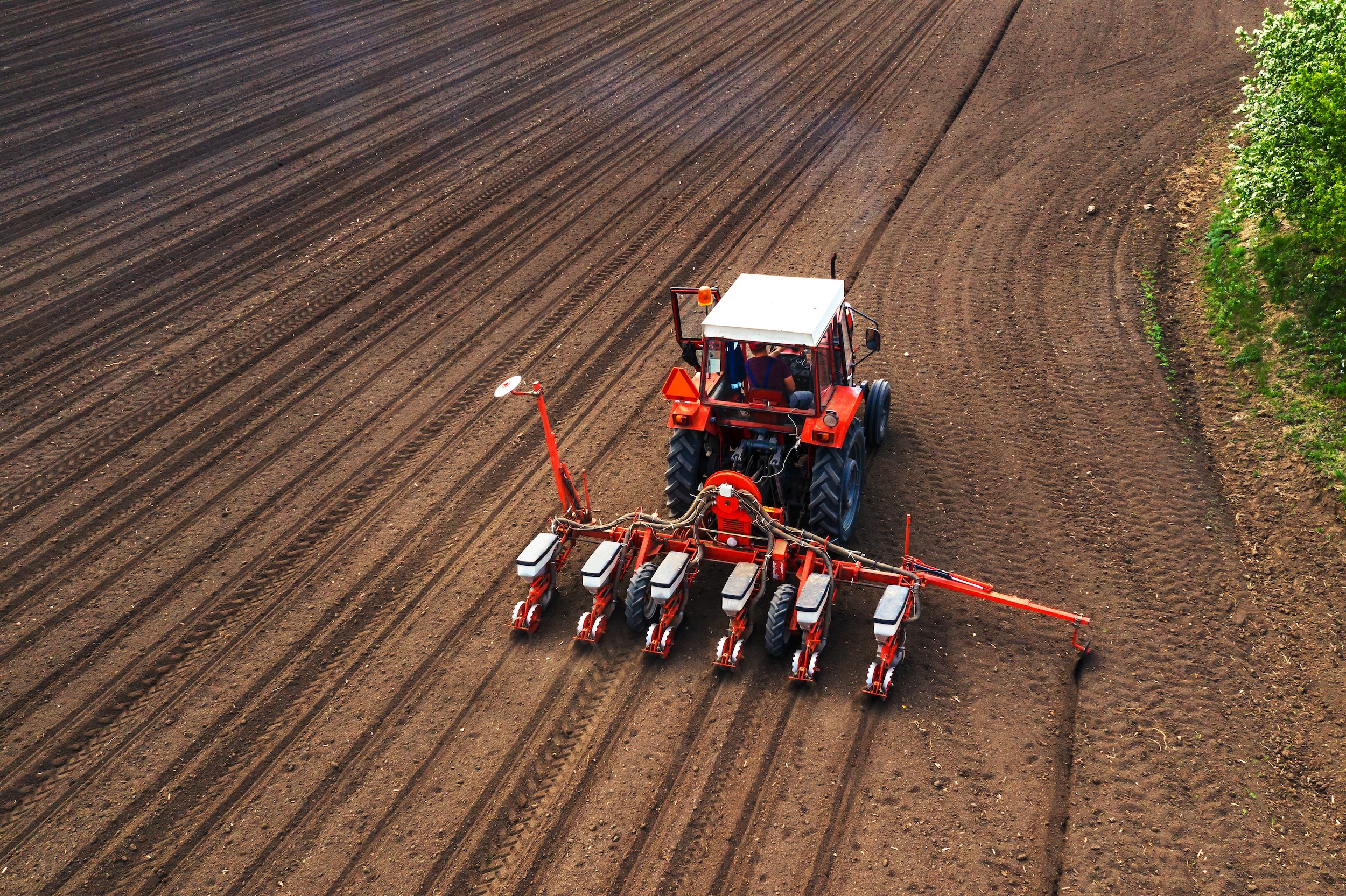
The used versus new decision stands as one of the most important choices you’ll make regarding the cost (and lifetime value) of a tractor, with significant financial implications in both directions.
Understanding the true economics of each option—including the upfront cost difference—helps you make the right tractor choice for your particular farm.
Yes, buying a used tractor reduces initial cost substantially. But whether it actually saves you money in the long run depends on numerous factors that go beyond simple purchase price comparison.
We’ve done the research, though, and we’ll share the sweet spot that can make buying a used tractor genuinely the best cost option for your farm.
The Impact Of Depreciation On How Much A Tractor Can Cost
New tractors experience their steepest value decline immediately after purchase. Studies of John Deere compact tractors indicate depreciation of approximately 23 to 26 percent in the first year, with continuing depreciation in subsequent years. By year five, these tractors typically retain about 58 percent of their original price and value.
This depreciation pattern creates a genuine cost opportunity for smart used tractor buyers. A two to three-year-old tractor has already absorbed the steepest depreciation hit, yet it still offers most of its useful life ahead, making this cost window one of the most favorable.
You’re essentially letting the first tractor owner pay the price for the privilege of being first—they take the cost hit while you acquire proven equipment at a meaningful discount. This is the sweet spot when it comes to optimizing the cost and purchase price of a tractor.
However, depreciation rates vary considerably by brand and equipment type. John Deere tractors tend to hold price value better than many competitors—that premium brand pricing pays dividends at resale time.
Conversely, lesser-known tractor brands may depreciate more steeply, making them attractive used buys but poor long-term value propositions if you’ll eventually resell, as you won’t be able to command a higher price.
Understanding how to evaluate used equipment values helps you recognize fair pricing and avoid paying a high cost in the used market. Hours of operation, maintenance history, visible condition, and specific model reputation all factor into determining how much a tractor genuinely should cost you.
Advantages Of Buying A New Tractor
While we lean toward preferring the notable cost advantages of buying a used tractor, it’s worth noting that new tractors come with some advantages as well.
You know exactly how the machine has been treated (or more accurately, hasn’t been mistreated yet). You’re likely to receive the full manufacturer’s warranty (typically 2 to 5 years on powertrain components). And you start with zero tractor maintenance issues hanging over your head, which helps reduce the upfront maintenance costs.
For farms where downtime costs money and reliability is paramount, this peace of mind about your tractor provides a real cost advantage. Missing your narrow hay-making window because your used tractor broke down can cost far more than the depreciation you saved by buying used in the first place.
Modern tractors also incorporate technology and efficiency improvements that didn’t exist even five years ago and could lead to cost savings. Better tractor fuel efficiency, improved hydraulics, more comfortable operator stations, and integrated precision agriculture technology all contribute to farm productivity gains that can offset higher initial costs over time.
Financing terms can favor new tractor purchases, which can help reduce costs for your farm. These financing advantages can sometimes make the monthly cost of a new tractor comparable to that of used tractors financed at higher rates.
Caveat: Many new tractors involve investing in subscription services for new technologies, which can result in the newer tractors costing more in the long run than the used ones. You’ll want to factor this into your decision-making process while evaluating tractor prices and total cost of ownership.
There has also been a growing trend of farmers opting to buy vintage tractors due to the higher build quality of previous generations. So while new tractors haven’t been touched by another farmer, they do pose a risk of not being “built like they used to be,” which can have a direct impact on your long-term cost savings.
Pro Tip: Tax advantages also exist for new and used tractor purchases, which can lead to substantial cost savings for your farm. Section 179 deductions allow immediate expensing of equipment purchases up to significant limits, potentially offering noteworthy tax benefits for profitable operations considering purchasing a tractor.
Cost Benefits And Considerations Of Buying A Tractor Used
The primary advantage of purchasing used tractors is straightforward: lower initial cost. A well-maintained five-year-old tractor might cost 30 to 50 percent less than its new equivalent, putting capable equipment within reach of farm operations with tighter budgets or allowing you to acquire a larger, better-equipped machine used than you perhaps couldn’t afford new.
In addition to their favorable cost, used tractors also provide faster access to working machinery. For farms with time-sensitive needs and shorter windows of profitability, tractor availability is a critical factor in the cost equation.
Used tractors dominate the marketplace for many price-conscious buyers, and for good reason. They offer genuine value when chosen carefully.
Hours of operation matter significantly—under 1,000 hours indicates low use, 2,000 to 3,000 hours represents moderate use, and 4,000-plus hours indicates high use for compact and utility tractors. However, a well-maintained 3,000-hour tractor often makes a better purchase than a neglected 1,500-hour machine, and there’s a chance it could even cost less.
The importance of a thorough pre-purchase tractor inspection cannot be overstated, especially when it comes to ensuring you’re not paying a higher price than you should. Check for hydraulic leaks, engine smoke or unusual noises, tire wear patterns, play in three-point hitch linkages, and overall condition of wear items to ensure the cost of the tractor doesn’t exceed its value.
Caveat: Parts availability presents challenges for older used tractors. Models more than 15 to 20 years old can prove increasingly difficult to maintain as parts become scarce and fewer mechanics remain familiar with older systems. A tractor is only economical if you can actually keep it running—this consideration becomes more critical as equipment ages and inevitably factors into the cost equation.
Private party sales versus dealer used inventory presents another choice. Private sellers typically offer lower tractor prices, but you may not be able to secure a warranty (always check with the seller to see, though). Dealer used tractor inventory costs more but often includes some warranty coverage or service support.
Making The Right Tractor Choice For Your Situation
The new versus used tractor decision ultimately depends on your specific circumstances and cost flexibility. Here’s a framework for thinking it through:
Consider new if you value the latest technology and features, warranty protection is non-negotiable, or you can secure favorable financing terms that make the payment for your tractor affordable relative to your cash flow.
Choose used if you have mechanical aptitude or access to affordable service, you’re operating on a tight budget where upfront savings matter most, you don’t need the latest features and technology, or you’re aiming to maximize the value to tractor cost ratio (remember the 2-5 year sweet spot we mentioned earlier).
How And When To Negotiate Tractor Prices And Total Cost
How much does a tractor cost? Believe it or not, much of that is up to you. Pricing and cost is negotiable—both for new and used tractors—yet many buyers either don’t realize this or don’t know how to navigate the negotiation process effectively.
Understanding how tractor pricing works and when you have the most leverage to reduce cost can save thousands of dollars on the price tag of your tractor purchase.
Approach tractor cost negotiations as a professional business discussion rather than an adversarial confrontation. You’re working toward a deal that serves both parties—a fair tractor price for your farm and a reasonable profit for the dealer.
Understanding Tractor Dealer Pricing Structure
Tractor dealers operate on margin—the difference between their wholesale cost and what they sell equipment for. Unlike automotive dealerships, where invoice pricing is sometimes publicly available, tractor wholesale costs generally remain private. However, industry norms provide guidance.
For new compact and utility tractors, dealers typically work with margins that allow for cost negotiation. The specific markup varies by brand and model—higher-volume brands may operate on thinner margins than specialty tractor brands, which has a direct impact on price flexibility. Popular models during peak season leave less room for negotiation than slow-moving inventory at year-end.
Tractor cost itself is somewhat flexible. Attachments and implements often carry higher margins, making them useful negotiating points. Delivery charges, setup and prep work, filled tires, and extended service packages all represent areas where dealers can adjust to make deals work.
What’s less flexible? Extremely popular tractor models with limited availability, high-demand periods when dealers have more buyers than inventory, and special-order equipment where the dealer has committed to bringing in specific tractors can lead to higher costs.
Manufacturer incentives and floor plan costs also factor in—dealers pay interest on tractor inventory sitting on their lots, making aged inventory inherently more negotiable than freshly arrived equipment.
Strategic Timing For Best Tractor Prices
When you buy matters as much as what you buy and where you buy it. Several windows throughout the year offer better cost negotiating leverage for tractor purchases:
Year-end (November through January): Tractor dealers want to clear inventory before their fiscal year ends and make room for incoming new model year tractors, meaning costs for those older models will be lower. December and January often bring the most aggressive tractor pricing as dealers balance year-end financial goals against carrying costs.
Off-season purchases: Buying a tractor in winter for spring delivery, or late summer before harvest season, often yields better price deals than purchasing during peak spring season when demand hits its annual high.
End of month or quarter: Salespeople working on commission frequently have monthly or quarterly quotas. The last few days of these periods can provide additional leverage if they’re close to hitting targets and need a few more tractor deals to qualify for bonuses.
Manufacturer promotion periods: Watch for special financing rates, rebate programs, or bundle deals. Timing your tractor purchase to coincide with promotions can save thousands in cost—dealers can offer better pricing deals when manufacturers are supporting them with incentives.
Model year transitions: Previous-year tractor models get discounted when new model years arrive (typically mid-to-late calendar year), which can cut your farm’s costs substantially.
Research Tractor Costs Before You Negotiate
Effective tractor negotiation starts with gathering information on expected prices and price ranges. Before visiting dealers, research comparable tractors across multiple sources to assess the average cost.
Whether you opt to buy new or used, getting quotes from three or more tractor sellers provides valuable leverage in securing the best price for your farm.
Even if you prefer working with a particular seller, having competitive quotes on tractors demonstrates that you’ve done your homework and are not going to tolerate a cost that exceeds the value.
For those comfortable with the process, online farm equipment auctions provide insight into actual selling prices versus asking prices and are often an excellent route to securing the best price for a high-quality tractor.
For used farm tractors, understanding current valuations is essential to determining how much the tractor should cost you. Service history, hours of operation, condition, and included attachments all factor into appropriate tractor pricing.
Our Best Tips For Negotiating The Cost Of A Used Tractor
When it comes to establishing how much a tractor should cost (and negotiating for that price), these are the things to keep top of mind:
Inspection provides leverage: A thorough pre-purchase inspection that reveals issues provides legitimate negotiating leverage and helps establish a realistic baseline for the cost of the tractor.
Service history commands premium value: Farm tractors with complete maintenance records are worth a higher price than similar equipment without documentation. If service records are absent, factor this uncertainty into your offer—you’re assuming more risk about the tractor’s true condition and history, which should absolutely have an impact on the total cost you absorb.
Hours and condition inform your offer: High hours or visible wear patterns provide an excellent opportunity to negotiate down the cost of a tractor and establish a fair asking price. A tractor showing 4,500 hours deserves a lower price than one with 1,200 hours, all else being equal.
“As-is” versus warranty influences value: If the seller won’t provide any warranty or guarantee, tractor prices should reflect the risk you’re accepting.
Private party dynamics: Private sellers often have more pricing flexibility than tractor dealers. Understanding seller motivation helps—someone moving out of the area, upgrading to different equipment, or managing an estate sale often proves more flexible on price than someone casually testing the market.
For sellers who are preparing their tractor for auction sale, understand they’ve already invested time and money making the tractor presentable and marketable, which can impact the cost. This investment sometimes makes their tractor prices firmer, but it also means you’re buying equipment that’s been serviced and detailed.
Be genuinely willing to walk away: The most powerful negotiating position is authentic willingness to walk away if the deal doesn’t meet your needs. This doesn’t mean being difficult, but it does mean knowing the maximum price you’re willing to pay for a tractor and respecting it.
Get everything in writing: Before committing, ensure all agreed terms, included items, delivery timeline, and tractor pricing appear in writing.
Find The Right Tractor, At The Right Price, For Your Farm
After exploring everything from horsepower requirements to negotiation strategies, one truth stands clear: determining how much a tractor costs is really about determining what your farm operation needs are and finding equipment that delivers that capability at a fair value.
There’s wisdom in choosing a quality used tractor that’s been well-maintained over stretching your budget for a new tractor with a higher price tag that leaves no room for the cost of attachments and maintenance.
The right tractor (at the right price) matches your land, your work, and your budget. It’s a machine you can count on season after season, that holds its value over time, and that enables you to build something lasting on your property.
At Hayden Outdoors, we understand that your farm’s tractor is more than just machinery—it’s the foundation of your operation’s productivity and the tools that help you build legacy on your land. That’s why we connect buyers with sellers offering tractors at a cost that feels right.
Browse Available Tractors
Does Your Farm Need A Driverless Or Autonomous Tractor?

As experts in all things farmland, we work closely with rural landowners and ag operators every day. We know farming because it’s in our roots, and we understand the real-world decisions farmers face, especially when it comes to investing in mission-critical equipment like tractors. In this guide, we’ll walk you through what a driverless or autonomous tractor can offer your operation. You’ll learn how these self driving machines work, the advantages they bring to the table, what they cost, and how to evaluate the total cost of ownership of an automated tractor.
We’ll also break down which types of farms are best suited for driverless tractor technology, what the resale market looks like, and what potential pitfalls exist for these self driving vehicles. By the end, you’ll have the knowledge you need to make an informed purchase decision, and you’ll know where to turn when it’s time to find the right autonomous tractor for your farmland.
Table Of Contents
What Is An Autonomous Tractor?
Along with the rise in electric tractors, autonomous tractors are rapidly becoming a central topic in modern farming conversations. These high-tech machines are designed to perform essential agricultural tasks without a human in the driver’s seat, revolutionizing how farmers manage labor, time, and field operations.
As we move into a new stage of modern agriculture, we’re here to help farmers understand the distinctions and capabilities of driverless and autonomous tractors, which can very well be the key to staying competitive and efficient.
For many farmers, the concept of a tractor that drives itself sounds like science fiction. After all, the image of the hard-working farmer navigating their land is synonymous with what it means to work in agriculture. That said, autonomous tractors are a growing trend and already being used across the country on farms of all sizes.
Whether you’re running a multi-acre grain operation or exploring ways to grow your ag business operations, knowing what makes an autonomous tractor different from traditional models and what options are available will help guide a more informed investment.
The term autonomous tractor (also known as a self-driving tractor, driverless tractor, automated tractors, or automatic tractor) is becoming more common, but it’s important to understand what it really refers to.
At its simplest, an autonomous tractor is a vehicle capable of performing farm tasks (such as tillage, planting, spraying, or hauling) with little intervention or no human driver in the cab. As with many emerging technologies, there’s a spectrum:
- Full autonomy: The tractor operates without a human on board whatsoever.
- Semi-autonomy: A human supervises the tractor, but many tasks are automated.
- Retrofit kits and assisted automation: Older tractors can be upgraded with features such as GPS guidance and automated steering.
This differentiation is crucial. Some farmers may think they already own an “autonomous” tractor if it has autosteer as a function. However, full autonomy takes things several steps further—and also requires additional planning, equipment, and training.
How Do Autonomous Tractors Work?
At the heart of every autonomous tractor is a combination of GPS precision, sensor technology, and artificial intelligence (AI) that allows these driverless vehicles to function.
These machines aren’t just big pieces of metal moving through a field; they’re complex systems designed to think, navigate, and adapt without a human behind the wheel. Understanding how driverless and autonomous tractors work is essential if you’re considering integrating one into your farming operation.
Unlike traditional tractors that rely on a skilled operator to steer, monitor, and make decisions in real time, autonomous tractors use high-tech tools to handle everything from pathfinding to implement control. It’s essentially performing the same tasks, without the need for human involvement.
GPS systems ensure exact location tracking, while sensors detect and navigate around obstacles on the farm.
The real power of autonomous tractors lies in the software: AI platforms that make decisions based on real-time data, enabling the driverless tractor to execute farming tasks with precision and consistency.
That little bump in terrain in the middle of your field of row crops? The autonomous tractor can learn those intricacies and adjust accordingly.
While the idea of the autonomous tractor may seem futuristic, it really just comes down to a combination of hardware and software. Understanding how automated tractors function helps clarify what you’re investing in. Here are the essential systems:
GPS And Guidance Technology
GPS and GNSS systems play a key role in making autonomous tractors viable. These technologies provide accurate location tracking that enables straight-line navigation, tight headland turns, and consistent field coverage. Real-time kinematic (RTK) GPS, in particular, can reduce pass-to-pass errors to within one inch, which significantly reduces overlap and wasted inputs.
On a 1,000-acre farm, eliminating just 5% of overlap during seeding can result in substantial savings on everything from seed to fuel to time. Farmers using high-precision guidance often report improved yield uniformity and fewer field gaps. Those little efficiencies end up saving you both in time and in money required to pay those working on your farm.
Most autonomous tractors use real-time kinematic (RTK) GPS, which offers centimeter-level accuracy compared to traditional GPS. This level of accuracy ensures that the tractor stays on precise paths, eliminating overlaps and missed rows, which can be easily missed by a human driving a tractor.
Autonomous Tractor Sensor Systems
Each sensor on a driverless or autonomous tractor serves a specific function. LiDAR scans the terrain with lasers to create a 3D map, enabling your tractor to detect and respond to dips, mounds, and debris. Radar is especially helpful in low-visibility conditions such as dust, fog, or heavy rain. Cameras help with identifying objects in the path of the tractor, which is helpful both from a navigation and safety perspective.
Rather than your farm having to count on a tractor operator having their eyes on every corner of the farm, these sensors form a 360-degree awareness system that allows autonomous tractors to stop for obstacles, reroute when necessary, and operate safely, even when human supervision is minimal. These sensors work in tandem to help the tractor make real-time decisions, such as stopping when a dog runs in front or navigating around a ditch.
AI And Control Systems Driving Autonomous Tractors
In today’s fast-moving agricultural landscape, artificial intelligence is what transforms data into decisions. Once GPS and sensor inputs are received, AI processes that information and determines the best paths for the tractor, the necessary speeds, and any relevant equipment settings. It can also learn from repeated operations, improving efficiency and reliability over time.
For example, if a field has an irregular shape or contains known obstacles, the AI can modify path planning to optimize coverage without the help of a driver. Some systems even detect soil compaction patterns or yield variability to adjust tillage depth or seeding rate.
All of the data the autonomous tractor collects via its sensors can be used to plan routes, make real-time adjustments, and optimize task performance on the farm. Some models even use machine learning to improve over time, adapting to specific field conditions, terrain patterns, or crop types. It’s essentially like training your own farm hand, without the labor costs.
Communication And Connectivity Of Autonomous Tractors
One of the biggest perks? Autonomous tractors allow farmers to manage operations from the office, a truck, or even another state with their real-time connection. This means your farm managers can schedule tasks, receive alerts, and track progress via smartphones or tablets. This is especially useful for large farms where supervising every machine manually is impractical.
One of the biggest challenges farmers face is the need to always feel like they must be on the farm at all times, and this type of technology loosens those reins a bit and gives you, as the farmer, just a bit more freedom.
That said, the challenge of connectivity is real. Remote farms with weak cell coverage may struggle to maintain real-time data transmission. In these cases, satellite internet or local RTK towers may be necessary to maintain control and data flow to keep operations running smoothly on the farm.
If you’re considering an autonomous tractor, the costs of building out the needed infrastructure to ensure connectivity should be a part of your budgeting process.
What Are The Advantages Of An Autonomous Tractor Over A Human Driver?
The reality is, investing in an autonomous tractor is expensive. So how can you effectively determine whether this type of technology really makes sense for your farm?
To boil it down, driverless tractors are designed to optimize every aspect of fieldwork, whether that’s reducing overlap during seeding or extending work hours far beyond a human’s capacity.
If you’re undecided on whether an autonomous tractor could be right for your farming operation, there are a few perks to consider.
1. Labor Efficiency and Availability: Farm labor is getting harder to find and more it’s often more expensive. Autonomous tractors significantly reduce the need for human drivers, freeing up skilled labor for tasks requiring more oversight or flexibility. During peak seasons, this means more acres covered with fewer people.
2. 24/7 Operation: Unlike human drivers, autonomous tractors don’t need rest, meals, or breaks. That means they can run overnight and during long weather windows. For short-season crops or unpredictable climates, this could mean the difference between a successful or failed harvest.
3. Fuel and Input Savings: Consistent pathing reduces overlap and missed rows.
4. Enhanced Safety: Fewer humans in the cab reduces exposure to dust, noise, and heat, all of which can lead to long-term health problems. Fewer driver errors also mean fewer accidents.
5. Precision and Repeatability: Every pass is consistent, regardless of the time of day or fatigue level. This leads to improved planting depth, seed spacing, and application accuracy.
6. Better Data Collection: Some autonomous tractor systems collect operational and environmental data as they work. Over time, this builds a valuable dataset for decision-making, yield mapping, and resource optimization.
How Much Does A Driverless Tractor Cost?
The upfront cost of a driverless or autonomous tractor can seem intimidating, but the long-term return on investment can often justify the expense, especially for operations looking to streamline labor and reduce field inefficiencies.
When calculating costs, it’s important to consider both the purchase price and the ongoing benefits these machines bring through labor savings, productivity gains, and reduced equipment wear.
Driverless tractors typically come at a premium compared to traditional models. However, those costs are often offset within a few seasons through decreased reliance on hired labor, fewer mistakes during field operations, and improved machine uptime.
It’s also essential to consider the opportunity cost of not automating: missed windows, inefficient routes, and operator fatigue can all chip away at margins. A careful analysis will show that for many farms, autonomous technology isn’t just viable, but it’s also strategic.
The price of a driverless tractor varies by brand, autonomy level, power, and implements.
Here’s a breakdown of typical costs:
- Traditional 150-hp tractor: ~$180,000 (with a range often between 140K and 200K)
- Semi-autonomous retrofit kit: $30,000–50,000 (that said, prices are dropping)
- Fully autonomous tractor (OEM-built): $120,000 – $500,000
That higher price point raises the question: Is it worth it to invest in an autonomous tractor? We’ve created a sample 5-year cost-benefit scenario to give you the insights.
Sample ROI Scenario (500-acre operation):
- Labor saved: estimated $25/hour for a tractor operator × 800 hours/year (assumes approximately 15 hours/week) = $20,000
- Fuel/input savings: approximately $6,000/year (smaller acreage and less challenging terrain may be less)
- Operator injury insurance savings: $2,000/year (assumes a commercial-level operation)
- Downtime reduction: $3,000/year in missed opportunity (this accounts for, as an example, 15 sick days for someone getting paid $25/hour)
- Total annual savings: approximately $31,000
- Upfront premium for autonomy: $50,000–80,000 (includes equipment and software considerations)
- Payback period: 2–3 years
Many farms report even faster ROI when factoring in reduced hiring headaches and overlapping harvest seasons.
What Types of Farms And Operations Are Driverless And Autonomous Tractors Best For?
Not all farms are equally suited to go autonomous. The best types of farms for driverless tractors are those that already embrace technology and have operational scale or labor challenges that self-driving tractors can help solve.
That said, even mid-sized and small farms can benefit from specific autonomous features, especially when they want to hedge against rising labor costs.
Autonomous tractors are ideal for farms with the following characteristics:
Farms that have long, straight field layouts, consistent cropping patterns, and repeatable operations benefit most from autonomous tractor deployment. These characteristics reduce the complexity of pathfinding and increase the efficiency of automated workflows.
Large-scale row crop operations, particularly those planting corn, soybeans, or wheat, see the greatest return from full autonomy.
- Row crop farms: Especially corn, soy, wheat, and cotton.
- Large-acreage operations: Where field passes are long and consistent.
- Multi-site farms: Where a fleet of tractors can be managed remotely.
In contrast, operations with tight field spacing, irregular perimeters, or many different crops may require more human oversight. For these farms, semi-autonomous solutions or specialized tractor retrofits may offer a better balance between cost and functionality.
Terrain Considerations For Driverless Tractors
Autonomous and driverless tractors make more sense for different terrain types than others. If your farm is in the following types of places, a self driving tractor could be a good fit:
- Flat or gently rolling land
- Fields with few trees, rocks, or natural barriers
- High GPS signal zones
Hilly or forested areas may challenge the accuracy of the sensors and the GPS reception, making autonomous tractors less ideal for those types of farming operations.
Infrastructure Readiness Of Your Farm
The reality is that a self driving tractor will require a baseline level of infrastructure in order to operate at its full potential. Consider the following factors before investing in this type of tech for your farm:
- RTK GPS coverage or base station access
- Reliable cell signal or satellite
- Digital field maps and boundaries
Farmers should assess whether their existing tech capabilities (e.g., variable rate control, yield monitors) really allows for the platforms needed for an autonomous tractor to live up to its potential.
Current Applications For Autonomous Tractors
As of now, most driverless tractor deployments focus on primary tillage, herbicide and fertilizer application, harvest towing/transport, and nutrient spreading. The reality is that these are tasks that benefit from repeatable, linear movements. These jobs demand long hours and typically have low variability, making them better suited for automation.
While planting and harvesting are inherently more complex due to variable conditions and real-time decision-making, improvements in machine learning are steadily expanding the scope of tasks suitable for autonomy.
The Total Cost Of Driverless And Autonomous Tractors – Software Updates And Other Considerations
While the initial purchase price of a driverless tractor is a big part of the conversation, it’s not the full story. We really have to look at the long-term cost of ownership, which can vary widely based on the brand, software requirements, connectivity infrastructure, and service agreements for the specific tractor you’re considering.
Farmers exploring self driving or autonomous tractors must budget not just for hardware, but also for the digital ecosystem that powers it. From licensing fees to cloud-based data storage, autonomous systems often require recurring investments that are new to many farmers. Understanding these costs, and planning for them, is critical for determining the true value of an autonomous system.
Failing to account for these expenses can turn what seemed like a cost-saving upgrade into an unexpected budget burden (those subscription services can add up quickly). But with proper planning, these tools can deliver powerful, predictable returns over time.
Your investment in a driverless or autonomous tractor doesn’t stop at the purchase. Here’s a detailed breakdown of total cost of ownership (TCO):
1. Software Licensing
- Annual fees: $2,000–5,000 (varies by brand)
- Some brands offer bundled packages, while others charge per feature (e.g., AI optimization, fleet coordination, historical data logs).
2. Connectivity and Support
- RTK service: $1,200–2,000/year
- Satellite internet or LTE connectivity: $40–100/month
- Cloud data storage: Tiered pricing based on acreage or device count
3. Maintenance and Parts
- Sensor recalibration: $500/year
- Replacement LiDAR or cameras: $1,000–2,500/unit
- Annual service: May require certified technicians for software and hardware checks
4. Staff Training
- Onboarding employees can take 10–20 hours of training, depending on how familiar they are with the technology
- Vendor support plans may include training or require additional cost
5. Regulatory and Insurance
- Autonomous equipment insurance may differ from conventional coverage
- Liability clauses may vary based on whether a human is present during operation
- States like California and Colorado may impose additional safety standards or permit fees
6. Obsolescence Risk
Technology lifecycles are fast. What’s cutting-edge today could be outdated in five years. Ensure your autonomous tractor vendor provides:
- Firmware and software updates
- Hardware upgrade paths
- Long-term service support
What Does The Resale Market For Driverless And Autonomous Tractors Look Like?
Resale value is an important, but often overlooked, factor in the total cost of ownership of driverless tractors. Here’s the reality: the market for autonomous tractors is quite new, and it’s natural to wonder how well these machines hold their value compared to traditional models. While it’s still early days for large-scale resale data, several trends are beginning to emerge.
Autonomous tractors from major manufacturers (think: John Deere) with scalable platforms and regular software support tend to retain value better than lesser-known brands. Buyers on the secondary market are looking for reliability, serviceability, and assurance that the technology won’t become obsolete overnight.
The resale market is still forming. Here’s what to keep in mind:
Key Value Retention Factors
- Brand reputation: John Deere, Monarch, and CNH hold value better than niche startups
- Transferable software licenses: Boost resale price, as the farmer who buys your equipment can inherit your license, too
- Update-ability: Autonomous tractors with modular hardware or OTA (over-the-air) update options retain more value
Buyer Concerns
- Fear of outdated software
- Worries about sensor condition or wear
- Uncertainty around service availability (this is still a pretty new technology, after all)
Until the market matures, assume slightly lower resale value for your driverless tractor and plan ROI accordingly.
The Downsides Of Autonomous Tractors
No agricultural technology is perfect, and self driving or autonomous tractors are no exception. While they offer significant advantages, farmers must also weigh the trade-offs. Costs, complexity, and connectivity requirements can pose barriers, particularly for smaller operations or those in remote areas with limited infrastructure.
While these downsides don’t necessarily negate the benefits, they do need to be factored into your planning process to determine if autonomous tractors are right for your farm. These are the core drawbacks:
- High upfront cost: This may require capital or financing, as prices can sometimes double a standard diesel tractor
- Connectivity limits: Remote areas may struggle with GPS or LTE
- Narrow task suitability: Complex operations or difficult terrain will often require human intervention
- Repair complexity: Sensor and AI failures may need to be serviced by a specialist, which can be tough in rural areas
- Learning curve: Farm staff must adapt to new workflows
- Regulation gaps: Legal gray areas in some jurisdictions
- Depreciation risk: Rapid tech evolution may shorten resale timelines
As a general best practice, we recommend starting with one or two autonomous tractors to test performance before scaling fleet-wide.
Factors To Keep In Mind Before You Buy A Self Driving Tractor
Buying a self driving tractor isn’t just about picking a machine—it’s about choosing a tractor that aligns with your farm’s long-term goals. From the needed technical requirements to the training needs, there are multiple moving parts to consider. Making the right choice involves more than checking horsepower and tire size.
Buying an autonomous tractor is a strategic investment that will impact how you farm for years to come. Before you commit, make sure you’ve considered the full picture: connectivity readiness, crop compatibility, labor availability, and vendor support. Taking a thorough, structured approach ensures you maximize ROI and avoid costly surprises down the line.
Use this checklist to guide your decision:
1. Perform A Farm Assessment To Identify If An Autonomous Tractor Makes Sense
- Field consistency and size
- Connectivity infrastructure
- Crop types
- Existing equipment compatibility
2. Perform Budget And ROI Planning For An Autonomous Tractor
- Upfront vs total cost
- Labor savings projections (look at current tractor runtimes and labor costs required to get a baseline)
- Break-even timeline
- Subscription & update cost
3. Look Into Legal And Support Readiness Requirements For Driverless Tractors
Navigating the regulatory environment of self driving tractors is a vital part of adopting autonomous equipment. While some states are welcoming the technology, others require certification or restrict fully unmanned operation. Farmers in California, for instance, must comply with specific emissions, safety, and operational standards.
From an insurance perspective, autonomous tractors may require special policies that address liability in the event of software failure or accident. Support readiness is equally important. Having access to certified technicians, manufacturer support, and remote diagnostics ensures problems can be resolved quickly and safely.
Consider Local Regulations For Autonomous Tractors
- Insurance coverage
- Tech support access
- Farming staff training time
Our best advice? Consider scheduling a trial period or demonstration before purchasing an autonomous tractor. Some vendors offer demo days or seasonal rentals to test technology on your particular farm.
Find The Right Tractor For Your Farm
While autonomous tractors are changing the way many producers approach fieldwork, making the right investment on driverless technology still comes down to your unique farming operation, goals, and budget.
At Hayden Outdoors, we connect farmers and landowners with a wide network of equipment sellers across the country. Whether you’re looking to explore your options or list a tractor for sale, our platform helps match the right equipment with the right buyer.
And if you’re still on the search for the perfect piece of farmland, we’ve got you covered there, too.
Browse Available Tractors
Everything You Should Know About Electric Tractors – Complete Farm Guide

The agricultural landscape is changing, and electric tractors are at the forefront of this transformation. As farmers look for ways to reduce operating costs, minimize environmental impact, and embrace new technology, battery-powered tractors are emerging as a viable alternative to traditional diesel models. But is an electric tractor right for your farm operation?
At Hayden Outdoors, we’re experts on all things farmland and farm operations. And we’ve crafted this comprehensive guide to help you understand everything from power specifications and pricing to battery life and total cost of ownership.
Whether you’re managing a vineyard, running a dairy farm, or maintaining specialty crops, you’ll find the information you need to make an informed decision about electric tractor ownership.
Table Of Contents
The Pros Of Electric Tractors And Why They’re Worth Considering For Your Farm

Electric tractors offer compelling advantages that go beyond just being environmentally friendly. Here’s what makes them worth considering for your operation:
1. Electric Tractors Have Significantly Lower Operating Costs
The economics of electric tractors are hard to ignore. Operating costs for electric tractors range from just $2.50 to $3.75 per hour compared to $7.50 per hour for diesel-powered models. Over the course of a year, this difference adds up substantially. If you’re running your tractor 500 hours annually, you could save between $1,875 and $2,500 each year on operating costs alone.
2. Electric Tractors Can Have Reduced Maintenance Requirements
While electric tractors aren’t entirely maintenance-free, they eliminate many time-consuming and costly service requirements. You won’t need engine oil changes, which saves both time and expense. However, electric tractors still rely on hydraulic systems, meaning you’ll still need hydraulic fluid, greases, and lubricants.
The key difference is in what you eliminate: fuel filters, exhaust system maintenance, spark plugs, and fuel injectors all disappear from your service schedule. With fewer moving parts overall, there’s simply less that can break or require replacement.
3. Federal And State Financial Incentives Are Available
One of the most significant game-changers for electric tractor affordability is the availability of substantial government incentives. The Environmental Quality Incentives Program (EQIP), administered by the USDA Natural Resources Conservation Service, can provide subsidies of 50% or more off the retail price.
Federal tax credits can reduce your purchase cost by up to 30%, and the Rural Energy for America Program (REAP) offers additional grant opportunities. Many states have also developed their own incentive programs.
To qualify for EQIP, you’ll need to work with your local USDA service center. The program requires that you replace an existing diesel tractor of 32 horsepower or more. Applications are typically batched annually, with deadlines ranging from November to February, depending on your state.
4. Electric Tractors Are Often Quieter To Operate
The near-silent operation of electric tractors provides benefits that extend beyond worker comfort. Operators experience significantly less fatigue during long workdays without the constant engine noise and vibration. This reduced noise pollution also benefits neighboring communities and makes electric tractors particularly suitable for operations near residential areas.
5. Electric Tractors Have Zero Emissions At Point Of Use
Electric tractors produce no exhaust emissions during operation, creating cleaner air for operators and eliminating exposure to diesel fumes. The absence of emissions also opens up new possibilities, including safe indoor operation for tasks in barns, greenhouses, and covered facilities where diesel exhaust would be problematic.
6. Electric Tractors Offer Instant Torque Delivery
Unlike diesel engines that need to build up RPMs to deliver maximum power, electric motors provide instant torque the moment you press the pedal. This delivers immediate, responsive power for tasks like loader work, pulling heavy implements, or working in challenging terrain.
7. Electric Tractors Offer Potential for On-Farm Solar Integration
Electric tractors create an opportunity for true energy independence when paired with on-farm solar installations. By generating your own electricity, you can further reduce operating costs and insulate yourself from fluctuating utility rates.
8. Electric Tractors Come With Advanced Technology Features
Many electric tractors come equipped with modern connected features including remote monitoring capabilities, integration with farm management software for data collection, and over-the-air updates. These technologies represent the future of precision agriculture.
What Types of Farms Are Current Electric Tractors Best Suited For?
Not all farm operations are equally suited for electric tractors, given current technology limitations. Understanding where these machines excel helps you determine if they match your operation.
Electric tractors currently perform best on farm operations under 500 acres, where daily tasks are repetitive and predictable. Orchards and vineyards are ideal applications—the quiet operation is appreciated by workers spending long hours in the field, and zero emissions make these tractors perfect for working among crops. Berry operations benefit similarly.
Dairy farms and livestock operations have found electric tractors particularly well-suited for their needs. The daily routine of feed delivery, manure handling, and general yard work typically falls well within the runtime capabilities of modern electric tractors. Some dairy operations are seeing payback periods as short as 1.5 to 3.5 years due to high annual usage hours.
Specialty crop farms—including vegetables, herbs, and nursery operations—find value in electric tractors’ precision and quiet operation. The instant torque is especially useful for tasks requiring careful maneuvering around delicate plants.
Operations located near residential areas (including hobby operations) benefit tremendously from reduced noise pollution. If you’ve received complaints about early morning or late evening tractor work, an electric model could resolve those community relations challenges.
Understanding Electric Tractor Power: What kW and kWh Mean for Your Farm
If you’ve spent your career evaluating tractors based on horsepower ratings, the specifications for electric tractors might initially seem confusing. Understanding these new measurements is essential for selecting the right machine.
Understanding kW (Kilowatts) vs. Horsepower
Electric tractor power is measured in kilowatts (kW), rather than horsepower (hp), but the conversion is straightforward. One kilowatt equals approximately 1.34 horsepower. So a 50 kW electric tractor delivers roughly 67 horsepower—comparable to a small to mid-sized utility tractor.
Current models typically range from 50 to 55 kW (67 to 74 hp). The Case IH Farmall 75C Electric and New Holland T4 Electric Power, for example, both provide 55 kW of rated power, which translates to 74 hp.
Why does the power delivery feel different despite similar numbers? Electric motors provide consistent power across their entire operating range, whereas diesel engines have power curves that vary with RPM. This means an electric tractor’s 70 hp feels more responsive and usable than you might expect.
What kWh (Kilowatt-Hours) Means For Electric Tractor Battery Capacity
While kW tells you about power output, kWh (kilowatt-hours) measures battery capacity—essentially how much energy is stored for work. Think of kWh like the fuel tank size on a diesel tractor, but instead of gallons, you’re measuring stored electrical energy.
Current electric tractors feature battery packs ranging from 30 kWh for compact models up to 150 kWh or more for larger machines. For reference, the Case IH Farmall 75C Electric and New Holland T4 Electric Power come with 110 kWh maximum capacity batteries.
Battery capacity directly affects how long you can work before recharging. A larger kWh rating means more stored energy and longer runtime, but it also typically means a higher purchase price and longer charging times.
Matching Electric Tractor Specifications To Your Operation
Reading spec sheets requires understanding the relationship between power (kW) and capacity (kWh). Consider your typical workload: Are you running a loader for a few hours of intensive work, or pulling a light implement for extended periods? Heavy implements and demanding tasks drain batteries faster than light-duty applications.
What Difference In Price Can You Expect When Buying An Electric Tractor vs A Standard One For Your Farm?
Price represents one of the biggest decision points when considering an electric tractor. Understanding both the upfront investment and how incentives affect the real purchase cost is crucial.
Electric tractors currently command premium pricing compared to comparable diesel models. A Case IH Farmall 75C Electric lists at approximately $79,000, while smaller electric models from manufacturers like Solectrac begin around $29,249 for their 25 hp compact tractor.
A comparable 75 hp diesel utility tractor typically ranges from $45,000 to $60,000, depending on features. This means electric models can carry a premium of $15,000 to $30,000 before incentives are applied.
However, these upfront prices don’t tell the complete story. Federal and state incentives dramatically change the economics. With EQIP subsidies providing 50% or more off retail price, that $79,000 electric tractor could cost you $39,500 or less. Add federal tax credits of up to 30%, and the effective purchase price can drop below that of a comparable diesel tractor.
The pricing landscape for electric tractors is still evolving as more manufacturers enter the market. While the initial sticker shock is real, the combination of available incentives and dramatically lower operating costs changes the value equation significantly.
How Battery Life Plays A Role In An Electric Tractor Purchase
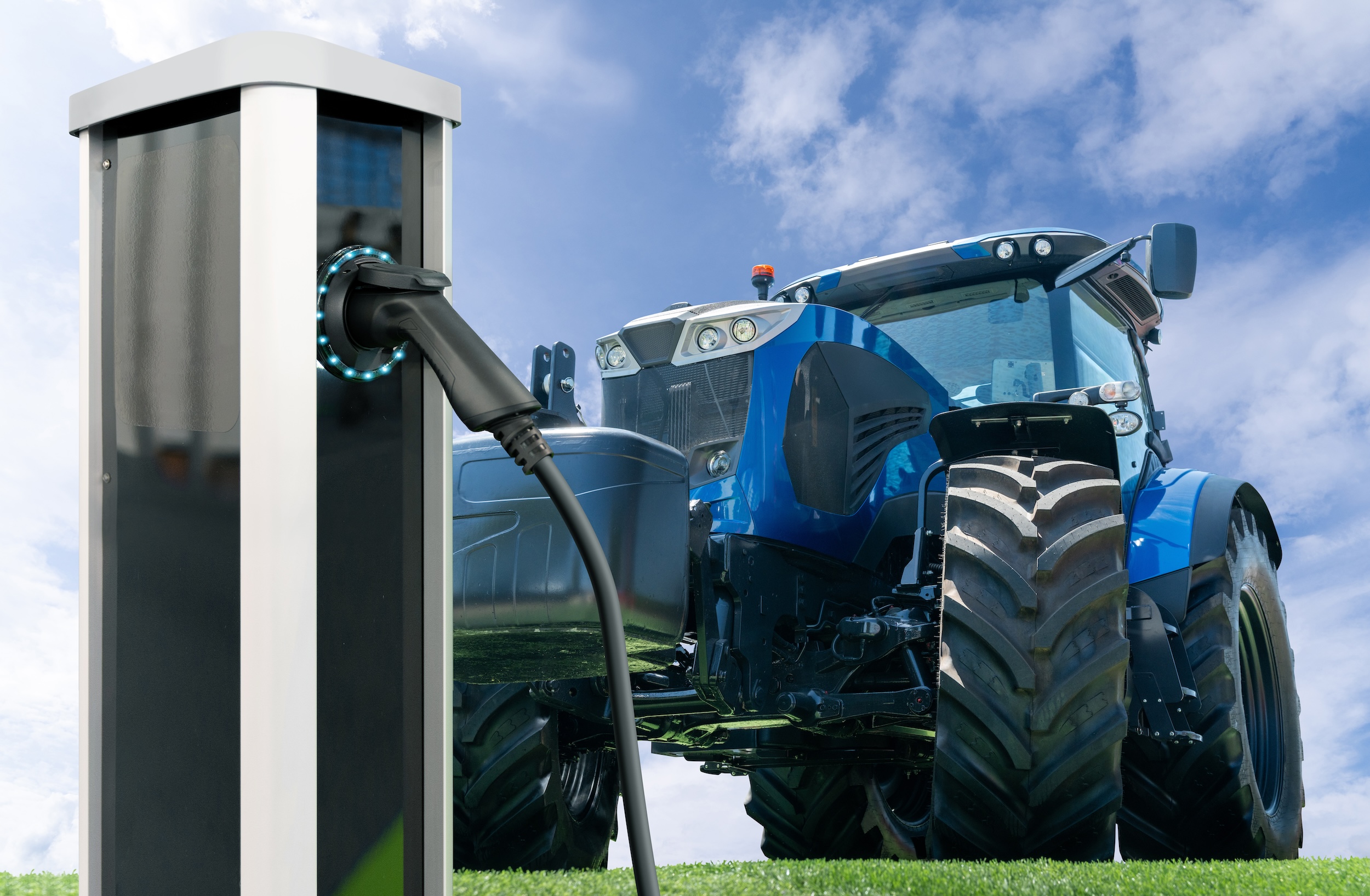
Battery performance sits at the heart of electric tractor ownership. Understanding runtime, charging requirements, and long-term battery considerations is essential for making a confident purchase decision.
Electric Tractor Runtime Expectations
Current electric tractors offer runtime ranging from 4 to 14 hours on a single charge, depending on the model and application. This wide range reflects the dramatic difference in power draw between various farming tasks.
The Case IH Farmall 75C Electric and New Holland T4 Electric Power provide approximately 4 hours of runtime under moderate continuous duty. However, the runtime extends to 8 hours or more for lighter tasks.
Light-duty operations, such as transporting materials with an empty wagon or running a rotary cutter on maintained grounds, drain batteries slowly and maximize runtime. Heavy-duty applications, including intensive loader work or pulling heavily loaded implements, consume battery power most rapidly. When deciding on the type of tractor to choose, considering the type of work you do on your farm will be critical.
Electric Tractor Charging Infrastructure Requirements
Charging an electric tractor requires planning and investment in proper infrastructure. Level II charging (220V, 30-40 amp service) represents the most common installation for farm applications. With an 80-amp Level II charger, expect charging times of 5-6 hours from depleted to full. A 40-amp charger extends this to 10-12 hours.
Your farm’s existing electrical service capacity may require upgrades to support tractor charging. Electrical service upgrades can range from $1,000 to $5,000 or more, depending on the distance from your main service panel and the capacity required. The charging station itself adds another $500 to $2,000.
Solar charging presents an attractive option for offsetting electricity costs and moving toward complete energy independence.
Battery Longevity and Replacement Considerations
Electric tractor batteries typically come with warranties covering 5 to 8 years, with total expected lifespan ranging from 15 to 25 years under normal use conditions. This longevity compares favorably to diesel engine overhaul cycles.
However, battery replacement after warranty expiration represents a significant expense—potentially $15,000 to $30,000 or more. This makes it essential to understand warranty terms and ask manufacturers about battery replacement programs.
Critical questions to ask dealers include:
- What does the battery warranty cover?
- Is there a battery replacement program available?
- How is battery health monitored?
- What happens to battery performance as it ages?
One additional consideration for farmers in northern or high-altitude climates: battery performance in extreme cold. Electric vehicle batteries can experience range loss of 10-40% in freezing temperatures. The chemical reactions that generate electricity slow down in cold conditions, and energy is required to heat both the battery and cabin. Plan for reduced runtime during the winter months.
Is The Attachment Market As Good For Electric Tractors As It is For Standard Ones?
One of the greatest values of tractor ownership is versatility—the ability to use multiple implements and attachments to tackle diverse farm tasks. Fortunately, electric tractors maintain this crucial advantage.
Electric tractors use standard Category I and Category II three-point hitch systems, meaning they’re compatible with the vast majority of existing implements designed for tractors in their power range. Your current inventory of implements—whether you have a box blade, rotary cutter, post hole digger, or rear blade—will work with an electric tractor of appropriate size.
The PTO (power take-off) systems on electric tractors function similarly to diesel tractors, allowing you to run PTO-powered implements like mowers, spreaders, and augers. Front-end loader compatibility is equally straightforward. The instant torque delivery of electric motors actually provides excellent loader performance with responsive bucket control.
There are some considerations to keep in mind. Extremely power-intensive implements that would normally push a tractor to its limits will drain batteries more quickly. This doesn’t mean they won’t work—just that your runtime will be reduced.
The Cons Of Electric Tractors
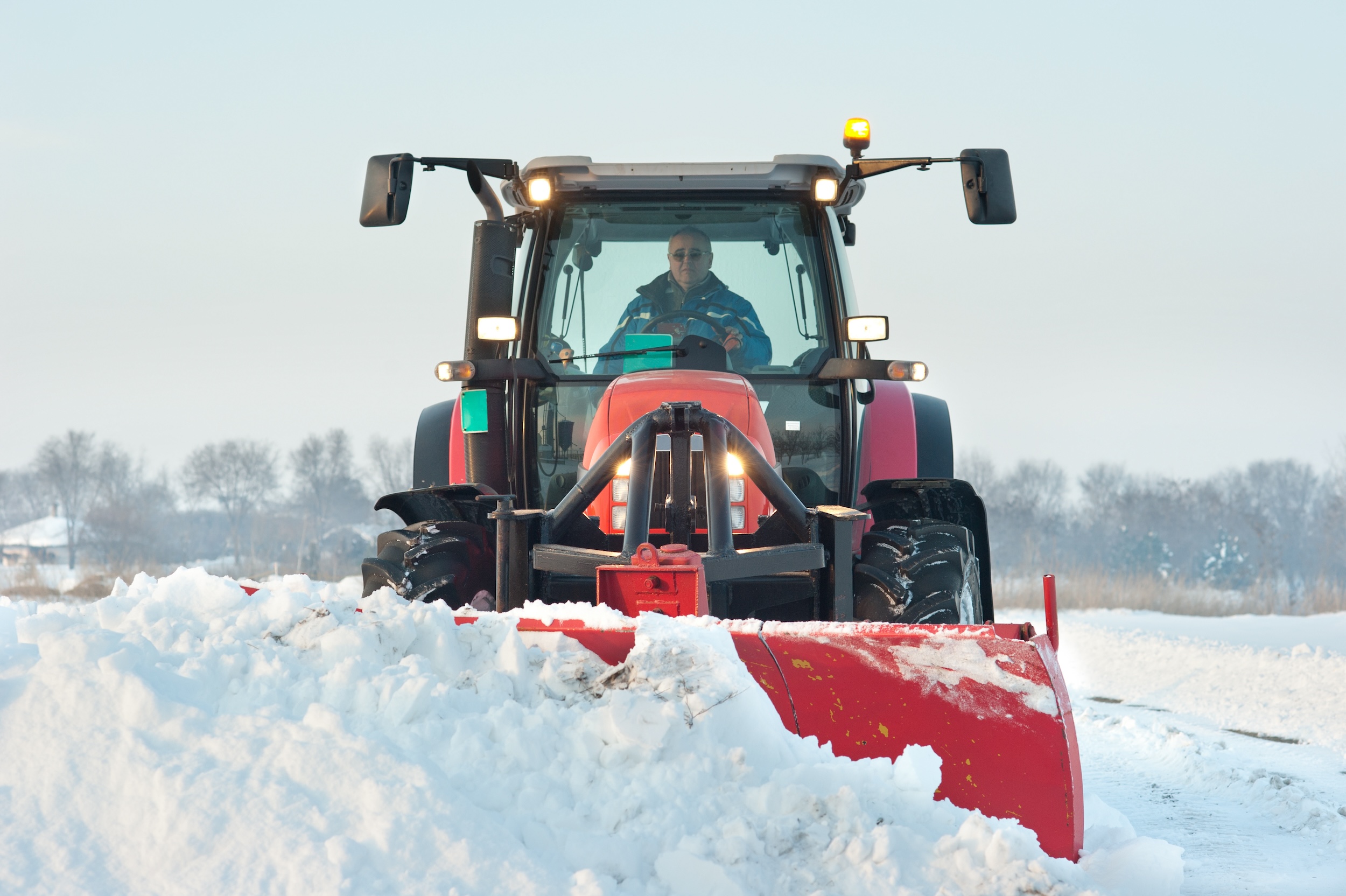
Making an informed decision requires understanding not just the benefits but also the limitations and challenges of electric tractor ownership. Here’s what you need to know about the potential drawbacks—and how to work around them.
1. Electric Tractors Can Have A Higher Upfront Purchase Price
Before incentives, electric tractors cost significantly more than comparable diesel models—typically $15,000 to $30,000 more depending on size and features.
How to manage it: Take full advantage of available incentive programs. EQIP can reduce costs by 50% or more, and federal tax credits provide an additional 30% reduction. Consider the total cost of ownership analysis rather than focusing solely on purchase price. When you calculate savings over 3-5 years, the payback period often makes the higher upfront cost manageable.
2. Electric Tractors Have Limited Runtime Compared to Diesel
While 4-14 hours of runtime covers many farm operations, it doesn’t match the flexibility of a diesel tractor that you can quickly refuel and return to work in minutes.
How to manage it: Structure your work schedule around available runtime. Plan intensive tasks during morning hours when batteries are fully charged. Consider charging during lunch breaks or other natural work pauses. For farms with extended daily operation requirements, maintain a hybrid fleet with both electric and diesel tractors.
Battery range loss in cold weather deserves special mention for northern and high-altitude farmers. Winter conditions can reduce battery performance by 10-40%. If you operate in cold climates, factor this seasonal reduction into your planning.
3. Charging Infrastructure Investment Is Required
Beyond the tractor purchase, you’ll need to invest in charging infrastructure. Electrical service upgrades combined with charging station installation can add $1,500 to $7,000 or more to your initial investment.
How to manage it: Plan for these costs upfront as part of your total investment. Some incentive programs specifically cover charging infrastructure costs. Consider solar integration from the beginning—while it increases initial investment, it can provide long-term energy independence and cost savings.
4. Limited Electric Tractor Dealer Network and Service Availability
The electric tractor market is still emerging, which means fewer dealers are certified to service these machines compared to conventional tractors. This can translate to longer wait times for repairs.
How to manage it: Choose manufacturers with strong service commitments and remote diagnostic capabilities. Many electric tractors can transmit performance data and error codes remotely, allowing technicians to diagnose issues before dispatching for service. Ask about mobile service options where technicians come to your farm.
5. Battery Replacement Costs Are A Long-Term Consideration
While batteries are warrantied for 5-8 years with expected lifespans of 15-25 years, eventual replacement could represent a significant expense—potentially $15,000 to $30,000 or more.
How to manage it: Understand warranty terms thoroughly before purchase. Factor potential replacement costs into your total cost of ownership calculations. Maintain battery health through proper charging practices and environmental storage when possible. Remember that battery technology is improving rapidly; replacement costs may decrease significantly by the time your battery needs replacing.
6. Horsepower Limitations Exist For Heavy-Duty Tasks
Current production electric tractors top out around 100-130 HP, with most models in the 70-75 HP range. This means electric tractors aren’t yet suitable for large-scale tillage operations, heavy seeding equipment, or substantial hauling applications that require 150+ HP.
How to manage it: Adopt a hybrid fleet approach. Use electric tractors for daily tasks like loader work, mowing, and material transport, where they excel. Maintain diesel power for heavy field work, including primary tillage and large-scale planting. This strategy allows you to capture operating cost savings where it’s most beneficial while maintaining the capability to handle demanding tasks.
7. Electric Tractors Have An Uncertain Resale Market
As an early adopter of electric tractor technology, you’re entering a market with virtually no established used equipment values.
How to manage it: Focus on maximizing the value you receive during ownership rather than banking on strong resale returns. Document all maintenance carefully and preserve battery health through proper management. Recognize that you’re making an investment in technology that serves your operation’s immediate needs while accepting some uncertainty about future resale values.
Total Cost of Ownership: Looking Beyond the Sticker Price
Understanding the true investment in an electric tractor requires looking beyond the purchase price to calculate costs over the machine’s entire lifetime. This total cost of ownership perspective often reveals that electric tractors are more affordable than they initially appear.
Operating Cost Comparisons
The most dramatic difference between electric and diesel tractors appears in hour-by-hour operating costs. Electric tractors cost approximately $2.50 to $3.75 per hour to operate, while comparable diesel tractors run $7.50 per hour or more.
Breaking down these costs reveals where savings occur. Electricity for charging costs roughly $0.10 to $0.15 per kWh. A tractor with a 100 kWh battery operating for 6 hours might consume $6-9 in electricity. By contrast, a 75 HP diesel tractor burns approximately 3.3 gallons per hour at $3.50 per gallon diesel, costing $11.55 per hour in fuel alone.
For a farm using a tractor 500 hours per year, the annual savings in operating costs alone can reach $1,875 to $2,500. Operations with higher annual usage could save $6,750 to $9,000 annually.
ROI Timeline Expectations
Given these operating cost savings combined with reduced maintenance, what’s a realistic payback period?
With incentives applied, many farmers are seeing payback periods of 3 to 5 years. Dairy operations with 1,800 hours of annual use are reporting payback periods as short as 1.5 to 3.5 years.
Calculate your specific payback: Subtract incentives from purchase price to determine your net investment. Multiply annual hours of use by per-hour savings ($4 to $5 per hour) to estimate annual operating cost reduction. Divide net investment by annual savings to find your payback period.
Long-Term Value Considerations Of Electric Tractors
The total cost of ownership advantage grows more compelling as years pass. Reduced maintenance costs compound over a tractor’s lifetime. Diesel fuel prices fluctuate significantly with global oil markets, while electricity rates tend to be more stable and predictable. For farms with on-site solar generation, electricity costs can be reduced even further.
Resale Value Considerations: What We Know (And Don’t Know Yet)
The electric tractor market is still so new that establishing definitive resale value projections is impossible. This uncertainty is an honest reality that must be acknowledged in your purchase decision.
Current State Of The Electric Tractor Market
The used electric tractor market essentially doesn’t exist yet. Most electric tractors have been in customer hands for less than two years, and few have been resold. This means we lack the historical transaction data that guides traditional tractor value assessment. As an early adopter, you’re accepting some uncertainty about what your electric tractor will be worth five or ten years from now.
Factors That Will Affect Resale Value Of Your Electric Tractor
When the used electric tractor market matures, several factors will likely prove critical in determining value.
Battery health and remaining warranty coverage will be paramount. Just as used electric cars are valued partly on battery condition, tractor buyers will assess remaining battery capacity and warranty protection. Hours of use and maintenance records matter for any tractor, but documentation becomes even more important for electric models. Battery warranty transferability will significantly impact desirability.
Protecting Your Investment
While you can’t control future market conditions, you can take steps to maximize the value your electric tractor retains.
Document everything meticulously. Keep detailed records of all maintenance, charging patterns, battery performance over time, and any issues encountered and resolved. Practice good battery care by following manufacturer recommendations for charging and storage. Store in climate-controlled conditions when possible, as extreme temperatures accelerate battery degradation.
Framework Without Predictions
Rather than offering value predictions we can’t support, consider this framework: You’re purchasing an electric tractor primarily for the value it delivers during your ownership—reduced operating costs, lower maintenance, improved working environment, and environmental benefits. View it as an operating investment that pays returns through cost savings rather than banking heavily on resale value.
Core Factors To Consider Before Buying An Electric Tractor
Making a confident electric tractor purchase requires careful evaluation of how this technology fits your specific operation. Consider these key factors:
Your Daily Operation Requirements—Start with an honest assessment of how you actually use tractors. Calculate typical hours of use per day and identify the specific tasks you need to accomplish. If you regularly need 10+ hours of continuous operation, current electric tractor limitations may not suit your needs. However, if your typical workday involves 4-8 hours of mixed tasks with natural breaks, this type of tractor can serve you well.
Your Farm’s Electrical Infrastructure—Evaluate your current electrical service capacity before committing to purchase. Does your existing service panel have the capacity to support tractor charging? What’s the distance from your electrical service to the location where you’ll charge the tractor? Schedule a consultation with a licensed electrician to assess upgrade needs and costs before finalizing your purchase decision.
Available Incentives in Your State—Research which programs you qualify for and understand application timelines. EQIP applications are batched annually, with deadlines typically falling between November and February. Federal tax credits have specific requirements and limitations. Work with your accountant to understand how various incentives apply to your tax situation.
Dealer Support and Service Network—Investigate dealer proximity and service capabilities. How far is the nearest certified service center for the electric tractor brand you’re considering for your farm? What’s the manufacturer’s reputation for customer support? Are mobile service options available?
Your Long-Term Fleet Strategy—Consider whether an electric tractor will be your only tractor on your farm or part of a mixed fleet. For most farmers, a hybrid approach makes sense: electric tractors handle daily tasks where operating cost savings are maximized, while diesel tractors remain available for heavy-duty applications and backup capacity.
Realistic Assessment of Limitations—Be honest about tasks that electric tractors can’t handle well with current technology. Large-scale field work, heavy tillage, and big hauling jobs exceed current electric tractor capabilities. If these tasks represent a significant portion of your tractor use, electric models aren’t ready to be your primary machine.
Whether It’s Electric Or Not, We’re Here To Help You Find The Right Tractor
Choosing the right tractor for your operation—whether electric, diesel, or a combination of both—requires careful consideration of your specific needs, budget, and operational requirements. The decision isn’t always straightforward, and there’s no one-size-fits-all answer.
At Hayden Outdoors, we understand that finding the perfect tractor means matching equipment capabilities to your unique farming operation. Our equipment marketplace connects you with sellers offering a wide range of tractors to meet diverse agricultural needs. Whether you’re exploring electric options or staying with proven diesel technology, we’re here to help you navigate your choices.
Browse available tractors and connect with sellers at Hayden Outdoors. Our platform makes it easy to compare options, ask questions, and find equipment that fits your operation and budget.
Find A Tractor For Your Farm
2026 Top Trends In Agriculture – Current Industry Advancements
As agriculture moves into 2026, the industry is facing one of its most transformative periods in decades, with a few key trends, technologies, and current agricultural advancements paving the way for future farming success.
Driven by shifting climate conditions, current rapid technological advancements in agriculture, evolving consumer demands, and a tightening labor market, today’s producers are navigating a complex landscape of opportunity and challenge.
For those who want to stay ahead, it’s no longer just about keeping up with what’s trending. It’s about strategically evaluating which innovations, practices, and investments align with their unique operation, goals, and region.
In this guide, we explore the most impactful agriculture industry trends of 2026, from current breakthrough technologies to shifting land values, infrastructure developments, and the future of regenerative practices.
Whether you’re a seasoned producer or new to the field, we’ll provide you with a comprehensive outlook of the top agriculture industry trends to help you ask the right questions and identify the current advancements, practices, and technologies worth investing in.
Table Of Contents
The Top Agricultural Land Buying Industry Trends
Land investment trends in the agriculture industry are shifting rapidly. Climate change, water access, and proximity to infrastructure are all influencing where farmers choose to invest.
Climate Migration: As weather patterns shift, some traditionally productive regions are seeing decreased viability, while other regions are becoming newly attractive. States in the Upper Midwest and parts of the Pacific Northwest are gaining attention due to moderate climates and growing seasons, resulting in them becoming a trending hub for agriculture.
Water Access: Water rights are becoming a major factor in land purchasing decisions. In arid states like Arizona and California, farms with senior water rights command premium prices. Smaller operations may struggle to compete here, while large-scale farms are investing in water-efficient agricultural technologies and pivoting toward the trend of growing less water-intensive crops.
Proximity to Markets: With rising fuel costs and supply chain vulnerabilities, many farmers are prioritizing land near processing facilities, co-ops, or urban markets. This agriculture industry trend benefits smaller, regional farms looking to reduce transport costs and serve local communities.
Is this agriculture industry trend right for my farm? Before buying farmland, ask yourself: Is this land future-proof against climate and water stress? And does it offer logistical advantages based on my operation’s size and market focus?
Find Land In Prime Farming Regions
The Top Trending Agricultural Technologies Of 2026

2026 marks a pivotal year for agricultural technology trends. With digital tools becoming more accessible and farm economics pushing for higher efficiency, farmers are looking to smart technologies and current agricultural advancements to drive productivity and resilience.
However, the adoption curve for the top agricultural technologies remains steep for some, especially smaller operations navigating cost and complexity barriers. These are the current trending agricultural technologies and advancements to keep an eye on:
1. Autonomous And Electric Equipment
When it comes to the top agricultural technologies of 2026, autonomous tractors and electric-powered machinery in particular are the current advancements gaining momentum in the industry, especially among large-scale growers.
These solutions reduce labor costs and environmental impact, encouraging leaner and more sustainable farming initiatives. That said, upfront investment and infrastructure (charging stations, maintenance know-how) remain limiting factors for this particular agricultural technology trend, making these current advancements limited to more established operations.
2. Precision Agriculture Platforms

When it comes to leveling the farming playing field, accessible analytics tools and real-time decision support systems are among the top agricultural technologies and current advancements truly making a dent in the industry.
These platforms, which are often powered by AI and cloud computing, are transforming how farmers gather, interpret, and act on data. Many now integrate seamlessly with existing equipment, sensors, and drones, offering intuitive dashboards that track key variables like soil moisture, nutrient levels, crop health, pest presence, and even financial inputs.
Real-time alerts and predictive recommendations are the current agricultural technological advancements that are helping growers fine-tune inputs such as irrigation or fertilizer, improving margins by avoiding waste and increasing yield.
Importantly, these trending agricultural technologies are becoming more affordable and user-friendly, currently opening up precision agriculture technological advancements to medium- and small-scale farming industry operations. Some systems also allow farmers to benchmark performance against anonymized regional data, offering new ways to evaluate success and make data-driven decisions.
Is this agriculture industry trend right for my farm? Ask yourself:
- Does this tool improve decision-making enough to justify its cost?
- Can my team use it effectively without extensive training?
- Does it integrate well with our existing machinery and software stack?
3. Predictive Tools And Data Co-ops
From weather forecasting to market timing, AI-driven predictive analytics are improving crop planning. Meanwhile, farmer-owned data co-ops are allowing producers to benefit from shared insights without ceding control.
Is this agriculture industry trend right for my farm? Evaluate whether your data privacy needs align with those of shared platforms before exploring this particular agricultural technology trend.
4. Biotechnology And Robotics
While biotechnology is not an entirely new agricultural technology, it has been an ever-growing trend in the industry. Gene-edited crops with enhanced drought or pest resistance are expanding across climates, while robotics for specialty crops (e.g., fruit and nut harvesting) is addressing labor shortages.
However, these trending agricultural technologies often require customized implementation, and not all regions have access to support networks for troubleshooting and maintenance. Additionally, access to biotechnology remains somewhat uneven across farm sizes and agricultural ventures.
Larger operations are typically better positioned to invest in biotech due to their scale, capital resources, and technical expertise. Smaller farmers may face higher entry costs, regulatory complexity, or limited access to agronomic advisors familiar with gene-edited varieties.
That said, new cooperative models and educational initiatives are beginning to close this gap, helping independent growers evaluate biotech options that make sense for their scale and crop portfolio and allow them to take advantage of these trending agricultural technologies.
5. Interoperability And Integration Platforms
As farms adopt a mix of new tools, integration platforms are emerging to connect data streams across equipment brands and systems. Look for solutions that prioritize open architecture and offer support during setup.
6. Livestock AI
From breeding optimization to health monitoring, AI is bringing precision to animal husbandry. Livestock operations should consider the value of early illness detection vs. the cost of system installation.
Is this agriculture industry trend right for my farm? Ask yourself: Is having access to current agricultural advancements that identify illness early and prevent widespread illness amongst other livestock something that I can afford and will save me money in the long run?
Workforce Trends In The Agriculture Industry
The labor shortage continues to challenge the agriculture industry, which is what is leading to automation being a core trend in the agriculture industry. As older farmers retire and fewer young people enter the field, the workforce dynamic is shifting.
As farmers looking to keep up with the agriculture industry trends, these are a few things to keep an eye on:
- Automation and Workforce Training: The workforce shortage has accelerated interest in automated machinery and robotics in the farming industry, resulting in a growing trend of farming operations adopting this particular agricultural technology. At the same time, workforce training programs are evolving to help workers learn how to operate and maintain this equipment, particularly in regions leveraging H-2A visa programs for seasonal labor.
- Generational Shift: Many farms are undergoing generational transitions. Younger farmers entering the industry are more likely to embrace trending digital agricultural technologies, sustainability, and alternative revenue models. This generation prioritizes flexible operations, diversified income, and environmental stewardship, shaping the future of American farming.
Is this agriculture industry trend right for my farm? Ask yourself:
- Is my operation ready to attract and retain tech-savvy talent?
- Can automation reduce my reliance on a shrinking labor pool without sacrificing output?
Critical Agriculture Infrastructure Trends To Keep An Eye On
Investments in infrastructure are central to both profitability and long-term sustainability, and current agricultural advancements and trends are addressing exactly that. Here are key infrastructure trends shaping the ag industry in 2026:
- Modern Irrigation: Drip and precision irrigation systems are trending agricultural technologies that are minimizing water use while boosting yields, especially vital in drought-prone areas.
- Rural Broadband: High-speed internet access is now a critical piece of technology for adopting precision agriculture and operating smart equipment. Grants and public-private partnerships are helping bridge the digital divide, bringing farmers into the modern age with current technological infrastructure, so they can run their agricultural operations effectively.
- Energy and Storage Solutions: Controlled environment agriculture (like greenhouses) requires robust energy setups, often paired with solar or wind. On-farm cold storage and grain bins are current agricultural advancements that are improving post-harvest handling and reducing waste.
- Equipment Retrofitting: Rather than replacing costly machinery, there is a growing agricultural trend in the industry of farmers retrofitting used equipment with sensors and smart components, extending the value of existing assets and making the most of their technology.
- Water and Energy Management: Current agricultural advancements and innovations in water storage and renewable energy are creating dual-use opportunities. For example, solar panels over irrigation canals or wind turbines on pastureland.
Farmers should explore available infrastructure grants and consider long-term ROI before taking advantage of any of these agriculture industry trends and current advancements.
Is this agriculture industry trend right for my farm? Ask yourself: Does this technological or machinery upgrade cut costs, boost yields, or open up new revenue channels?
Critical Policy And Regulatory Trends In The Agriculture Industry
Agricultural policy is evolving to support the adoption of technologies and environmental stewardship. Farmers tuned into these changes can capture financial incentives.
When monitoring policy-related agriculture industry trends, look out for:
- Incentive Programs: Programs like EQIP, CRP, and CSP offer payments for conservation practices. Tech-savvy farmers may also qualify for new state and federal grants promoting precision agriculture, making this a particularly appealing agricultural technology trend.
- Tax and Depreciation Rules: Updated tax codes now favor faster depreciation for ag equipment, making upgrades to more technologically-enhanced and capable equipment more financially attractive.
- State-Specific Incentives: States like Nebraska and Kansas are offering tax credits and infrastructure funding for modern ag practices, attracting both new and expanding operations.
- Trade Policy: Shifts in trade agreements and export restrictions are affecting crop selection. Farmers should monitor policy changes that influence global demand.
Before investing in any top agricultural technologies or current advancements, consider: Does this ag technology or practice qualify for incentive support, and what’s the payback period under current tax laws?
The Top Trends in Regenerative Agriculture
Regenerative agriculture is an industry trend gaining widespread momentum in 2026 for its dual focus on long-term profitability and ecological restoration. As producers face growing pressure to reduce their environmental footprint, all while maintaining yield and profitability, regenerative agriculture presents a compelling model that meets both economic and ecological goals.
So what does this particular agriculture industry trend look like?
- Environmental Payments: Farmers are increasingly able to monetize their stewardship through carbon credits, biodiversity offsets, and soil health-related ecosystem services. These payments often come from private carbon markets, corporate buyers, or government incentive programs. However, payout rates and eligibility requirements can vary significantly, so it’s important to look into these before taking advantage of this particular agriculture industry trend. To evaluate potential, farmers should assess: Does my operation already meet the criteria for credits? And which environmental outcomes are most valuable in my market?
- MRV Tools: Measurement, Reporting, and Verification (MRV) platforms are making it possible to quantify environmental improvements accurately. These tools often rely on satellite imagery, in-field sensors, and AI models to track carbon sequestration, nutrient cycling, or water retention. While some platforms are bundled with carbon programs, others charge setup and verification fees. Farmers should weigh the cost of verification against expected payouts before jumping on this agriculture industry trend and consider partnering with co-ops or aggregators to reduce overhead.
- Nature-Positive ROI: Many regenerative practices (e.g., no-till farming, cover cropping, diversified rotations, and rotational grazing) are showing strong returns over time, making them an excellent agriculture industry trend to consider adopting. These methods build soil organic matter, increase water retention, and reduce the need for synthetic inputs. While the payoff may take several growing seasons to fully materialize, regenerative methods often lead to more resilient yields and lower input costs in the long run.
- Tokenization and New Revenue Streams: Emerging financial technology solutions are allowing agricultural operations to tokenize their environmental impact, such as carbon credits or biodiversity improvements, and trade them on blockchain-based platforms. These current agricultural advancements are opening up new, potentially passive revenue streams for farmers willing to document and verify their stewardship efforts.
Despite the promise of the regenerative agriculture industry trend, there are challenges. Upfront investment in cover crop seed, fencing, or new grazing infrastructure can be substantial. Moreover, understanding and navigating verification processes for carbon programs can be daunting. However, early adopters who build systems now may enjoy first-mover advantages as credit markets mature and prices increase.
Regenerative agriculture is no longer a fringe practice. It’s one of the most impactful agriculture industry trends of 2026. By combining soil health with smart finance, it offers a viable way to future-proof operations while aligning with growing consumer and policy demands for sustainability.
Is this agriculture industry trend right for my farm? Ask yourself:
- Do I have the infrastructure or partners needed to verify and monetize my regenerative practices?
- Is my region equipped with the support services to help me scale this sustainably?
- How long am I willing to wait for environmental returns to show up as financial ones?
“Food Transparency” Agriculture Industry Trends

One of the biggest trends in the agriculture industry is being driven by consumers themselves. Nowadays, consumers are demanding more transparency about where their food comes from, and farmers who want to get ahead of current trends are responding. These are the ways they’re taking advantage of this trend:
- Blockchain and Internet of Things (IoT): These technologies and tools create end-to-end supply chain visibility, tracking food from seed to shelf, providing a level of transparency in the agriculture industry that previously didn’t exist.
- Direct-to-Consumer Sales: Technology enables farmers to bypass middlemen and sell directly to consumers, capturing more profit from their agricultural endeavors.
- Brand Storytelling: Farms that highlight their methods, values, and sustainability practices are building brand loyalty and commanding premium prices.
- Certifications and Traceability: Labels like USDA Organic and Animal Welfare Approved are increasingly important for discerning buyers.
Is this agriculture industry trend right for my farm? Ask yourself:
- Can my operation support transparent practices that justify premium pricing?
- What tools are needed to document and share our story effectively?
Smart Agricultural Investments: What Trends And Technologies Farmers Are Prioritizing in 2026

Despite all the buzz around new and trending agricultural technologies and advancements, these trends in particular are the highly strategic investment decisions farmers are currently making:
- Adapting To Economic Pressures: High input costs and volatile commodity prices are pushing farmers to prioritize ROI and operational efficiency, often via new technologies.
- Retrofit vs. Replace: For those not investing in new agricultural technologies, many are retrofitting equipment rather than replacing it, focusing on upgrades that offer faster payback.
- Capital Access: Financing trends show increased interest in flexible loans and equipment leasing, especially for mid-sized agriculture operations.
- Selective Investment: Farmers are investing in tools that solve specific pain points (e.g., water use, labor savings, or real-time data), rather than buying into broad tech ecosystems or generalized trends. Precision is key.
- Investing In The Next Generation: Institutional knowledge and best practices are something older farmers are prioritizing passing down to younger generations of farmers, so they can feel equipped to take advantage of the trends and technologies that genuinely make sense, and leave the others behind.
Which agriculture industry trend is right for my farm? Ask yourself:
- Can my operation support transparent practices that justify premium pricing?
- What tools are needed to document and share our story effectively?
- Will this investment solve a problem I face daily? And can I measure the payback within two to three seasons?
How Agritourism Is Redefining Agriculture Industry Trends

Agritourism, where farms invite the public onto their land for recreational, educational, or hospitality experiences, is an agricultural trend that is redefining how farmers engage with consumers and generate income.
This trending segment of the agriculture industry blends traditional production with rural tourism, offering everything from farm stays and U-pick produce to weddings, tours, and seasonal festivals.
More than a side business, the agritourism trend is becoming a strategic way for farmers to diversify income, especially as margins tighten in commodity markets. It’s also helping the next generation of producers build community-focused brands and add value to their land without intensive cropping.
Here’s everything you need to know about this particular trend in agriculture:
- Diversified Income: Activities like farm stays, U-pick orchards, and educational tours are opening new income streams, especially for smaller operations.
- Sectors Leading the Way: Vineyards, orchards, flower farms, and hobby farms are especially well-suited for agritourism.
- Brand Building: The agritourism trend allows farmers to build direct relationships with consumers, increasing trust and brand awareness.
- Land Use Strategy: Agritourism doesn’t require full-scale production, making it a great trend for farmers with smaller parcels or scenic landscapes to capitalize on.
Is this agriculture industry trend right for my farm? Ask yourself:
- Does my location support tourism?
- Do I have a compelling story or product to share?
Get Ahead Of 2026’s Agriculture Industry Trends. Find Your Perfect Plot Of Farmland.
Whether you’re looking for land to implement cutting-edge precision ag, establish a regenerative operation eligible for carbon credits, or create an agritourism destination, Hayden Outdoors connects you with farmland matched to your vision, so you can get ahead of current agriculture industry trends.
Our experienced agents guide you through every step, from market insights to financing strategies, to ensure your land investment supports the agriculture trends that matter most to you.
Start exploring available farmland listings or connect with a local expert to bring your 2026 ag vision to life.
Find Your Next Plot Of Farmland


 866-741-8323