
×

Sign in
Sign in to save favorite properties and equipment, save your search parameters and more
Don’t have an account yet? Sign Up Now
Sign up
Already have an account? Login Now


 866-741-8323
Sign in
Sign in to save favorite properties and equipment, save your search parameters and more
Don’t have an account yet? Sign Up Now
Sign up
Already have an account? Login Now
866-741-8323
Login
Sign in
Sign in to save favorite properties and equipment, save your search parameters and more
Don’t have an account yet? Sign Up Now
Sign up
Already have an account? Login Now
Sign in
Sign in to save favorite properties and equipment, save your search parameters and more
Don’t have an account yet? Sign Up Now
Sign up
Already have an account? Login Now
Few things in life compare to a full day on horseback with good country ahead of you. There’s a connection that’s crafted over time between horse and rider, across miles of trail and hours in the saddle, and the right horseback riding equipment and gear is what makes all of that possible from day one.
Get the horseback riding gear right, and your horse moves comfortably, communicates clearly, and stays sound. You ride with confidence, stay safe in situations that would otherwise catch you off guard, and spend your energy on the ride instead of managing problems that the right horseback riding equipment would have prevented.
Most horse riding gear lists hand you an equipment checklist and call it a day. We’re going to go a bit deeper. We cover every essential item, explain what each piece actually does, and give special attention to the trail and outdoor gear that most horse riding equipment guides leave out entirely. We’ll also tell you what to prioritize first, what a good fit looks like, and how to care for your equipment so it lasts.
Pro Tip: If you’re still in the process of selecting your horse, our guide to buying your first horse is worth reading before you build out your riding gear list.
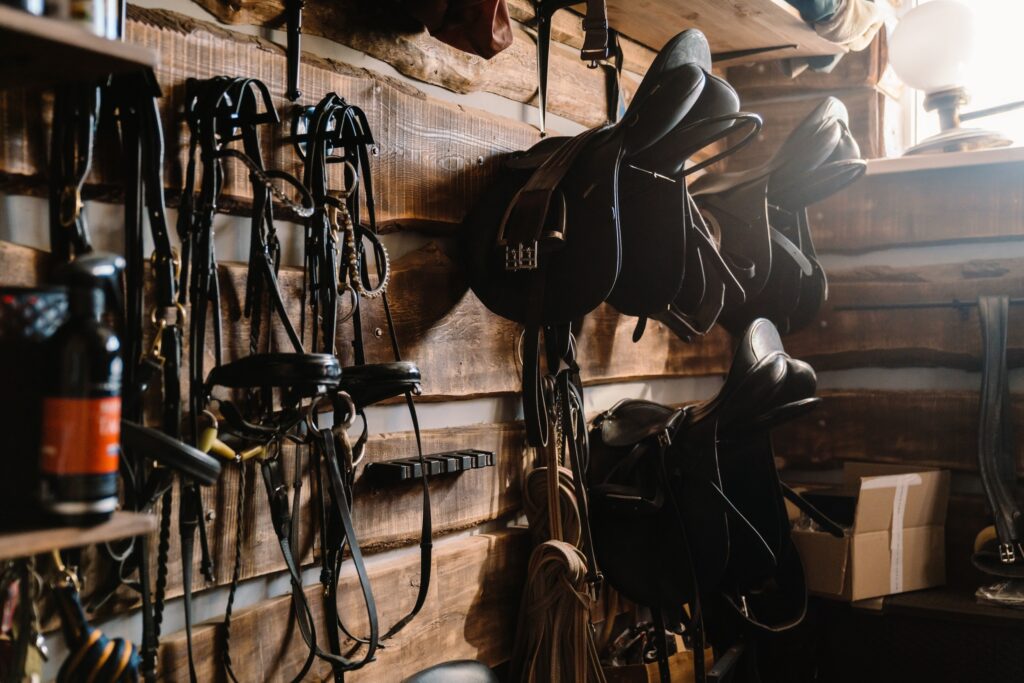
We can really break horse riding equipment and gear into two core categories:
Both sides of that list matter, and both have real consequences when something is wrong.
A saddle that doesn’t fit causes pain. A horse in pain acts out. A helmet that isn’t properly certified offers less protection than it looks like it does. Boots without the right heel can trap your foot in a stirrup. These aren’t abstract concerns. They’re the practical reasons why understanding your horse riding gear before you buy it is worth the time.
Horse riding gear and equipment also vary by discipline. English and Western tack are different. Trail and outdoor riders have needs that arena-focused horseback riding equipment guides rarely touch on. Our guide covers all of it, with particular depth on the trail and backcountry horseback riding equipment that tends to get left off other gear lists entirely.
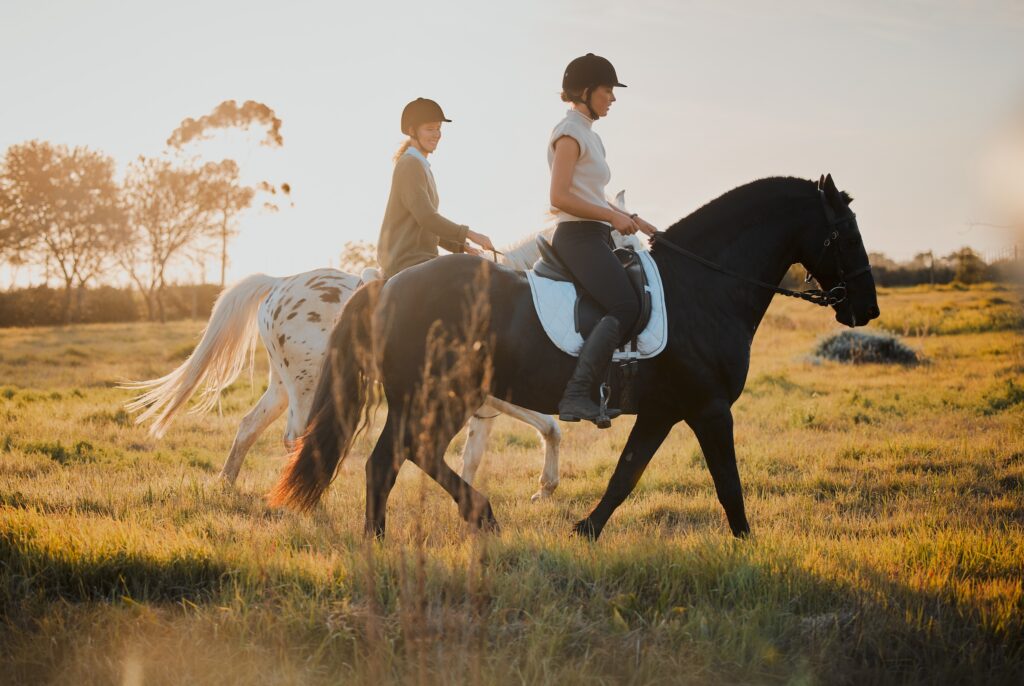
Safety gear is the first stop on any honest horse riding equipment list. This is where fit and quality matter most, and where cutting corners tends to have the most serious consequences.
Helmet: Your helmet is the most important piece of horse riding equipment you own. Look for ASTM F1163 certification and the SEI mark, which tells you the helmet has been independently tested to that standard. A bike helmet doesn’t qualify. The impact forces around horses are different from cycling falls, and an equestrian helmet is built around those specific dynamics.
Fit is just as important as certification. The helmet should sit level, roughly two finger-widths above your eyebrows, and should not shift when you push against it in any direction. Get it fitted by someone who knows what they’re looking at, and replace it after any significant impact, even if the shell looks fine. The foam inside can be compromised without showing visible damage.
Body Protector And Air Vest: Body protectors and air vests are pieces of horse riding equipment that both protect your torso in a fall, but they work differently. A body protector is a foam-padded vest that absorbs and distributes impact on contact. It’s always on and always working. An air vest inflates automatically with CO2 when the tether connecting it to the saddle pulls free during a fall, and it wraps the rider in cushioning in the moment it’s needed most.
A lot of serious trail and backcountry horseback riders wear both pieces of equipment. If you’re choosing just one to start, a body protector rated to BETA Level 3 or higher covers most situations well.
Reflective Equipment And Gear: This one gets left off most horse riding equipment lists, but it belongs in your gear lineup if you ride early mornings, at dusk, or on trails that run near roads. Reflective vest overlays for riders and reflective strips for horses are inexpensive additions to your horseback riding equipment setup and can prevent the kind of accidents that have nothing to do with horsemanship at all.
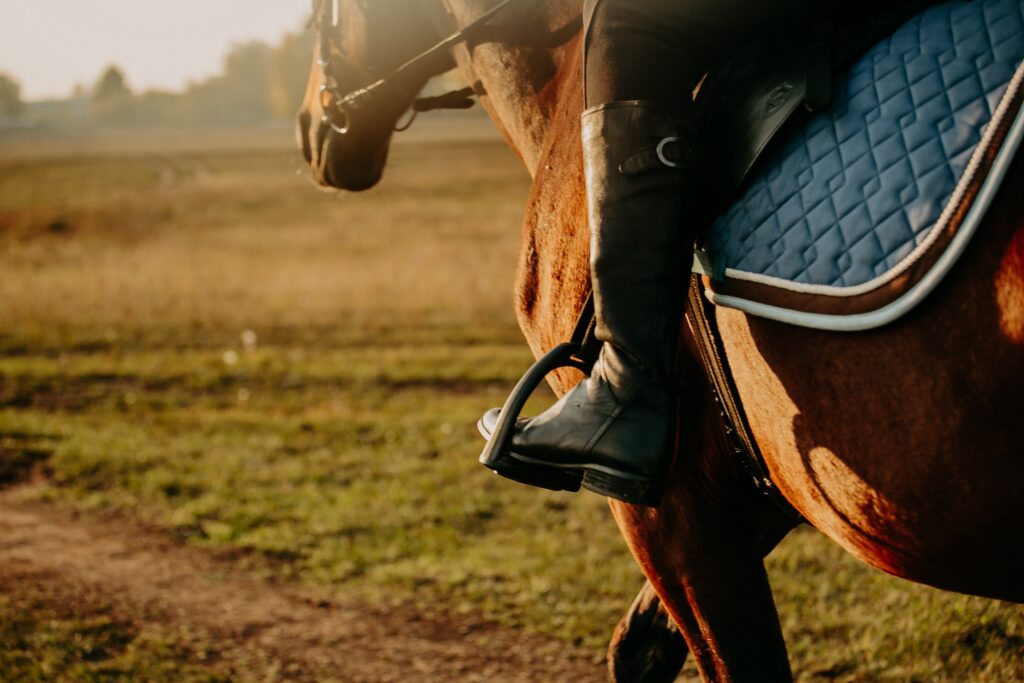
Riding Boots: When it comes to essential horse riding gear, it’s worth noting that a standard work boot or hiking boot isn’t a substitute for a riding boot. The defining feature of purpose-built horseback riding boots is the heel, typically at least one inch, which prevents your foot from sliding through the stirrup and getting caught in a fall. That’s one of the most important design elements in this piece of horse riding gear.
Tall boots are traditional for English riding and offer more leg coverage. Paddock boots paired with half chaps are common in Western and trail contexts where you spend more time moving around on foot. Either way, fit snug through the heel with room to flex through the ankle.
Breeches And Riding Pants: Riding-specific pants are cut to remove the inseam bulk that causes friction where your leg contacts the saddle. Full-seat breeches add a grippy panel for stability. Western riders typically reach for riding jeans, which accomplish the same thing with a different look. Whatever you choose, loose fabric at the inner leg is the enemy. It creates chafing fast and gets uncomfortable even faster.
Gloves: Riding gloves protect your hands from blisters on longer rides, improve grip on the reins, and keep your hands working in cold weather. A well-fitted glove lets you feel what the reins are doing while taking the wear off your skin. It’s a small piece of horse riding gear, but you’ll notice when you don’t have them.
Weather-Appropriate Horseback Riding Outerwear: Horseback riders who spend time riding on the trails need to think about outdoor-appropriate outerwear gear more seriously than arena riders do. A packable rain shell, layering pieces for cold mornings, and UV-protective tops for summer riding all earn a spot on a complete horseback riding equipment list. Weather moves fast in open country, and being caught unprepared on horseback is a different problem than being caught on foot.
Tack is where the majority of your horse riding equipment budget goes, and where the gear decisions you make have the most direct effect on how the horse moves, responds, and stays healthy over time.
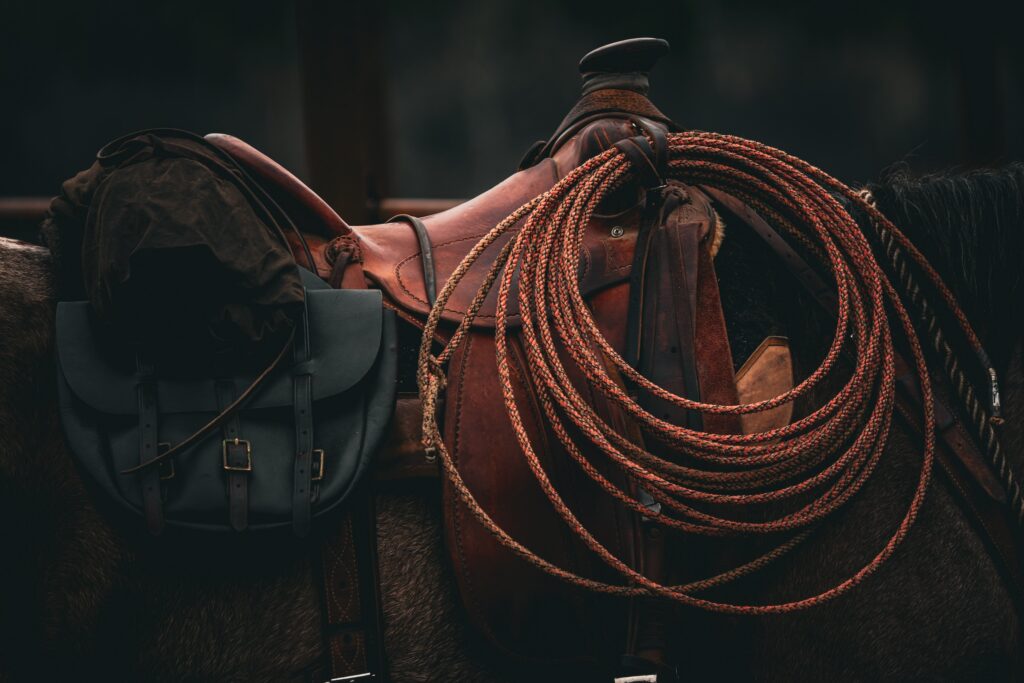
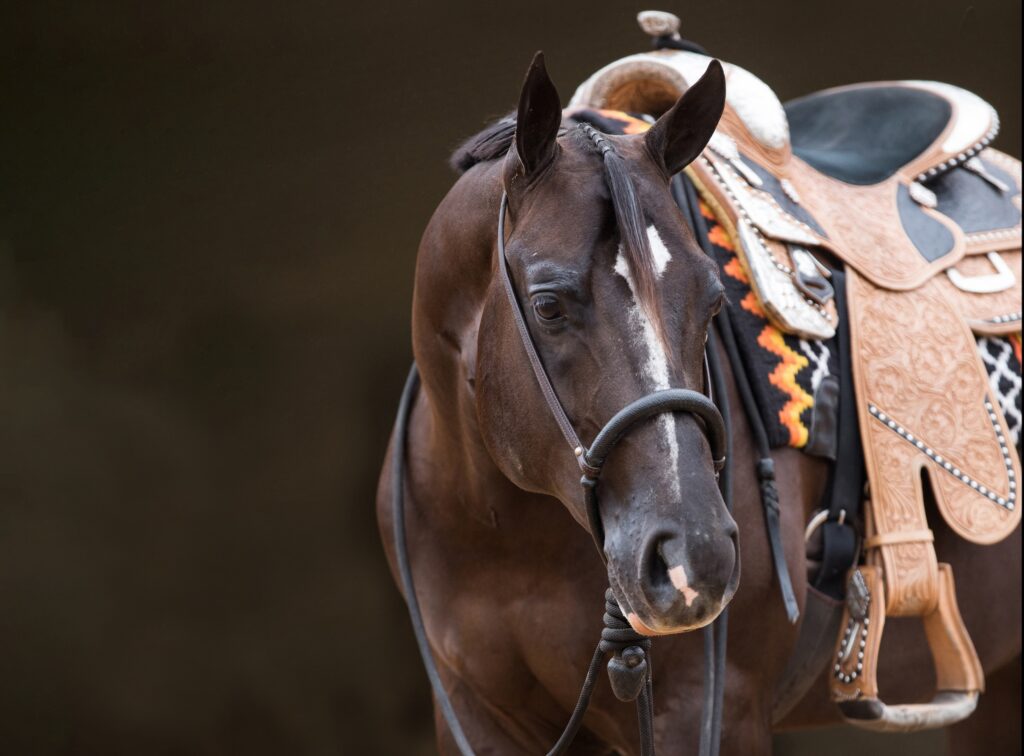
Saddle: The saddle is the foundation of any solid horse riding equipment list. A well-fitted saddle distributes weight evenly across the horse’s back, allows the shoulders to move freely, and sits level without rocking.
There are two things to understand when evaluating saddle fit: tree width and gullet clearance. The tree is the internal frame of the saddle, and it needs to match the width of your horse’s back. If it’s narrower than it should be, it can pinch the withers. If it’s too wide, the saddle drops forward and loads the spine. The gullet is the channel along the underside of the saddle, and it needs to clear the horse’s spine completely from front to back. If you’re not sure, a professional saddle fitter is worth investing in. Getting saddle fit wrong costs you in the horse’s soundness and behavior over time.
Saddle Pad: Every ride starts with a saddle pad layered under the saddle, cushioning the contact point between the tree and your horse’s back. It cushions contact, pulls sweat away, protects the saddle from dirt and oils, and helps manage heat. A good pad doesn’t fix a poorly fitted saddle, but it’s still an important part of a complete horse riding equipment setup.
Pad thickness and material depend on discipline and climate. Contoured pads work better for horses with high withers. Wool pads breathe well and handle moisture in variable conditions. Check the underside regularly for embedded grit and debris. Even through padding, that material creates pressure points.
Girth Or Cinch: When it comes to horse riding equipment, the girth in English riding and the cinch in Western riding do the same job: wrapping around the horse’s barrel to hold the saddle in place. It’s a straightforward piece of horse riding equipment with a job that matters.
Check the fit every time you tack up. A loose girth allows the saddle to shift. Overtightening too fast can cause discomfort and defensive behavior. Tighten gradually, walk the horse for a few minutes, then check and adjust again.
Bridle, Bit, And Reins: The bridle is a piece of riding equipment that fits over the horse’s head and holds the bit and reins in place, connecting you to your horse through the most direct communication channel in riding. English bridles and Western headstalls are built differently, and bitless options like hackamores serve specific horses and training situations.
Bit selection is its own deep topic, but the practical starting point for most riders building their first horseback riding equipment setup is a simple, softer bit suited to where the horse is in its training. If you’re unsure, ask a trainer or an experienced tack shop staff member rather than guessing.
Reins come in leather, rubber, and synthetic materials. Longer split reins are standard for Western and trail riding. Shorter loop reins are more common in English contexts. Whatever style suits your riding, the reins need to be long enough to give relief when the horse needs it and short enough to maintain real contact when you want it.
Halter And Lead Rope: The halter and lead rope come before everything else on the horse riding equipment list. Before the saddle is on, before the bridle is fitted, you need a way to catch, lead, and tie your horse safely. A well-fitted halter gives you that control on the ground. Bring a halter and lead rope on trail rides, too. There are plenty of situations out on the trail where having them accessible is not optional.
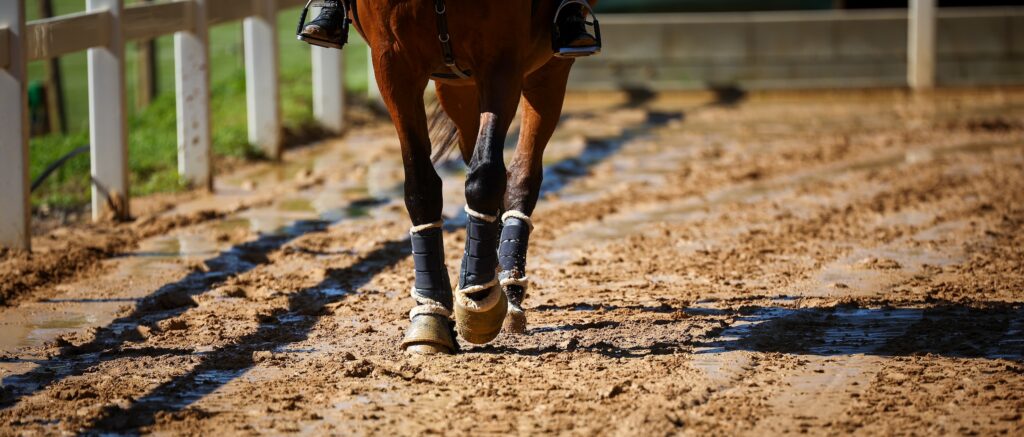
Bell Boots: Bell boots fit over your horse’s hoof and protect the heel bulbs from overreach injuries, which happen when a hind foot strikes the back of a front foot during movement. Horses with long strides, horses working on uneven terrain, and horses in any kind of active work benefit from this piece of gear.
Splint Boots And Sport Boots: Splint boots protect the cannon bone and fetlock from interference strikes, where one leg contacts another during movement. Sport boots add support alongside protection and are common in disciplines that demand lateral movement and quick direction changes. For trail riders, a lightweight protective boot gives a practical middle ground without the bulk of full competition gear.
Leg Wraps: Leg wraps cover some of the same ground as boots and are also used for shipping, stall rest, and therapeutic support. They require more skill to apply correctly than boots do. An improperly applied wrap creates pressure problems instead of preventing them. For most recreational and trail horseback riders, boots are the more practical gear choice. Leg wraps become more relevant as your horsemanship develops and you have specific support needs to address.
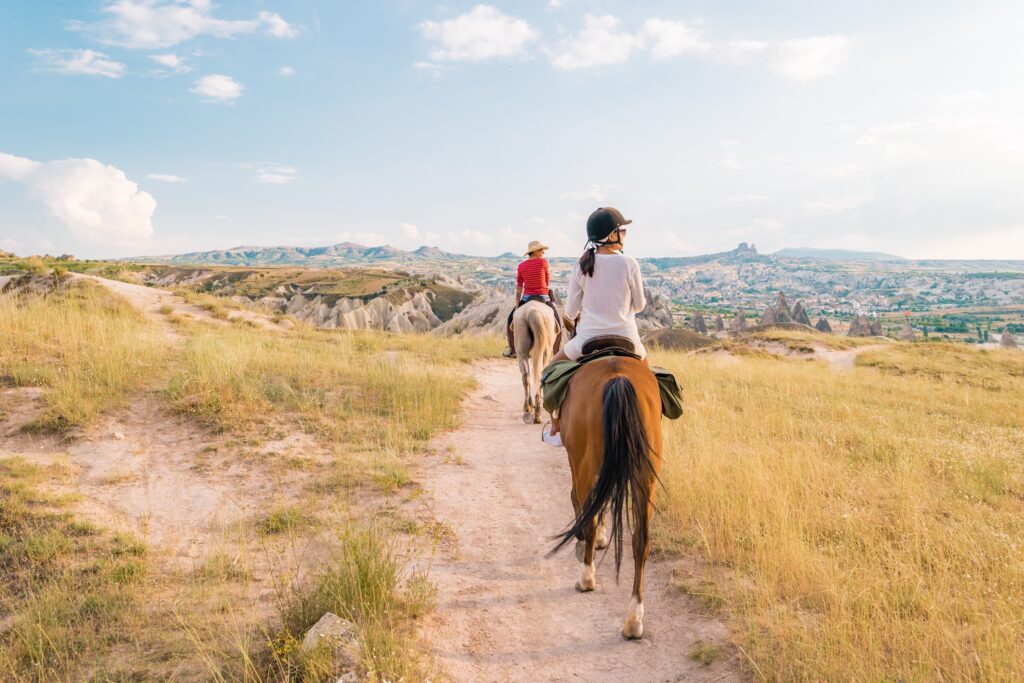
If you ride off property or in the backcountry at all, this section of the horse riding equipment list is where the standard guides fall short. Arena-focused horseback riding equipment guides simply don’t address what happens when you’re five miles from the trailer and something goes sideways. This gear does.
Saddlebags And Horn Bags: Saddlebags are essential horse riding equipment the moment you leave your starting point for anything more than a short trek. They carry water, food, a first aid kit, rain gear, a hoof pick, and whatever else the day might require. Horn bags attach to the saddle horn for quick-access items you want to reach while still mounted. Cantle bags handle heavier loads at the rear. A good saddlebag system sits balanced and secure at a trot and over uneven ground.
Breastcollar And Crupper: On flat arena ground, a saddle stays put with the girth alone. Add any real terrain, and that can change. A breastcollar connects the front of the saddle to the girth and keeps the saddle from sliding back on uphills. A crupper runs from the back of the saddle under the tail and prevents it from sliding forward on descents. Both are standard horse riding equipment for anyone riding in hilly or mountainous terrain. If your horse rides include elevation change, a breastcollar at a minimum belongs on your horseback riding equipment list.
Trail First Aid Kit: A purpose-built trail first aid kit is horse riding gear you pack, hoping you never open it. The kit should cover wound care for the horse (antiseptic, gauze, self-adhesive bandage wrap), basic rider care (bandages, pain reliever, emergency contacts), and a hoof pick for debris issues mid-ride. A compact, dedicated kit beats improvising from whatever happens to be in your saddlebag.
Hoof Pick: A hoof pick lives in the barn, and it’s a piece of gear that also needs to live on your horse or in your saddlebag every time you leave the property to go riding. Rocks and packed debris lodge in the hoof during trail rides. A horse that picks up a stone and goes unaddressed can end up lame miles from the trailer. This is one of the smallest but most impactful pieces of horse riding equipment on this list.
Rain Gear And Layering: Weather in open country can shift rapidly, and being caught on horseback in a cold downpour without rain gear can become quite the mess. A packable waterproof shell that fits over your riding clothes is non-negotiable horse riding equipment. Add layering pieces for cold mornings and a lightweight base layer for summer riding, and you’re covered for most of what the outdoors throws at you.
Trail Tools: Riders in timbered country should think seriously about carrying a compact folding saw or hand axe as a part of their horse riding gear lineup. This is specialized horse riding equipment that rarely makes it onto standard gear lists, but experienced backcountry riders carry it as a matter of course. A downed tree across a narrow trail with a horse is not a minor inconvenience.
Headlamp Or Helmet Light: If your ride has any chance of extending past daylight or starting before sunrise, a headlamp or helmet-mounted light is practical horse riding gear. It keeps you visible to others, helps you navigate terrain safely, and gives you light to handle the horse and check tack in low-light conditions. Clip-on lights designed for equestrian helmets are a clean solution that doesn’t interfere with your riding.
You won’t want to get in the saddle without these.
Once the essentials are in place, this horseback riding equipment rounds out your setup.
This tier of horse riding gear and equipment becomes relevant as your riding develops and your needs get more specific.
Even if you have the right horse riding equipment and gear, the wrong fit creates its own set of problems. Here’s what to look for across the pieces that matter most:
Quality horse riding gear and equipment lasts for years when it’s taken care of. Neglect it and the timeline shortens, potentially creating safety problems before creating visible ones.
Leather saddles, bridles, and girths need regular cleaning and conditioning. Wipe down leather with a lightly damp sponge and a pH-balanced cleaner after a few rides or whenever it is visibly dusty or sweated through. Follow with a conditioner to keep the leather supple. Dry leather cracks and gets brittle, and brittle leather fails. Every six months, do a more thorough cleaning and inspect every stitched joint, buckle, and billet strap for wear.
Saddle pads pick up sweat, hair, and dried dirt from every ride. That buildup becomes abrasive against the horse’s back over time. Shake or brush pads out after each ride and wash them on a regular schedule according to the manufacturer’s instructions. Dry them completely before storage. A damp pad in a closed tack trunk develops mildew fast, and that’s problematic for both the material and the horse.
Buckles, snaps, D-rings, stirrup leathers, and billets are the structural connection points of your horse riding equipment. Check them regularly for corrosion, deformation, and cracking. A buckle with a hairline fracture in the frame looks fine until it doesn’t. Replace anything that shows structural wear.
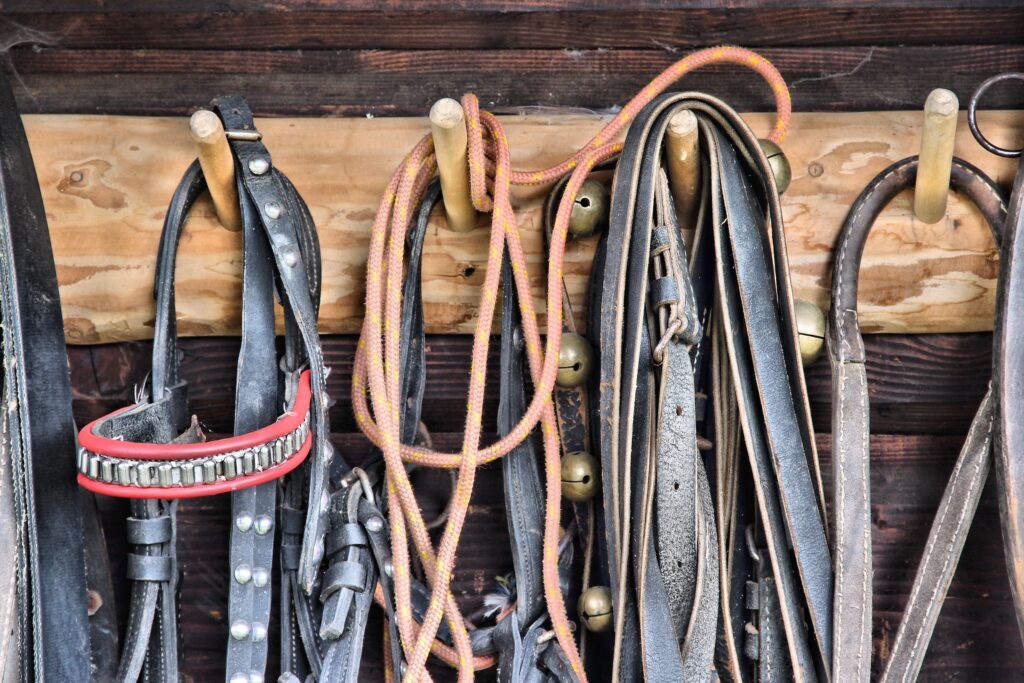
Saddles belong on proper saddle racks that support the tree and keep it off the ground. Bridles hang best from rounded pegs that hold the leather in shape. Keep your tack room dry, out of direct sunlight, and at a reasonably stable temperature to protect your horse riding equipment. Heat and moisture break down leather and delaminate synthetic materials quickly.
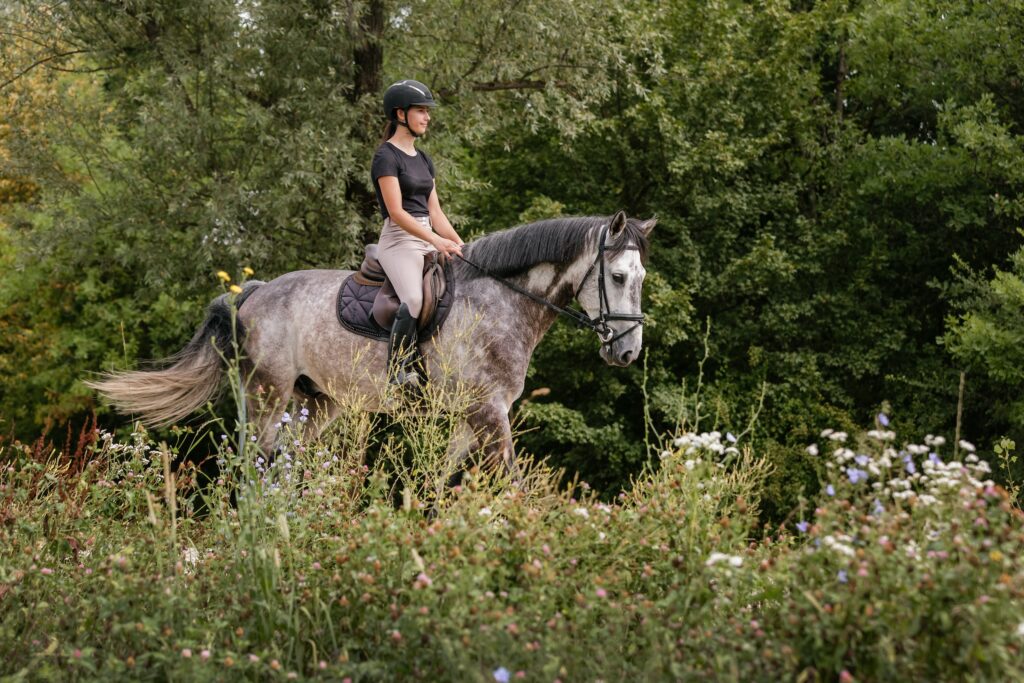
Once your horse riding equipment is dialed in and you have the right horse to adventure with, the next move is finding land that’s worth riding on. Room to move. Established trails. Pasture and infrastructure that makes keeping horses practical, rather than a constant logistical challenge.
That kind of equestrian property exists across the country, and here at Hayden Outdoors, we know where to find it. From working ranch land with existing horse facilities to private acreage with direct trail access, our agents understand what makes a property genuinely suitable for horses, beyond just the square footage.
Browse our current equestrian property listings and find land that matches the investment you have already made in your horseback riding.
View Available Equestrian Properties
 Back to Blog