
×

Sign in
Sign in to save favorite properties and equipment, save your search parameters and more
Don’t have an account yet? Sign Up Now
Sign up
Already have an account? Login Now


 866-741-8323
Sign in
Sign in to save favorite properties and equipment, save your search parameters and more
Don’t have an account yet? Sign Up Now
Sign up
Already have an account? Login Now
866-741-8323
Login
Sign in
Sign in to save favorite properties and equipment, save your search parameters and more
Don’t have an account yet? Sign Up Now
Sign up
Already have an account? Login Now
Sign in
Sign in to save favorite properties and equipment, save your search parameters and more
Don’t have an account yet? Sign Up Now
Sign up
Already have an account? Login Now
 Back to Blog
/
Equipment, Land and Habitat Management /
Back to Blog
/
Equipment, Land and Habitat Management /
There’s a quiet revolution happening across American farmland. Farmers who once measured their success by how thoroughly they turned the soil are rethinking everything, reaching instead for no till farming equipment as a path toward a more productive, more resilient, and more sustainable operation.
Input costs are climbing. Soil quality on intensively tilled ground is declining over time. And the pressure on farmers to produce consistently, year after year, without degrading the land beneath their feet, has never been greater. If you’ve been asking whether there’s a better way, no till farming equipment is worth looking into.
This guide covers what no till farming is, which farming operations are best suited for it, the honest pros and cons, the core equipment involved, how to acquire and adapt that equipment, and what it takes to keep it running well.
Whether you’re a seasoned farmer exploring a transition or a land buyer evaluating a property’s agricultural potential, we’ll give you a grounded, practical understanding of no till farm equipment and what it means for the land you work.
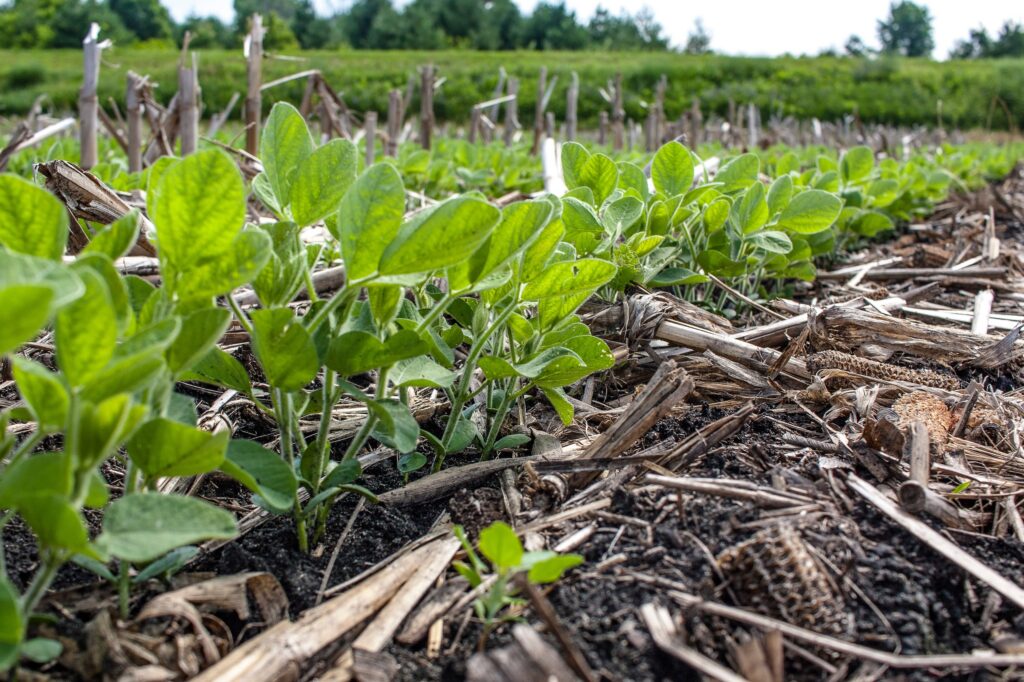
No till farming, sometimes called zero tillage or direct seeding, is an approach to crop production that eliminates the need to mechanically disturb the soil before planting.
In a conventional system, farmers plow, disc, and work the ground repeatedly to prepare a seedbed, kill existing weeds, and incorporate residue from the previous crop. No till farming skips those passes entirely. Instead, specialized no till farming equipment places seeds directly into undisturbed soil, cutting through crop residue and surface material with minimal ground disturbance.
The idea isn’t new. No till farming gained significant momentum in the United States starting in the 1970s, when broad-spectrum herbicides became widely available and gave farmers an alternative tool for weed control that didn’t rely on tillage. Since then, adoption has grown substantially.
Today, roughly a quarter of US cropland is managed using zero tillage methods and equipment, and the practice has been described in agricultural literature as one of the most significant shifts in modern farming.
The equipment that makes no till farming possible is purpose-built for a very different task than conventional tillage tools. In conventional farming, a plow, disc harrow, or field cultivator is designed to aggressively disturb the soil across a wide swath.
No till farm equipment, by contrast, is engineered to do the opposite: open a precise, narrow slot in undisturbed ground, place seed at the correct depth, and close the furrow behind it, all while leaving the surrounding soil structure intact.
This fundamental difference in purpose drives every design decision. No till drills and planters are heavier than their conventional farming equipment counterparts because they must push through crop residue and firm, untilled soil. Their coulters, openers, and press wheels are built to take on tougher conditions than machines designed for a freshly worked seedbed.
And the way these pieces of no till farming equipment interact with the land is categorically different. Where a conventional tillage tool is meant to destroy existing structure, no till farming equipment is built to work with it.
This difference is important because the structure of undisturbed soil is one of its most valuable assets. When soil is tilled repeatedly, it loses the network of pores, channels, and aggregates that allow water to move through it, oxygen to reach plant roots, and microorganisms to do their work. No till farm equipment preserves that structure season after season, which is a central reason why the long-term trajectory of zero tillage fields tends to look very different from conventionally tilled ground.
The soil health and land value benefits of no till farming are well-documented. Fields managed over several years with zero tillage equipment generally develop higher water-holding capacity than conventionally tilled fields, which matters enormously in drought-prone regions where water availability is tied directly to crop survival.
No till farming and the equipment that’s used for it can also reduce soil erosion, which helps keep sediment out of nearby waterways and protects water quality. Organic matter from previous crops stays on and in the soil rather than being buried or dispersed, feeding microbial life and building long-term fertility.
For landowners and hunters, the wildlife habitat benefits of no till farming are quite compelling. The residue and cover left on the soil surface by no till farming systems provide year-round habitat for birds, beneficial insects, and small mammals. Research has found that zero tillage fields support significantly more bird species and earthworm populations than conventionally tilled ground, making no till farm equipment a genuine tool for land stewardship, not just crop production.
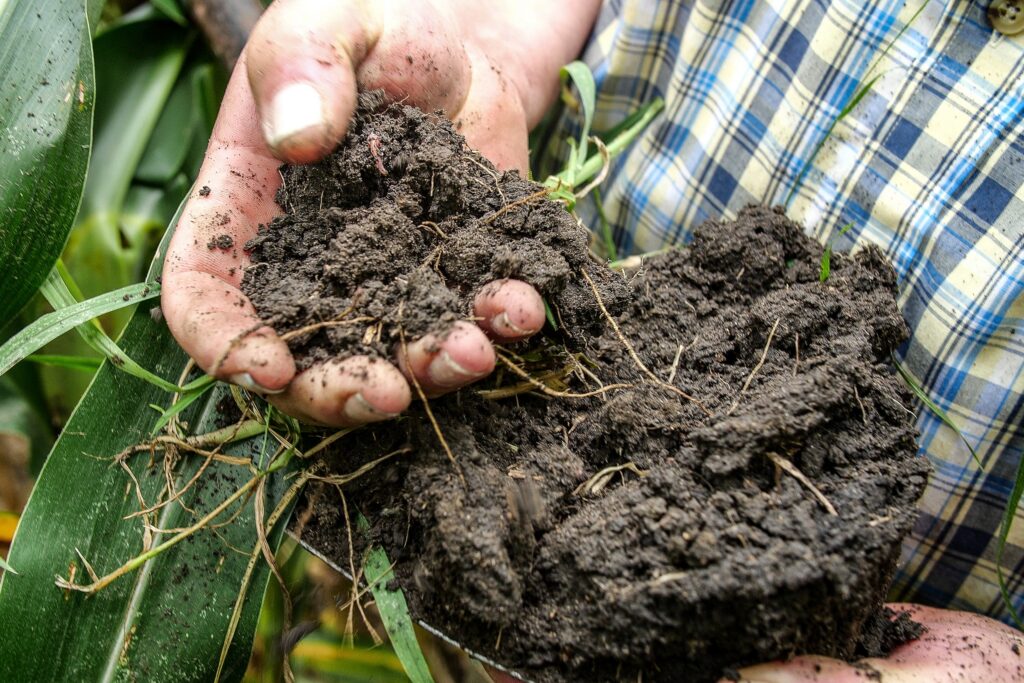
No till farming equipment is not a universal fit for every operation, and understanding where it performs best will help you determine whether it makes sense to implement zero tillage on your land.
Soil type plays a significant role. Well-drained soils with good natural structure tend to transition to no till farming systems more smoothly than heavy clay soils that are prone to compaction and slow to drain. That said, no till farming equipment has been successfully implemented across a wide range of soil types when managed carefully. In clay-heavy ground, the transition to zero tillage may require more patience and a stronger emphasis on cover crops to build the biological activity needed to maintain pore structure without mechanical intervention.
Crop rotation is another key factor. No till farming equipment performs well in diverse rotations that break pest and disease cycles and reduce weed pressure over time. Corn and soybean rotations, small grains like wheat and barley, and forage crops are all commonly grown with no till farm equipment. Monoculture systems, on the other hand, can make weed and residue management more challenging without tillage as a reset tool.
Terrain matters too. Sloped, erosion-prone ground is often where no till farming equipment provides the most visible benefits, since the residue cover and undisturbed soil structure dramatically reduce the movement of soil and nutrients during rain events. Flat, highly productive ground may see subtler benefits from no till farming equipment use in the short term, but still gains in the long run through the improved soil health of a zero tillage process. Extremely rocky or irregular terrain can create challenges for some types of zero tillage equipment, particularly equipment with rigid coulter or opener configurations that struggle to follow uneven ground closely.
Farm scale is less of a limiting factor than many assume. No till farm equipment is available in configurations suited to small operations, mid-size family farms, and large commercial producers. Smaller operations may find that renting no till farming equipment or working with a custom hire operator is a practical entry point, while larger operations may justify dedicated equipment more quickly. The key is matching the equipment’s capacity and configuration to your specific acreage, row spacing requirements, and the crops you grow.
Finally, consider your willingness to manage a transition period to zero tillage. No till farming does not always deliver its full benefits immediately. In the first one to three years after switching to zero tillage, some farmers see modest yield reductions as soil biology adjusts to the new system and management practices evolve. This is a normal part of the transition to no till farming equipment and should be factored into any decision to adopt a zero tillage approach.
The case for no till farm equipment is built on a foundation of well-documented, long-term benefits that compound over time.
Fuel and labor savings are among the most immediate and tangible benefits of zero tillage. Conventional tillage requires multiple passes over a field before planting, each one burning fuel and logging hours on equipment. No till farming equipment eliminates most or all of those passes. The USDA has noted that continuous no till requires a fraction of the diesel fuel per acre compared to conventional tillage systems, and that labor savings from eliminating pre-plant tillage passes can be substantial on large acreage operations.
Soil health improvement is the most consequential long-term advantage of using no till farming equipment. No till farming preserves soil structure, reduces erosion, and builds organic matter over time. Fields that have been managed with no till farm equipment for years tend to have greater water-holding capacity, better infiltration, higher levels of biological activity, and more earthworm populations than tilled fields. This translates into greater resilience during drought, better nutrient cycling, and a more productive soil ecosystem over the long run.
From a land value standpoint, well-managed no till fields with improving soil health are increasingly attractive to buyers. As awareness of soil health’s role in long-term land productivity grows among agricultural land investors and farmers alike, a documented history of using no till farming equipment and improving soil organic matter can be a meaningful asset.
For landowners with wildlife and hunting interests, the habitat benefits of no till farming practices and equipment usage add another layer of value. The surface residue and cover that zero tillage equipment leaves behind creates food and shelter for game birds, pollinators, and the full range of wildlife that makes a property thrive.
Any thorough guide to no till farming equipment requires diving into the challenges and obstacles.
The upfront equipment investment is one of the most commonly cited barriers to implementing zero tillage. Quality no till farming equipment is typically more expensive than conventional planting equipment because of the heavier construction, more complex opener systems, and additional components required to handle residue and undisturbed soil. Farmers who already own conventional planters may find that converting or adding components is a cost-effective option, but those starting from scratch should expect a substantial equipment investment choosing no till farming.
Weed management becomes more complex without tillage as a tool. Tillage has historically served as a primary method of weed control, physically destroying germinating weeds and disrupting seed banks. No till farming replaces that function with a combination of crop rotation, cover crops (e.g., cereals, grasses, and legumes), and herbicide programs. Managing herbicide-resistant weeds is one of the most significant challenges in no till systems, and it requires active, thoughtful management rather than a set-it-and-forget-it approach.
Residue management can also add complexity, particularly in high-yield corn systems where stalk residue is heavy and dense. Too much residue can interfere with seed placement, slow soil warming in spring, and create slug-friendly conditions. Row cleaners on no till farming equipment help address this, but residue management remains an ongoing consideration that influences both equipment selection and agronomic decisions.
Lastly, there’s the transition period. Yields in the first one to three years after switching to no till farm equipment can dip modestly as the soil adjusts. Farmers who enter the transition expecting immediate gains from adopting a zero tillage approach may be disappointed, while those who understand the longer arc of the system tend to stick with it and reap the rewards.
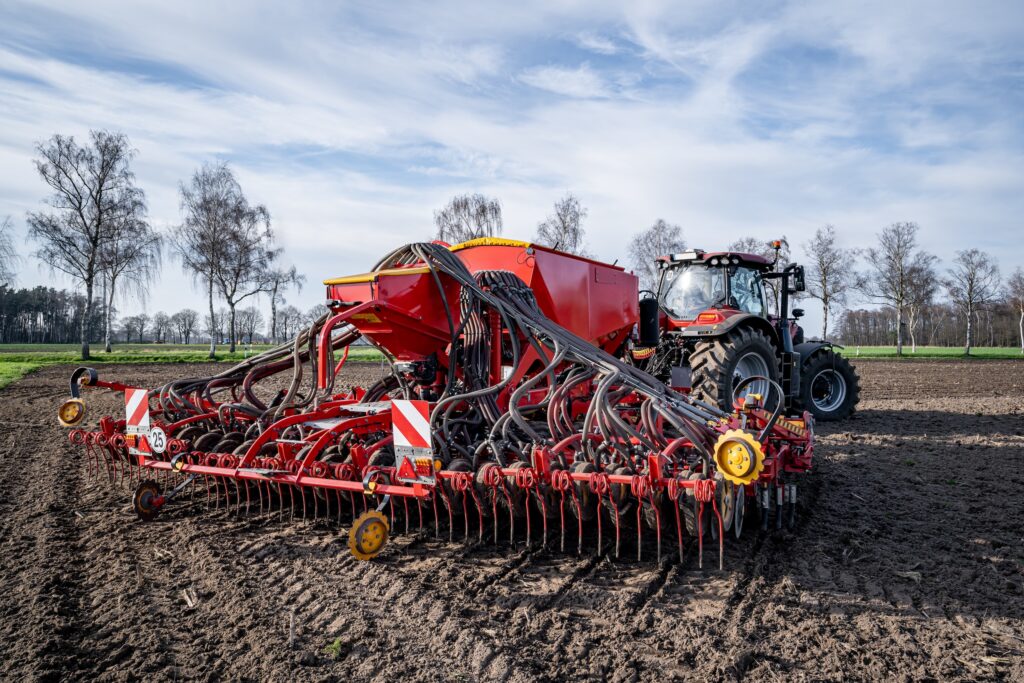
Ask any farmer who has made the switch to no till farming equipment and they’ll tell you the same thing: the drill or planter is where it all starts. Get that piece of no till farming equipment right, and everything else becomes manageable. Get it wrong, and you will be fighting the system all season.
A no till drill is the go-to choice for small grains like wheat, oats, barley, and rye, as well as cover crops and forage species. It works in closely spaced rows, covering a wide swath of ground in a single pass.
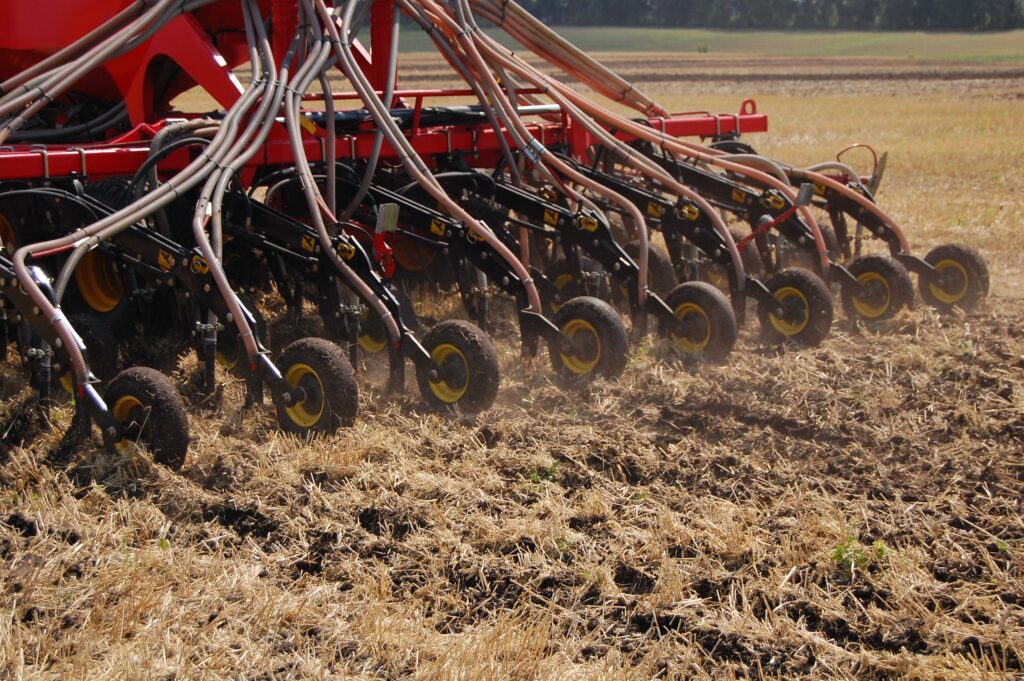
What sets a no till drill apart from a conventional grain drill is what happens at the front of this piece of farming equipment. In heavy residue conditions, aggressive coulters lead the way, slicing through last year’s crop material before the seed opener ever touches the soil. The sequence matters more than most people realize. The coulter opens a path, the disc opener places the seed at the right depth, and the press wheel or closing wheel seals everything behind it. If you get the order wrong or run worn-down components, you’re planting into a mess instead of a clean furrow.
No till planting equipment works differently because farming row crops like corn and soybeans demand a different approach. Each row unit operates on its own, placing individual seeds at precise spacing and depth.
In a no till system, those row units are heavier and carry stronger down-pressure systems than what you would find on a conventional planter. They have to be. Firm, undisturbed ground doesn’t give way easily, and consistent planting depth is critical when it comes to emergence. Most no till planters also run row cleaners ahead of each unit to move residue out of the path before the opener gets there, which makes a noticeable difference in heavy corn stalks or thick cover crop biomass.
Calibration is where experience pays off with any no till farming equipment. Seed depth, down pressure, row cleaner aggressiveness, closing wheel tension, all of it shifts depending on soil conditions, residue levels, and what you’re planting. Dialing in those settings takes time, and frankly, it takes a few seasons of paying close attention to what the ground is telling you.
A no till drill or planter gets the seed in the ground, but the rest of your farm equipment lineup is what keeps the system working throughout the year.
Row cleaners are a good example. They mount ahead of each row unit on the planter and do the unglamorous work of sweeping residue out of the planting zone before the opener arrives. In a corn-on-corn rotation or after a high-yield year with heavy stalks, a row cleaner is not an optional piece of equipment in a no till farming lineup. Without one, you’re asking the opener to fight through material it was not designed to handle, which leads to skips, hairpinning, and uneven emergence. The design varies, from finger-style units to basket-style to coulter-based, and the right fit depends on your residue, your soil, and the specific planter you’re running.
Cover crop seeding equipment has become a bigger part of the zero tillage conversation as more farmers pair cover crops with their no till systems. The combination makes sense. Cover crops suppress weeds, hold soil in place over winter, add organic matter, and, in the case of legumes, fix nitrogen from the air. They can be seeded with a dedicated drill, broadcast from a high-clearance applicator into a standing cash crop, or interseeded between rows during the growing season. Each approach has its own timing considerations and establishment trade-offs, and most farmers end up finding what works through some trial and error. Terminating those cover crops before planting is its own equipment question. Herbicide is still the most common method, but roller-crimpers have drawn real interest in recent years.
A roller-crimper lays the cover crop flat and crimps the stems, killing the plant and leaving a thick mat of biomass on the surface that suppresses weeds and holds moisture. For farmers moving toward organic or reduced-input systems, it is a compelling option worth understanding.
Rounding out the no till farm equipment picture is the sprayer. Herbicide does more heavy lifting in a no till system than in a conventional one, because tillage equipment is no longer there to serve as a mechanical weed control pass.
Whether you’re running a pull-type sprayer or a self-propelled unit, calibration and timing matter. A late or off-target application in a no till system can set weed pressure back weeks, and in a bad year, that pressure is hard to recover from without reaching for the tillage tool you’re trying to avoid.
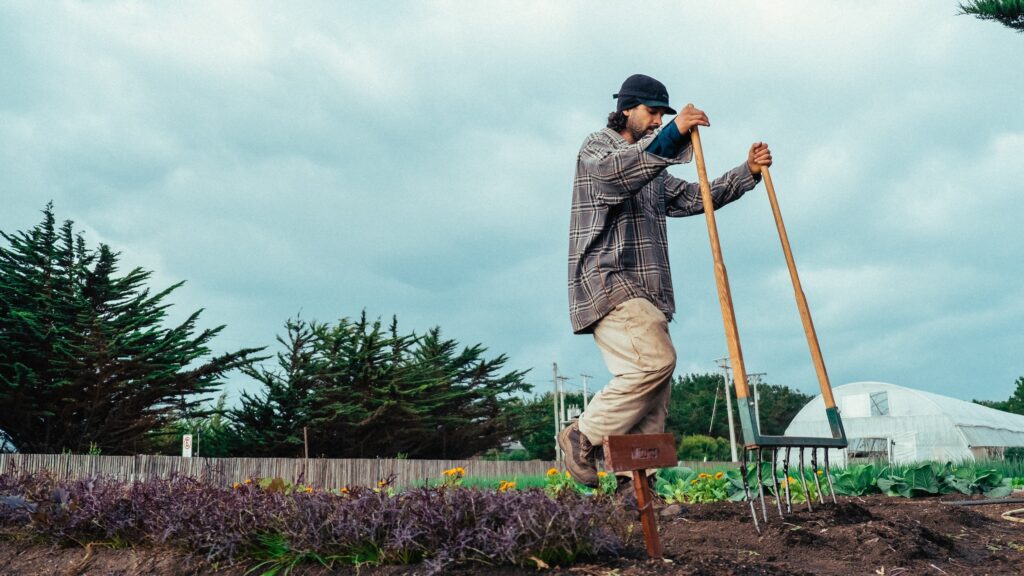
Getting into no till farming doesn’t have to require writing a big check on day one. There are a few different ways to get access to the no till equipment you need, and the right approach depends less on what is ideal and more on what fits your farm right now.
The most common no till starting point for farmers who already have a planter is adapting the farming equipment they already own for a zero tillage approach. Adding row cleaners, upgrading to heavier down-pressure springs, and bolting on a no till coulter package can make a conventional planter functional in lighter residue conditions without a full equipment replacement.
It’s not a perfect solution, and experienced no till farmers will be quick to tell you that a converted planter is not the same as a purpose-built machine. In heavy corn stalks or very hard, dry ground in late spring, a converted planter will have some limitations. But it gets you started, it lets you learn the system, and it keeps the entry cost manageable.
Buying dedicated no till farming equipment, whether new or used, is the right call for farmers who are committed to the zero tillage approach and farming enough acres to justify it. Purpose-built zero tillage equipment is engineered from the frame up for undisturbed soil, with heavier construction, more aggressive coulter systems, and down-pressure mechanisms that conventional machines simply don’t have.
New no till farming equipment comes with current technology and dealer support. Used no till farm equipment can be a smart buy, especially if you’re buying equipment that’s already experienced a substantial amount of its depreciation. Pay attention to coulter diameter and condition, the wear on disc openers, the integrity of press wheels and closing wheels, and the overall condition of seed tubes and the frame. Those are the components of no till farming equipment that take the hardest beating and the ones most likely to need attention on a used zero tillage machine.
For smaller operations, landowners farming limited acreage, or anyone who wants to test no till on part of their ground before going all in, renting farming equipment or hiring a custom operator is worth considering.
Equipment rental arrangements through co-operatives or dealers, and custom hire operators who will come in and do the planting for a per-acre fee, lower the barrier to entry considerably. Plenty of farmers have planted no till for years through custom hire while they build experience with the system and decide whether full equipment ownership makes sense for their situation.
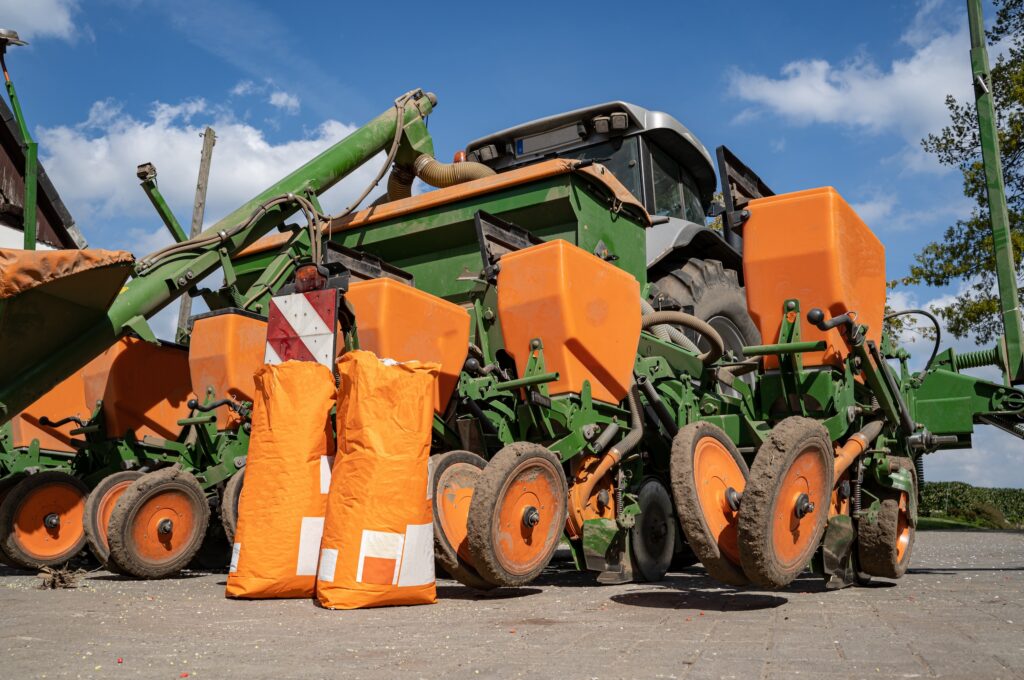
No till farming equipment takes a beating that most conventional tillage tools typically don’t see. Coulters, disc openers, row cleaners, and closing wheels are working through undisturbed ground and heavy residue every single pass, and the wear can add up. The farmers who get the most out of their no till equipment are the ones who treat pre-season maintenance as seriously as planting day itself.
Coulters are the first to experience some wear. They hit the soil before anything else does, slicing through residue and opening the initial slot. When a coulter wears down past its serviceable diameter, it stops cutting and starts pushing. That means residue getting folded into the seed furrow instead of being cut away from it, inconsistent slot depth, and the hairpinning problem that causes seeds to germinate in a pocket of plant material rather than soil. Pull a tape measure on your coulters before the season starts. If they’re worn below spec, replace them. It’s one of the highest-return equipment maintenance calls you can make on a no till drill or farming planter.
Disc openers are next. They wear gradually with every acre, and once they drop below their minimum diameter, they stop forming a clean V-slot. The result is variable seed depth and poor seed-to-soil contact, two things that could cost you in the stand and in your yield. Many farmers check opener disc diameter as a routine pre-season task, the same way they check tire pressure and grease fittings, and replace or adjust as needed before the first field.
Row cleaners, press wheels, and closing wheels all belong on the same inspection checklist. Worn row cleaner fingers lose their ability to move residue cleanly and start leaving material in the path of the opener. Damaged or misaligned closing wheels leave the seed furrow open instead of sealed, which affects emergence in both wet and dry conditions. These are not glamorous parts of the machine, but their condition shows up directly in your stand.
Beyond the components that contact the soil, the rest of the maintenance picture for no till farming equipment is straightforward: grease everything on schedule, check gauge wheel and transport tire pressure, inspect seed tubes for blockages or wear, calibrate seed meters before you plant, and store the equipment somewhere dry where rodents can’t get to the wiring and plastic tubes over winter.
One thing worth calling out specifically for no till equipment is coulter-to-opener alignment. These components need to track in line with one another for the system to work the way it was designed. If the opener is not following the slot the coulter cut, you lose the whole benefit of having a coulter out front. It’s a quick check before the season and the kind of thing that’s easy to overlook until you’re trying to figure out why emergence is uneven across the field.
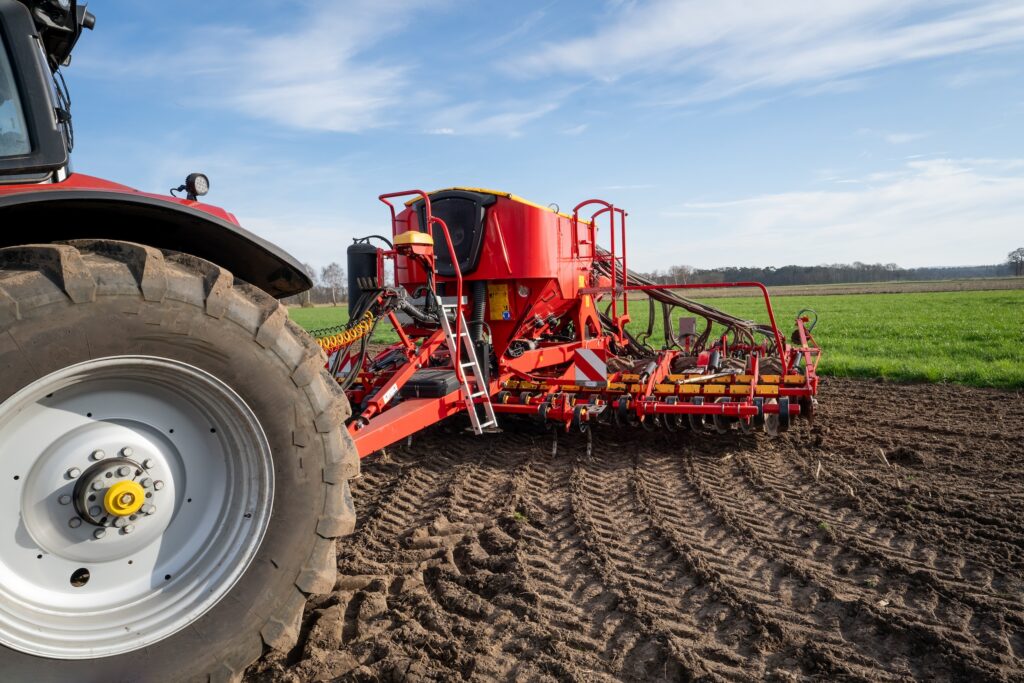
Anyone who tells you no till farming equipment pays for itself in year one isn’t presenting the full picture. The honest version of this conversation starts with acknowledging that the upfront costs are real, the transition takes time, and the payoff is not linear.
Purpose-built no till drills and planters cost more than comparable conventional seeding equipment, and there’s a reason for that. They’re heavier, more complex, and built to work in conditions that would stop a conventional planter in its tracks. Farmers who adapt existing equipment lower that initial cost, and those who start with rental or custom hire arrangements lower it further. But for anyone committed to no till farming as a long-term management approach, equipment investment is part of the picture.
What makes zero tillage farming equipment worth that investment over time is what stops happening when you go no till. Pre-plant tillage passes disappear from the schedule, which means less fuel burned, fewer hours logged on aging tractors, and less maintenance on the plows and cultivators that no longer need to run. The USDA has documented that continuous no till farming requires significantly less fuel per acre than conventional tillage, and those eliminated tillage passes also free up meaningful labor hours during the busiest stretch of the year.
Soil health is where the economics of no till farming equipment get interesting in ways that are harder to see at first. No till farm equipment, used consistently over the years, builds water-holding capacity, organic matter, and biological activity in the soil. Those improvements translate to greater yield stability during dry years, reduced inputs as soil fertility improves, and land that holds its productivity over the long run. For farmers who own their ground, that has real bearing on land value too. Agricultural land buyers increasingly pay attention to soil health, and a documented history of no till management is not invisible to the market.
The transition period is where farmers sometimes lose faith in the system before it has had a chance to show what it can do. A modest yield dip in the first season or two after switching to no till farming equipment is common. The soil is adjusting, management practices are evolving, and the full biological benefit of undisturbed ground takes time to develop. Farmers who stick with it past that window are typically the ones who look back years later and wonder why they waited so long to make the switch.
The farmers who get no till farming right are not necessarily the ones with the newest equipment or the most acres. They’re the ones who found the right tools, learned their ground, and stayed with the zero tillage system long enough to see what it can do.
Getting there starts with getting your hands on the right no till farming equipment, whether that means buying, selling, or finding the right connection to make it happen.
Here at Hayden Outdoors, we work with farmers, landowners, and agricultural land buyers across the country. Our equipment marketplace is built to connect people who have quality no till equipment with the people who need it, and to make that transaction straightforward on both ends. If you’re looking to buy no till farm equipment, you’ll find listings from real sellers. If you have no till equipment to move, we can help you find the right buyer.
Browse current farming equipment listings or get your tools in front of the right audience. The land is worth farming well. We’re here to help make that possible.
Learn More About The Hayden Outdoors Equipment Marketplace