
×

Sign in
Sign in to save favorite properties and equipment, save your search parameters and more
Don’t have an account yet? Sign Up Now
Sign up
Already have an account? Login Now


 866-741-8323
Sign in
Sign in to save favorite properties and equipment, save your search parameters and more
Don’t have an account yet? Sign Up Now
Sign up
Already have an account? Login Now
866-741-8323
Login
Sign in
Sign in to save favorite properties and equipment, save your search parameters and more
Don’t have an account yet? Sign Up Now
Sign up
Already have an account? Login Now
Sign in
Sign in to save favorite properties and equipment, save your search parameters and more
Don’t have an account yet? Sign Up Now
Sign up
Already have an account? Login Now
If you’ve spent any time searching how much an ATV (also known as a four wheeler or quad) can cost, you’ve probably noticed the numbers are all over the map. That’s because ATV price genuinely depends on a handful of specific factors, and once you know what they are, it’s a lot easier to land on a number that makes sense for your situation.
Maybe you’re outfitting a working ranch and need something that can handle a full day of fence checking and feeding. Maybe you’re gearing up for trail season with the family. Or maybe you’re just ready to have your own quad instead of borrowing your neighbor’s every time a job comes up. Whatever brings you here, we want to give you a genuinely comprehensive answer on ATV cost, including the ownership costs that come after the purchase, what actually drives that number up or down, and how to land on a fair price for the way you plan to use your four wheeler.
That’s why we’ve written this ATV pricing guide. Hayden Outdoors has been rooted in the world of ranch, farm, and recreational land since 1976, and that family-owned, hands-on background is exactly why we’re a trusted resource here. We connect buyers and sellers of ranch, farm, and recreational equipment directly, with no fees or commissions on either side, so we see what real ATVs are actually listed and sold for across the market. We’re not here to sell you a specific machine. We’re here to help you understand that market so you walk into a purchase knowing what you’re actually looking at.
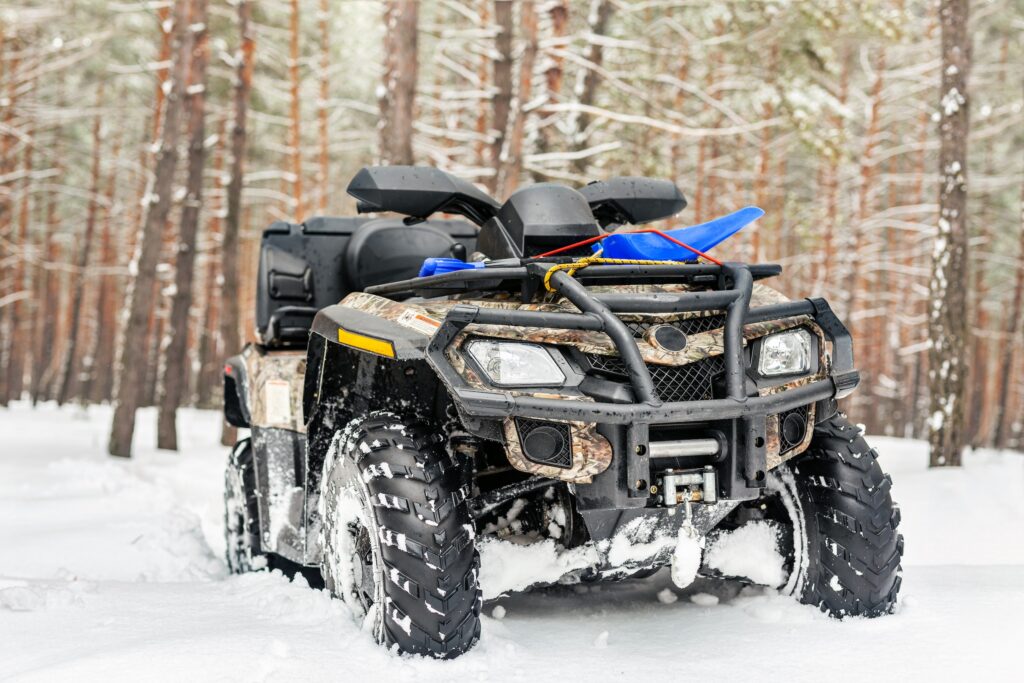
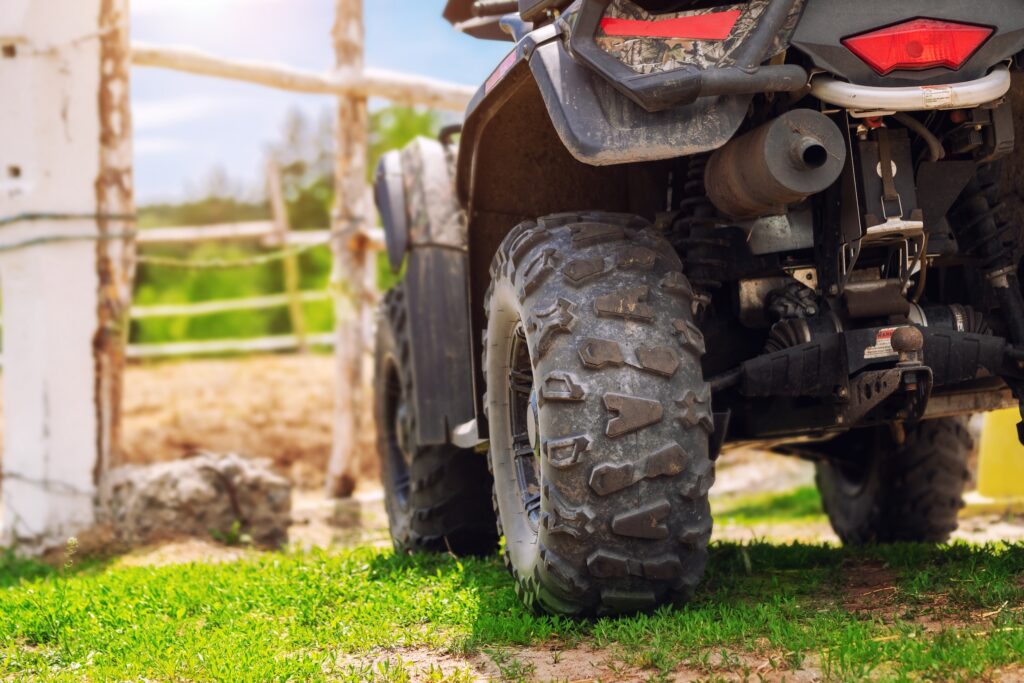
Before you can pin down an accurate ATV cost picture for your own situation, it helps to know what’s actually moving the number behind the scenes. Four wheeler cost calculations aren’t random, and they aren’t determined by one single thing. They’re built from a handful of specific pricing variables, and once you know them, the wide ATV cost range starts to break down into something you can actually work with.
One of the biggest factors in determining how much an ATV can cost you is whether you’re buying a new or used four wheeler. A new quad carries the full manufacturer’s price tag, the newest features, and typically a warranty backing it up. A used ATV can cost a fraction of that new price, especially if it’s a few model years old with a reasonable number of hours on the engine. This is usually the first fork in the road for anyone asking how much an ATV will cost them, because the gap between new and used pricing is often larger than any other factor on the list.
The condition of the ATV you’re looking at also matters substantially. Two ATVs from the same model year can carry very different price tags depending on how they were stored, how hard they were ridden, and how well they were maintained. A machine that spent its life in a barn and got regular oil changes is going to hold more value than one that sat outside through a few rough winters. When you’re figuring out how much an ATV is going to cost you and comparing various quad listings, don’t just look at the year. Look at the hours, the maintenance records for the ATV (if the seller has them), and the overall condition of the tires, brakes, and body of the four wheeler.
Engine size and drivetrain type play a direct role in how much a four wheeler costs. Small displacement, single-cylinder engines built for light recreational ATV use or younger riders sit at the lower end of the price scale. Larger displacement engines, four-wheel drive systems, and higher-performance ATV builds push the price up because they cost more to manufacture and tend to hold more value on resale down the road.
If you’re comparing how much a quad built for casual trail riding costs against one built for heavy work or higher speed, engine size is usually where that price gap starts to show up. It’s worth being honest with yourself about what you actually need here. A bigger engine isn’t automatically the better buy if most of your riding is light trail use or slow work around a property. Matching the engine to the job is one of the simplest ways to avoid overpaying for capability you won’t use.
The same ATV can carry a very different price tag depending on where it’s purchased, and price is only part of what changes. A dealership sticker price for a four wheeler often includes dealer fees, freight charges, and ATV setup costs included in the base price. But that price also typically comes with a warranty, an ATV that’s been inspected and serviced before sale, and someone to call if something goes wrong with your four wheeler shortly after you buy it. For buyers who want that safety net when buying an ATV, the dealership route has some clear benefits.
Buying your ATV directly from a private seller or through an equipment marketplace tends to remove a good bit of that markup from the four wheeler cost equation. That’s a big part of why the used four wheeler market, bought direct, often has some cost benefits. The trade-off is that a private ATV sale typically comes as-is, with no warranty and no recourse if the seller left something out or wasn’t fully upfront about the quad’s condition. The responsibility for verifying condition, service history, and any mechanical issues falls on you as the buyer of the quad.
Where you buy your quad also affects how much room you have to negotiate the price. A dealership price is usually more fixed. A private sale or marketplace listing often has more price flexibility built in, especially if the seller of the ATV wants a straightforward transaction. But that same flexibility means there’s typically no dealership backing up the deal after it’s done.
None of this means one path is right for everyone. A dealership can be worth the added cost for a buyer who wants a warranty and a fully vetted ATV. A private sale or marketplace listing can be worth the savings for a buyer who’s comfortable inspecting the four wheeler closely, asking the right questions, and taking on that responsibility themselves. It’s worth weighing that trade-off (and not just the sticker price) before deciding what a fair four wheeler cost looks like for the ATV you want.
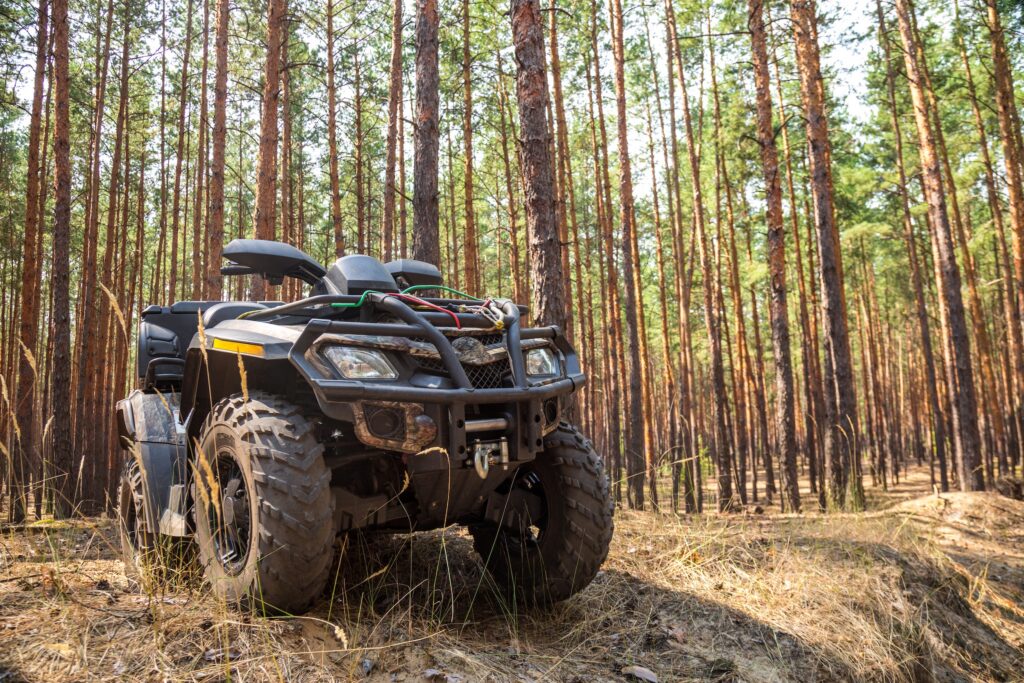
This is an often-forgotten piece of the puzzle when determining how much an ATV can and should cost, but it’s quite possibly one of the most important price considerations you need to take into account. Every ATV loses value over time, but the rate at which it loses that value isn’t steady. Knowing the shape of that curve can help you time a purchase (or a sale) a lot smarter.
According to ATV Trader, most four wheelers hold their value fairly well for roughly the first three years of ownership. After that point, the depreciation of your quad picks up, typically running between 10 and 25 percent annually. Essentially, a newer ATV tends to hold steady in value early on, then loses ground more noticeably once it’s a few years old.
This explains why two ATVs only a couple of years apart in age can sometimes carry surprisingly similar price tags early on, while the gap widens more once one of the four wheelers passes that three-year mark. It also means the calculus on new versus used isn’t as simple as “newer always costs more.” Where a four wheeler sits relative to that three-year point is often just as important as its age alone in the price calculation.
If you’re trying to get the most machine for your money, the sweet spot in used ATV price tends to show up once a four wheeler is a few years past new, after that initial depreciation has already run its course, but before it’s racked up enough hours or wear to start needing bigger repairs. Buying your quad in that window means someone else absorbed the steepest part of the value drop, and you get to buy in at a more stable, more predictable price.
This is also useful information if you’re planning to sell your quad down the road. A well-maintained ATV with clean service records tends to hold its position on that stabilized part of the curve much better than one that’s been neglected, which is one more reason maintenance isn’t just about keeping your four wheeler running. It’s about protecting what it’s worth.
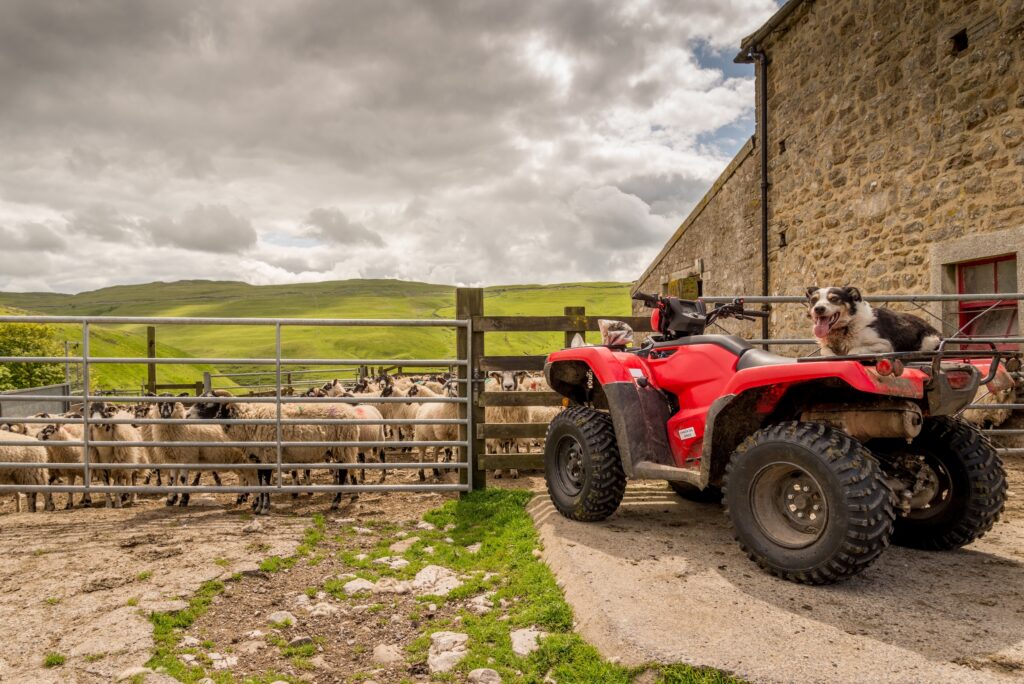
Beyond the machine itself, where it’s purchased, and how far along it is on the depreciation curve, there’s a second layer of factors that shape what you’ll actually spend on an ATV, and just as important, what you’ll keep spending after the purchase is done.
Here’s where a lot of buyers get tripped up chasing the lowest possible price for their ATV. A rundown, high-hour four wheeler might look like a bargain sitting on the lot or in a listing photo, but it often comes with a trade-off. More frequent repairs. Worn tires and brakes that need replacing right away. A higher chance of a bigger mechanical bill waiting just down the road.
Something as routine as a clutch job can run anywhere from $150 to $500, depending on what’s involved, and a full tune-up can run anywhere from $100 to $400. Those costs add up fast on an ATV that was already showing its age at the time of purchase. General annual upkeep can put you at roughly 10 to 15 percent of the vehicle’s purchase price under normal conditions, climbing higher for four wheelers ridden hard on rough terrain, like rocky trails or heavily wooded ground.
That doesn’t mean every used ATV is a bad buy. Plenty of them are excellent value. It means the real cost of an inexpensively priced four wheeler isn’t always the price tag you see up front; it’s also the corresponding maintenance and upkeep required. An ATV priced a bit higher but sold in solid mechanical condition, with service records to back it up, can often work out to a better overall price value than one that looked like a steal until the repair estimates started rolling in. When you’re weighing how much an ATV costs against another option, always ask what kind of shape the machine is actually in, not just what number is on the price tag.
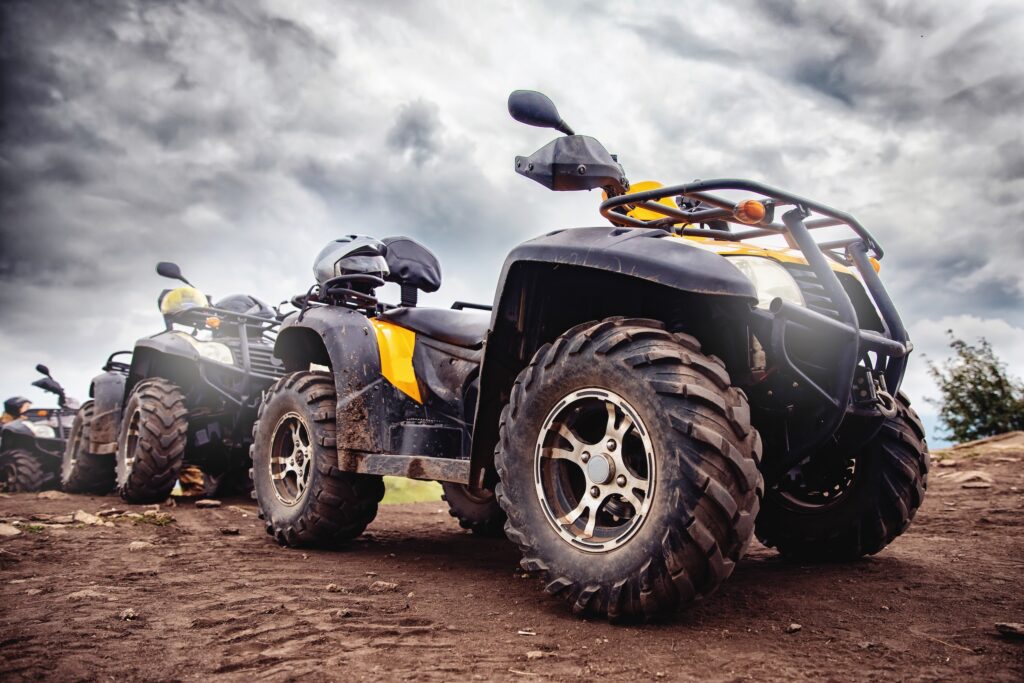
With all these factors in mind, here’s how ATV cost typically breaks down by category. These are ranges, not exact figures, since condition, hours, region, and how far along the depreciation curve a four wheeler sits will all shift the final cost number.
Entry-level ATVs, the kind built for younger riders or light recreational use, sit at the bottom of the four wheeler cost scale. These are simpler builds with smaller engines, fewer features, and less overall capability, which keeps the price accessible for first-time buyers or families getting a young rider started. ATV models typically start in the $3,000 to $7,000 price range, with basic features like disc brakes and automatic transmission included as standard.
Mid-range ATVs make up the bulk of the market, and honestly, the bulk of searches into how much an ATV can cost. New mid-range ATVs generally fall in the $7,000 to $10,000 price range. These are the quads built for regular trail riding, hunting trips, or general ranch and property work, carrying a larger engine, more capable suspension, and often four-wheel drive, which puts them solidly above entry-level four wheeler pricing while still staying reasonable for everyday use.
High-performance and heavy-duty ATVs sit at the top of the price range, generally starting around $10,000 and climbing to $15,000 or more for fully loaded models with upgraded suspension, electric start, and towing packages built in from the factory. These four wheelers are built for serious work, serious trail speed, or both, and naturally, that added capability comes at a higher cost.
Where in these price ranges your own ATV purchase lands across these tiers comes down to what you actually need your four wheeler to do day to day. A weekend trail rider and a rancher checking fence lines every morning are shopping two very different corners of the same market, even if they typed the exact same question to get started in their search.
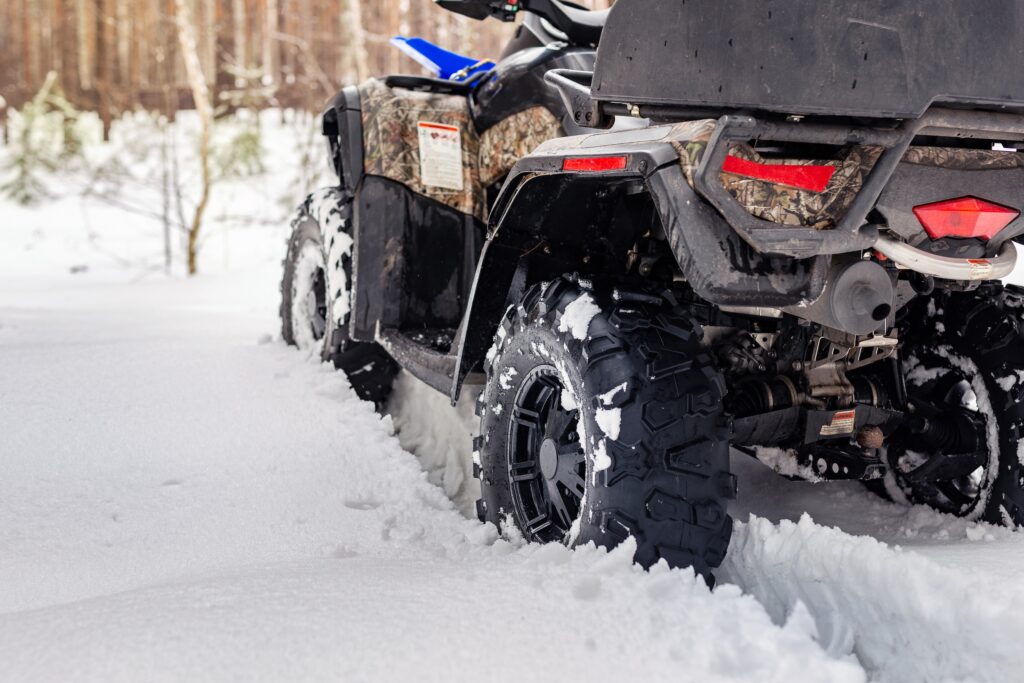
The ATV purchase price is only part of the full cost picture. A handful of ongoing costs, and a few one-time costs that rarely get mentioned, factor into the true lifetime cost of buying and owning a four wheeler.
Insurance is one of the more overlooked pieces of the ATV cost equation. Liability-only coverage averages around $88 a year, while full coverage averages closer to $327 a year, though your actual rate depends on the machine’s value, where you ride, and your driving history. Factors like engine size, location, how often you ride, and your riding experience all shift that number up or down, and you can often get discounts for bundling with an existing auto or home policy.
Routine ATV maintenance is the other recurring cost worth budgeting for at the start. Oil changes typically run $30 to $55, and tire replacement runs roughly $20 to $250 per tire, depending on what you choose (this is before installation). While none of these numbers is a dealbreaker on its own, stacked together over a full riding season, they need to be a part of the calculation of how much cost you’ll be taking on when buying your ATV.
Registration fees and fuel costs round out the recurring list, and both vary quite a bit by state and by how much you actually ride. Neither tends to be a major expense on its own, but building them into your budget up front means fewer surprises waiting for you after the sale is done.
There are a few other additional costs you’ll want to consider when investing in an ATV. These are the little, easy to forget items, but they’re a critical part of your gear lineup.
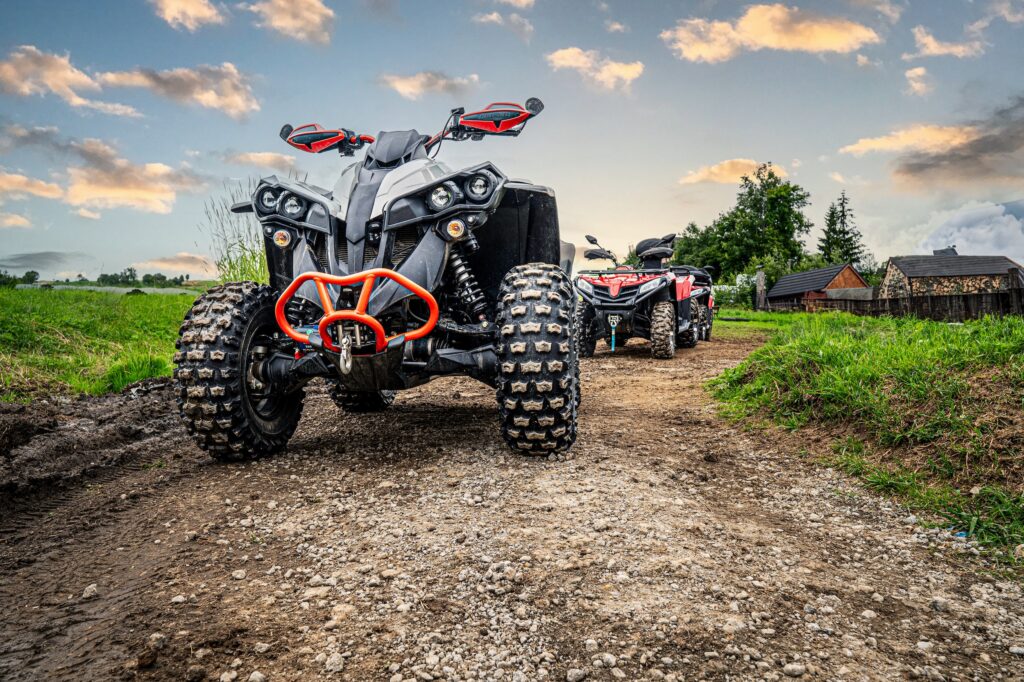
Once you know what drives ATV price, how that price changes over time, and what it costs to keep one running, the last question is the simplest one: where do you actually go to find a fair deal?
For most buyers, the used market is where the best ATV at the best cost is hiding. A well-maintained used four wheeler, especially one bought after the steepest part of its depreciation curve, gives you most of the capability of a new one at a meaningfully lower price. If you know what to look for in terms of hours, condition, and maintenance history, you can avoid the “inexpensive now, expensive later” trap we covered earlier in this guide. This is especially true if you’re buying for ranch or work use rather than needing the latest features on a brand new model straight off the line.
Shopping used also gives you room to negotiate price in a way that isn’t always possible when buying new. Private sellers and equipment marketplaces often have more flexibility than a showroom sticker price, especially if you’re paying cash or coming in with your own arrangements already made.
This is exactly the market Hayden Outdoors was built for. We connect buyers and sellers of ranch, farm, and recreational equipment directly, with no fees and no commissions standing between you and a fair deal on an ATV. You deal with the seller, they deal with you, and we stay out of the transaction entirely.
If you’re ready to find a four wheeler priced right for your budget, take a look at our current ATV listings and start the conversation directly with the seller to find the quad that matches your needs and your land.
 Back to Blog