
×

Sign in
Sign in to save favorite properties and equipment, save your search parameters and more
Don’t have an account yet? Sign Up Now
Sign up
Already have an account? Login Now


 866-741-8323
Sign in
Sign in to save favorite properties and equipment, save your search parameters and more
Don’t have an account yet? Sign Up Now
Sign up
Already have an account? Login Now
866-741-8323
Login
Sign in
Sign in to save favorite properties and equipment, save your search parameters and more
Don’t have an account yet? Sign Up Now
Sign up
Already have an account? Login Now
Sign in
Sign in to save favorite properties and equipment, save your search parameters and more
Don’t have an account yet? Sign Up Now
Sign up
Already have an account? Login Now
The agricultural landscape is changing, and electric tractors are at the forefront of this transformation. As farmers look for ways to reduce operating costs, minimize environmental impact, and embrace new technology, battery-powered tractors are emerging as a viable alternative to traditional diesel models. But is an electric tractor right for your farm operation?
At Hayden Outdoors, we’re experts on all things farmland and farm operations. And we’ve crafted this comprehensive guide to help you understand everything from power specifications and pricing to battery life and total cost of ownership.
Whether you’re managing a vineyard, running a dairy farm, or maintaining specialty crops, you’ll find the information you need to make an informed decision about electric tractor ownership.

Electric tractors offer compelling advantages that go beyond just being environmentally friendly. Here’s what makes them worth considering for your operation:
The economics of electric tractors are hard to ignore. Operating costs for electric tractors range from just $2.50 to $3.75 per hour compared to $7.50 per hour for diesel-powered models. Over the course of a year, this difference adds up substantially. If you’re running your tractor 500 hours annually, you could save between $1,875 and $2,500 each year on operating costs alone.
While electric tractors aren’t entirely maintenance-free, they eliminate many time-consuming and costly service requirements. You won’t need engine oil changes, which saves both time and expense. However, electric tractors still rely on hydraulic systems, meaning you’ll still need hydraulic fluid, greases, and lubricants.
The key difference is in what you eliminate: fuel filters, exhaust system maintenance, spark plugs, and fuel injectors all disappear from your service schedule. With fewer moving parts overall, there’s simply less that can break or require replacement.
One of the most significant game-changers for electric tractor affordability is the availability of substantial government incentives. The Environmental Quality Incentives Program (EQIP), administered by the USDA Natural Resources Conservation Service, can provide subsidies of 50% or more off the retail price.
Federal tax credits can reduce your purchase cost by up to 30%, and the Rural Energy for America Program (REAP) offers additional grant opportunities. Many states have also developed their own incentive programs.
To qualify for EQIP, you’ll need to work with your local USDA service center. The program requires that you replace an existing diesel tractor of 32 horsepower or more. Applications are typically batched annually, with deadlines ranging from November to February, depending on your state.
The near-silent operation of electric tractors provides benefits that extend beyond worker comfort. Operators experience significantly less fatigue during long workdays without the constant engine noise and vibration. This reduced noise pollution also benefits neighboring communities and makes electric tractors particularly suitable for operations near residential areas.
Electric tractors produce no exhaust emissions during operation, creating cleaner air for operators and eliminating exposure to diesel fumes. The absence of emissions also opens up new possibilities, including safe indoor operation for tasks in barns, greenhouses, and covered facilities where diesel exhaust would be problematic.
Unlike diesel engines that need to build up RPMs to deliver maximum power, electric motors provide instant torque the moment you press the pedal. This delivers immediate, responsive power for tasks like loader work, pulling heavy implements, or working in challenging terrain.
Electric tractors create an opportunity for true energy independence when paired with on-farm solar installations. By generating your own electricity, you can further reduce operating costs and insulate yourself from fluctuating utility rates.
Many electric tractors come equipped with modern connected features including remote monitoring capabilities, integration with farm management software for data collection, and over-the-air updates. These technologies represent the future of precision agriculture.

Not all farm operations are equally suited for electric tractors, given current technology limitations. Understanding where these machines excel helps you determine if they match your operation.
Electric tractors currently perform best on farm operations under 500 acres, where daily tasks are repetitive and predictable. Orchards and vineyards are ideal applications—the quiet operation is appreciated by workers spending long hours in the field, and zero emissions make these tractors perfect for working among crops. Berry operations benefit similarly.
Dairy farms and livestock operations have found electric tractors particularly well-suited for their needs. The daily routine of feed delivery, manure handling, and general yard work typically falls well within the runtime capabilities of modern electric tractors. Some dairy operations are seeing payback periods as short as 1.5 to 3.5 years due to high annual usage hours.
Specialty crop farms—including vegetables, herbs, and nursery operations—find value in electric tractors’ precision and quiet operation. The instant torque is especially useful for tasks requiring careful maneuvering around delicate plants.
Operations located near residential areas (including hobby operations) benefit tremendously from reduced noise pollution. If you’ve received complaints about early morning or late evening tractor work, an electric model could resolve those community relations challenges.

If you’ve spent your career evaluating tractors based on horsepower ratings, the specifications for electric tractors might initially seem confusing. Understanding these new measurements is essential for selecting the right machine.
Electric tractor power is measured in kilowatts (kW), rather than horsepower (hp), but the conversion is straightforward. One kilowatt equals approximately 1.34 horsepower. So a 50 kW electric tractor delivers roughly 67 horsepower—comparable to a small to mid-sized utility tractor.
Current models typically range from 50 to 55 kW (67 to 74 hp). The Case IH Farmall 75C Electric and New Holland T4 Electric Power, for example, both provide 55 kW of rated power, which translates to 74 hp.
Why does the power delivery feel different despite similar numbers? Electric motors provide consistent power across their entire operating range, whereas diesel engines have power curves that vary with RPM. This means an electric tractor’s 70 hp feels more responsive and usable than you might expect.
While kW tells you about power output, kWh (kilowatt-hours) measures battery capacity—essentially how much energy is stored for work. Think of kWh like the fuel tank size on a diesel tractor, but instead of gallons, you’re measuring stored electrical energy.
Current electric tractors feature battery packs ranging from 30 kWh for compact models up to 150 kWh or more for larger machines. For reference, the Case IH Farmall 75C Electric and New Holland T4 Electric Power come with 110 kWh maximum capacity batteries.
Battery capacity directly affects how long you can work before recharging. A larger kWh rating means more stored energy and longer runtime, but it also typically means a higher purchase price and longer charging times.
Reading spec sheets requires understanding the relationship between power (kW) and capacity (kWh). Consider your typical workload: Are you running a loader for a few hours of intensive work, or pulling a light implement for extended periods? Heavy implements and demanding tasks drain batteries faster than light-duty applications.

Price represents one of the biggest decision points when considering an electric tractor. Understanding both the upfront investment and how incentives affect the real purchase cost is crucial.
Electric tractors currently command premium pricing compared to comparable diesel models. A Case IH Farmall 75C Electric lists at approximately $79,000, while smaller electric models from manufacturers like Solectrac begin around $29,249 for their 25 hp compact tractor.
A comparable 75 hp diesel utility tractor typically ranges from $45,000 to $60,000, depending on features. This means electric models can carry a premium of $15,000 to $30,000 before incentives are applied.
However, these upfront prices don’t tell the complete story. Federal and state incentives dramatically change the economics. With EQIP subsidies providing 50% or more off retail price, that $79,000 electric tractor could cost you $39,500 or less. Add federal tax credits of up to 30%, and the effective purchase price can drop below that of a comparable diesel tractor.
The pricing landscape for electric tractors is still evolving as more manufacturers enter the market. While the initial sticker shock is real, the combination of available incentives and dramatically lower operating costs changes the value equation significantly.
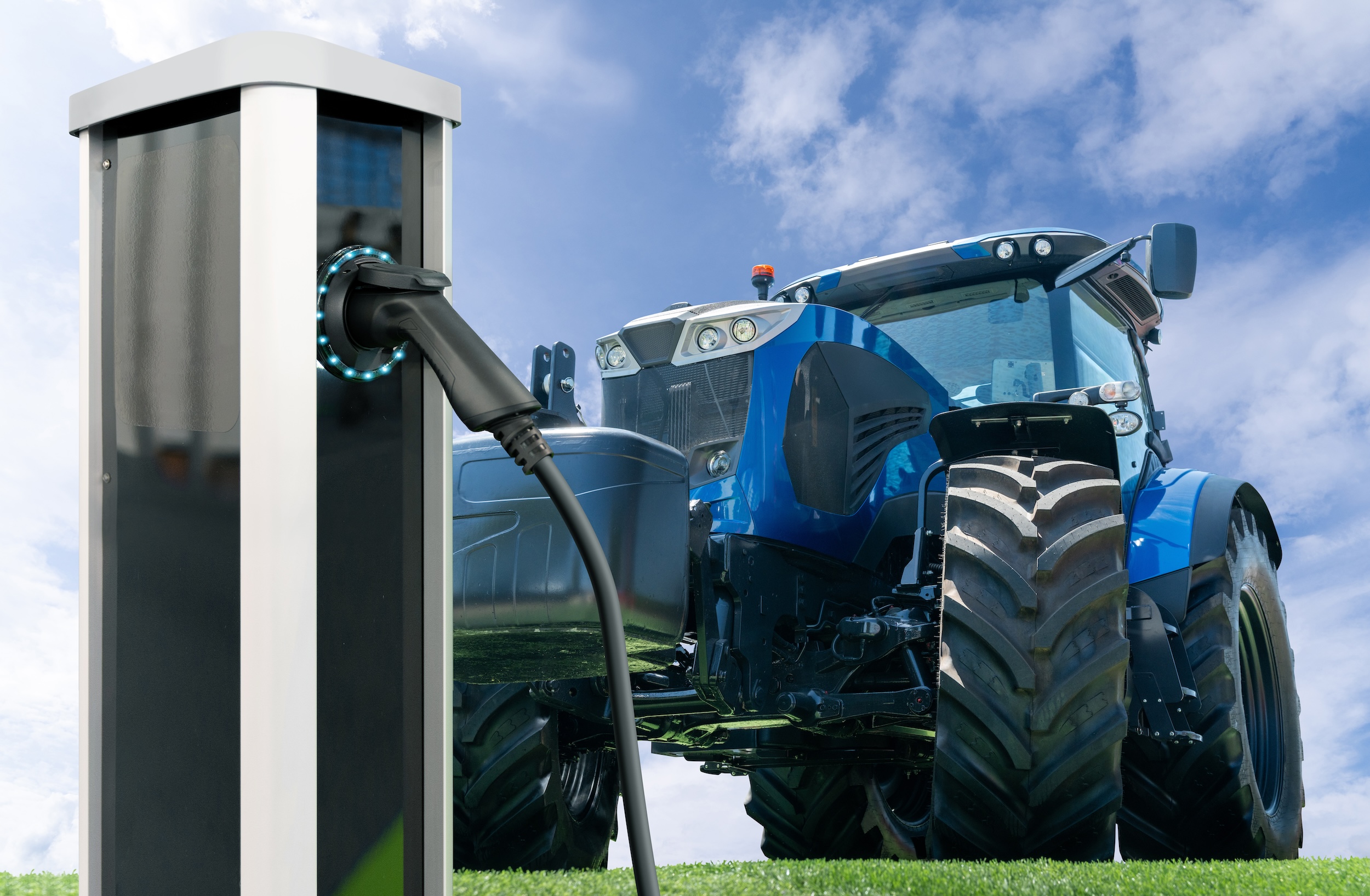
Battery performance sits at the heart of electric tractor ownership. Understanding runtime, charging requirements, and long-term battery considerations is essential for making a confident purchase decision.
Current electric tractors offer runtime ranging from 4 to 14 hours on a single charge, depending on the model and application. This wide range reflects the dramatic difference in power draw between various farming tasks.
The Case IH Farmall 75C Electric and New Holland T4 Electric Power provide approximately 4 hours of runtime under moderate continuous duty. However, the runtime extends to 8 hours or more for lighter tasks.
Light-duty operations, such as transporting materials with an empty wagon or running a rotary cutter on maintained grounds, drain batteries slowly and maximize runtime. Heavy-duty applications, including intensive loader work or pulling heavily loaded implements, consume battery power most rapidly. When deciding on the type of tractor to choose, considering the type of work you do on your farm will be critical.
Charging an electric tractor requires planning and investment in proper infrastructure. Level II charging (220V, 30-40 amp service) represents the most common installation for farm applications. With an 80-amp Level II charger, expect charging times of 5-6 hours from depleted to full. A 40-amp charger extends this to 10-12 hours.
Your farm’s existing electrical service capacity may require upgrades to support tractor charging. Electrical service upgrades can range from $1,000 to $5,000 or more, depending on the distance from your main service panel and the capacity required. The charging station itself adds another $500 to $2,000.
Solar charging presents an attractive option for offsetting electricity costs and moving toward complete energy independence.
Electric tractor batteries typically come with warranties covering 5 to 8 years, with total expected lifespan ranging from 15 to 25 years under normal use conditions. This longevity compares favorably to diesel engine overhaul cycles.
However, battery replacement after warranty expiration represents a significant expense—potentially $15,000 to $30,000 or more. This makes it essential to understand warranty terms and ask manufacturers about battery replacement programs.
Critical questions to ask dealers include:
One additional consideration for farmers in northern or high-altitude climates: battery performance in extreme cold. Electric vehicle batteries can experience range loss of 10-40% in freezing temperatures. The chemical reactions that generate electricity slow down in cold conditions, and energy is required to heat both the battery and cabin. Plan for reduced runtime during the winter months.

One of the greatest values of tractor ownership is versatility—the ability to use multiple implements and attachments to tackle diverse farm tasks. Fortunately, electric tractors maintain this crucial advantage.
Electric tractors use standard Category I and Category II three-point hitch systems, meaning they’re compatible with the vast majority of existing implements designed for tractors in their power range. Your current inventory of implements—whether you have a box blade, rotary cutter, post hole digger, or rear blade—will work with an electric tractor of appropriate size.
The PTO (power take-off) systems on electric tractors function similarly to diesel tractors, allowing you to run PTO-powered implements like mowers, spreaders, and augers. Front-end loader compatibility is equally straightforward. The instant torque delivery of electric motors actually provides excellent loader performance with responsive bucket control.
There are some considerations to keep in mind. Extremely power-intensive implements that would normally push a tractor to its limits will drain batteries more quickly. This doesn’t mean they won’t work—just that your runtime will be reduced.

Making an informed decision requires understanding not just the benefits but also the limitations and challenges of electric tractor ownership. Here’s what you need to know about the potential drawbacks—and how to work around them.
Before incentives, electric tractors cost significantly more than comparable diesel models—typically $15,000 to $30,000 more depending on size and features.
How to manage it: Take full advantage of available incentive programs. EQIP can reduce costs by 50% or more, and federal tax credits provide an additional 30% reduction. Consider the total cost of ownership analysis rather than focusing solely on purchase price. When you calculate savings over 3-5 years, the payback period often makes the higher upfront cost manageable.
While 4-14 hours of runtime covers many farm operations, it doesn’t match the flexibility of a diesel tractor that you can quickly refuel and return to work in minutes.
How to manage it: Structure your work schedule around available runtime. Plan intensive tasks during morning hours when batteries are fully charged. Consider charging during lunch breaks or other natural work pauses. For farms with extended daily operation requirements, maintain a hybrid fleet with both electric and diesel tractors.
Battery range loss in cold weather deserves special mention for northern and high-altitude farmers. Winter conditions can reduce battery performance by 10-40%. If you operate in cold climates, factor this seasonal reduction into your planning.
Beyond the tractor purchase, you’ll need to invest in charging infrastructure. Electrical service upgrades combined with charging station installation can add $1,500 to $7,000 or more to your initial investment.
How to manage it: Plan for these costs upfront as part of your total investment. Some incentive programs specifically cover charging infrastructure costs. Consider solar integration from the beginning—while it increases initial investment, it can provide long-term energy independence and cost savings.
The electric tractor market is still emerging, which means fewer dealers are certified to service these machines compared to conventional tractors. This can translate to longer wait times for repairs.
How to manage it: Choose manufacturers with strong service commitments and remote diagnostic capabilities. Many electric tractors can transmit performance data and error codes remotely, allowing technicians to diagnose issues before dispatching for service. Ask about mobile service options where technicians come to your farm.
While batteries are warrantied for 5-8 years with expected lifespans of 15-25 years, eventual replacement could represent a significant expense—potentially $15,000 to $30,000 or more.
How to manage it: Understand warranty terms thoroughly before purchase. Factor potential replacement costs into your total cost of ownership calculations. Maintain battery health through proper charging practices and environmental storage when possible. Remember that battery technology is improving rapidly; replacement costs may decrease significantly by the time your battery needs replacing.
Current production electric tractors top out around 100-130 HP, with most models in the 70-75 HP range. This means electric tractors aren’t yet suitable for large-scale tillage operations, heavy seeding equipment, or substantial hauling applications that require 150+ HP.
How to manage it: Adopt a hybrid fleet approach. Use electric tractors for daily tasks like loader work, mowing, and material transport, where they excel. Maintain diesel power for heavy field work, including primary tillage and large-scale planting. This strategy allows you to capture operating cost savings where it’s most beneficial while maintaining the capability to handle demanding tasks.
As an early adopter of electric tractor technology, you’re entering a market with virtually no established used equipment values.
How to manage it: Focus on maximizing the value you receive during ownership rather than banking on strong resale returns. Document all maintenance carefully and preserve battery health through proper management. Recognize that you’re making an investment in technology that serves your operation’s immediate needs while accepting some uncertainty about future resale values.

Understanding the true investment in an electric tractor requires looking beyond the purchase price to calculate costs over the machine’s entire lifetime. This total cost of ownership perspective often reveals that electric tractors are more affordable than they initially appear.
The most dramatic difference between electric and diesel tractors appears in hour-by-hour operating costs. Electric tractors cost approximately $2.50 to $3.75 per hour to operate, while comparable diesel tractors run $7.50 per hour or more.
Breaking down these costs reveals where savings occur. Electricity for charging costs roughly $0.10 to $0.15 per kWh. A tractor with a 100 kWh battery operating for 6 hours might consume $6-9 in electricity. By contrast, a 75 HP diesel tractor burns approximately 3.3 gallons per hour at $3.50 per gallon diesel, costing $11.55 per hour in fuel alone.
For a farm using a tractor 500 hours per year, the annual savings in operating costs alone can reach $1,875 to $2,500. Operations with higher annual usage could save $6,750 to $9,000 annually.
Given these operating cost savings combined with reduced maintenance, what’s a realistic payback period?
With incentives applied, many farmers are seeing payback periods of 3 to 5 years. Dairy operations with 1,800 hours of annual use are reporting payback periods as short as 1.5 to 3.5 years.
Calculate your specific payback: Subtract incentives from purchase price to determine your net investment. Multiply annual hours of use by per-hour savings ($4 to $5 per hour) to estimate annual operating cost reduction. Divide net investment by annual savings to find your payback period.
The total cost of ownership advantage grows more compelling as years pass. Reduced maintenance costs compound over a tractor’s lifetime. Diesel fuel prices fluctuate significantly with global oil markets, while electricity rates tend to be more stable and predictable. For farms with on-site solar generation, electricity costs can be reduced even further.

The electric tractor market is still so new that establishing definitive resale value projections is impossible. This uncertainty is an honest reality that must be acknowledged in your purchase decision.
The used electric tractor market essentially doesn’t exist yet. Most electric tractors have been in customer hands for less than two years, and few have been resold. This means we lack the historical transaction data that guides traditional tractor value assessment. As an early adopter, you’re accepting some uncertainty about what your electric tractor will be worth five or ten years from now.
When the used electric tractor market matures, several factors will likely prove critical in determining value.
Battery health and remaining warranty coverage will be paramount. Just as used electric cars are valued partly on battery condition, tractor buyers will assess remaining battery capacity and warranty protection. Hours of use and maintenance records matter for any tractor, but documentation becomes even more important for electric models. Battery warranty transferability will significantly impact desirability.
While you can’t control future market conditions, you can take steps to maximize the value your electric tractor retains.
Document everything meticulously. Keep detailed records of all maintenance, charging patterns, battery performance over time, and any issues encountered and resolved. Practice good battery care by following manufacturer recommendations for charging and storage. Store in climate-controlled conditions when possible, as extreme temperatures accelerate battery degradation.
Rather than offering value predictions we can’t support, consider this framework: You’re purchasing an electric tractor primarily for the value it delivers during your ownership—reduced operating costs, lower maintenance, improved working environment, and environmental benefits. View it as an operating investment that pays returns through cost savings rather than banking heavily on resale value.

Making a confident electric tractor purchase requires careful evaluation of how this technology fits your specific operation. Consider these key factors:
Your Daily Operation Requirements—Start with an honest assessment of how you actually use tractors. Calculate typical hours of use per day and identify the specific tasks you need to accomplish. If you regularly need 10+ hours of continuous operation, current electric tractor limitations may not suit your needs. However, if your typical workday involves 4-8 hours of mixed tasks with natural breaks, this type of tractor can serve you well.
Your Farm’s Electrical Infrastructure—Evaluate your current electrical service capacity before committing to purchase. Does your existing service panel have the capacity to support tractor charging? What’s the distance from your electrical service to the location where you’ll charge the tractor? Schedule a consultation with a licensed electrician to assess upgrade needs and costs before finalizing your purchase decision.
Available Incentives in Your State—Research which programs you qualify for and understand application timelines. EQIP applications are batched annually, with deadlines typically falling between November and February. Federal tax credits have specific requirements and limitations. Work with your accountant to understand how various incentives apply to your tax situation.
Dealer Support and Service Network—Investigate dealer proximity and service capabilities. How far is the nearest certified service center for the electric tractor brand you’re considering for your farm? What’s the manufacturer’s reputation for customer support? Are mobile service options available?
Your Long-Term Fleet Strategy—Consider whether an electric tractor will be your only tractor on your farm or part of a mixed fleet. For most farmers, a hybrid approach makes sense: electric tractors handle daily tasks where operating cost savings are maximized, while diesel tractors remain available for heavy-duty applications and backup capacity.
Realistic Assessment of Limitations—Be honest about tasks that electric tractors can’t handle well with current technology. Large-scale field work, heavy tillage, and big hauling jobs exceed current electric tractor capabilities. If these tasks represent a significant portion of your tractor use, electric models aren’t ready to be your primary machine.
Choosing the right tractor for your operation—whether electric, diesel, or a combination of both—requires careful consideration of your specific needs, budget, and operational requirements. The decision isn’t always straightforward, and there’s no one-size-fits-all answer.
At Hayden Outdoors, we understand that finding the perfect tractor means matching equipment capabilities to your unique farming operation. Our equipment marketplace connects you with sellers offering a wide range of tractors to meet diverse agricultural needs. Whether you’re exploring electric options or staying with proven diesel technology, we’re here to help you navigate your choices.
Browse available tractors and connect with sellers at Hayden Outdoors. Our platform makes it easy to compare options, ask questions, and find equipment that fits your operation and budget.


 Back to Blog