
×

Sign in
Sign in to save favorite properties and equipment, save your search parameters and more
Don’t have an account yet? Sign Up Now
Sign up
Already have an account? Login Now


 866-741-8323
Sign in
Sign in to save favorite properties and equipment, save your search parameters and more
Don’t have an account yet? Sign Up Now
Sign up
Already have an account? Login Now
866-741-8323
Login
Sign in
Sign in to save favorite properties and equipment, save your search parameters and more
Don’t have an account yet? Sign Up Now
Sign up
Already have an account? Login Now
Sign in
Sign in to save favorite properties and equipment, save your search parameters and more
Don’t have an account yet? Sign Up Now
Sign up
Already have an account? Login Now
 Back to Blog
/
Hunting and Fishing /
Picture a cold morning before shooting light. The decoys are out, the thermos is half empty, and your hunting dog is sitting beside you watching the sky for waterfowl. That dog is part of a long tradition. Hunters have worked alongside retrievers for generations, and learning where those dogs came from is a great first step in finding the best duck hunting dogs and breeds for your own blind.
Great Lakes market hunters are said to have paddled out with compact spaniels riding in their punts. South Carolina hunters shaped a compact retriever for the Wateree River. On the Chesapeake Bay, retrievers often had to break ice to get the job done. Each of those duck hunting dogs came from a certain place, a certain kind of water, and a certain way of waterfowl hunting.
Picking a duck hunting dog is a big decision, and you’ll hear plenty of opinions from other waterfowl hunters regarding which breeds they think are the best. Our guide keeps things simple. We’ll help you match a waterfowl hunting dog to your particular water and home. We’ll compare canine breeds with deep hunting roots and cover what to ask a dog breeder. We’ll also talk about the ground where your duck dog will work, since our team at Hayden Outdoors knows what makes for good waterfowl hunting land.
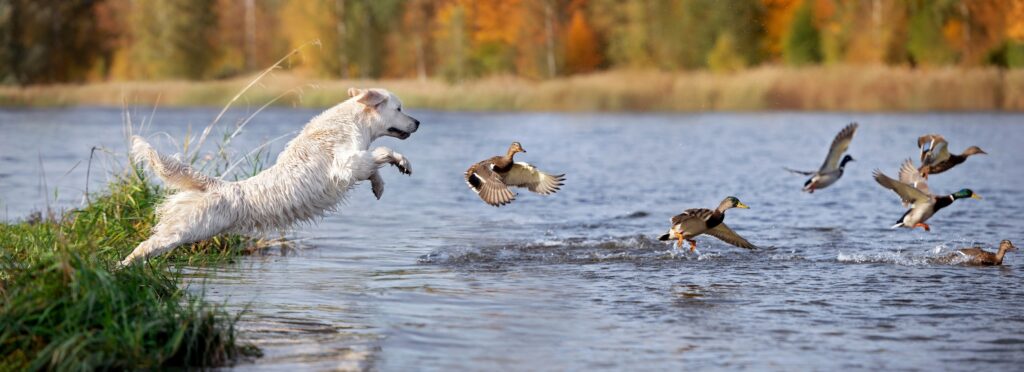
Many waterfowl hunters have strong opinions on which types of dogs make for the best duck hunting dogs. But every hunting setup is different, and the right choice of canine depends on several different factors. The best duck hunting dogs for a big, windy bay may differ from the best choices for waterfowl hunting from a creek or a canoe.
When it comes to waterfowl hunting, a good duck dog can help you in a few core ways. For starters, waterfowl hunting dogs carry on a conservation tradition. The North American Hunting Retriever Association, or NAHRA, ties trained retrievers to the conservation of game. Its standard calls for recovering birds quickly and efficiently, with as little disturbance as possible.
There’s a legal side to retrieving as well. Federal rules say hunters must make a reasonable effort to retrieve any migratory game bird they kill or cripple. While this doesn’t require a duck dog, a trained waterfowl hunting dog gives you a capable partner when a bird sails into the cattails or drifts toward open water.
Then there’s the company. Duck hunting dogs can turn a slow morning into time well spent. For many families, the dog is part of the tradition and part of the story told around the dinner table.
A wonderful duck dog can still be a tough match for a certain setup. Let’s take weight as an example. The Boykin Spaniel Society explains that a heavy retriever could be a drawback in a small boat already loaded with people and gear. In fact, that very challenge helped inspire a whole breed of duck hunting dogs.
Size really goes both ways. The Golden Retriever Club of America looks for a retriever with enough size to do the work. But they also recommend a dog that still fits in a boat or blind. It’s a delicate balance you have to meet when deciding between different duck hunting dogs.
A duck dog that fits your water, your season, and your schedule can make every waterfowl hunting trip easier for both of you. But getting it wrong comes with its own set of challenges that can cancel out a lot of the benefits of bringing along a waterfowl hunting dog.
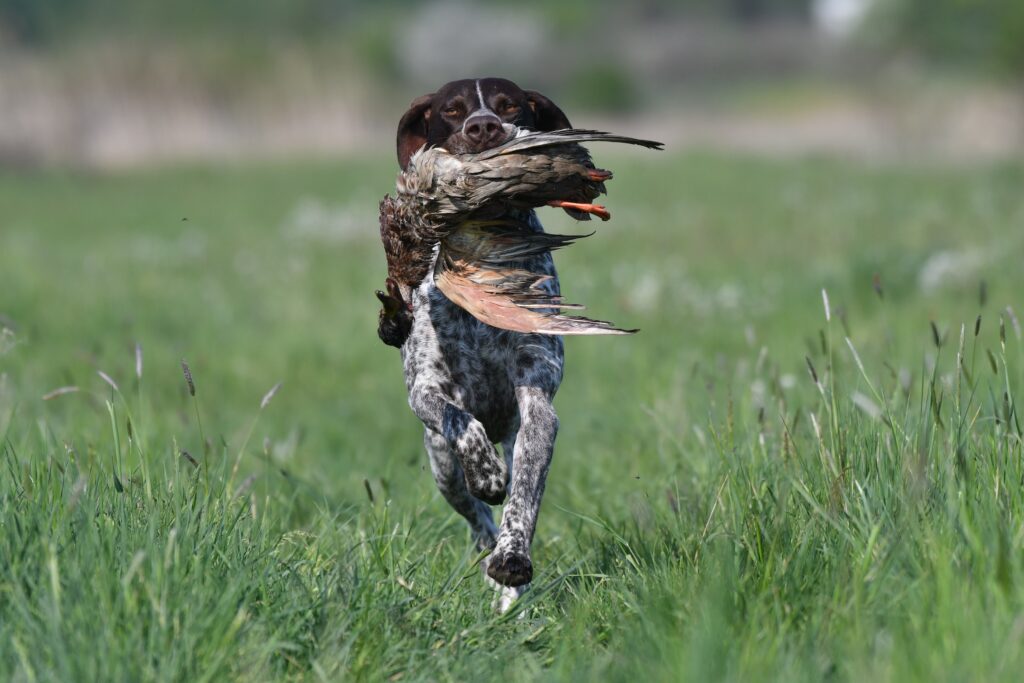
When it comes to choosing the right duck hunting dog, it gets a bit easier when you break down the process into a few core steps.
Start with the places you and your duck dog would hunt most for waterfowl. Big water, small ponds, flooded timber, and grain fields all demand something different from waterfowl hunting dogs. Think about your typical hunt, and look for duck hunting dogs with a history in similar country and conditions.
Next, think about your late-season weather. Coat matters when you’re comparing waterfowl hunting dogs, so note how cold and windy your mornings tend to get. The breed table further down will give you a starting point.
The type of boat you hunt with matters as well. A duck hunting dog adds weight, and a wet dog climbing aboard can easily shift your balance. The Wisconsin DNR advises hunters to avoid overloading a boat, balance it evenly, and keep weight low. It also suggests life jackets for canine companions. Our guide to duck hunting from a boat has more tips on bringing your hunting dog along, including how a dog platform can help keep the boat steady.
Can a small dog be a good duck dog? It can be. The Boykin and the American water spaniel both have long histories as small-boat duck dogs. Compact duck hunting dogs can be a great fit for waterfowl hunters working from canoes and skiffs.
The reality: your duck hunting dog will spend far more time at home than in the blind. A few questions can help:
Breed sources often describe waterfowl hunting dogs as trainable. The United Kennel Club says Labs are easily trained, and the GRCA points to the golden’s high level of trainability.
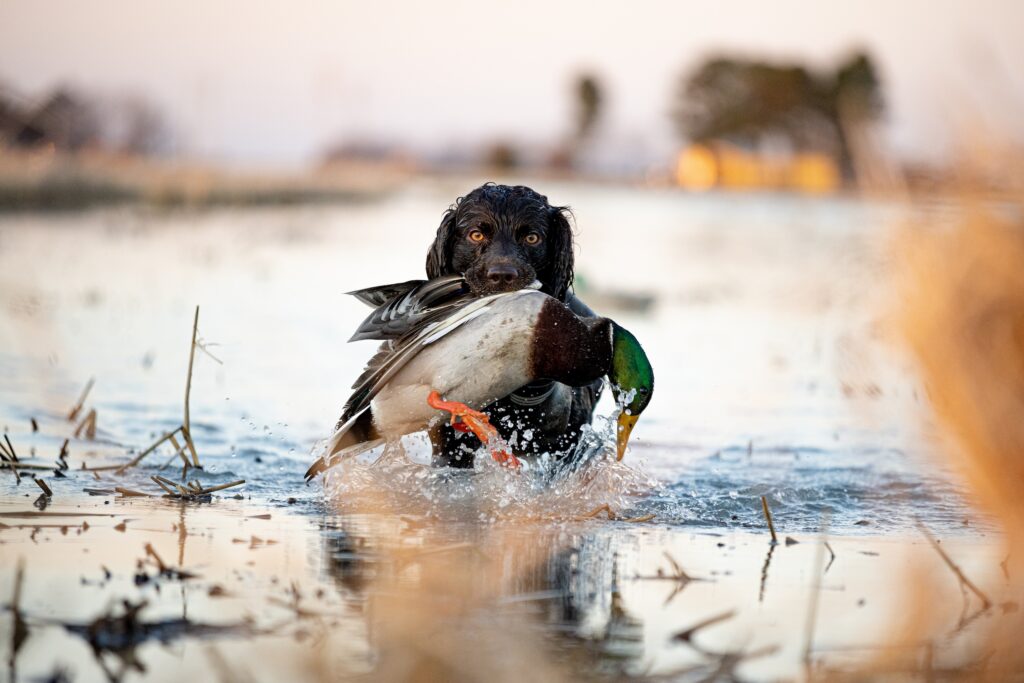
When it comes to the best waterfowl hunting dogs, the table below gives a quick side-by-side look at several duck hunting dog breeds with well-documented histories. Note: this is a comparison, rather than a ranking, but it should help you match the right dog to your lifestyle and hunting approach. And remember, individual dogs vary, so treat these details as a starting point.
| Breed | Size | Coat And Water | Background | Source |
|---|---|---|---|---|
| Labrador Retriever | 55 to 80 lb | Short, dense, water-repellent double coat | Bred for water retrieving | UKC |
| Chesapeake Bay Retriever | 55 to 80 lb | Oily double coat built to resist water | Developed along the Chesapeake Bay for waterfowl | CKC |
| Golden Retriever | 55 to 75 lb | Dense, water-repellent coat with good undercoat | Developed in Scotland for waterfowl and upland game | GRCA |
| Boykin Spaniel | 25 to 40 lb | Flat to moderately curly coat of medium length | Bred for hunting from small boats in South Carolina | BSS |
| American Water Spaniel | 25 to 45 lb | Wavy to curly coat with a dense undercoat | Developed in Wisconsin’s Fox and Wolf River valleys | AWSC |
| Nova Scotia Duck Tolling Retriever | 37 to 51 lb | Water-repellent double coat | Bred to lure and retrieve waterfowl | Dogs NSW |
The Lab’s got a story that starts on the water. According to the United Kennel Club, its ancestor was the St. John’s dog from Newfoundland. Those dogs reached England, where gamekeepers crossed them with gun dogs to sharpen hunting and retrieving instincts.
Today’s Lab is an easy duck dog to like. UKC describes a friendly, outgoing dog that’s keen to please. They have a good nose, a soft mouth, and a short double coat that shields them during water retrieves. That temperament of a Lab comes in handy when your duck hunting dog also doubles as the house dog.
You may hear hunters talk about American and English Labs. The Puget Sound Labrador Retriever Association shares the Labrador Retriever Club’s position that there’s only one breed. It suggests “field” and “show” as better labels for those differences in style. Those labels won’t tell you a dog’s temperament or trainability, so make sure to have a conversation with a breeder about this.
The Canadian Kennel Club standard traces the Chessie dog breed to the Chesapeake Bay, where it hunted waterfowl in rough weather and water. Wind, tide, ice, and long cold swims were all part of the job.
That history shows in the Chessie’s coat. A harsh outer layer and woolly undercoat hold natural oil, which helps keep cold water from reaching the skin. Even its coat color is meant to blend in on the marsh, with shades running from deadgrass and sedge to brown.
Temperament is an important consideration as well. This breed of duck hunting dog is valued for a bright, happy disposition, intelligence, and an affectionate, protective nature. If you hunt big water and love a duck dog with deep roots, the Chessie is worth a spot on your list of potential waterfowl hunting dogs.
Are goldens good duck dogs? They can be. The GRCA traces the breed to the hunting field, and its standard still calls the golden primarily a hunting dog. The club describes a retriever built to work on land and in water.
The golden’s roots trace to the Scottish Highlands. Dudley Marjoribanks, the first Lord Tweedmouth, kept detailed breeding records at his Guisachan estate. In 1865, he bought a yellow pup named Nous. Nous was later bred to a Tweed Water Spaniel named Belle, and their four pups started the breed.
If you’re looking at goldens as duck hunting dogs, take a close look at the coat. GRCA explains that excessive coat doesn’t suit a hunting dog, since it can hold water and collect debris.
Can a pointing breed hunt ducks? Many can, with the right training. Versatile waterfowl hunting dog breeds appeal to hunters who want one partner for upland birds and ducks.
The North American Versatile Hunting Dog Association (NAVHDA) tests can show you what these dogs are capable of in the water. The group’s higher-level tests include walking at heel, staying steady by a blind, retrieving a duck, and searching for a duck in the water. If you’re considering versatile duck hunting dogs, ask whether the parents have NAVHDA test results to share.
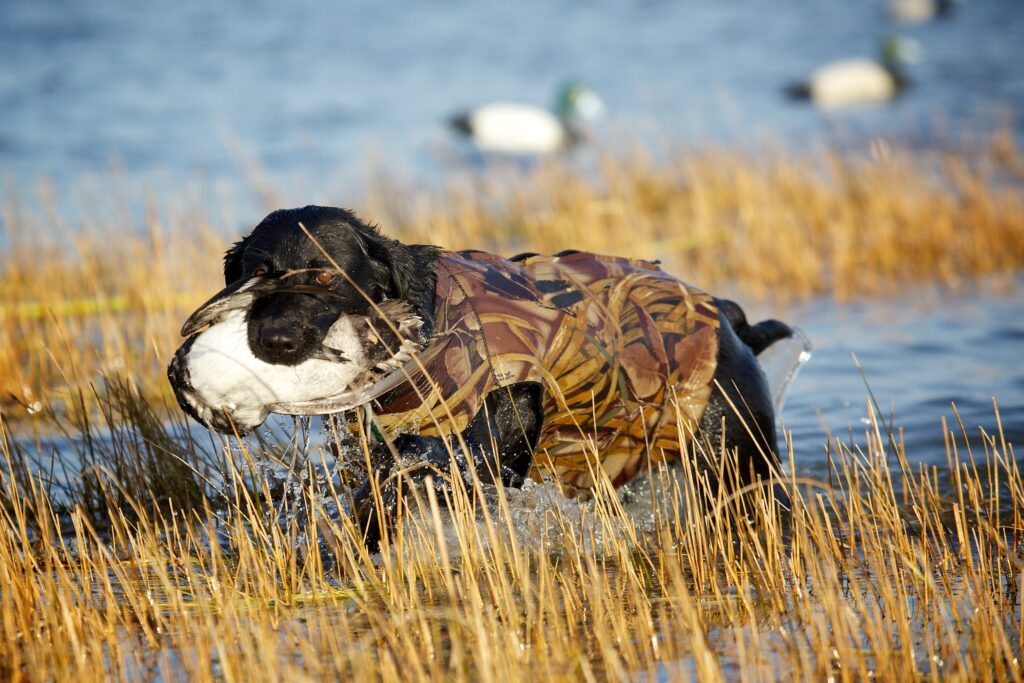
Once you’ve settled on a breed, start with its breed club. A club can point you toward breeders and explain what to look for in that breed. The American Wirehaired Pointing Griffon Association publishes a list of buyer questions that works as a helpful model for many duck hunting dogs.
If you want a duck hunting dog, ask about the work behind the pedigree. Questions like these can help:
Hunting lines can vary from one breeder to the next, so these talks are worth the time. The Puget Sound Labrador Retriever Association recommends discussing size, style, temperament, and trainability with any breeder you contact. And for health questions, your breed club and veterinarian are the right people to ask.
Waterfowl hunting dogs come at different stages. A puppy gives you the most time together (but often the most training to do). A started or finished dog has already had some of that work done. Your schedule and experience can help you decide which route makes sense.
Titles can help you read a pedigree. The GRCA’s field title guide describes three common hunt test levels:
Dogs in these tests are judged against a standard, without competing against each other. That makes titles a handy reference for comparing duck hunting dogs and the parents behind them.
What does a duck hunting dog cost? It varies by breed, breeder, training, and location. Ask each breeder what’s included so you can compare fairly.
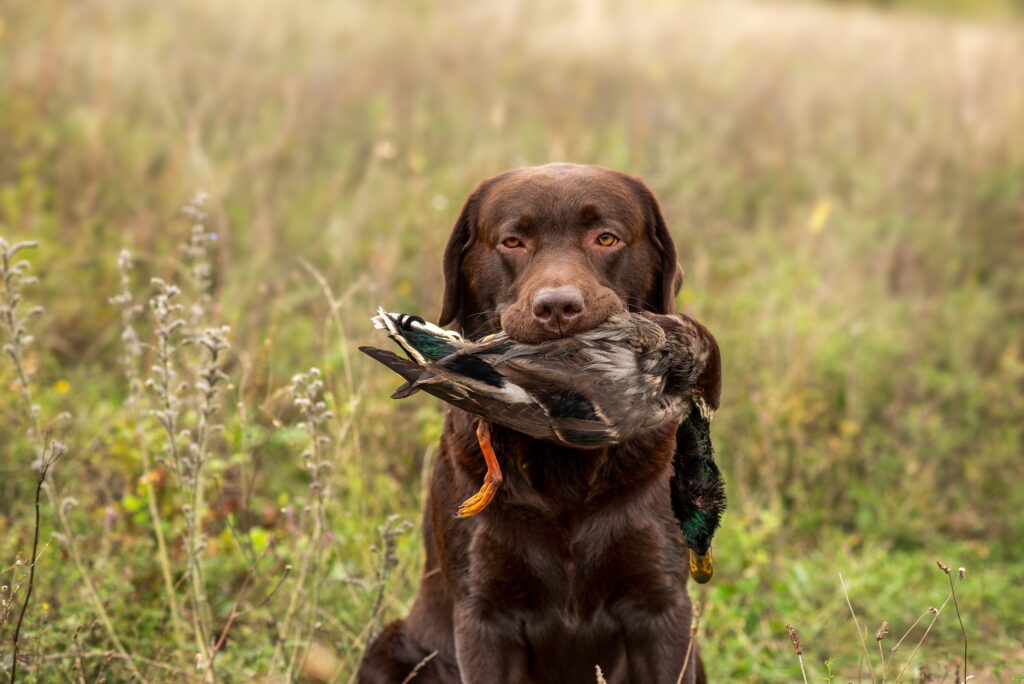
Good duck hunting dogs are built one training session at a time. Hunt tests can give you a useful roadmap, even if you never plan to enter one. Here are a few ways to prepare a duck hunting dog for opening day.
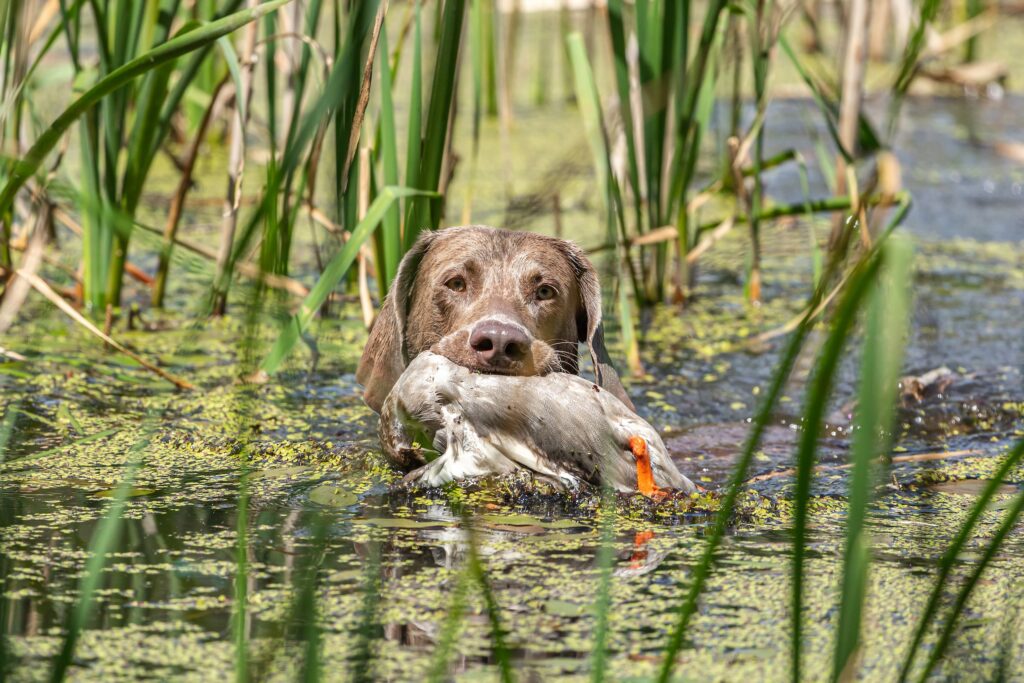
The right duck dog can change how a season feels. Off-season training gives you a reason to get outside. Opening morning has a little more excitement in it. A clean retrieve across a quiet pond can stay with you for years.
The best duck hunting dogs also become part of the family story. Kids grow up around them. Hunting partners tell stories about them. Long after a season ends, you’ll likely remember the duck dogs beside you as much as the birds you were hunting.
That’s the heritage of waterfowl hunting dogs. From Great Lakes punts to Scottish estates, these dogs have long been tied to people and places. Your duck dog can carry that tradition forward on the ground you call home.
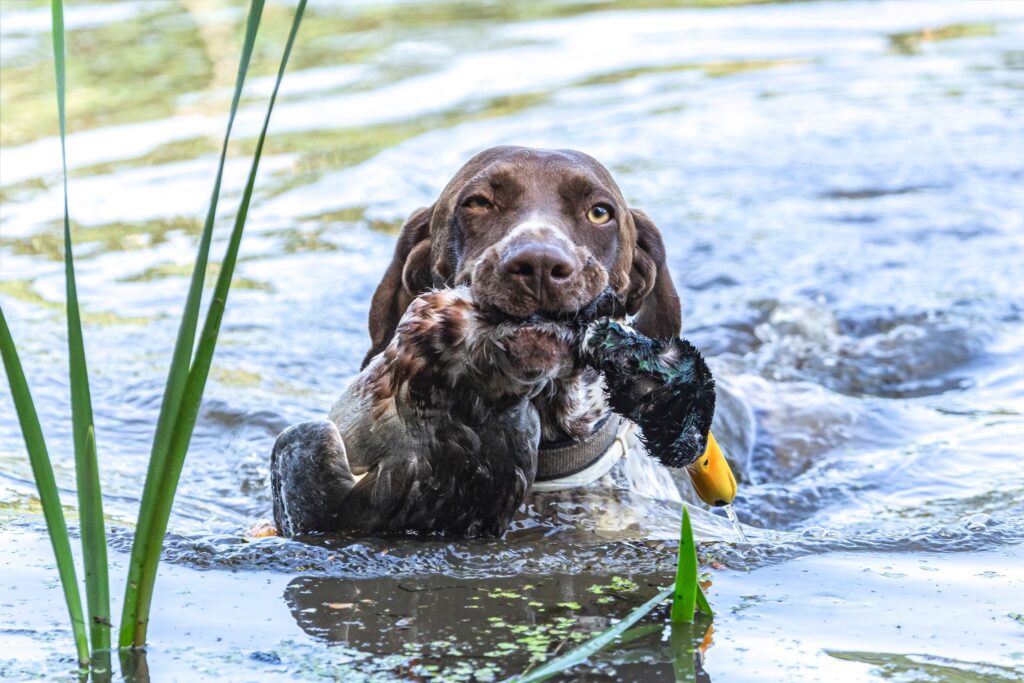
Duck dogs need good places to work, and owning land can open up some great opportunities for waterfowl hunting. Shopping for property with waterfowl hunting dogs in mind? Add a few questions to your checklist:
Hayden’s waterfowl hunting properties range from fully dialed duck hunting paradises to blank slates on key migration corridors. A blank slate can be a fun project for hunters who want to shape the ground around their dogs.
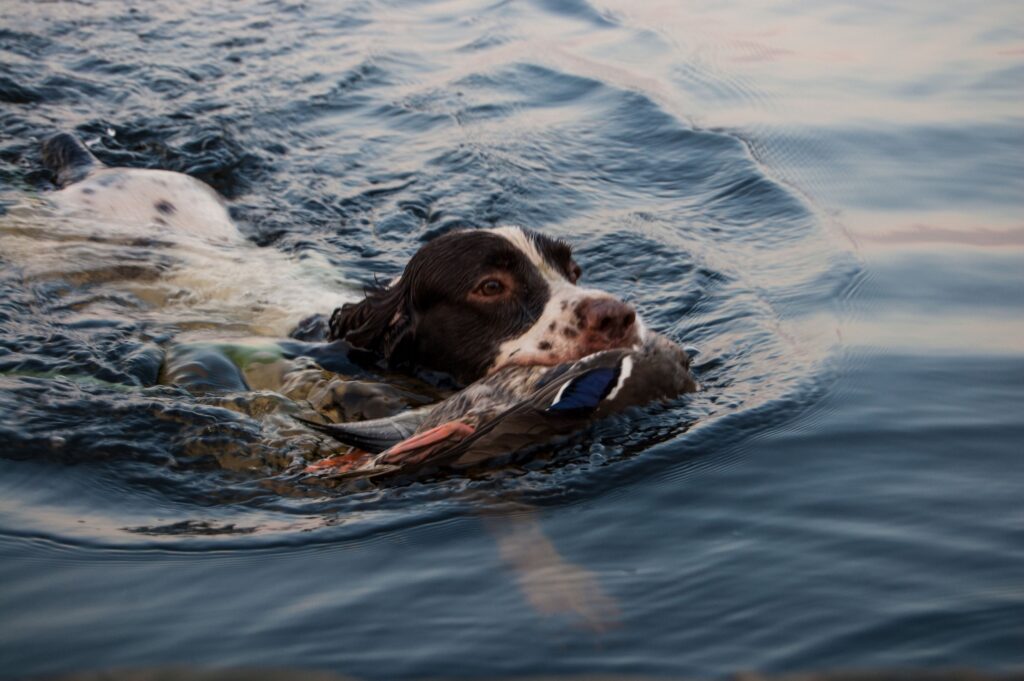
Once you’ve found the right partner, the next step is finding a place to hunt together. When you own your hunting property, you play a bigger role in deciding when to hunt, who joins you, and how to manage the land. Our team knows what makes for good waterfowl hunting land, and we’re here to guide you through the process.
When you buy hunting land, you’re creating a legacy. If you’re ready to find ground for you and your duck hunting dogs, we can help you narrow down the ideal waterfowl hunting property; something that can be passed along for generations of hunters to come.