
×

Sign in
Sign in to save favorite properties and equipment, save your search parameters and more
Don’t have an account yet? Sign Up Now
Sign up
Already have an account? Login Now


 866-741-8323
Sign in
Sign in to save favorite properties and equipment, save your search parameters and more
Don’t have an account yet? Sign Up Now
Sign up
Already have an account? Login Now
866-741-8323
Login
Sign in
Sign in to save favorite properties and equipment, save your search parameters and more
Don’t have an account yet? Sign Up Now
Sign up
Already have an account? Login Now
Sign in
Sign in to save favorite properties and equipment, save your search parameters and more
Don’t have an account yet? Sign Up Now
Sign up
Already have an account? Login Now
 Back to Blog
/
Hunting and Fishing /
Back to Blog
/
Hunting and Fishing /
There’s a particular kind of quiet that settles over a mountain basin an hour before first light, right before a bull starts bugling. If you’ve heard it, you know why so many hunters build their whole year around one elk hunting season. If you haven’t yet, you’re probably here because you’re trying to figure out the best state for elk hunting and where that first trip should happen.
Picking the best state for elk hunting isn’t as simple as it sounds. Herd numbers, draw systems, tag costs, terrain, and season timing are all a part of the equation, and what makes one state the best state to hunt elk for a budget-minded first-timer might make that place less of a fit for someone chasing a trophy bull.
Elk hunting has long been a little different from other pursuits in the hunting world. It’s tied up in family trips, in tags saved for years, in trucks packed the night before opening morning. It’s a tradition worth honoring, and it’s why guessing your way into a state, or choosing whatever state your buddy hunted elk in last year, usually isn’t the move.
At Hayden Outdoors, our land specialists hunt elk themselves, and they know the type of land these creatures roam. We’ve built our hunting guide with this in mind: straight, sourced, and grounded in experience.
We’ll break down what actually separates a good elk hunting state from a great one, then walk state by state through eight of the best elk hunts in the US, backed by data from the agencies that report on these herds. By the end, you’ll know where to hunt elk based on your own particular hunting goals (and which states may not make sense at the moment).
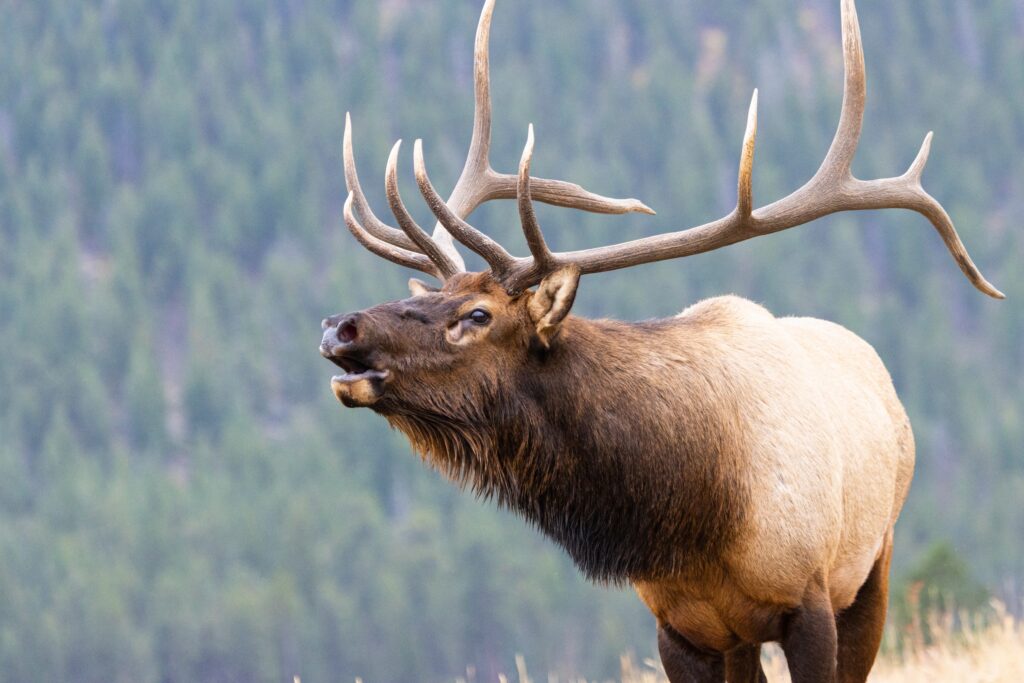
Here’s how we sized up our list of the best places to hunt elk across the US. None of this is a rigid scoring formula. These are the same handful of questions a smart hunter asks before spending their hard-earned time packing it up to a core elk hunting state during peak season.
Herd population and trend: When determining where to hunt, total elk herd numbers are important, but so is the growth trend. We looked at current population estimates from state wildlife agencies and the Rocky Mountain Elk Foundation, and where possible, the direction that number has moved over the past few years.
Permit system: Some states still sell general season elk hunting tags over the counter. Others run a straight lottery, a preference point system that rewards patience, or a bonus point system that blends points with pure luck. Knowing which one you’re dealing with changes how you plan your whole elk hunting season.
Draw odds trend: A single year’s odds are a snapshot. We looked at multi-year direction wherever agency data made that possible, because odds that are getting tighter can help you determine whether it’s worth applying again during next year’s elk hunting season.
Public land access: The share of a state that’s open to public hunting versus locked up in private ownership determines how much of that “best place to hunt elk” reputation you can actually act on without an invitation.
Tag cost: Resident and non-resident license and tag fees can vary quite a bit, and several states have raised non-resident elk hunting fees substantially in the past two years. We’ve included current, sourced numbers below so you’re working from this year’s real costs.
Terrain and climate: Elevation gain, timber density, and the weather a hunter can expect during archery versus rifle season all shape how physically demanding an elk hunt will be, and what gear actually belongs in the truck.
Disease management: Chronic wasting disease surveillance zones are active in parts of several of these states. It’s not something to be afraid of. This is something worth knowing before you plan your elk hunt in these places.
Hunter success and satisfaction: Several US states survey their own hunters after the elk hunting season closes, asking about crowding, satisfaction, and why a tag went unfilled. Colorado, for instance, contracts an outside firm to survey roughly 180,000 hunters a year on exactly these questions, which gives a clear picture of what a season actually feels like.
Elk Hunting Pro Tip: Every state on this list has real strengths, and a tradeoff on one factor (say, cost, or draw odds) is usually balanced out by a strength somewhere else, like public land access or trophy quality. The goal of the table below, and everything that follows, is simply to help you match your own elk hunting goals to the state that fits them best.
| State | Approx. Elk Population | Permit System | Resident Tag Cost | Non-Resident Tag Cost |
|---|---|---|---|---|
| Colorado | ~280,000 | OTC (most units) & limited draw | $70.40 | $845.16 |
| Wyoming | ~109,000 | Preference point draw | $62 | $707 regular / $1,965 special |
| Montana | ~150,000 | Draw (Combination license) | $20 | ~$1,112 |
| Arizona | ~35,000 | Bonus point hybrid draw, 10% NR cap | ~$148 | $160 license + ~$650 tag |
| New Mexico | ~104,000 | Draw, outfitter pool | $100 | $773 standard / $998 quality |
| Idaho | ~120,000 | Moving to draw for 2026 | $36.75 tag + $15.75 license | ~$652 tag + $185 license |
| Utah | ~83,020 | OTC general & limited entry draw | $56 general / $314 limited entry | $849 general/$1,950 limited entry |
| Oregon | ~133,000 combined | Draw, 5% NR cap; OTC Roosevelt | $56 | $660 |
Note: Figures are current at the time of writing. Fees and quotas can change year-to-year, so always confirm current numbers directly with the issuing agency before you apply.
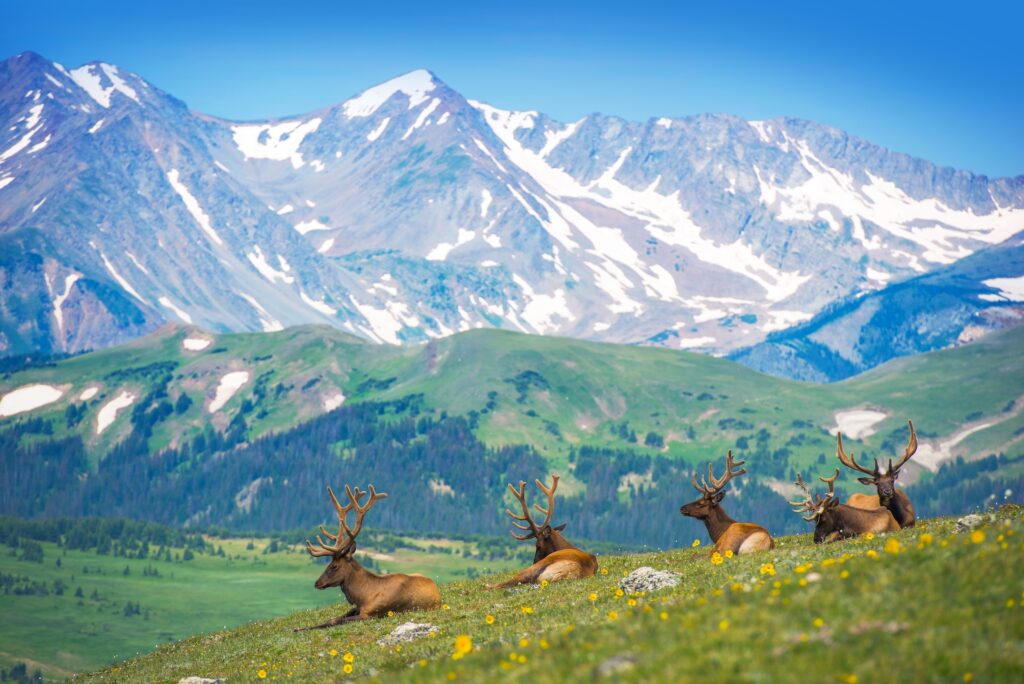
Colorado has more elk than any other state in the US, which is why it’s often a crowd favorite during hunting season. Colorado Parks and Wildlife puts the state’s herd at more than 280,000 animals, a number that took decades of restoration work to reach after the state’s elk population had dropped to fewer than a thousand animals by 1910. If raw numbers matter to you when weighing where to hunt elk, Colorado is an excellent state to consider for hunting season.
What makes Colorado stand apart from most of the states on this list is that a good share of its elk tags are still sold over the counter, not drawn through a lottery. That means a hunter can decide in July to go elk hunting in the state of Colorado during fall and actually make it happen, which is often rare in the modern West.
Limited draw units exist too, for hunters chasing specific herds or trophy potential, and CPW publishes draw recap data every year showing exactly how many licenses were available, how many hunters applied, and how many preference points it took to draw.
Terrain varies enormously across the state, from the high alpine basins of the San Juans to the sage country of the northwest. A non-resident archery or rifle elk hunting tag in the state of Colorado currently runs in the $800 to $850 range, on top of a habitat stamp and license fees, which is moderate compared to several neighboring states.
Colorado does maintain chronic wasting disease surveillance in a number of units, and the state’s own big game harvest survey, run each year with a very large sample of hunters, tracks satisfaction and perceived crowding alongside harvest numbers.
Northwest Colorado’s herds around Meeker and Steamboat Springs took a hard hit during the intense winter of 2022-23, with license numbers cut sharply in response, but CPW has reported those herds recovering through 2025 and 2026 and is now proposing more elk hunting opportunity back into that section of the state.
Colorado is a state that fits the elk hunter who wants flexibility, a genuine shot at an OTC hunting tag, and access to some of the largest public land tracts in the Rockies. It’s a strong answer for anyone asking what the best state for elk hunting looks like if they want options rather than a single narrow path.
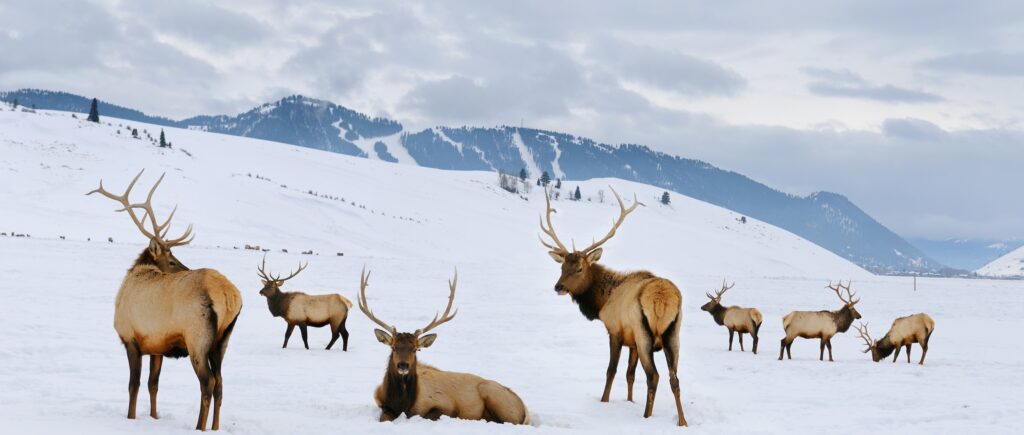
Wyoming runs its elk program on a preference point system, and once you get the hang of it, it’s actually one of the more transparent draws in the country. The Wyoming Game and Fish Department estimates the statewide elk population at around 109,000 animals. WGFD also publishes its preference point fees directly: $52 per point for non-resident elk, on top of license and tag costs, with roughly 75% of tags allocated to the applicants holding the most points and the remainder filled by random draw.
WGFD’s current fee schedule lists the nonresident full-price elk and fishing license at $707, with a special-draw version at $1,965 for hunters chasing better odds in premium units. Residents pay $62 for the equivalent license.
Wyoming’s real strength as one of the best elk hunting places in the US is what’s underneath the tags: nearly half the state is public land, threaded through the Bighorns, the Wind River Range, and the edges of the Greater Yellowstone Ecosystem, giving hunters enormous room to roam.
The tradeoff is patience. Point creep is real here, and current data shows hundreds of non-resident applicants sitting on maximum points in the most sought-after units, still waiting their turn. That’s not a knock on the state; rather a fact worth planning around, the same way a good hunter plans around elevation or weather.
Weapon seasons in Wyoming typically stack from early September archery through late fall rifle hunts, with specific dates set unit by unit, so a hunter can plan around the rut or around when the elk have moved down out of the high country, depending on what kind of hunt they want.
For a hunter willing to build points over several elk hunting seasons, or one who’s happy chasing a solid bull in a less crowded unit right away, the state of Wyoming remains one of the best elk hunts in the US for public land solitude. It rewards the hunter who treats the application process as part of the hunt itself, not an obstacle standing between them and the woods.
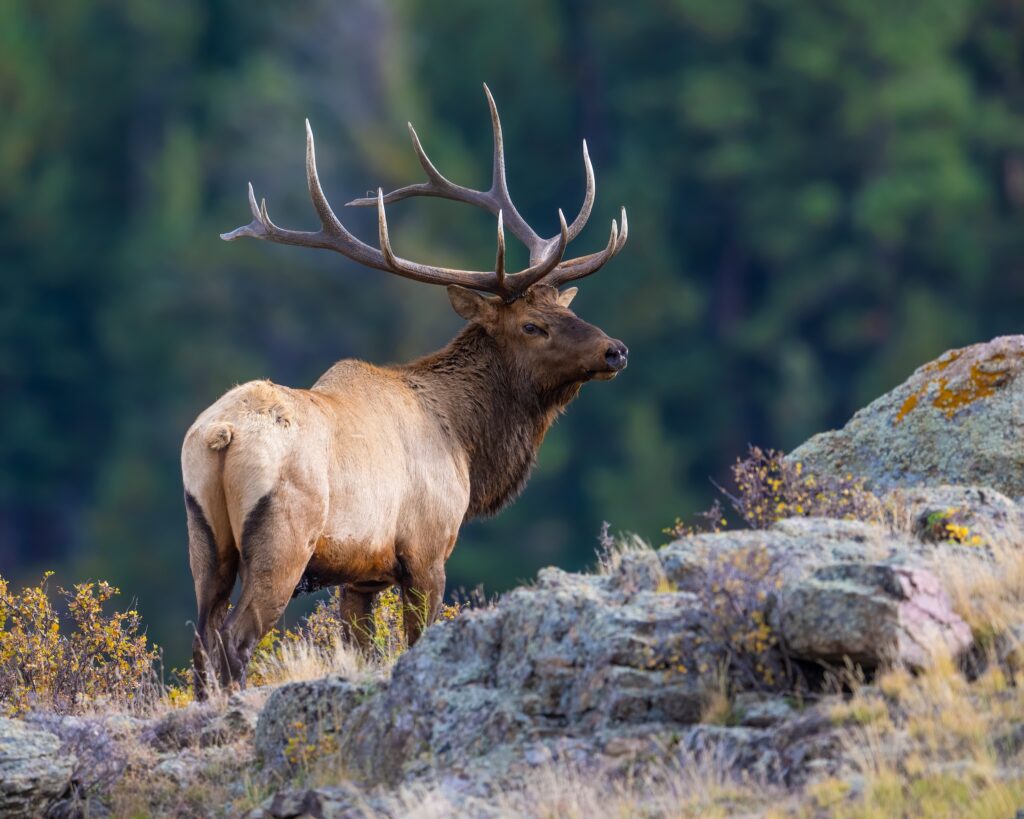
Montana holds a reputation as a state built for elk hunters who want to do everything themselves, and that reputation mostly holds up. It comes down to one specific rule, or rather the lack of one: Montana doesn’t require non-resident hunters to hire a guide or outfitter anywhere in the state, including its federally designated wilderness areas. A hunter can buy maps, study the Hunt Planner, and walk into the Bob Marshall or the Bitterroot-Selway country entirely on their own terms.
Montana Fish, Wildlife and Parks puts the statewide elk population at roughly 150,000 animals, one of the largest herds anywhere in North America, spread across that same public backcountry. Non-residents can no longer walk up and buy a general elk hunting license over the counter, though. Instead, Montana Fish, Wildlife and Parks runs a Combination license drawing, with the General Elk Combination currently priced around $1,112 (application windows run from March 1 through April 1 each year).
It’s worth noting that that cost is higher than several neighboring states. But what you get for it is access to some of the most storied elk hunting country in the Lower 48 states, from the Bob Marshall Wilderness to the Missouri River Breaks. Roughly a third of the state is public land, and Montana also sells individual Elk B licenses (antlerless tags tied to specific hunting districts) both through a drawing and, later in the season, over the counter, which gives a hunter more than one path into the field even without a general tag.
Montana’s elk seasons stretch long, with archery typically opening in early September and general rifle season running into late November, giving hunters real flexibility in when they plan their hunting trip. Weather is worth planning around too, though. Late-season rifle hunters in Montana’s higher basins should expect potentially heavy snow and single-digit mornings by the time November closes out, which is part of what makes the hunting so good once elk push down out of the high country ahead of it.
For a hunter who wants a demanding, self-guided elk hunt on genuinely wild ground, the state of Montana earns its old school reputation.
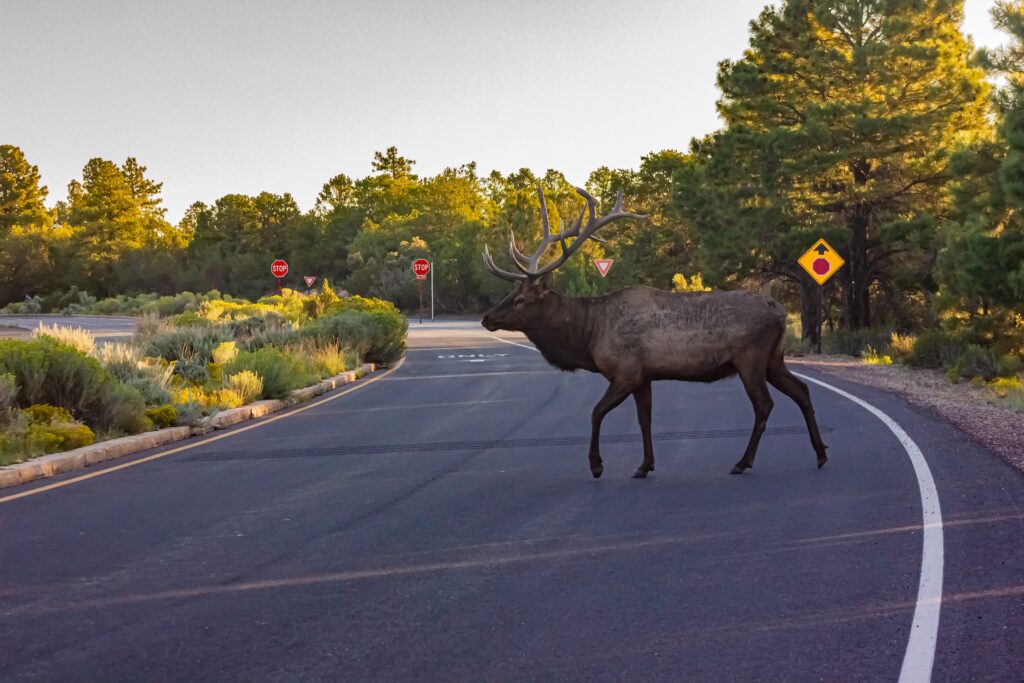
Arizona plays a different game than most of the states on our list of best places for elk hunting. It isn’t chasing volume; it’s chasing quality, and it delivers. The Arizona Game and Fish Department puts the statewide elk population at roughly 35,000 animals, the smallest herd on this list. Non-resident tags are capped at 10 percent of the total allocation for any given hunt, which keeps pressure low in the state’s best units and helps bulls reach the age and antler mass Arizona is known for nationally.
The draw itself is a hybrid system: about half of state non-resident elk hunting tags go to applicants with the most bonus points, and the other half are awarded through a true random drawing, meaning even a first-time applicant has a real, if modest, chance at hunting for elk in the state.
An Arizona state non-resident combination hunting and fishing license runs about $160, with the elk hunting tag itself priced around $650 if you draw. Arizona’s premier units, concentrated around the Mogollon Rim and White Mountains, are managed specifically for mature bulls, and the trophy quality coming out of those units is a big part of why serious elk hunters keep applying with the state year after year, even with long odds.
The state of Arizona also publishes its full elk harvest and survey data every year, down to draw odds and post-season hunting questionnaires. This year-over-year transparency is helpful if you’re building a multi-year bonus point strategy, since it lets you track how odds are actually trending in a specific unit rather than relying on last season’s numbers alone.
This is the state for an elk hunter whose top priority is inches on the antler and whose patience for a multi-year application strategy is high. It’s a tougher draw than Colorado or Wyoming, but for the hunter chasing the best state to hunt elk for trophy potential specifically, Arizona is one of the top places.
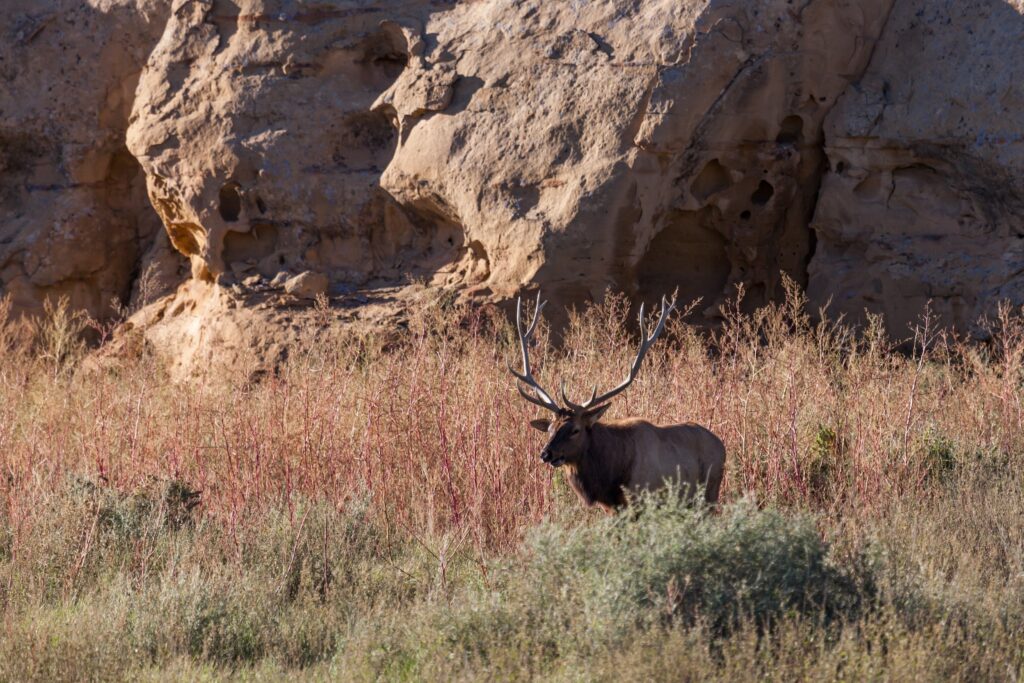
New Mexico shares Arizona’s reputation for producing exceptional bulls, and the state backs it up with a licensing structure built around quality. New Mexico Game and Fish estimates the statewide elk population at around 104,000 animals, spread across herds that the department describes as stable to slightly increasing.
The department also issues two tiers of elk licenses: a standard tier currently priced around $773 for non-resident elk hunting, and a Quality or High Demand tier, covering the state’s best units, priced around $998. Residents pay $100 for either tier.
Up to six percent of licenses go to non-residents applying without a New Mexico outfitter, with an additional ten percent set aside specifically for the outfitter pool, meaning a hunter working with a licensed New Mexico guide has better odds than someone applying solo for an elk hunting license.
New Mexico’s elk country ranges from the high country of the Sangre de Cristos to the Gila Wilderness, one of the largest roadless areas in the country. For hunters not drawn in the public lottery, the state also allows landowner hunting tags, generally priced well above draw tags but offering access to private ground managed specifically for elk without needing to win the public draw. Prices for those landowner tags vary by unit, but hunters should plan on a higher price than a standard draw tag, in exchange for that more direct path to a tag.
Between the guided pathway and the landowner option, New Mexico offers more structured routes to a tag than most of the premier elk hunting states in the West, which makes it a strong fit for a hunter who wants trophy potential without staking everything on a single lottery draw.
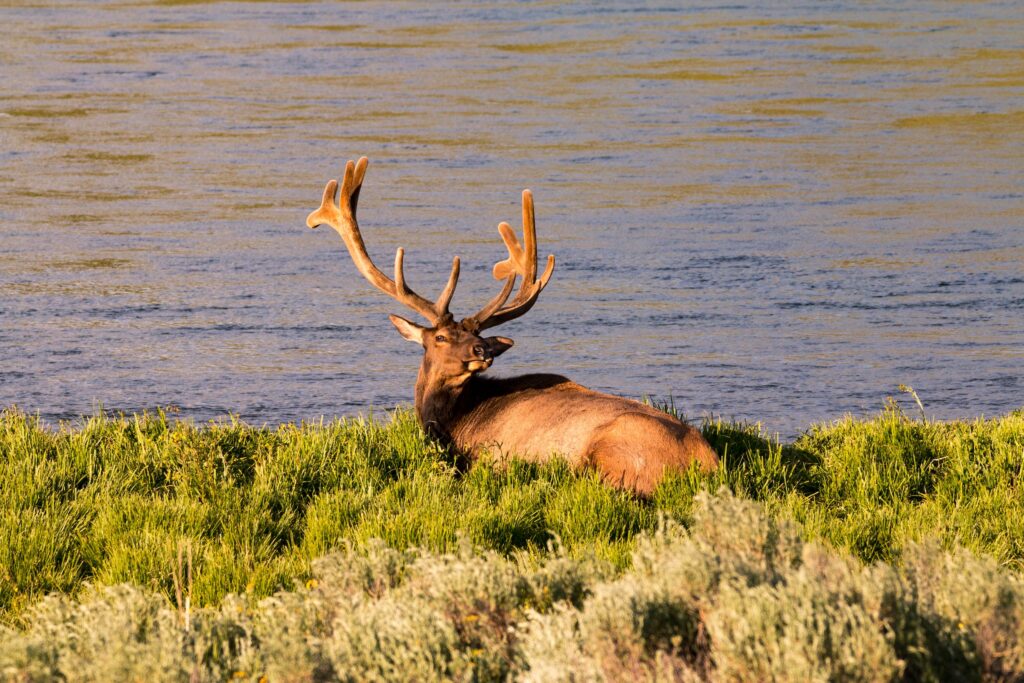
Idaho has more public land open to hunting than almost any state on this list, with well over half the state available to hunters, and Idaho Fish and Game puts the statewide elk population at more than 120,000 animals, spread across some of the most varied elk habitat in the country.
The state is currently going through one of the biggest changes to its non-resident elk hunting program in decades: for years, Idaho sold non-resident general season elk and deer tags over the counter on a first-come, first-served basis, which made it a favorite for hunters who didn’t want to gamble on a draw. Idaho Fish and Game announced the state was moving to a draw system for non-resident general tags starting in the 2026 season, after demand grew so heavy that tens of thousands of hunters were competing online for a much smaller pool of tags each December.
The non-resident elk hunting license in Idaho state currently runs about $185 to purchase before applying, non-refundable whether or not you draw, and a non-resident elk tag itself is priced around $652. The state of Idaho manages elk across 28 zones and nearly a hundred hunting units, most of which remain open to general season hunting rather than requiring a separate limited-entry application, even under the new draw framework.
Idaho’s elk zones and units are spread across the whole state, which means a hunter who doesn’t draw a coveted unit still has dozens of other zones to choose from, most of them open to general season hunting rather than requiring a separate limited-entry draw. That breadth is part of what’s made Idaho a longtime best state for hunters who want real choice in where they elk hunt each fall.
What the state of Idaho actually offers, once you’re through the licensing side of things, is genuinely rugged country for elk hunting: the Frank Church Wilderness, the Selway-Bitterroot backcountry, and drainages where a hunter can go days without seeing another truck. It’s a demanding place to hunt physically, with steep, timbered terrain that rewards fitness and solid map skills.
For a hunter chasing a real backcountry experience and willing to adjust to the state of Idaho’s new draw process, it remains one of the best places to hunt elk in the country, just with a licensing process that looks different than it did even two years ago.
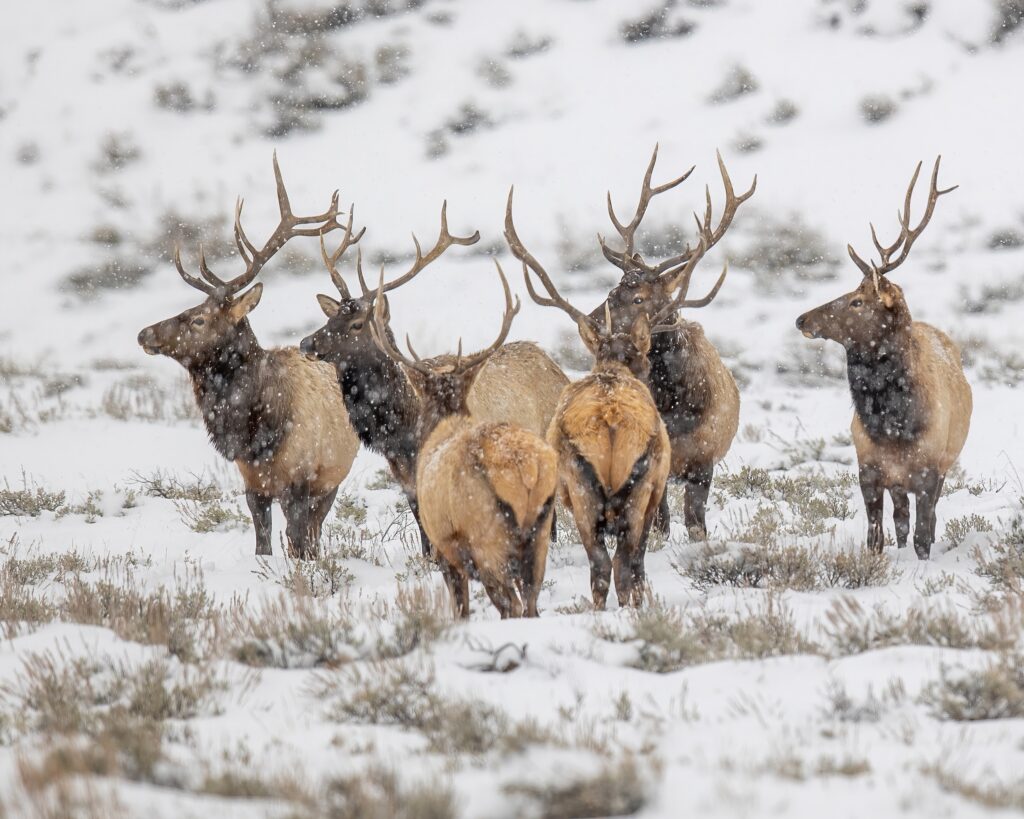
Utah runs one of the more thoughtfully managed elk hunting programs in the West, and it shows in the bulls coming out of the state’s limited entry units. The Utah Division of Wildlife Resources put the statewide elk population at roughly 83,020 animals in its 2026 permit recommendations, slightly above the state’s own management objective of 80,600.
That elk herd is split between general season country and specific limited entry units, like the Book Cliffs, Henry Mountains, and Wasatch Mountains, managed specifically to grow older age-class bulls rather than maximize tag numbers for the state.
The state of Utah gives elk hunters two real paths into the field. General season bull tags, including an over-the-counter option for archery, spike bull, and any-bull hunts, are currently priced around $849 for non-residents. Limited entry tags, covering the state’s premier trophy elk units, run about $1,950 and require a bonus point application, with the most competitive units taking many years of points to draw. The state of Utah raised its non-resident elk hunting fees substantially in 2025, so if you’ve seen older pricing elsewhere, it’s worth double-checking.
The structure means a non-resident hunter isn’t locked into a single strategy. You can buy a general season tag most years and hunt, while simultaneously building points toward a limited entry unit for the hunt of a lifetime down the road.
The state of Utah’s general season archery elk hunt typically opens in mid-August, ahead of most neighboring states, giving hunters an early crack at rutting bulls before the crowds and the cold weather show up.
For a hunter who lives for a layered, long-term approach to elk hunting, and who wants a real shot at a genuinely mature bull without needing a guide to get there, the state of Utah is one of the best places to consider.
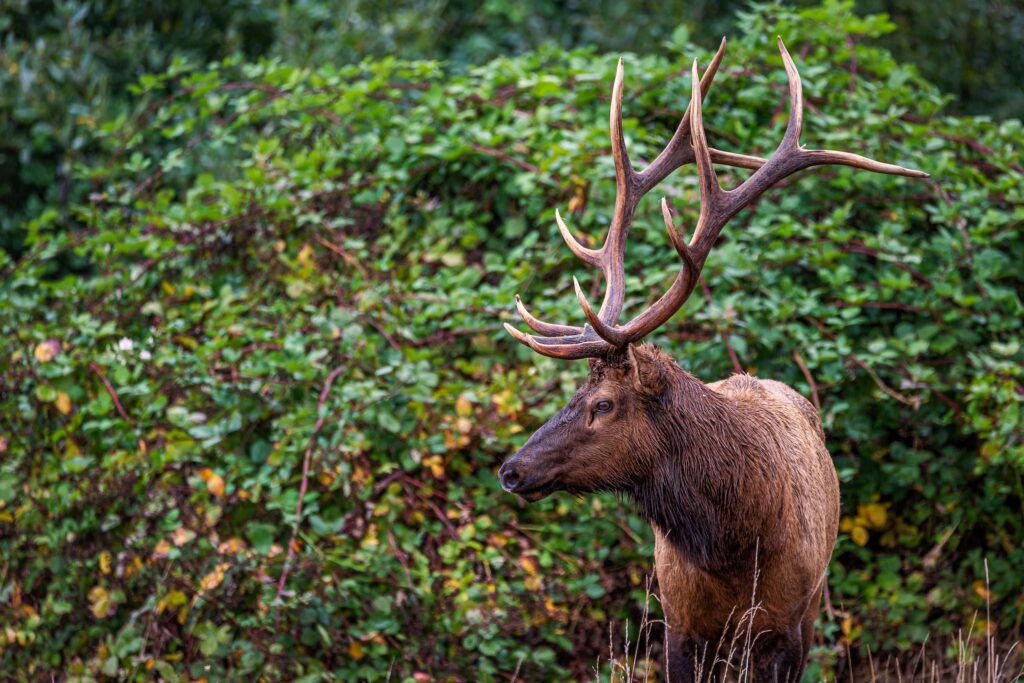
Oregon is the one state on this list where a hunter gets a real choice between two different animals. Rocky Mountain elk roam the state’s eastern high desert and Blue Mountains, with a population the Oregon Department of Fish and Wildlife estimates at more than 74,000 animals, while Roosevelt elk, the heaviest-bodied elk subspecies in North America, live in the thick, wet timber of the Coast Range and western Cascades, with ODFW estimating that population at around 59,000.
The hunting experience each elk type offers is genuinely different. Mature Roosevelt bulls can top 900 pounds on the hoof, heavier than almost any Rocky Mountain bull, even though their antlers typically don’t score as high by Boone and Crockett standards.
Non-resident tag allocation for controlled hunts in the state is capped at five percent, which keeps Oregon’s premium eastern units tightly limited and helps explain why some of the best Rocky Mountain elk hunting tags here can take a decade or more of preference points to draw.
Roosevelt elk hunting is a bit different. Much of Oregon’s Roosevelt archery and rifle hunting remains available over the counter, meaning a hunter can plan a Roosevelt elk hunt on relatively short notice, even if the terrain (steep, brushy, coastal rainforest) makes it one of the more physically demanding places to hunt on this list. A non-resident elk tag runs roughly $610 to $660, on top of a non-resident hunting license currently priced near $193.
Oregon suits two very different elk hunters well: the patient point-builder hunting a trophy Rocky Mountain bull in the state’s eastern units, and the hunter who wants a genuinely tough, OTC coastal hunt without years of waiting.
Weather is a real factor either way. Eastern Oregon’s rifle seasons run into cold, sometimes snowy conditions in November, while the coastal archery season in late August and September stays milder but wetter, with the thick understory of the Coast Range holding moisture well into fall. Few of the best elk hunting states let you choose between those two genuinely different experiences under one license system, making Oregon quite the unique place to hunt.
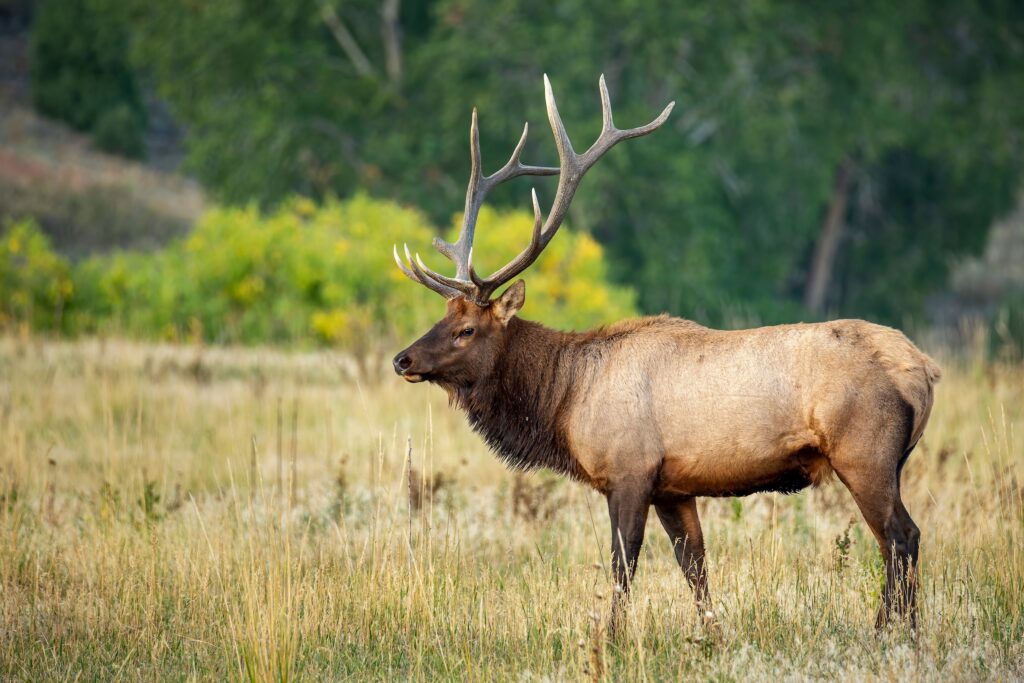
With eight states on the table, it helps to sort them by what you’re actually after during your elk hunt. Here’s the breakdown:
States that are the easiest entry point for a first elk hunt: Colorado’s OTC units and Utah’s general season bull tags both let a non-resident hunter plan and hunt in the same year, without years of point-building first.
States with the best trophy potential: Arizona and New Mexico consistently produce some of the largest bulls in the country, thanks to tight non-resident elk hunting tag caps and unit management built around mature age classes.
States with the most budget-friendly path: Colorado and New Mexico’s standard-tier license both land under $850 all-in for a non-resident tag, considerably less than Utah’s limited entry or Montana’s combination license.
States that are the best fit for a demanding backcountry hunt: Idaho and Montana both offer genuinely wild, low-pressure country for an elk hunter willing to earn the hunt on foot.
Best draw odds trend right now: The state of Colorado’s OTC availability and Utah’s general season tags currently offer the most reliable non-resident elk hunting access without a multi-year points strategy.
As for guided versus do-it-yourself, both paths lead to a great hunt in the right state: An elk hunting guide matters most in places like New Mexico, where the outfitter pool changes your draw odds, or in thick coastal terrain like Oregon’s Roosevelt units, where local knowledge saves time. In more open public-land states like Wyoming and Colorado, plenty of elk hunters do it entirely on their own, with nothing but a good map, a point system, and a season’s worth of scouting for elk before the hunt.
It’s also worth thinking about how each state fits into a longer elk hunting strategy rather than a single trip. A hunter building points in Wyoming or applying for Arizona bonus points every year isn’t just planning next season; they’re playing a decade-long game.
Colorado and Utah reward a hunter who wants to hunt something almost every year, even if it’s not always the premium unit. Arizona, New Mexico, and Wyoming’s top units reward the hunter willing to wait years for one exceptional season.
The choice of best place to hunt elk comes down to whether you’d rather hunt often or are okay with waiting to hunt big, and there’s no reason you can’t do both by spreading your applications across more than one state.
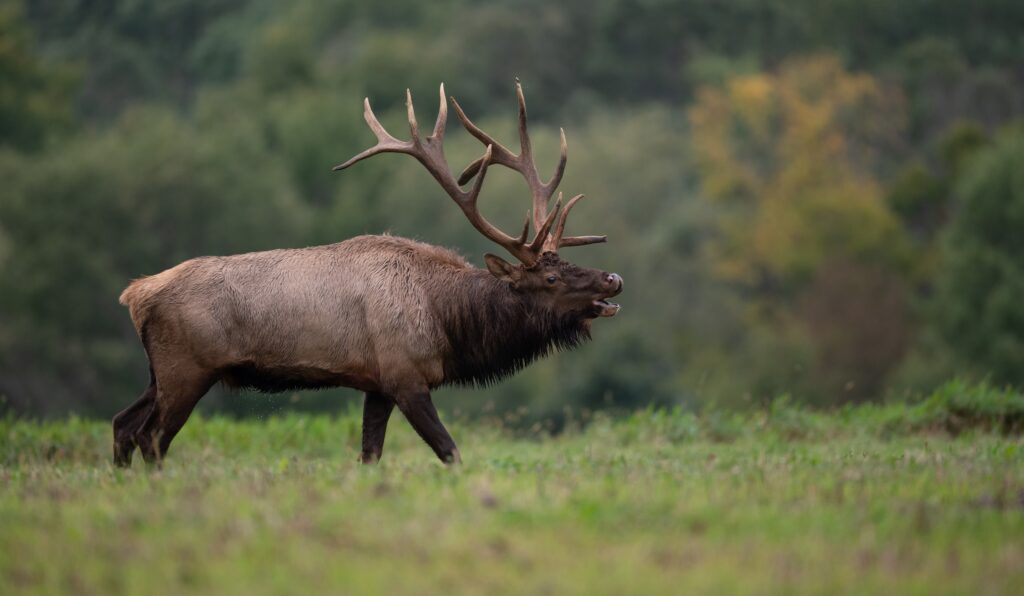
Every state above offers a real shot at a great elk hunt, and understanding the tradeoffs, the draw odds, the cost, and the terrain is exactly what turns a hopeful hunting season into a filled tag.
Even in the best states for elk hunting, there’s something worth keeping in mind: public land access is competitive, and several states have raised non-resident fees substantially in the past two years.
Private land ownership sidesteps a lot of that uncertainty. In states with landowner tag programs, like New Mexico, Colorado, and Utah, owning qualifying ground can improve your odds significantly, and in some cases provide a tag outside the general public draw entirely. The specifics vary by state and by program, so ownership alone doesn’t guarantee a tag or eliminate the draw everywhere, but it’s a real, structural advantage in the states that offer it.
It’s a different kind of hunt: no waiting on point creep, no gambling an application fee on odds that might not improve for years, just land that’s yours and elk that use it. There’s also something to be said for the version of hunting that isn’t about tags and quotas at all, walking your own ground before light, knowing the draws and the water and the timber the way your grandfather might have known his, and passing that same knowledge down instead of starting from scratch every application season.
That’s the ground Hayden Outdoors works in every day. Our agents know what to look for in ground that actually holds elk through the season, because they’ve hunted enough of it themselves to know the difference.
If the idea of owning your own piece of elk country, rather than reapplying for it every year, sounds like the next step, take a look through our current hunting land listings or reach out to an agent who knows exactly what you’re picturing when you say you want ground that holds elk.
Because at the end of the day, the best state for elk hunting is the one where you actually get to hunt, year after year, on your own terms. For a growing number of hunters, that answer isn’t a state at all. It’s a piece of land with their name on the deed.